Imagine waking up on a crisp Sunshine Coast morning, stepping into the shower, and being met with a bracing blast of icy water. It’s a frustrating way to start the day, and it usually happens when you least expect it. When you’re facing a breakdown, finding reliable hot water system repairs sunshine coast becomes your top priority. You need a solution that’s fast and fair, without the worry of being overcharged by an emergency plumber.
We understand that a failing unit or a sudden spike in your electricity bill can feel overwhelming, especially with the confusion surrounding modern solar, gas, and heat pump options. You deserve honest advice on whether your system has years of life left or if it’s finally time for an upgrade. This guide will help you regain control of your home’s comfort by showing you how to spot common faults and when it’s actually worth fixing your current unit.
We will walk through the latest 2026 repair standards, transparent pricing expectations, and how to find a specialist who understands both the plumbing and electrical requirements of a safe, compliant system.
Key Takeaways
- Learn how to interpret warning signs like fluctuating temperatures and discoloured water before they lead to a complete system failure.
- Use the “10-Year Rule” and “50% Rule” to determine if hot water system repairs sunshine coast are the most cost-effective choice for your home.
- Understand the common technical faults across electric, gas, and solar units, from failing heating elements to pilot light issues.
- Identify the specific licensing and local expertise required to ensure your repair meets Queensland plumbing and electrical safety standards.
- Discover the benefits of hiring a specialist team that combines both plumbing and electrical qualifications for a seamless, one-stop repair experience.
Recognising the Signs: When Your Hot Water System Needs a Professional Repair
Most homeowners don’t think about their hot water until the morning routine is interrupted by a cold surprise. While some issues are obvious, others are subtle warnings that your unit is struggling. Identifying these early signs of trouble can be the difference between a simple fix and a complete system failure. When you notice these red flags, it’s usually time to look into different types of hot water systems and seek expert hot water system repairs sunshine coast to prevent further damage.
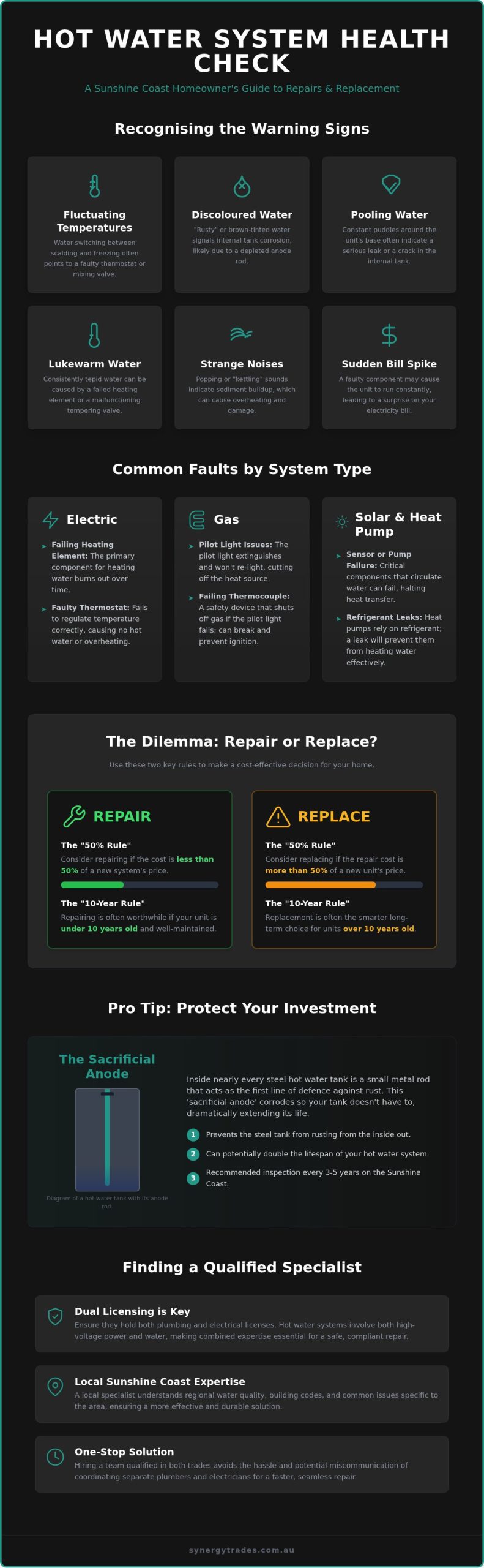
If your shower fluctuates between scalding and freezing, it’s rarely a coincidence. This often points to a failing thermostat or a cross-connection issue. Similarly, seeing “rusty” or brown-tinted water coming out of the tap is a major warning. This usually means the sacrificial anode rod, designed to prevent tank corrosion, has been fully consumed. Once the anode is gone, the water starts attacking the steel tank itself. You should also watch for visible pooling around the base of your unit. While a tiny amount of discharge from the Pressure Temperature Relief (PTR) valve is normal during the heating cycle, constant puddles often signal a fracture in the internal cylinder.
The “Tepid Water” Trap
Lukewarm water is a common complaint that often indicates a partial failure of the heating element in electric units. In Queensland, all new installations require a tempering valve to limit tap water to 50°C for safety. If this valve fails, you might find your water is never quite hot enough, regardless of your settings. A faulty thermostat is another culprit; it might keep the element running constantly, which won’t necessarily give you hotter water but will certainly skyrocket your next electricity bill. Professional hot water system repairs sunshine coast can resolve these temperature issues by testing the electrical components and ensuring the valve is calibrated correctly.
Strange Sounds and Their Meanings
If your hot water tank sounds like a boiling kettle or makes loud popping noises, you’re likely hearing sediment buildup. Over time, minerals settle at the bottom of the tank, creating a layer that traps water underneath. When this water boils, it bubbles through the sediment, causing that distinct “kettling” sound. You might also experience “water hammer,” which is a loud banging in the pipes when a tap is turned off. Mineral deposits found in Sunshine Coast water supplies can lead to significant tank noise as they calcify on heating elements and the tank floor. Regular maintenance and flushing can clear these deposits before they cause the tank to overheat and crack.
Troubleshooting Common Faults: Electric, Gas, and Solar Systems
Every hot water system has its own set of mechanical and electrical quirks. Whether you have a traditional electric tank tucked in the laundry or a modern heat pump outside, understanding where things go wrong is the first step toward a resolution. Identifying these faults early helps you avoid the stress of a total breakdown and ensures you get the most efficient making a cost-effective choice when it comes to maintenance or replacement.
Electric systems are the most common on the Coast, and they usually fail due to a burnt-out heating element or a faulty thermostat. Gas units, while reliable, often suffer from pilot lights that won’t stay lit or a failing thermocouple, which is a safety device that controls the gas flow. Solar systems and heat pumps are more complex. Solar units rely on circulating pumps and temperature sensors that can degrade under our harsh Queensland sun. Heat pumps use a compressor and evaporator cycle similar to a refrigerator; if the refrigerant leaks or the compressor fails, your water stays cold despite the unit running. Identifying these specific issues is a core part of professional hot water system repairs sunshine coast.
Why Your Sacrificial Anode Is Your Best Friend
Inside almost every steel hot water tank is a magnesium or aluminium rod called a sacrificial anode. This clever component is designed to corrode so your tank doesn’t have to. It “sacrifices” itself to the minerals in the water, preventing the steel walls of your heater from rusting through. On the Sunshine Coast, where water hardness can vary, we recommend having your anode inspected every three to five years. Replacing a depleted anode is a simple maintenance task that costs a fraction of the price of a brand-new tank. It is the single most effective way to double the lifespan of your unit.
Electrical Components That Often Fail
Many homeowners don’t realise that a plumbing problem is often actually an electrical one. If your safety switch keeps tripping, it is frequently caused by a grounded heating element inside the hot water tank. This requires a technician with both plumbing and electrical knowledge to diagnose safely. Thermostat calibration is also vital; if it’s set too low, it won’t kill harmful bacteria like Legionella. If it’s too high, you’re wasting money on every electricity bill. Because these repairs involve high-voltage wiring and water, you must always use a licensed professional to ensure your home remains compliant with QLD safety standards. If you’re unsure about the state of your wiring, our team can provide a comprehensive electrical safety check alongside your plumbing repair.
Managing these faults requires a methodical approach. From checking the booster switch on a solar system to testing the continuity of an electric element, a professional diagnosis saves you from the “guesswork” that leads to wasted money and cold showers.
The Repair vs. Replace Dilemma: Making the Most Cost-Effective Choice
When your unit stops working, the first question is always about the cost. Should you invest in hot water system repairs sunshine coast or start fresh? Making the right call depends on several factors beyond just the immediate price tag. We aim to provide honest advice that prioritises your long-term savings over a quick, temporary fix.
The “10-Year Rule” is a reliable benchmark for storage systems. Most units have an expected lifespan of 10 to 12 years. If your system is approaching its tenth birthday, it’s often more sensible to replace it rather than sinking money into failing components. An old tank is prone to internal corrosion that no amount of maintenance can truly reverse. We also apply the “50% Rule” for our customers. If a repair quote exceeds half the cost of a brand-new installation, the smarter financial move is usually a replacement. Modern 2026 models are significantly more efficient than those from a decade ago, meaning you will likely recoup some of the cost through lower electricity or gas bills. For a detailed breakdown of how to weigh these factors, our guide on whether to repair or replace your hot water system provides a straightforward framework tailored to Sunshine Coast conditions.
Assessing the True Cost of Repairs
Patching up an old unit often leads to “false economy.” You might fix a thermostat today only for the heating element to fail next month. When we assess a system, we look at the overall health of the unit, including the state of the tank and the availability of parts. If your current fault is covered by a manufacturer’s warranty, a repair is a no-brainer. However, for out-of-warranty units, you should weigh the repair cost against the benefits of a new system warranty. If you’re also concerned about ongoing running costs, switching to off peak hot water tariffs under Queensland’s 2026 regulations could slash your annual electricity bill by up to 50% when you do choose to replace your unit.
| Criteria | Repair Recommended | Replacement Recommended |
|---|---|---|
| System Age | Under 8 years | Over 10-12 years |
| Repair Cost | Less than 50% of new unit | More than 50% of new unit |
| Unit Efficiency | Still meets energy needs | High bills or poor performance |
| Tank Integrity | No visible leaks or rust | Fractured cylinder or heavy corrosion |
When Replacement Is the Only Option
If your tank has burst or is leaking from the main cylinder, repairs are no longer an option. A fractured internal tank cannot be safely welded or patched. This usually happens when the sacrificial anode has been neglected, allowing rust to eat through the steel walls. Beyond structural failure, you might choose to replace a working unit if your family has grown. A small tank that once suited a couple won’t keep up with the demands of a larger household. Upgrading ensures everyone gets a hot shower without the wait. When you need professional guidance on
hot water system repairs sunshine coast
, we can help you evaluate these factors to find the most reliable solution for your home.
What to Look for in a Sunshine Coast Hot Water Specialist
Choosing a technician for hot water system repairs sunshine coast involves more than just finding the quickest response. Because these systems combine high-pressure water with either high-voltage electricity or gas, the risks of a poor repair are significant. You need a specialist who understands the specific technical requirements of our region and possesses the correct legal credentials to perform the work safely. In Queensland, this means verifying that your chosen professional holds a current QBCC (Queensland Building and Construction Commission) licence.
One of the most important factors often overlooked is the “dual trade” advantage. Many hot water faults are electrical in nature, such as a tripped safety switch or a burnt-out thermostat. A standard plumber without an electrical licence may not be legally allowed to touch the wiring, often leading to the need for two separate call-out fees. Finding a team that is licensed for both plumbing and electrical safety work ensures a more efficient, one-stop resolution. This approach not only saves time but also guarantees that the entire system, from the pipes to the power supply, is compliant with Australian standards.
The Value of Local Experience
A family-owned business like Synergy Trades Group operates on its local reputation. With Paul and Lynda at the helm, our team brings over 70 years of combined industry experience to every job. This depth of knowledge is vital for rapid fault diagnosis. We understand how the Sunshine Coast’s specific water conditions and coastal climate affect different tank materials. We also stay current with local council regulations and QLD plumbing standards, ensuring that every repair or component replacement is fully documented and safe for your family. Dealing with locals means you avoid the “hidden extras” and impersonal service often found with national call centres.
Questions to Ask Before You Hire
Before you commit to a service, it’s wise to vet your specialist with a few direct questions. This transparency protects you from unexpected costs and ensures the person entering your home is qualified. Consider asking the following:
- “Do you provide a transparent quote for the repair before starting?” This helps you avoid “bill shock” once the work is completed.
- “Are you licensed to handle both the plumbing and the electrical components of my unit?” This confirms they can legally finish the job without calling in a second contractor.
- “What is your specific warranty on parts and workmanship?” A reliable specialist should stand behind their work with a clear guarantee.
Selecting a professional who values clear communication and traditional service standards will make the entire process stress-free. If you’re ready to get your morning routine back on track, you can contact our team of hot water specialists for a reliable assessment of your system.
Synergy Trades Group: Your Trusted Partners for Hot Water on the Coast
When you call for help with your hot water, you aren’t just getting a technician; you’re inviting a local expert into your home. Synergy Trades Group is a family-owned business run by Paul and Lynda. We’ve built our reputation on being a stable, dependable pillar of the Sunshine Coast community. Our team specialises in hot water system repairs sunshine coast, bringing a personal touch that larger national franchises often lack. We treat every job with the same care we’d give our own family’s home, prioritising your peace of mind over quick sales.
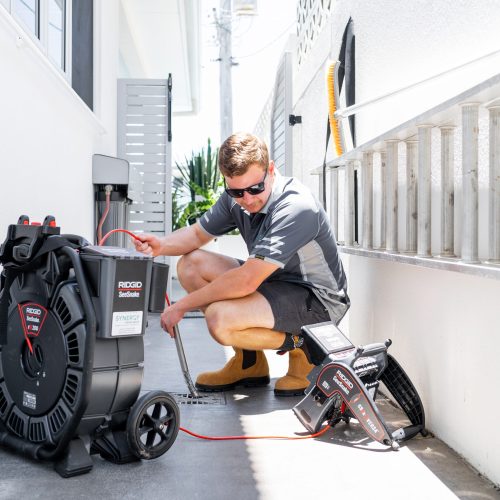
Our combined 70+ years of industry experience means we’ve seen every possible fault. From obscure electrical glitches in heat pump compressors to standard element failures in electric tanks, we’ve fixed it all. This longevity in the trade allows us to work efficiently. We diagnose the root cause of your problem quickly, saving you time and reducing the stress of a cold house. Because we are licensed for both plumbing and electrical safety work, we handle the entire repair in-house. You won’t have to wait for a second contractor to arrive just to check a thermostat or a safety switch.
Our “Service-First” Approach
We believe in transparency and honest communication. You won’t hear us using confusing technical jargon or high-pressure sales tactics. Instead, we provide clear, grounded solutions that make sense for your budget and your home’s needs. Our goal is to be your trusted guide, offering sincere advice on whether a repair is viable or if a replacement is safer. We also focus on preventative maintenance. By checking your sacrificial anode and pressure valves during a routine visit, we help you avoid future hot water emergencies before they happen.
Ready to Organise Your Repair?
Getting your hot water back shouldn’t be a complicated process. When you contact us, you’ll speak with a team that values punctuality and clear communication. We’ll arrange a time that suits your schedule and arrive ready to work. During the service call, we’ll perform a thorough inspection, explain our findings, and provide a straightforward plan to restore your system. We take pride in our workmanship and our commitment to traditional service values. If you’re tired of cold showers or worrying about your unit’s efficiency, Book your hot water system inspection with Synergy Trades Group today and experience the difference that local expertise makes.
Restore Your Home’s Comfort with Expert Care
Managing a failing unit doesn’t have to be a source of stress. By recognising the early warning signs and understanding when a repair offers better value than a replacement, you can keep your household running smoothly and efficiently. It’s clear that the right hot water system repairs sunshine coast require a specialist who understands both the plumbing and electrical intricacies of your specific unit. This dual-trade expertise ensures your repair is safe, compliant, and built to last.
At Synergy Trades Group, Paul and Lynda lead a family-owned team with over 70 years of combined industry experience. As fully licensed QBCC plumbers and electricians, we provide the honest, transparent service you deserve. We’re here to help you make the best decision for your home without the pressure of a high-stakes sales pitch. Get your hot water sorted by the experts at Synergy Trades Group today. We look forward to helping you get back to those reliable, warm mornings you enjoy on the Coast.
Frequently Asked Questions
How much does a hot water system repair typically cost on the Sunshine Coast?
General repair costs on the Sunshine Coast typically range from A$145 to A$485 depending on the specific fault. This industry average usually covers common tasks like replacing a faulty valve or a thermostat. If your unit requires more complex work, such as a full heating element replacement or extensive electrical troubleshooting, the final price will reflect the cost of the specific parts required for your model.
How long should a standard electric hot water system last?
A standard electric storage system should last between 10 and 12 years if it’s maintained correctly. The actual lifespan depends heavily on the water quality in your specific part of the Sunshine Coast and whether the sacrificial anode is replaced on schedule. Units that are neglected often fail closer to the eight-year mark because internal tank corrosion goes unchecked, eventually leading to a burst cylinder.
Is it worth repairing a hot water system that is over 10 years old?
It is generally not cost-effective to perform major repairs on a system that has passed the 10-year mark. While a minor valve replacement might buy you a little more time, the risk of a total tank failure increases significantly after a decade. We usually recommend investing that money into a modern, energy-efficient unit that provides better performance and comes with a fresh manufacturer’s warranty.
Can a leaking hot water tank be repaired, or does it need replacing?
A tank leaking from the main internal cylinder cannot be repaired and must be replaced immediately. If the leak is originating from a valve, a fitting, or a connection, a technician can often fix it by replacing the specific faulty component. However, a fractured or rusted internal tank is a structural failure that creates a safety risk; it cannot be welded or patched effectively or safely.
Why is my hot water system making a loud banging noise?
Loud banging or popping noises are typically caused by sediment buildup at the bottom of your hot water tank. This occurs when minerals from the water supply settle and harden over time, trapping water underneath the sediment layer. When the unit heats up, steam bubbles through the sediment, creating the noise. Regular flushing can prevent this buildup from damaging your heating elements and reducing the tank’s capacity.
Do I need a plumber or an electrician to fix my hot water?
You often need a professional licensed in both trades to handle hot water system repairs sunshine coast safely and effectively. While a plumber handles the water connections and pressure valves, an electrician is required for the heating element, thermostat, and internal wiring. Hiring a dual-trade specialist ensures that all components are checked and compliant without the need for you to pay two separate call-out fees.
What is a sacrificial anode and why does it need replacing?
A sacrificial anode is a metal rod that prevents your tank from rusting by corroding in place of the steel. It attracts the corrosive minerals in the water, “sacrificing” itself to keep the internal tank walls intact. Once this rod is fully depleted, the water will start to attack the tank itself, leading to terminal leaks. Replacing the anode every three to five years is essential for tank longevity.
How can I make my hot water system more energy-efficient?
Maintaining your unit through regular servicing and ensuring your thermostat is set to 60°C are the best ways to improve efficiency. You should also ensure that the hot water pipes exiting the tank are properly insulated to prevent heat loss. If your system is old, upgrading to a modern heat pump can significantly reduce your annual running costs, with some units costing as little as A$150 to A$300 annually. Homeowners looking to reduce costs further should also explore off peak hot water tariffs available to Sunshine Coast residents, which can cut running costs by up to 50% under Queensland’s 2026 electricity regulations.