Have you ever wondered if that official-looking letter from the Sunshine Coast Council is just another piece of paperwork, or a genuine safeguard for your family’s health? When it comes to RPZ backflow testing Sunshine Coast property owners often feel a bit overwhelmed by the technical requirements and strict annual deadlines. It’s completely understandable to feel a sense of dread when a compliance notice lands in your letterbox, especially when you’re already busy managing a home or business.
You want to do the right thing by our community and keep the local drinking water supply safe, but the technical terminology and threat of fines can feel like a lot to handle. This guide simplifies everything you need to know about staying compliant in 2026, from understanding hazard ratings to ensuring your Form 9 paperwork is lodged correctly with the Council. We will break down the annual testing mandate and explain why RPZ valves are vital for high-hazard areas like bidet installations or irrigation systems. Our goal is to show you how to achieve total peace of mind through a straightforward, stress-free process.
Key Takeaways
- Understand why the Sunshine Coast Council mandates annual testing for high-hazard devices to protect our local drinking water supply.
- Identify whether your property requires a Reduced Pressure Zone (RPZ) valve based on current Queensland hazard rating standards.
- Learn how to simplify your compliance by booking professional RPZ backflow testing Sunshine Coast services that handle all the mandatory Council paperwork for you.
- Recognise early warning signs of valve failure, such as constant dripping from the relief port, to prevent water wastage and potential contamination.
- Discover the importance of using a QBCC-licenced plumber with specific backflow endorsements to ensure your annual testing is valid and legally compliant.
What is RPZ Backflow Testing and Why is it Mandatory?
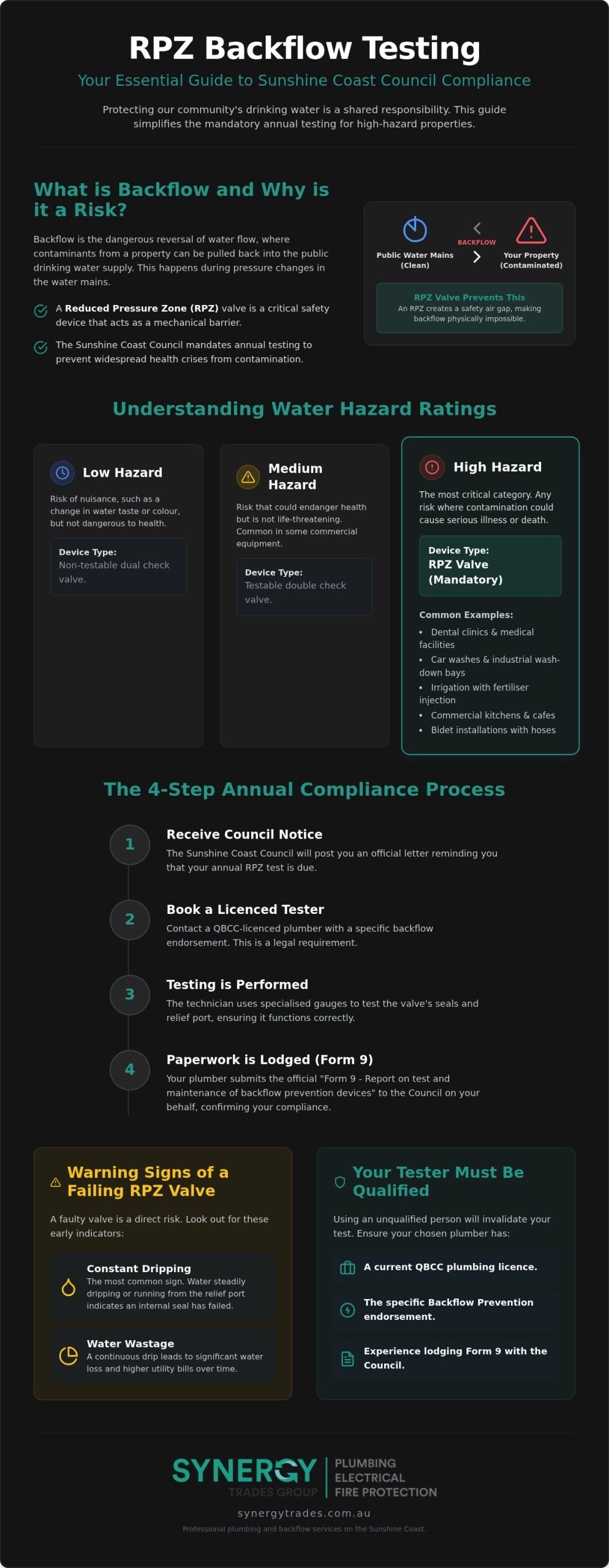
At its simplest, backflow is the unintended reversal of water flow. Instead of fresh water moving from the mains into your property, contaminated water is pulled or pushed back into the public supply. This reversal happens during pressure drops in the street mains or when pressure on your property exceeds the supply pressure. To prevent this, a Reduced Pressure Zone (RPZ) device acts as a mechanical barrier. It is widely considered the gold standard of protection because it offers multiple layers of safety that other valves simply can’t match.
Living on the Sunshine Coast means we enjoy some of the best water quality in Queensland. Our unique coastal geography, with its mix of high-density tourism hubs and industrial zones, makes water safety a top priority across the Sunshine Coast. This is why the Queensland Building and Construction Commission (QBCC) strictly regulates who can perform RPZ backflow testing sunshine coast. Only plumbers with a specific backflow endorsement on their licence are authorised to test and certify these devices.
The Health Risks of Backflow Contamination
Cross-connections are the primary culprit in backflow incidents. These occur when a drinking water pipe is connected to a non-potable source. Common risk areas include:
- Commercial chemical mixing tanks
- Industrial grease traps and wash-down bays
- Large-scale irrigation systems with fertiliser injection
If the pressure shifts, bacteria or hazardous chemicals can be sucked directly into the taps of your home or neighbouring businesses. Real-world incidents in commercial settings, such as car washes or industrial plants, have shown how quickly a single failure can lead to widespread health alerts. For property owners, regular testing provides the peace of mind that your site isn’t the source of a community health crisis.
Legal Obligations for Sunshine Coast Property Owners
The Plumbing and Drainage Act 2018 sets out clear rules for managing high-hazard water connections. If your property is classified as a high-risk site, you are legally required to have your devices registered and tested every twelve months. An RPZ valve is a mechanical device designed to prevent back-siphonage and back-pressure. Ignoring these requirements can lead to more than just a guilty conscience. The Sunshine Coast Council has the authority to issue significant fines or even disconnect your water service to protect the public. Staying on top of your RPZ backflow testing sunshine coast schedule ensures you remain compliant and your business stays operational without legal interruptions.
Understanding Hazard Ratings: When is an RPZ Required?
The classification of hazard levels isn’t arbitrary. It’s a structured system used by local authorities to decide which properties pose a threat to the town’s water supply. During your initial plumbing application, the Sunshine Coast Council evaluates the intended use of the site. They assign one of three ratings: Low, Medium, or High.
Low hazard situations are those where backflow might cause a nuisance, like a change in water taste or colour, but won’t make people sick. Medium hazard refers to risks that could endanger health, such as cross-connections in cooling towers. High hazard, however, is the most critical category. This rating applies whenever there is a risk of substances entering the water that could cause death. Because the stakes are so high, the Council mandates the installation of an RPZ valve.
Many local businesses fall into the high-hazard category without even realising it. If you run a dental clinic in Maroochydore, operate a busy cafe with specialised coffee machines, or manage a car wash in Noosa, you likely have a testable device on-site. These businesses rely on consistent RPZ backflow testing sunshine coast to prove their safety barriers are functioning perfectly. Regular RPZ backflow testing sunshine coast provides the documentation needed to satisfy Council auditors and protect your neighbours.
High Hazard vs. Low Hazard Installations
The main difference between these installations is the type of valve used and how it is maintained. Low-hazard setups often use non-testable dual check valves. These are simple, set-and-forget components that are usually replaced rather than repaired. High-hazard sites require testable devices like the RPZ. The term testable is vital. It means a licenced professional can physically verify the valve is working using specialised gauges. Unlike the simpler versions, these devices require an annual service to ensure the mechanical parts haven’t seized or failed.
Registerable Devices and the Council Database
The Sunshine Coast Council maintains a comprehensive database of every testable backflow device in the region. This registry ensures that no property falls through the cracks. Once your annual test is complete, your plumber must lodge a Form 9. You can view the official Queensland Government plumbing forms to see exactly what information is recorded. This form is the legal proof that you’ve met your obligations. If you’ve recently added a bidet installation or a new irrigation system, ensuring it’s correctly registered is the first step in avoiding Council compliance letters.
If you’re unsure about your current hazard rating or need to confirm your device is on the register, you can request a professional compliance check from a licenced specialist today.
The Annual RPZ Testing Process: What to Expect
Staying ahead of your compliance deadline is the best way to avoid unnecessary stress. Every testable device on the Sunshine Coast has an annual anniversary date recorded in the Council registry. We recommend scheduling your RPZ backflow testing sunshine coast at least two weeks before this date. This buffer allows time for any required repairs if the device fails its initial test. During the visit, a licenced plumber performs a physical inspection to look for external leaks, signs of corrosion, or debris that might interfere with the valve’s operation.
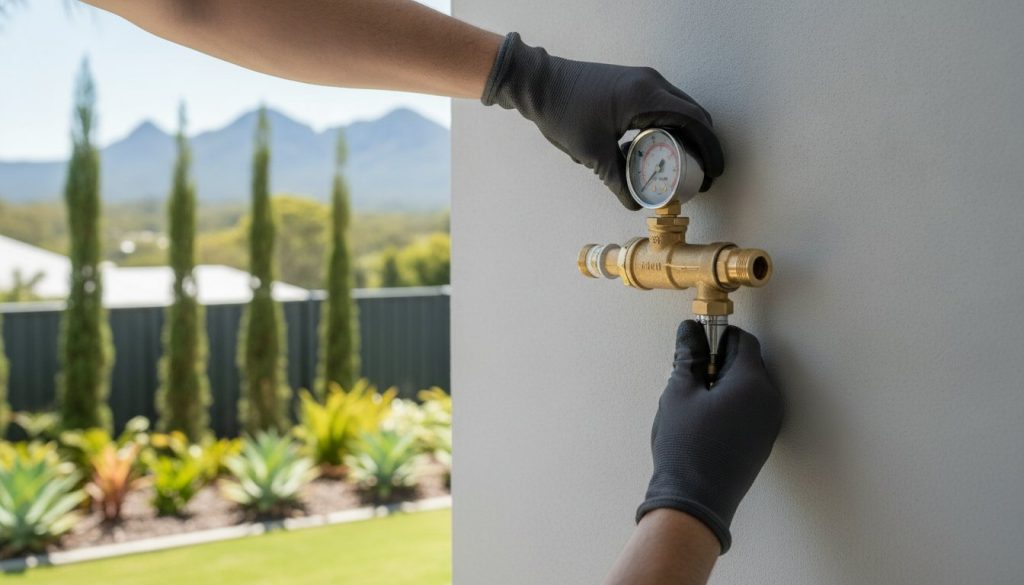
The core of the process involves using specialised differential pressure gauges. These high-precision instruments measure the pressure drop across different parts of the valve. It is a technical task that goes beyond a simple visual check. Once the testing is complete, the plumber manages the paperwork trail by lodging the Form 9 directly with the Sunshine Coast Council. You should receive a copy for your own records, providing proof of your commitment to water safety.
Step-by-Step: On-Site Testing Procedures
The process begins with a brief shut-off of your water supply. This allows the tester to isolate the device and connect the pressure gauges. A vital part of the service is cleaning the internal strainers. Over time, sediment from the local water mains can build up, which often leads to premature mechanical failure. By clearing this debris, we ensure the longevity of the device. Finally, the plumber tests the relief valve and check valves under simulated backflow conditions to verify they seal perfectly when pressure fluctuates.
Managing Water Disruptions During Testing
We understand that losing water, even briefly, can be a headache. For most residential and small commercial sites, the water will be off for only 15 to 30 minutes. If you run a business that relies heavily on a constant supply, we can organise tests during low-flow periods to minimise the impact on your operations. Professional leak detection services often go hand-in-hand with backflow checks. While the water is isolated, it is the perfect time to ensure there are no hidden issues in your plumbing system. This methodical approach keeps your property compliant without causing major disruptions to your day.
Common Causes of RPZ Valve Failure and Maintenance
Mechanical devices are never “set and forget”. Even the most robust RPZ valve eventually feels the effects of daily use. On the Sunshine Coast, the most frequent cause of failure is sediment. Fine particles from the local water mains can lodge in the valve’s rubber seals. When these seals don’t close perfectly, the device can’t maintain the required pressure differential. This is why regular RPZ backflow testing sunshine coast is so critical. It identifies these tiny obstructions before they compromise your property’s safety.
A common sight that worries property owners is a constantly dripping relief valve. While a small discharge during pressure fluctuations is normal, a steady stream is a cry for help. It usually indicates that the first check valve is leaking or the relief valve seat is damaged. Ignoring this leads to significant water wastage and higher utility bills. Most internal components, like springs and o-rings, have a predictable lifespan. Depending on water quality and usage, a full rebuild of the internal kit is often necessary every few years to keep everything in top shape.
Effective maintenance also bridges the gap between Unitywater and the Sunshine Coast Council. While Unitywater is responsible for the water supply reaching your boundary, the Council manages the compliance register. A failing valve isn’t just a plumbing issue; it’s a breach of your agreement with these authorities. Routine checks prevent emergency repairs that often occur at the most inconvenient times. Regular maintenance ensures that your property remains a responsible part of the local water network.
Signs Your Backflow Device Needs Urgent Attention
You don’t always need a pressure gauge to know something is wrong. Keep an eye out for these red flags:
- Unusual smells or discolouration in your tap water.
- Sudden, unexplained drops in water pressure when multiple taps are used.
- Visible green or white corrosion on the brass valve body or surrounding pipework.
If you notice any of these, it’s best to act quickly. These symptoms often point to a device that is no longer providing a reliable barrier against contamination.
The Synergy Trades Approach to Maintenance
With over 70 years of combined experience, our family-owned team has seen every possible valve failure. We understand that property maintenance can be a financial burden. That’s why we prioritise a “repair over replace” philosophy. If we can clean a seal or replace a single o-ring to bring your device back to standard, we will. This approach saves you money while ensuring you meet all legal requirements. For broader Sunshine Coast plumbing services, we look at the whole system to ensure your backflow device isn’t working harder than it needs to.
Don’t wait for a compliance fine or a burst seal to take action. You can schedule your annual backflow maintenance with our experienced team to keep your water running safely and efficiently.
Choosing a Licenced Backflow Tester on the Sunshine Coast
Not every plumber is qualified to inspect your property’s safety barriers. While many tradespeople can fix a leaking tap, RPZ backflow testing sunshine coast requires a specific endorsement from the Queensland Building and Construction Commission (QBCC). This certification proves the plumber has undergone the rigorous training necessary to operate high-precision gauges and interpret complex pressure readings. When you’re looking for a tester, always ask to see their backflow credentials. It’s the only way to ensure your annual certificate is legally valid.
It can be tempting to choose the cheapest quote you find online. However, “budget” testing often leads to expensive compliance headaches. Some low-cost providers might rush the physical inspection or fail to lodge the paperwork correctly. If the Council doesn’t receive your Form 9 on time, you’re the one who faces the fines. Choosing a team with deep roots in the community, like Paul and Lynda’s family-owned business, ensures you’re getting 70+ years of combined industry experience. We treat your property like it’s our own, focusing on accuracy and reliability rather than just ticking a box.
The Synergy Trades Difference: Compliance Made Easy
We believe that property maintenance shouldn’t be a source of stress. Our team takes the entire administrative burden off your shoulders. Once the physical test is complete, we handle the submission of your Form 9 directly to the Sunshine Coast Council. You won’t have to chase us for paperwork or worry about missing deadlines. We even manage a reminder system to alert you when next year’s test is due. Our specialists are on the road every day, providing expert service to neighbours in Noosa, Caloundra, and everywhere in between.
Comprehensive Property Safety Solutions
One of the biggest advantages of working with our team is our multi-trade capability. We don’t just look at your pipes in isolation. Because we offer both plumbing and commercial electrical safety, we can provide a holistic safety check for your business or home. This “one-stop” approach means you have a single, trusted local point of contact for all your compliance needs. It’s about more than just passing a test; it’s about the peace of mind that comes from knowing your entire property is in professional hands. You can contact Synergy Trades Group to book your annual RPZ test and experience the ease of a truly professional service.
Secure Your Property’s Water Safety for 2026
Maintaining your backflow prevention device doesn’t have to be a source of administrative stress. By understanding your hazard rating and staying ahead of your annual anniversary date, you protect both your property and the Sunshine Coast’s drinking water supply. A correctly functioning RPZ valve is your best defence against contamination; regular maintenance is the key to avoiding Council fines and unexpected water disruptions. Our team makes RPZ backflow testing sunshine coast simple by handling the technical checks and the mandatory Council paperwork on your behalf.
As a family-owned business operated by Paul and Lynda, we bring over 70 years of combined industry experience to every site visit. Our QBCC Licenced Backflow Specialists ensure your property remains fully compliant with the latest local regulations while providing the personal service of a trusted neighbour. Ready to tick this essential task off your to-do list? You can book your annual RPZ backflow test with Synergy Trades today. We look forward to helping you keep your home or business safe, efficient, and compliant throughout the year ahead.
Frequently Asked Questions
How often does my RPZ valve need testing on the Sunshine Coast?
Your RPZ valve must be tested every 12 months without exception. This annual requirement is set by the Sunshine Coast Council to ensure the device continues to protect the local drinking water from contamination. We recommend scheduling your RPZ backflow testing sunshine coast a few weeks before the anniversary date shown on your previous certificate. This proactive approach gives you enough time to manage any required maintenance or repairs before the official compliance deadline passes.
Will my water be turned off during the backflow test?
Yes, your water supply will be briefly interrupted during the testing process. The plumber needs to isolate the device to connect specialised pressure gauges and verify the internal components are sealing correctly. For most standard properties, the water is turned off for approximately 15 to 30 minutes. We always aim to coordinate these tests during low-flow periods to minimise the impact on your household routine or business operations.
What happens if my RPZ valve fails the annual test?
If a device fails, it must be repaired or replaced to meet safety standards. Common issues include debris in the seals or worn internal springs. Our team uses over 70 years of combined experience to diagnose the specific cause of the failure. We focus on repairing the valve whenever possible to keep your costs down. Once the repairs are finished, we re-test the device to ensure it passes before submitting the final paperwork.
Do I have to submit the test results to the Council myself?
No, you don’t need to worry about the paperwork. A licenced plumber is legally required to lodge the Form 9 report with the Sunshine Coast Council within 10 business days of the test. Our team manages this entire submission process for you, ensuring the Council’s register is updated accurately. You will also receive a copy of the results for your own property records to prove your compliance if an auditor ever visits.
How much does a standard RPZ backflow test cost?
The total cost for a test depends on several factors, such as the number of devices on your property and the current Council registration fees. While we don’t provide fixed pricing here, remember that the Council includes an annual fee on your rates notice for maintaining the backflow register. Investing in a professional RPZ backflow testing sunshine coast service ensures your high-hazard water connections remain safe and prevents expensive fines for non-compliance.
Can any plumber perform RPZ backflow testing?
Only plumbers with a specific backflow prevention endorsement on their QBCC licence can perform this work. It’s a specialised field that requires training in high-precision pressure testing and local regulatory standards. Every member of our team is a fully licenced specialist. This ensures that your testing is performed to the highest standard and that your compliance certificates are legally recognised by the Sunshine Coast Council and Unitywater.
What is the difference between an RPZ and a DCV valve?
The primary difference lies in the hazard level they are designed to protect against. A Reduced Pressure Zone (RPZ) valve is the gold standard for high-hazard situations because it includes a relief valve that can dump water if a failure occurs. A Double Check Valve (DCV) is used for medium-hazard risks and doesn’t have a relief port. RPZ valves provide a higher level of safety by creating a physical air gap during a backflow event.
I just moved into a commercial property; how do I know if I have a backflow device?
You can usually find the device located near your main water meter or at the point where water enters a specific piece of equipment. It looks like a complex brass assembly with several test ports and a relief valve. If you’re still unsure, you can check the Sunshine Coast Council’s backflow register. We can also visit your site to perform a professional compliance audit and identify any testable devices that require annual certification.