Imagine stepping into the shower on a crisp morning in Buderim, only to be met by a bracing blast of icy water because your old unit finally gave up. It’s a scenario no one wants to face, yet finding the right solution for gas hot water Sunshine Coast homeowners can actually trust often feels like a chore. You’re likely looking for a way to end those unexpected cold snaps while keeping your monthly energy bills under control.
We understand that the technical side of plumbing can be overwhelming, especially when you’re trying to decide between the continuous flow of an instantaneous system or the familiar reliability of a storage tank. You want a hot water supply that just works, installed by a local professional who understands the specific Queensland regulations and coastal conditions. Reliability and transparency shouldn’t be too much to ask for when it comes to your family’s comfort.
This guide promises to help you master everything you need to know about gas hot water on the Coast, from choosing between LPG and natural gas to navigating the latest 2026 compliance standards. We’ll preview the differences between various system types, offer advice on expert repairs, and explain how a licensed local gas fitter ensures your home stays safe and efficient for years to come.
Key Takeaways
- Learn the practical differences between continuous flow and storage units to choose a system that matches your household’s daily hot water demand.
- Identify common coastal maintenance issues, like pilot light failures and pressure drops, to keep your unit running efficiently and avoid unexpected cold showers.
- Navigate strict Queensland safety regulations and learn why a Gas Compliance Certificate (Form 4) is a mandatory requirement for every installation.
- Find out why local families trust Synergy Trades Group for reliable gas hot water sunshine coast installations and expert repairs backed by 70 years of experience.
- Discover the space-saving benefits of wall-mounted instantaneous systems and how they can help lower your long-term household energy costs.
Understanding Gas Hot Water Systems on the Sunshine Coast
A gas hot water system operates using a straightforward but highly effective mechanism. At its core, the system relies on a gas burner to create heat, which is then transferred to your water through a component called a heat exchanger. Whether you choose a tank that keeps water warm or a unit that heats it on demand, the result is a consistent flow of hot water that doesn’t falter when you need it most. This efficiency is a primary reason why gas hot water sunshine coast services remain in such high demand across our local region.
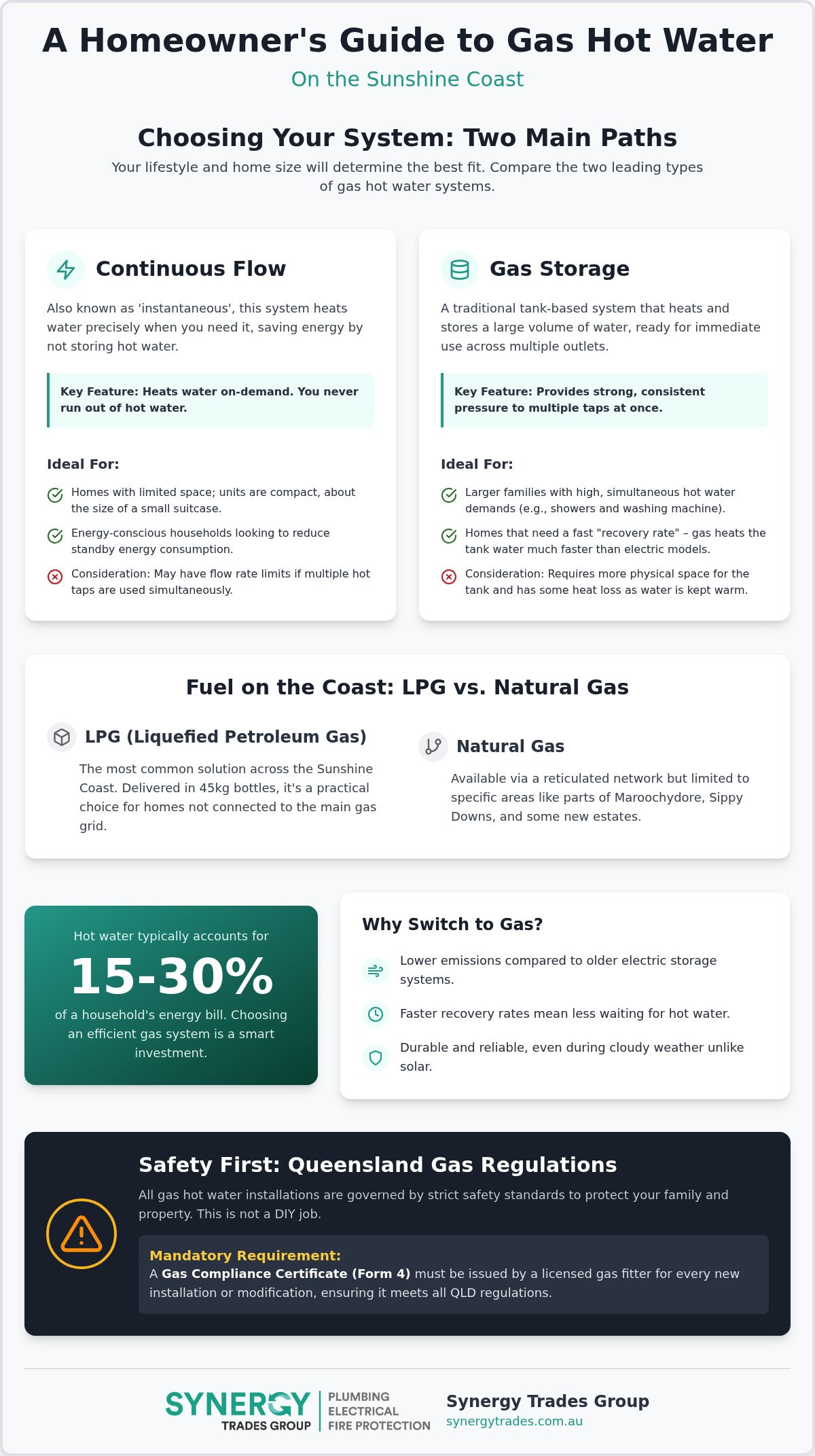
Many homeowners prefer gas because it offers a level of reliability that weather-dependent systems simply can’t match. While solar hot water is popular, it often requires an electric booster during the Sunshine Coast’s rainy spells. Gas systems work independently of the weather, ensuring your morning routine stays on track even during a week of heavy coastal clouds. To help you choose the best model, look for the energy star rating labels found on all Australian gas appliances. These ratings provide a clear guide on how much gas the unit consumes, allowing you to balance performance with long-term running costs. Since hot water systems account for 15% to 30% of household energy bills, selecting a high-efficiency model is a smart move for your budget.
LPG vs. Natural Gas: What is Available in Your Area?
It’s a common misconception that natural gas is available everywhere on the Coast. In reality, the reticulated natural gas network is limited to specific pockets, such as parts of Maroochydore, Sippy Downs, and certain new estates. Most residents, especially those in the hinterland or established coastal suburbs, will use LPG. This involves the use of large 45kg gas bottles that sit outside your home. Managing these bottles requires a bit of planning regarding storage space and clear access for delivery drivers, but it remains a highly practical solution for homes off the main gas grid. We help our clients find the right spot for their bottles to ensure they meet all safety clearances while remaining easy to swap over.
The Benefits of Switching to Gas
Making the switch to a gas-powered system offers several practical advantages for the modern household. If you’re replacing an old electric storage water heater, you’ll likely notice a drop in greenhouse gas emissions. Gas is generally considered a cleaner-burning fuel than the coal-fired electricity that powers many older tanks. Other benefits include:
- Faster recovery: Gas burners heat water much quicker than electric elements, meaning the tank refills with hot water faster after a long shower.
- Compact design: Instantaneous gas units are about the size of a small suitcase, freeing up valuable yard space compared to bulky electric tanks.
- Longevity: With regular maintenance, gas systems are known for their durability in our salty coastal environment.
By choosing a gas hot water sunshine coast solution, you’re investing in a system that balances environmental responsibility with the everyday needs of a busy family.
Continuous Flow vs. Gas Storage: Which Suits Your Lifestyle?
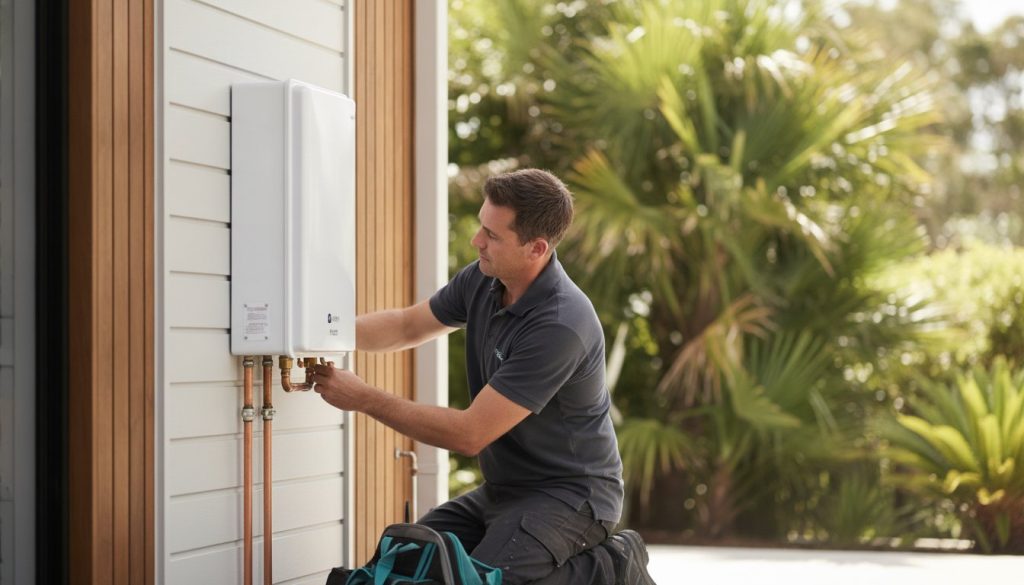
Selecting the right gas hot water sunshine coast system often comes down to how your household uses water. If you live in a busy townhouse in Maroochydore or a compact unit in Mooloolaba, space is at a premium. Continuous flow systems, often called instantaneous units, are roughly the size of a small suitcase and mount directly to an external wall. This clever design frees up your backyard or garage for more important things. Unlike traditional tanks, these units only heat water when you turn on the tap. This on-demand heating is incredibly energy-efficient because you aren’t paying to keep 130 litres of water hot while you’re at work or asleep.
Some older instantaneous models were known for the “cold water sandwich” effect. This happened when you turned the tap off and back on quickly, resulting in a brief burst of cold water between two hot streams. Modern high-end units have largely solved this with small internal buffers or advanced sensors that maintain a steady temperature. This ensures your shower remains comfortable from start to finish, even if someone else briefly uses a tap elsewhere in the house.
Instantaneous (Continuous Flow) Systems
These systems work by passing cold water through a copper heat exchanger heated by a gas burner. The water reaches your desired temperature almost instantly as it flows through the pipes. This technology is perfect for smaller families, couples, or anyone living in a home where internal storage space is limited. We often recommend leading Australian brands like Rinnai, Rheem, and Bosch for their reliability in our coastal environment. Because there’s no tank to empty, you won’t run out of hot water, no matter how many people need a shower in a row.
Gas Storage Tank Systems
For larger households where three people might be using different bathrooms at the same time, a gas storage tank is often the most reliable choice. These systems keep a large volume of water pre-heated in an insulated tank, ready for immediate high-pressure delivery. While they take up more room, they excel at handling high-peak usage periods where multiple taps are running simultaneously.
One critical maintenance point for these systems is the sacrificial anode. This is a metal rod inside the tank that attracts corrosive elements in the water, sacrificing itself to protect the tank liner from rusting. Given our proximity to the ocean, checking this rod every few years is vital for the longevity of your hot water system. If you’re unsure which model fits your property, you can request a professional assessment from our local team to find the most cost-effective solution.
Common Gas Hot Water Issues and Coastal Maintenance
Living near the ocean brings a unique set of challenges for household appliances. While we love the sea breeze in Noosa or Caloundra, that same salt-laden air can be incredibly harsh on your outdoor infrastructure. When it comes to gas hot water sunshine coast residents often find that their systems age faster than those in inland areas. Recognising the early signs of wear, such as rust on the cabinetry or fluctuating water temperatures, can save you from a total system failure and a very cold morning surprise.
Deciding whether to patch up an old unit or invest in a new one depends on the age and condition of the heat exchanger. If your system is over 10 years old and showing signs of heavy corrosion, a replacement is often more cost-effective than constant repairs. We pride ourselves on providing honest, transparent advice so you don’t waste money on a system that is clearly past its prime. Our goal is always to restore your reliable hot water supply with the least amount of stress possible.
Troubleshooting Your Gas System
If you have lost hot water, the first step is identifying the cause. For older storage units, the pilot light may have simply blown out during a coastal storm. If it won’t stay lit, you are likely looking at a faulty thermocouple. A thermocouple is a small safety sensor that detects the pilot flame’s heat and allows gas to flow, automatically shutting off the supply if the flame goes out to prevent dangerous leaks. On modern continuous flow units, check the digital controller for error codes; these numbers often point directly to issues with water pressure or ignition failure. Always ensure your gas isolation valve is fully open and your gas bottles haven’t simply run dry before calling for a technician.
Coastal Protection and Annual Servicing
Salt-spray corrosion is the primary reason for premature failure on the Coast. It doesn’t just affect the external casing; it can penetrate the internal electronics and burners. Regular servicing is vital to clear out debris from flues and ensure the ventilation remains unobstructed. We often find that a quick annual check-up can extend the life of a unit by several years, protecting your investment from the harsh Queensland elements. For more detailed advice on fixing specific faults, you can explore our Hot Water System Repairs Sunshine Coast guide. Keeping your system clean and well-maintained is the best way to ensure your gas hot water sunshine coast supply remains consistent and efficient year-round.
Compliance and Safety: Navigating QLD Gas Regulations
In Queensland, the standards for gas fitting and installation are exceptionally high to ensure the safety of every household. All work is governed by the Plumbing and Drainage Act 2018 and the Petroleum and Gas (Productivity and Safety) Act 2004. This legislation dictates that only a licensed gas fitter can perform any installation or repair on your system. Attempting DIY gas work is not just dangerous; it is illegal. Whether you are installing a new unit or replacing an old one, the work must meet strict Australian Standards to protect your family from the risks of gas leaks or carbon monoxide exposure.
One of the most critical documents you will receive after a professional installation is the Gas Compliance Certificate, often referred to as a Form 4. This certificate acts as official proof that your gas hot water sunshine coast system was installed by a qualified professional and meets all state safety requirements. If you ever decide to sell your property, or if you need to make a claim on your home insurance, this document is essential. Without it, your insurance provider may refuse a payout for any damage related to the gas system, leaving you with a significant financial burden.
Safety also extends to the physical placement of your gas supply. For homes using LPG, there are specific regulations regarding the distance gas bottles must be kept from ignition sources, windows, and doors. These clearances are designed to prevent gas from entering the home in the event of a minor leak. We ensure every installation we perform on the Sunshine Coast adheres to these spatial requirements, providing you with total peace of mind.
The Importance of a Licensed Gas Fitter
Verifying your tradesperson’s credentials is a simple but vital step. You can check a contractor’s QLD gas work licence through the QBCC online portal to ensure they are qualified for the specific task at hand. Using an unlicensed trade might save a few dollars upfront, but the long-term risks to your property’s safety and your insurance coverage are simply not worth it. We take a “Trusted Expert Guide” approach to every job, prioritising transparency and safety over quick fixes. If you have any doubts about your current setup, you can book a licensed gas inspection to ensure everything is up to code.
Safety Devices and Ventilation
Modern gas hot water sunshine coast systems rely on several safety devices to function correctly. Tempering valves are a mandatory requirement in Queensland; they mix hot and cold water to ensure the temperature at your taps does not exceed 50°C, which significantly reduces the risk of scalding. For any gas unit installed indoors, correct flueing is essential to safely vent exhaust gases outside the building. Additionally, a pressure relief valve is a safety component that automatically releases water if the internal pressure or temperature within a storage tank exceeds safe limits, preventing potential damage to the unit.
Expert Gas Hot Water Installation with Synergy Trades Group
Synergy Trades Group is a family-owned and operated business led by Paul and Lynda. With over 70 years of combined industry experience, we’ve become a dependable pillar for families across the region. We don’t just install a unit; we guide you through the entire process. This includes selecting the most efficient model for your home, managing the installation, and ensuring all final compliance paperwork is lodged correctly. Our team takes the guesswork out of the process, providing a service-first experience that prioritises your comfort and safety.
When you choose us for gas hot water sunshine coast services, you’re getting an end-to-end solution. We understand that a new system is a significant investment for any household. That’s why we focus on transparency and reliability, ensuring your home has a steady, energy-efficient hot water supply without the typical stress of technical maintenance. You can explore our full range of Hot Water Systems to see how we can help improve your home’s efficiency.
Our Service Areas: From Noosa to Caloundra
Our team is deeply embedded in the local community, servicing a wide area that includes Noosa, Maroochydore, Buderim, and Caloundra. This local presence is more than just a convenience; it means we have a practical understanding of regional water pressure variations and specific gas supply quirks that might affect your system’s performance. Whether you’re in a beachside apartment or a hinterland house, we know how to calibrate your system for the best results in our unique environment. You can find more details on our dedicated Sunshine Coast area page.
Why Locals Trust Synergy Trades
We pride ourselves on maintaining the professional conduct of a seasoned firm while keeping the “helpful neighbour” feel of a family business. One of our biggest advantages is our multi-trade capability. Because we hold both plumbing and electrical licences, we can handle every aspect of a hot water installation. Many modern gas hot water sunshine coast systems, particularly continuous flow models, require an electrical connection for the ignition and digital controllers. Instead of you having to coordinate multiple tradespeople, our team manages the entire job from start to finish.
We value punctuality, clear communication, and traditional pride in workmanship. Our goal is to leave you with peace of mind, knowing your installation is safe, compliant, and built to last. If you’re ready to upgrade or need expert advice on your current setup, Contact Synergy Trades Group for a reliable gas hot water solution today. We’re here to ensure your hot water stays hot and your bills stay manageable.
Secure Your Reliable Hot Water Supply Today
Choosing the right gas hot water sunshine coast system shouldn’t be a source of stress for your household. Whether you opt for the space-saving efficiency of a continuous flow unit or the high-volume capacity of a storage tank, the most important factor is matching the technology to your family’s specific needs. Keeping up with regular coastal maintenance and ensuring your system meets all Queensland safety regulations will protect your investment and provide years of trouble-free operation.
Synergy Trades Group is a family-owned and operated local business with over 70 years of combined trade experience. Our fully licensed QLD gas fitters are dedicated to providing a transparent, service-first experience that prioritises your safety and comfort. We handle every aspect of the process, from expert system selection to the final compliance certification, so you can focus on enjoying your home without worrying about the technical details.
If you’re ready for a stress-free installation or need a professional maintenance check, book your Sunshine Coast gas hot water service with Synergy Trades today. We look forward to providing the dependable hot water solution your family deserves.
Frequently Asked Questions
How long does a gas hot water system usually last on the Sunshine Coast?
On average, a gas hot water system lasts between 10 and 15 years. However, on the Sunshine Coast, our salt-laden air can accelerate corrosion on external components and cabinetry. Regular maintenance, such as checking the sacrificial anode in storage tanks every few years, is essential to maximise the unit’s lifespan. If your system is over a decade old and requires frequent repairs, it’s often more cost-effective to consider a replacement.
Is it cheaper to run a gas hot water system or an electric one?
Gas systems are typically more cost-effective to run than standard electric storage units. For a family of four, annual running costs for continuous flow gas are estimated between $350 and $550, while gas storage tanks range from $400 to $600. These figures make gas hot water sunshine coast systems a popular choice for families looking to manage their energy bills. Choosing a high energy star rating will further improve your long-term savings.
What should I do if I smell gas near my hot water unit?
If you smell gas near your unit, you must act immediately to ensure your family’s safety. Turn off the gas supply at the isolation valve or the bottles and avoid using any electrical switches or mobile phones nearby. If the unit is indoors, open all windows and doors to ventilate the area. Once the area is secure, contact a licensed gas fitter to locate and repair the leak before turning the gas back on.
Can I swap my electric hot water system for a gas one?
Yes, swapping from electric to gas is a common upgrade for many local properties. This process involves installing new gas pipework and, for continuous flow models, a nearby power point to run the digital controller. Because we hold both plumbing and electrical licences, our team can manage the entire conversion without the need for multiple contractors. This transition often provides faster recovery times and lower greenhouse gas emissions for your home.
How often should a gas hot water system be serviced?
We suggest having your system professionally serviced every 12 to 24 months. For those living in beachfront suburbs like Mooloolaba or Noosa, annual checks are vital to monitor the impact of salt-spray corrosion. A standard service includes checking the burner, cleaning filters, and testing safety valves. This proactive approach helps prevent unexpected cold showers and ensures your gas hot water sunshine coast unit operates at peak efficiency for as long as possible.
Do I need a special permit to install a gas hot water system in QLD?
You don’t need a personal permit, but Queensland law requires all gas work to be performed by a licensed gas fitter. Upon completion, the installer must provide you with a Gas Compliance Certificate, also known as a Form 4. This document is a legal requirement that proves the installation meets the Plumbing and Drainage Act standards. It’s essential for property sales and ensures your home insurance remains valid in the event of a claim.
What is the difference between LPG and Natural Gas for hot water?
The main difference is the delivery method. Natural gas is supplied through a permanent underground network, which is only available in specific pockets of the Sunshine Coast. LPG, or bottled gas, is the most common solution for our region’s hinterland and coastal homes. While the units look similar, they use different jets and regulators, so it’s crucial to choose a model that specifically matches the fuel type available at your property.
Why is my gas hot water taking so long to reach the shower?
That frustrating delay is usually caused by “dead legs,” which is the volume of cold water sitting in the pipes between the heater and your shower. If your unit is located far from the bathroom, you must flush out that cold water before the hot arrives. Installing a continuous flow system closer to the point of use or adding a recirculation pump can significantly reduce this waiting time and save water.