A toilet flush can affect pressure and airflow through connected drains. That’s why drain gurgling when a toilet is flushed may point to a restriction or venting issue. An occasional sound is not automatically dangerous if everything drains normally and there are no sewer smells or other slow fixtures. Multiple affected fixtures, sewer odours or water backing up are warning signs that need prompt attention.
It’s understandable to take an unfamiliar drain noise seriously, especially when it appears after a flush. A toilet sends roughly 4.5 litres of water through the drain in a couple of seconds, and the pattern of noises and slow drainage can help show whether the issue is isolated or affects a shared line.
This guide explains when gurgling is a concern, how the affected fixtures can help narrow down a restriction, and what a professional camera inspection can reveal. You’ll also learn why airflow matters and when an assessment can identify the cause more reliably than the sound alone.
Key Takeaways
- An occasional gurgle may be less concerning when the fixture drains normally and there are no odours or other drainage changes.
- Notice which fixtures gurgle, what triggers the noise and whether nearby drains are slow; the pattern can help pinpoint a shared restriction.
- Sewage odours, water backing up or several affected fixtures are warning signs that need prompt attention.
- A camera inspection can help reveal whether a drain is blocked or damaged and guide the next step in diagnosis.
- Flushing moves water through connected pipes, so poor venting or a restriction can disrupt airflow and create gurgling sounds.
Is a gurgling drain dangerous?
A gurgle isn’t automatically an emergency. If one fixture makes an occasional sound but drains normally, with no sewer odour or other slow drains, the issue may be minor. Persistent noise, sewage smells or water backing up call for investigation.
Dry Traps and Sewer Smells
A trap is the curved section beneath a sink or floor drain that holds water between the fixture and the sewer. That water forms a seal, helping prevent sewer gases from entering the room. In a rarely used fixture, evaporation can lower the seal and allow odours through. Running water for 30 seconds can refill a dry trap. If an indoor sewer smell remains, ventilate the room, refill the traps and have the cause investigated.
Sewer Line Warning Signs
Sewer line trouble can show up as several slow or backing-up fixtures, recurring gurgling or foul smells indoors. One slow sink may point to a local restriction; several affected fixtures suggest a wider drainage problem. Blockages between a toilet and the main sewer can involve damaged or cracked pipes, or roots entering the line. The Institute for Sustainable Futures at the University of Technology Sydney identifies these as possible causes.
A plumber can locate a restriction along the drain route to distinguish a property-side blockage from a council sewer issue. Responsibility depends on the asset boundary and ownership arrangements, which vary across Australia. A plumber can identify where the problem appears to be; the relevant water authority can clarify responsibility for its sewer assets.
Obstructed Sewer Vents
A sewer vent lets air move through the plumbing system. If it is obstructed, pressure can change and air may escape through a fixture. Leaves, debris and bird nests can block vents, while a flush may trigger gurgling at a connected sink. A plumber checks the vent as well as the affected drains, because a vent restriction and a pipe blockage can cause similar sounds.
Professional diagnosis may include inspecting drain lines with a camera, checking the vent stack, pressure testing and assessing the sewer line. The restriction’s location and condition guide the repair: a plumber may clear a blocked pipe or investigate faulty venting. Mechanical clearing or hydro-jetting can address some blockages, depending on the pipe and obstruction. Chemical drain cleaners can expose people to corrosive substances and may not reach a deeper restriction. Don’t mix cleaning products or add chemicals after using another product. Tell the plumber what has already been used. If sewage reaches a shower base or overflow relief gully, arrange an inspection that day.
Using which fixtures gurgle to locate a restriction
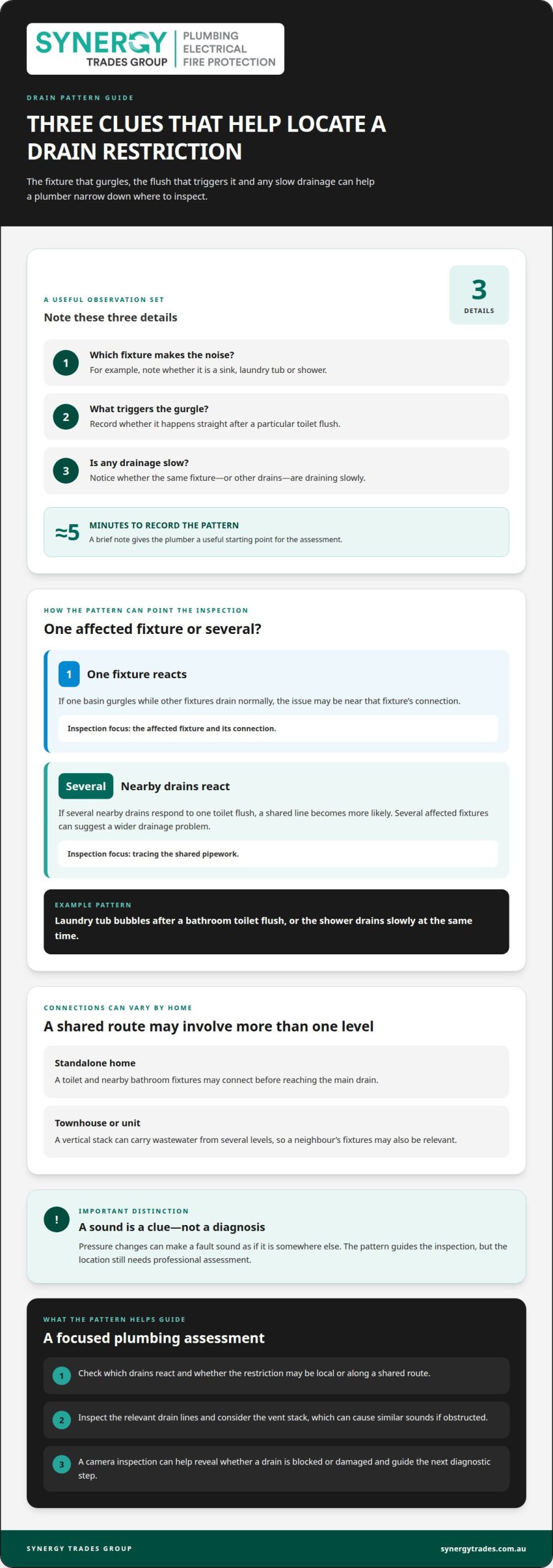
The fixture making the noise and the one triggering it can help narrow down where wastewater flow is restricted. A plumber also considers which drains are slow and whether the pattern affects one room or several.
Pressure Changes and Wastewater Flow
A toilet flush sends a surge of wastewater through connected pipes, changing pressure as the water moves. If a restriction limits the flow, air may be displaced or drawn through nearby fixtures, producing a gurgle. Timing matters: a sink that reacts immediately to a flush may share a drainage route with the toilet. A plumber uses that pattern to guide the inspection, rather than treating the noise as a diagnosis by itself.
Fixture Patterns and Restriction Location
Fixture patterns help show whether a restriction is local or affects a shared drain. If one basin gurgles while other fixtures drain normally, the problem may be near that fixture’s connection. If several nearby drains react to one toilet flush, a shared line becomes more likely. In units and townhouses, toilets and drains can feed into one vertical stack, so a neighbour’s fixtures may also be relevant.
A plumber considers three details: which fixture makes the noise, which fixture triggers it, and whether drainage is slow. Recording those observations takes about five minutes and gives the professional a useful starting point. For example, note whether the laundry tub bubbles after a bathroom toilet flush, or whether the shower drains slowly at the same time.
The pattern can help distinguish an isolated branch issue from a restriction further along the drainage route. One affected fixture directs the inspection towards its connection; several affected fixtures suggest tracing their shared pipework. The location still needs professional assessment, because pressure changes can make a fault sound as if it is somewhere else.
In a standalone home, a toilet and nearby bathroom fixtures may connect before reaching the main drain. In a townhouse, a vertical stack can carry wastewater from several levels. This affects which connections a plumber examines first. A clear account of the triggering flush and affected fixtures helps avoid overlooking a shared section.
When gurgling is frequent, drainage slows across several fixtures, or the affected pattern is spreading, arrange an assessment. Book a drain assessment so the fixture pattern can inform the inspection.
Warning signs of sewage backup and wider drainage problems
A gurgle can accompany a partial drain blockage or a blocked vent, but the sound alone doesn’t prove the sewer is blocked. Several affected fixtures, sewage odours or wastewater backing up make the pattern more concerning.
Signs of a Drain or Vent Problem
Drain and vent problems can cause bubbling, suction sounds, slow drainage and foul smells. A sink that gurgles each time the toilet flushes may have a partial blockage or vent restriction. If the toilet also drains slowly or another fixture starts reacting, the issue may affect more than one connection. These changes help a plumber distinguish a local symptom from a broader drainage problem.
Take sewage at an overflow relief gully or in a shower base seriously and arrange an inspection that day. If one fixture gurgles and drains slowly, book a plumber that week. Multiple fixtures backing up, frequent or worsening gurgling, or odours indoors call for prompt investigation. These signs can indicate a developing restriction, even before wastewater becomes visible in a room.
Renovation-Related Vent and Trap Problems
Gurgling that starts after a bathroom or kitchen renovation can point to a venting or grading fault in the new work, rather than a blockage. For example, a sink may start bubbling after a toilet flush even if it drained quietly before the renovation. The timing gives the plumber useful context, but inspection is needed to identify the cause.
Moving a fixture or changing its connection to the drain can alter how wastewater flows through the pipework. A plumber considers which fixtures are affected, when the noise began and what work was completed. This helps direct attention to the relevant branch, vent or pipe gradient instead of assuming every new gurgle has the same cause.
Diagnosing Persistent Drainage Problems
Persistent symptoms need diagnosis that considers both the drain and its venting. A plumber can assess the affected fixtures, check the vent stack, inspect drain lines with a camera, pressure test the system and assess the sewer line. These checks help narrow down whether the problem involves a local restriction, shared pipework, venting or damaged drainage.
Tell the plumber when the gurgling started, which fixtures are involved and whether wastewater has backed up. A toilet that triggers bubbling in a nearby basin, for instance, presents a different pattern from several slow drains throughout the home. If sewage has appeared at a gully or shower base, say where and when it occurred. These details help focus the inspection and determine the next step.
Camera inspection and drain diagnosis
A drain camera lets a plumber view the inside of a pipe when gurgling persists or keeps returning. The images can help locate a restriction and distinguish visible pipe damage from material obstructing the drain.
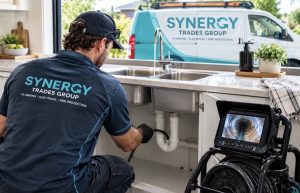
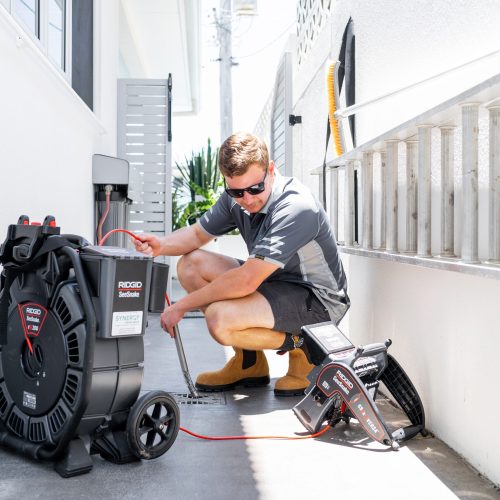
During an inspection, the plumber guides a camera through an accessible drain entry and watches its progress on a screen. The camera can show where wastewater flow meets an obstruction, rather than relying only on where a sound seems to come from. For example, a toilet may trigger bubbling at a basin while the restriction lies further along their shared pipe.
Camera footage can reveal a build-up, a crack or a joint that appears displaced. It may also show signs of roots entering a drain. The Institute for Sustainable Futures at the University of Technology Sydney identifies damaged, cracked and tree-root-invaded pipes as possible causes of blockages between a toilet and the main sewer. The camera helps the plumber assess what is visible inside the line.
The location can also be useful. When a blockage affects just one fixture, it is often in that fixture’s branch within a metre or two of its outlet. If the camera shows the branch is clear, the plumber can consider other parts of the drainage route. That prevents the initial noise from being treated as proof of a blockage at the nearest drain.
Camera inspection is one part of diagnosis, not a complete check of every plumbing component. A drain camera shows the pipe interior; it does not establish whether a sewer vent is obstructed. A plumber may also check the vent stack, assess the sewer line or pressure test the system. For instance, a clear drain image alongside persistent gurgling can make venting worth examining.
The findings guide the next step. A visible obstruction may need clearing, while a damaged section needs assessment before a suitable repair is chosen. If the camera shows a clear section but symptoms continue, the plumber can trace the connected pipework and consider whether the restriction lies elsewhere. The pipe’s condition and position influence which approach is appropriate.
For an inspection to answer a useful question, the plumber connects the camera findings with the reported symptoms. Details such as which fixture gurgles, what triggers it and whether wastewater drains slowly help narrow the search. For example, recurring noise after one toilet flush may direct attention to a branch or shared line. The camera then provides visual evidence to support the diagnosis.
Persistent gurgling deserves closer assessment when the cause is unclear, especially if drainage is also slowing. A camera inspection can help locate a restriction and show the pipe’s visible condition, giving the plumber a clearer basis for recommending the next step.
How toilet flushing affects drain airflow
A toilet flush moves water and air through connected drainage pipes at the same time. The way air moves helps explain why a flush can trigger noise at another fixture.
In an Australian home, a flush sends roughly 4.5 litres of water down the drain in a couple of seconds. This moving water occupies space in the pipe and pushes air ahead of it. Air behind the flow also needs to move as wastewater travels towards the sewer. A vent provides a route for that exchange, helping the system manage pressure as the flush passes.
If airflow cannot keep pace, pressure changes can draw air through a nearby sink or floor drain. That movement may disturb water in the fixture’s trap and create a brief gurgle. For example, a basin connected to the same drainage route may make a sound just after the toilet flushes, even though the basin itself has not been used.
A restriction can make the effect more noticeable. Wastewater may move unevenly past a partial blockage, trapping or displacing air along the way. A toilet trap can also collect a build-up that limits flow and traps air. The resulting bubbling is a clue about how water and air are interacting, but it doesn’t identify the exact fault.
Vent location and pipe layout matter, too. AS/NZS 3500.2 sets an allowable distance for an unvented waste run. If an unvented section exceeds the applicable allowance, airflow may not be managed as intended. A plumber considers the fixture connections and vent arrangement rather than judging the system from the sound alone.
In a unit or townhouse, several fixtures may connect to one vertical drain stack. A toilet flushing on one level can therefore affect airflow around a connected basin or another fixture. The pattern depends on how the plumbing branches meet, so the nearest noisy drain isn’t necessarily where the restriction is.
Flush-related gurgling is best understood as a signal of disturbed airflow or wastewater movement. One brief sound with normal drainage differs from recurring noise accompanied by slow fixtures. A plumber can assess the pipe route, venting and flow together to identify what is affecting the system.
If flushing repeatedly triggers gurgling, or drainage is slowing as well, arrange a professional assessment. Book a drain assessment to have the airflow and drainage issue investigated.
Synergy Trades Group: Blocked Drain Clearing
Synergy Trades Group provides Blocked Drain Clearing when recurring gurgling, slow drainage or wastewater backing up points to a drain restriction. A professional assessment can help identify whether clearing is appropriate, especially when several fixtures are affected or the noise keeps returning. Share which fixture makes the sound, what triggers it and whether drainage has changed. These details help clarify the problem and guide the next step. If the issue appears related to a blocked drain, Blocked Drain Clearing may be the right service. For help with a persistent drainage issue, contact Synergy Trades Group.
Choose a clear next step for your drainage
A drain gurgling when the toilet is flushed can be an early sign that the plumbing needs closer attention. If the sound keeps returning, note what triggers it and which fixtures are affected. This gives the plumber a practical starting point and helps connect the symptoms with the right checks.
Once the cause is understood, the next step can match the condition of the pipework. A restriction may need clearing, while a venting fault or damaged section calls for a different response. Don’t treat the sound alone as a diagnosis, particularly if drainage changes or sewage appears inside the home.
Synergy Trades Group also provides Hot Water System Repairs and RPZ Backflow Testing for other plumbing needs. For persistent gurgling or a suspected drain restriction, arrange a professional assessment with Synergy Trades Group. A clear diagnosis is a sensible first step towards getting your drainage working properly again.
Frequently Asked Questions
Why Is My Kitchen Sink Gurgling When I Flush the Toilet?
A kitchen sink that gurgles after a toilet flush may have a partial drain blockage or a blocked plumbing vent. The flush changes pressure in connected pipework, and the sink can become the route through which displaced air makes a noise. Note whether the kitchen sink also drains slowly or smells unusual. If the noise began after plumbing work, tell the plumber when it started, as that can help guide the investigation.
Why does a drain gurgle when the toilet is flushed?
A drain gurgling when the toilet is flushed can mean airflow or wastewater movement is disrupted. A restriction may trap air, while a vent that cannot supply air properly can alter pressure in connected pipes. The sound alone doesn’t show exactly where the cause lies. For example, a nearby basin may gurgle even though the restriction is further along the shared pipework, so diagnosis considers the connected fixtures and drainage route.
What does a gurgling toilet or sink mean if multiple drains are affected?
If multiple drains react, the issue may involve shared pipework rather than one fixture alone. In a unit or townhouse, drains from different fixtures or levels can connect to a vertical stack. A neighbour noticing similar symptoms may help establish whether the affected route serves multiple properties. Tell the plumber which drains are involved and what triggers each sound. This helps distinguish a local fixture issue from a wider drainage concern.
What safe checks can a plumber make for a gurgling drain before recommending repairs?
A plumber can compare the affected fixtures, check whether water drains slowly and inspect the relevant vent and drain routes. For persistent symptoms, checks may include a camera inspection, vent-stack check, pressure test or sewer-line assessment. These investigations help identify what needs attention before repair work is recommended. Plumbing repairs should be carried out by a fully licensed plumber, particularly when the cause involves concealed pipework or the sewer connection.
When is a gurgling drain an emergency, and what warning signs should I look for?
Sewage appearing at an overflow relief gully or in a shower base needs the drain looked at that day. Other warning signs include wastewater backing up, foul indoor odours, or several fixtures draining poorly. If sewer odour is indoors, ventilate the room and refill traps by running every tap for 30 seconds while the cause is investigated. On the Sunshine Coast, give the plumber clear details about where sewage or odours appeared.