Could your Sunshine Coast business survive a sudden, three-day closure simply because a hidden pipe burst under the concrete slab? For many local operators, the true cost of commercial plumbing maintenance isn’t the service fee; it’s the price of ignoring it until an emergency strikes. You’ve worked hard to build your reputation, yet a single undetected leak or a failed backflow valve can lead to skyrocketing water bills and stressful compliance audits.
We understand that keeping track of the latest Queensland Plumbing and Wastewater Code updates feels like a complex task on top of your daily operations. It’s frustrating to face unexpected repair bills that drain your monthly budget. This guide is designed to take that weight off your shoulders. You’ll discover how a proactive maintenance programme protects your assets, ensures you meet the latest lead-free requirements, and keeps your annual backflow certification up to date. We’ll walk through exactly what your facility needs to stay compliant and reliable, helping you lower long-term costs while securing total peace of mind.
Key Takeaways
- Understand your legal obligations under AS/NZS 3500 and why annual RPZ backflow testing is a non-negotiable requirement for Sunshine Coast businesses.
- Discover how a structured commercial plumbing maintenance programme prevents expensive emergency repairs and protects your bottom line from unexpected downtime.
- Learn to spot the hidden costs of reactive ‘break-fix’ plumbing, including lost revenue and high water bills caused by undetected leaks.
- Identify the essential components of a professional maintenance schedule that ensures your hot water systems and drains remain in peak condition.
- Find out how a local, family-owned partner provides the personal accountability and technical expertise needed to maintain coastal commercial properties.
What is Commercial Plumbing Maintenance and Why Does it Matter?
Commercial plumbing maintenance isn’t just about fixing a leaky tap when it becomes a nuisance. It’s a structured, proactive programme of inspections, testing, and minor repairs designed to keep a business facility running without interruption. Unlike a house, where a blocked toilet is a localised inconvenience, a failure in a commercial setting can shut down a whole floor of offices or force a restaurant to stop serving customers. These plumbing systems are the lifeblood of your building, and they require a different level of care than the pipes in your home.
Commercial properties deal with significantly higher usage volumes. A shopping centre or industrial park might see more water flow in a single afternoon than a suburban household uses in a month. This constant stress on valves, pumps, and seals means that wear and tear happens at an accelerated rate. Professional oversight ensures that small issues are caught before they turn into major structural damage or health hazards. It’s about being proactive rather than reactive.
As a business owner or property manager, you have a clear ‘duty of care’ to provide a safe and hygienic environment for tenants, employees, and the public. Meeting this responsibility requires more than just a quick visual check. By investing in regular oversight, you’re also extending the lifespan of expensive assets like hot water plants and backflow prevention devices. It’s the difference between replacing a minor component today or being forced into a full system overhaul years earlier than expected. Consistent care preserves the value of your property and protects your bottom line.
The Core Objectives of a Maintenance Programme
The primary goal is to prevent catastrophic failures that halt your operations. A burst main or a major sewer backup doesn’t just cost money to fix; it costs you reputation and revenue. Effective commercial plumbing maintenance helps you stay on the right side of Queensland health and safety regulations, particularly regarding drinking water quality and backflow prevention. Additionally, tuning your systems regularly reduces water wastage. Even a small, undetected leak can add thousands to your annual water bill if it isn’t identified and repaired promptly.
Common Commercial Plumbing Risks in Sunshine Coast Properties
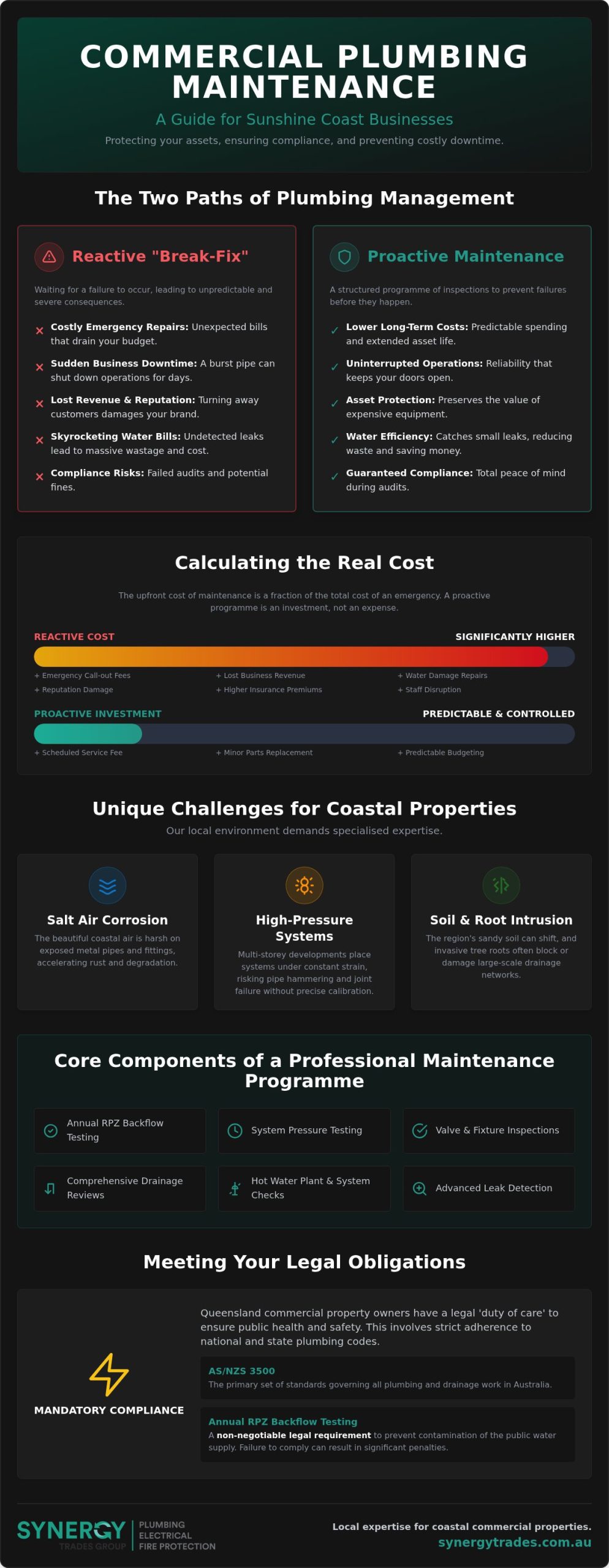
Our local environment presents unique challenges that require specific expertise. The salt air that makes the Sunshine Coast so beautiful is incredibly harsh on exposed metalwork, leading to rapid corrosion of pipes and fittings. In our newer multi-storey developments, high-pressure systems are under constant strain, requiring precise calibration to avoid pipe hammering or joint failure. Below the ground, the region’s sandy soil can shift, while aggressive tree roots often seek out the moisture in large-scale drainage networks, causing blockages that standard residential equipment simply cannot clear.
Essential Components of a Professional Maintenance Schedule
A professional commercial plumbing maintenance schedule is more than a simple checklist; it’s a strategic plan to protect your infrastructure. Every building has unique needs, but a standard programme usually includes pressure testing, valve inspections, and drainage reviews. By identifying small drips or slight pressure drops early, you avoid the massive expense of a midnight emergency. These inspections provide the data needed to make informed decisions about your property’s future.
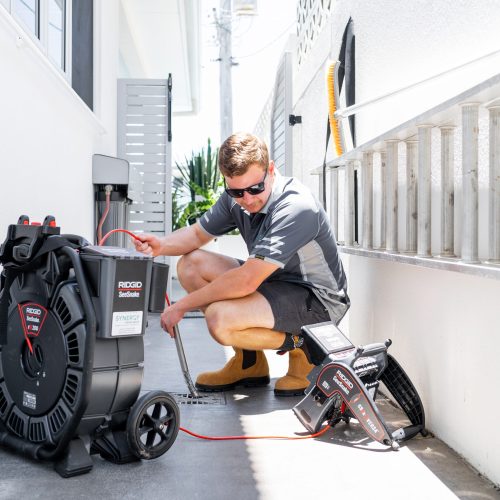
In modern commercial plant rooms and kitchens, the lines between trades often blur. A commercial hot water plant or a specialised pump system relies on both sound hydraulics and safe electrical connections. This is where a holistic approach becomes invaluable. We utilise advanced technology like thermal imaging to detect hidden water leaks or electrical hotspots without needing to cut into your walls. This non-invasive method provides a clear picture of your system’s health, allowing for precise repairs rather than guesswork. If you want to ensure your facility remains safe and efficient, our team can provide licensed RPZ backflow testing and comprehensive plumbing oversight.
RPZ Backflow Prevention and Annual Testing
RPZ valves, or Reduced Pressure Zone devices, are the gatekeepers of our local water quality. They prevent non-potable water, chemicals, or bacteria from siphoning back into the Sunshine Coast’s clean water supply. Because the risk to public health is high, annual testing is a strict legal requirement under Section 101 of the Plumbing and Drainage Regulation 2019. The Sunshine Coast Council maintains a rigorous register of these devices, and property owners are responsible for ensuring reports are submitted on time. Our team takes care of the entire process, from the physical test to the digital submission, so you don’t have to worry about council notices or legal liabilities.
Commercial Hot Water Systems and Drainage
Hot water is a non-negotiable for most businesses, especially in the hospitality and health sectors. Large electric and gas units face constant internal pressure and mineral buildup. Effective commercial plumbing maintenance involves checking sacrificial anodes, which protect the tank from corrosion, and testing temperature pressure relief valves. Neglecting these small components often leads to total tank failure and significant property damage.
Drainage is equally critical in high-traffic retail or food service environments. A proactive approach includes regular clearing of grease traps and waste lines to prevent the dreaded ‘Friday night backup’. We also focus on TMV testing; Thermostatic Mixing Valves are mandatory safety devices that mix hot and cold water to a specific temperature, ensuring customers and staff aren’t at risk of scalding in commercial bathrooms.
Reactive vs. Preventive Maintenance: Calculating the Real Cost
Operating a business involves managing risks, and your plumbing is often one of the largest unmanaged liabilities on the balance sheet. Many Sunshine Coast operators rely on a ‘break-fix’ model, only calling for help when a floor is flooding or the hot water stops. While this might seem to save money in the short term, it’s a high-stakes gamble. A reactive approach ignores the slow, silent degradation of your infrastructure, leading to inevitable failures at the worst possible moments.
A planned commercial plumbing maintenance agreement transforms these unpredictable disasters into manageable, fixed annual expenses. When you wait for a failure, you’re not just paying for the repair. You’re paying premium emergency call-out rates, which can be significantly higher than standard service fees. You’re also paying for the urgency of the situation, often without the luxury of comparing quotes or scheduling the work during off-peak hours. Preventive care ensures that your systems are tuned and tested during normal business hours, keeping your overheads stable and your stress levels low.
The Cost of Business Interruption
The most devastating cost of reactive plumbing isn’t the plumber’s invoice; it’s the lost revenue from a forced closure. If a burst pipe causes a three-day shutdown, a local cafe or retail store faces a total loss of income while staff costs and rent continue to accrue. For strata managers and commercial landlords, reliability is a key driver of tenant retention. Constant service interruptions lead to frustrated tenants and potential lease terminations. Additionally, many insurance providers now require proof of documented maintenance. If you cannot demonstrate that you’ve fulfilled your duty of care through regular inspections, your claim for water damage might be significantly more difficult to process.
Long-Term Asset Protection
Think of your commercial hot water plant as the heart of your building’s hygiene system. These units are significant capital investments. Comparing the cost of a decade of professional servicing against the price of a full emergency replacement shows a clear financial winner. Regular maintenance allows for the early identification of small issues before they compromise the entire system. For example, expert Water Leak Detection Sunshine Coast services can identify pinhole leaks in a wall cavity long before they cause structural rot or toxic mould growth. By catching these problems early, you’re not just fixing a pipe; you’re preserving the structural integrity and the resale value of your commercial property.
Key Compliance Standards and Your Legal Responsibilities
Compliance isn’t just a box-ticking exercise; it’s a legal shield for your business. The primary framework governing our work is AS/NZS 3500, which sets the national standard for plumbing and drainage across Australia. For Sunshine Coast business owners, staying aligned with these rules ensures that every tap, valve, and drain operates safely and reliably. A key part of commercial plumbing maintenance involves staying ahead of recent changes, such as the full implementation of lead-free product mandates as of May 2026. This regulation requires all fixtures in contact with drinking water to contain no more than 0.25% lead, a vital step for public health that requires professional verification.
Property owners also carry specific responsibilities for backflow prevention and fire service maintenance. If your facility has a testable backflow device, you’re legally required to have it inspected annually by an endorsed plumber. Failing to keep these records up to date can lead to significant penalties from the Sunshine Coast Council. To pass a health department or council audit, you need a clear paper trail of all testing and repairs. This documentation proves you’ve met your duty of care and helps protect you from legal liabilities if a system failure occurs. It’s about having the right evidence ready before an auditor walks through the door.
Understanding the Queensland Plumbing and Drainage Act
The Plumbing and Drainage Act 2018 and its 2019 regulations are the foundation of site safety in Queensland. Facility managers must ensure that all work is performed by licensed professionals and that compliance certificates are issued for any major changes. Penalties for non-compliance can be severe, potentially impacting your business insurance or your license to operate. Additionally, for commercial dwellings, the 2026 standards for smoke alarm interconnectedness are now in full effect, requiring all alarms to be linked so that if one triggers, they all sound throughout the building.
Risk Mitigation and Safety Switches
In a commercial plant room, water and electricity often live side-by-side. This proximity makes electrical safety a critical component of your overall maintenance strategy. Safety switches are your primary defence, designed to cut power in milliseconds if a fault is detected. These devices protect your staff from electric shocks and reduce the risk of electrical fires caused by moisture ingress or equipment failure. Ensuring your switchboard is up to code is just as important as checking your pipes. If your commercial property’s RCD protection needs reviewing, understanding the requirements for safety switch installation Sunshine Coast businesses must meet under the Electrical Safety Regulation 2026 is an essential first step. For comprehensive support with your site’s electrical compliance, you can rely on our team as a Commercial Electrician Sunshine Coast to keep your facility safe.
If you’re unsure whether your site meets the latest Queensland safety standards, we can help you conduct a thorough audit. Book a compliance review with our expert team today to secure your peace of mind and protect your business assets.
Choosing a Local Partner for Reliable Commercial Maintenance
Choosing the right partner for your commercial plumbing maintenance is as much about trust as it is about technical skill. On the Sunshine Coast, local knowledge isn’t a luxury; it’s a necessity. A technician who understands our unique coastal conditions knows exactly how the salt air corrodes hot water units or how our specific soil types impact drainage networks. This regional expertise allows for more accurate preventive measures, saving you from the “trial and error” approach that often leads to mounting costs and recurring issues.
At Synergy Trades Group, we bring a family-owned perspective to every project. This means you get a level of personal accountability that larger, faceless corporations simply can’t match. With over 70 years of combined industry experience, our team provides faster diagnostics and more efficient repairs. We’ve likely already solved the exact problem your building is facing. The “Synergy” advantage also simplifies your management tasks. Instead of juggling multiple contractors and separate invoices, you have one reliable point of contact for both plumbing and electrical compliance. This integrated approach ensures that no detail falls through the gaps between trades.
What to Look for in a Commercial Maintenance Contract
A solid agreement should be built on transparency and clarity. When you’re reviewing a potential partner for a long-term commercial plumbing maintenance programme, look for these essential elements:
- Detailed Reporting: You should receive a comprehensive report after every site visit, documenting exactly what was checked and what needs attention.
- Licencing Verification: Ensure your provider is specifically endorsed for technical tasks such as RPZ backflow testing or specialised bidet supply and installation.
- Flexible Scheduling: Maintenance shouldn’t hurt your trade. We organise our visits to ensure minimal disruption to your staff and customers.
- Predictable Pricing: Avoid contracts with hidden fees or vague service charges that make budgeting difficult.
Get Started with a Site Audit
The first step toward a more reliable facility is a comprehensive site audit. We don’t believe in one-size-fits-all solutions. Our team will perform a thorough assessment of your existing plumbing and electrical assets, identifying immediate risks and long-term needs. From this data, we create a bespoke maintenance calendar tailored specifically to your site’s usage patterns and equipment age. This organised plan takes the guesswork out of compliance, letting you focus on running your business while we handle the technical details.
Ready to secure your property’s future? Contact Synergy Trades Group for a commercial maintenance audit and discover the peace of mind that comes with a truly professional partner.
Take Control of Your Facility’s Future
Protecting your Sunshine Coast business requires more than just reacting to leaks as they happen. It’s about building a foundation of reliability that keeps your doors open and your customers safe. By shifting from a “break-fix” mindset to a structured programme of commercial plumbing maintenance, you transform unpredictable emergency costs into a stable, manageable annual investment. You also ensure your property remains fully compliant with Queensland’s strict health and safety regulations, from annual backflow testing to the latest lead-free standards.
As a family-owned business with over 70 years of combined industry expertise, we understand the unique challenges of coastal property management. Our team of licensed RPZ backflow testing specialists is here to guide you through every compliance hurdle with transparency and care. We take pride in being a dependable local partner that values your peace of mind as much as technical proficiency. We’re ready to help you simplify your facility management through our integrated plumbing and electrical oversight.
Secure your business with a professional maintenance audit from Synergy Trades Group. Let’s work together to keep your operations running smoothly and efficiently for years to come.
Frequently Asked Questions
How often should my business have its plumbing inspected?
Most Sunshine Coast businesses should schedule a comprehensive plumbing inspection at least once every twelve months. High-usage environments like commercial kitchens or busy retail centres often benefit from more frequent quarterly checks of their grease traps and drainage systems. Regular oversight allows you to identify minor wear and tear before it results in a costly system failure or an unexpected business closure.
Is RPZ backflow testing a legal requirement every year?
Yes, annual testing of all testable backflow prevention devices is a mandatory requirement under Section 101 of the Plumbing and Drainage Regulation 2019. The Sunshine Coast Council requires these results to be submitted by an endorsed licensed professional to ensure the local drinking water remains safe from contamination. Failing to complete this test can lead to council fines and significant health risks for your facility.
What are the most common commercial plumbing emergencies on the Sunshine Coast?
We frequently see blocked main drains caused by grease buildup or aggressive tree root intrusion, especially in older coastal properties. Burst pipes due to salt-air corrosion and sudden hot water system failures are also common issues for local operators. These emergencies often occur at the most inconvenient times, which is why proactive commercial plumbing maintenance is so valuable for minimising downtime.
Can one company handle both my plumbing and electrical compliance?
Yes, choosing a multi-trade partner like Synergy Trades Group allows you to manage both plumbing and electrical compliance through a single point of contact. This integrated approach is particularly useful for plant rooms where water systems and electrical switchboards operate in close proximity. It simplifies your administrative work and ensures that all safety standards are met across both trades simultaneously without the need for multiple contractors.
How much does a commercial plumbing maintenance plan typically cost?
The cost of a commercial plumbing maintenance plan varies depending on the size of your facility and the complexity of your infrastructure. Factors such as the number of backflow devices, the scale of your hot water plant, and the frequency of required inspections will influence the final agreement. We recommend a professional site audit to establish a bespoke schedule that fits your specific operational needs and your annual budget.
What documentation do I need to keep for my plumbing compliance audit?
You should maintain a dedicated file containing all Form 9 backflow test reports, TMV commissioning data, and hot water service logs. It’s also important to keep records of any professional leak detection or drain clearing work performed on the site. Having these documents organised and readily available ensures you can quickly satisfy a local council or health department auditor during a surprise site inspection.
How does preventive maintenance help lower my commercial water bill?
Preventive care identifies hidden leaks and faulty valves that can waste thousands of litres of water every month. By ensuring your cisterns don’t run and your taps don’t drip, you significantly reduce unnecessary consumption and the resulting high bills. Additionally, regular tuning of your hot water system improves overall energy efficiency, which helps to lower your total utility expenses across the financial year.
What happens if my business fails a backflow prevention audit?
If your device fails or you miss the annual testing deadline, the Sunshine Coast Council will typically issue a formal non-compliance notice. You’ll be given a specific timeframe to rectify the issue through professional repair or replacement by a licensed plumber. Ignoring these notices can result in substantial fines and, in extreme cases, the council may disconnect your water supply to prevent contamination of the public network.