Annual testing is the rule for testable backflow devices in Queensland. The answer to how often backflow devices should be tested in Qld is at least once every calendar year, including for properties in Brisbane.
Testing is more than a routine plumbing check: it confirms whether a device can stop contaminated water flowing back into the drinking water supply. Knowing which devices need testing and what the test involves makes the requirement easier to manage.
This guide explains what happens during a backflow test, which devices are testable in Queensland, and what owners need to know about testing and reporting. It also outlines how Brisbane’s backflow prevention program supports regular testing and helps protect the local water supply.
Key Takeaways
- In Queensland, testable backflow devices need testing at least once every calendar year; Brisbane owners must arrange testing by 31 December.
- After a test, the plumber must provide the Form 9 report to the council and property owner within 10 business days.
- Brisbane requires each testable device to be registered, and new devices are registered using Form 9.
- Backflow prevention helps stop contaminated water entering the drinking water supply when water pressure changes.
- Synergy Trades Group provides RPZ Backflow Testing for properties that need this specialist service.
Which Devices Are Testable in Queensland?
Queensland’s rules apply to testable backflow prevention devices registered with the local council. Owners must arrange testing at least once every calendar year. In Brisbane, that means completing the test within the calendar year, from 1 January to 31 December. A council notice helps identify a registered device and its testing requirement; it doesn’t replace the owner’s responsibility to arrange testing.
The Plumbing and Drainage Act 2018 and Plumbing and Drainage Regulation 2019 set the framework for Brisbane’s program. Under section 38 of the Standard Plumbing and Drainage Regulation, Queensland councils must run programs for registering, maintaining and testing testable devices. Owners must register installed testable devices with their local government. The Plumbing and Drainage Act also allows local governments to require inspection, testing, repair or replacement by a licensed person entitled to do the work.
Backflow testing must be carried out by a licensed plumber. The testing method is set by AS/NZS 2845.3:2020, and Queensland plumbers’ backflow prevention endorsements must be revalidated every five years. For owners, the practical step is to arrange testing by a licensed plumber qualified for backflow work and keep to the council’s annual cycle. A device that fails its test may need repair or replacement before it can reliably perform its protective role.
Annual testing is the baseline, but some circumstances call for an additional test. Significant plumbing or water-system modifications may affect the device or the risk it controls. High-risk commercial or industrial settings may also need more frequent testing. The timing depends on the change or risk at the premises, not just the usual annual reminder. A newly installed or replaced testable device also requires a commissioning test.
Brisbane City Council issues annual registration fee notices and testing reminders at the start of each year, typically in late February or early March. It also sends reminders throughout the year. Ipswich City Council, Redland City Council and Moreton Bay City Council issue reminders monthly. Notice schedules differ, but the annual testing requirement remains important. In Queensland, failing to register a testable device or have it tested each year carries a maximum penalty of 20 penalty units for each offence. A reminder is useful, but owners should ensure the required test is completed within the applicable period.
What is backflow testing?
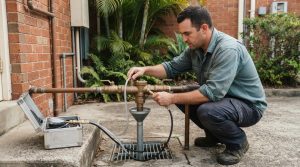
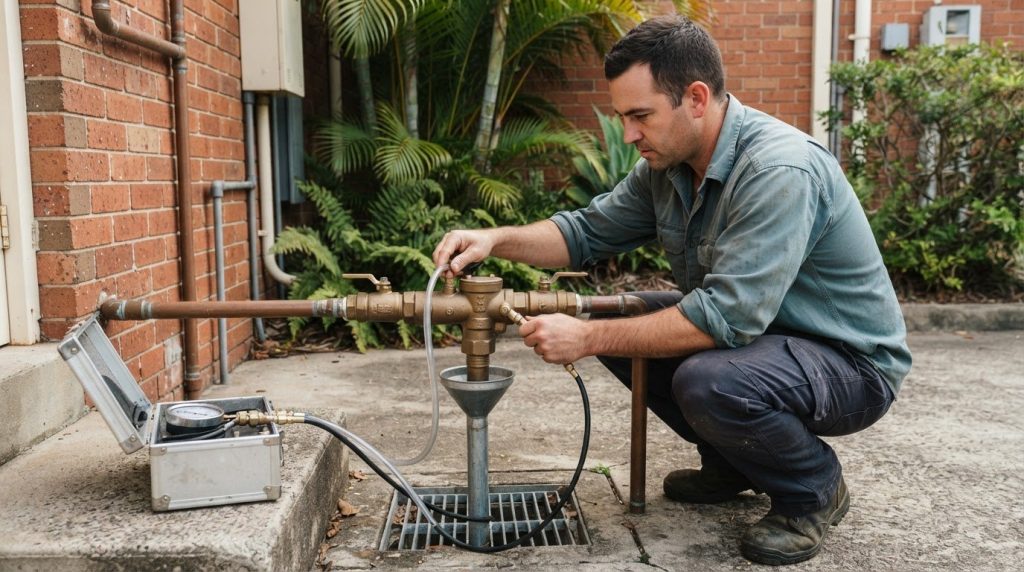
Backflow testing checks whether a testable device can prevent water from reversing direction and entering the drinking water supply. A licensed plumber assesses the device using the prescribed testing method, AS/NZS 2845.3:2020. The test result shows whether the device is functioning as intended or needs attention. For a property owner, the report is an important record: it documents the test outcome and supports council compliance.
In Queensland, the plumber provides a Form 9 test report to both the local council and the property owner within 10 business days of testing. The report records the result for the specific device, so the council can track whether its testing requirement has been met. In Brisbane, the report must also be lodged with Brisbane City Council after the test. A completed test without the required report may leave the council without evidence of compliance.
Only a licensed plumber can perform a backflow test and submit the necessary paperwork to the local council. This is different from installing, replacing or removing a testable backflow prevention device, which is notifiable work. For that work, the plumber must lodge Form 4 with the Queensland Building and Construction Commission. Form 9 records a test; Form 4 relates to the installation, replacement or removal work.
Registration and testing are separate responsibilities. Failing to register a testable device or have it tested each year can attract penalties. In Brisbane, a late or missing test report can also lead to fines or a compliance notice. The registration fee notice and the test report serve different purposes: paying the fee doesn’t demonstrate that the device passed its test. Owners need both current registration and the required testing record.
If a device fails, arrange prompt repair or replacement through a fully licensed plumber. A failed result means the device has not met the test requirements, and the report identifies the need for further work. After repair or replacement, the device needs the relevant testing, including a commissioning test for a newly installed or replaced testable device. Keep the test result and follow-up report together for a clear record.
If a test or report is due, you can arrange a backflow test and keep the council paperwork on track.
Brisbane’s backflow prevention program and device register
Local councils track testable backflow devices and check owners’ compliance. Their registers connect each device with the property responsible for its upkeep.
Properties requiring backflow prevention
Queensland rules require an appropriate backflow prevention device where plumbing could pollute a property’s water supply or the water service provider’s supply. This can matter wherever a property’s plumbing creates a potential connection between drinking water and contaminated water. Section 36 of the Standard Plumbing and Drainage Regulation sets this requirement. The risk at the premises helps determine the appropriate prevention measure.
Registration makes a testable device visible in the local council’s program. It allows the council to track registered devices and follow up on testing requirements. The register also supports audits and investigations into whether owners are meeting program requirements. A device connected with a property should remain registered while the premises remain in place.
Queensland local governments must maintain programs for registering, maintaining and testing testable backflow prevention devices under section 38 of the Standard Plumbing and Drainage Regulation. Owners must register installed testable devices with their local government. In Brisbane, the Backflow Prevention Program operates under the Plumbing and Drainage Act 2018 and the Plumbing and Drainage Regulation 2019. The program was created in January 2019.
When a new testable device is installed in Brisbane, the owner must register it with Council using Form 9. Owners must also pay an annual registration fee for each testable device. Registration and testing records have separate roles: the register identifies devices at a property, while a test report records the outcome of a test. Council notices and audits help connect those records to the premises.
Devices and air gaps
Backflow prevention devices help stop contaminated water flowing backwards into the drinking water supply. Valves are installed at points in a plumbing system where contamination could enter. An air gap is another prevention measure, used in some water storage arrangements. The appropriate measure depends on the plumbing application and potential contamination risk.
For example, a testable device is recorded and monitored through the council program, while an air gap prevents backflow by separating water in a storage arrangement. These are different measures, not two names for the same device. Council registers track testable backflow prevention devices, and Queensland rules require an appropriate prevention measure where premises plumbing could pollute a water supply.
A local council may audit or investigate devices to assess whether property owners meet its requirements. Device notices remain on the register until the premises are demolished or removed. The record is therefore tied to the premises, not just to a one-off test. Accurate registration helps the council maintain its records and administer its program.

Backflow and drinking-water contamination
Backflow can carry contaminated water into a property’s pipes or the wider water supply. A functioning prevention device helps keep drinking water separate from potential contaminants.
Risks to health and water quality
Backflow is a public health risk because pollutants or contaminants from a property can enter drinking water. For example, contaminated water connected to plumbing could flow into other pipes if the water reverses direction. This can affect water quality beyond the source of contamination, making prevention important for both the property and the wider supply.
Changes in water pressure can create conditions for backflow. An unexpected pressure drop may allow contaminated water from the ground or a faulty supply to enter pipes. A water main break or high demand at a water source can also cause backflow. These events show why a testable device must work when pressure changes, not only under ordinary conditions.
Contamination risks depend on the plumbing and the water connected to it. Premises plumbing that could pollute the property’s supply or the water service provider’s supply needs an appropriate prevention measure. A valve may be installed where contaminated water could enter the plumbing system. Its location matters because it determines which part of the water supply the device protects.
Device maintenance and water quality
Maintenance helps keep a backflow prevention device ready to stop water reversing direction. Testing checks whether a testable device is functioning correctly; it is not a laboratory test of drinking-water quality. The distinction matters: the test checks the protective device, while water quality concerns the water itself. A device that fails its test needs prompt attention to restore its intended protection.
Backflow prevention valves are installed where contamination could enter a plumbing system. Air gaps can also help maintain separation in water storage arrangements. These measures work differently, but both help protect water from contamination. The suitable approach depends on the plumbing application and the potential contamination risk at the premises.
For property owners, the practical step is to maintain testable devices and keep testing current. If plumbing or a water system is modified, the change may affect how the device protects the supply. Significant modifications may require an additional test. A fully licensed plumber can assess the device and identify whether repair or replacement is needed after a failed test.
Protecting drinking water depends on both the device and the plumbing around it. A faulty supply, pressure drop or water main break can create conditions for backflow, while a functioning prevention measure helps block reverse flow. Regular attention to a testable device helps maintain its protective role and reduce the chance of contaminated water entering pipes connected to the drinking-water supply.
Need a backflow test?
In Brisbane, owners must arrange testing within the calendar year, from 1 January to 31 December. The licensed plumber carries out the test and completes the Form 9 report. That report gives the local council and property owner a record of the test outcome. The reporting deadline matters as much as the test itself: an assessment that isn’t reported may leave council without evidence that the requirement has been met.
After testing, the plumber must provide the Form 9 report to both the council and the owner within 10 business days. In Brisbane, the report must also be lodged with Brisbane City Council. The plumber’s reporting role helps connect the result to the council’s device register. Owners should allow enough time for testing and reporting before the calendar-year deadline, rather than relying on a reminder arriving close to year-end.
A testing reminder supports the process, but responsibility remains with the owner. Local councils issue reminders during the year, alongside annual registration fee notices. The notices serve different purposes: registration keeps the device recorded in the council’s program, while a test report records the result of an actual inspection. Paying a registration fee alone does not meet testing and reporting requirements.
Late or missing reports can lead to penalties, including fines or compliance notices. Treat the report as part of completing the test, not optional paperwork. A clear record should identify the device and show the test result. If several devices are registered at a property, account for each device’s test and report in the council process.
Only a licensed plumber can perform backflow testing and submit the necessary paperwork to the local council. The testing method follows AS/NZS 2845.3:2020. If the device fails, the report makes the result clear, and the device should be repaired or replaced promptly. A newly installed or replaced testable device also requires a commissioning test, followed by the relevant reporting.
To keep the process on track, connect the council reminder with the testing date, report deadline and annual registration record. If plumbing or a water system has been significantly modified, an additional test may be needed. These steps help prevent a gap between arranging a test and the council receiving its report.
If your Sunshine Coast property needs backflow testing, book a test and keep the testing process moving.
Synergy Trades Group: RPZ Backflow Testing
Synergy Trades Group provides RPZ Backflow Testing for property owners who need a testable RPZ device assessed and its testing requirements addressed. Arrange testing as the annual council deadline approaches, after significant plumbing or water-system modifications, or when a device has failed a previous test and needs follow-up.
A fully licensed plumber performs the test and completes the relevant reporting process. If the device fails, prompt repair or replacement may be needed to restore its protective function. Keep the test report with your property records to track the result and the next testing cycle.
For other plumbing needs, Synergy Trades Group also offers Hot Water System Repairs, Blocked Drain Clearing and Bidet Supply & Installation. Contact Synergy Trades Group to arrange RPZ Backflow Testing for your Sunshine Coast property.
Make testing part of your property plan
Backflow maintenance is easier to manage when it has a clear place in your property’s regular upkeep. Add the device to your maintenance calendar, note who coordinates plumbing work, and keep records accessible to the people responsible for the premises. This is especially useful when property management changes or plumbing work is planned, as continuity helps prevent the device from being overlooked.
Knowing how often backflow devices should be tested in Qld is a useful starting point. Next, make sure responsibility for arranging the test is clear rather than relying on a reminder to reach the right person. A simple handover note can identify the device and the person managing its ongoing testing, helping keep future maintenance organised.
For support with the next step, contact Synergy Trades Group about testing. A clear plan helps you stay on top of this important part of property maintenance.
Frequently Asked Questions
How often does backflow need to be tested in Queensland?
Testable backflow devices in Queensland need testing at least once each calendar year. Treat the calendar year as the compliance period, rather than counting twelve months from the previous test date. For example, a test completed early in one year doesn’t remove the need for testing during the next calendar year. Brisbane owners should also plan around the council’s 31 December deadline.
What happens if you skip the annual test?
Skipping a required test can leave an owner without evidence that the device has been checked and may lead to penalties or a council compliance notice. It also means a fault could go undetected while the device is expected to protect the water supply. If a test has been missed, arrange it promptly and ensure the report is submitted through the relevant council process.
How often must backflow prevention devices be tested in Queensland?
At least annually. If you’re asking how often backflow devices should be tested in Qld, the key point is that each calendar year needs a test, not merely a test every twelve months from the last appointment. In Brisbane, owners must have testing completed by 31 December. A newly installed or replaced testable device also needs a commissioning test, separate from its ongoing testing cycle.
Do testing intervals vary by backflow device type or hazard rating in Queensland?
The annual cycle applies to testable devices, but higher-risk circumstances can call for more frequent testing. High-risk commercial or industrial premises may need additional attention, and substantial plumbing or water-system modifications may prompt another test. Consider the risk the device manages and whether changes could affect its function. A fully licensed plumber can assess the device and premises during testing.
Who is qualified to test and certify a backflow prevention device in Queensland?
A licensed plumber with the appropriate backflow prevention testing endorsement performs the test and completes the required report. The plumber records the result on Form 9 and submits it to the council and property owner. The endorsement must be revalidated every five years. Owners should ensure the testing and reporting are handled by a plumber qualified for this specific work, not by general property maintenance staff.
What are the backflow testing requirements for residential, commercial and industrial properties in Queensland?
Where a property has a testable backflow device, the owner must meet the applicable registration and testing requirements. Annual testing applies across residential and commercial properties in Queensland; high-risk commercial or industrial settings may require more frequent tests. A device is required where premises plumbing could pollute the property’s water supply or the provider’s service. The local council administers the program for its area.
What happens if a backflow device fails its test in Queensland?
A failed test means the device needs prompt attention. Arrange repair or replacement so it can perform its protective function; a fully licensed plumber can advise on the work required based on the test result. If the device is replaced, a commissioning test is required. The relevant report should document the outcome and follow-up testing, giving the owner and council a clear record of the device’s status.
What penalties apply for missing a required backflow test in Queensland?
Failing to register a testable device or have it tested each year carries a maximum penalty of 20 penalty units for each offence. From 1 July 2026, a Queensland penalty unit is A$172.70, making the maximum A$3,454 per offence. Missing a required report can also lead to fines or a compliance notice. Keeping registration, testing and reporting current helps owners avoid these enforcement issues.