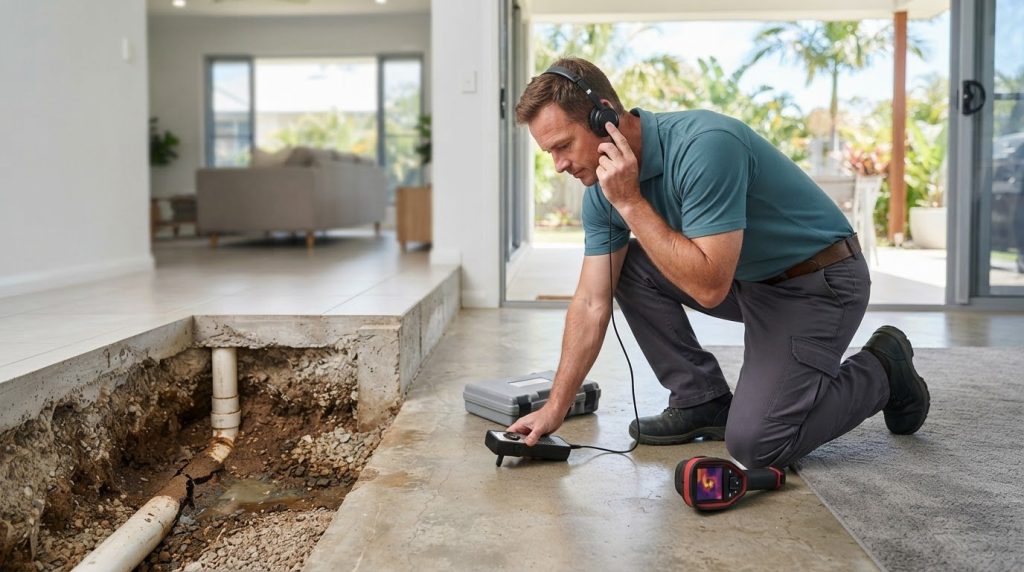
A leak beneath concrete may not show where water is escaping. Detecting water leaks under concrete starts with clues such as damp flooring, unusual warmth or changes in water pressure. Pressure testing, acoustic detection and thermal imaging can then help narrow down the source, so the problem can be investigated before deciding on a repair.
If you’ve noticed a damp patch or unexplained water use, you’ll want to understand what’s happening without unnecessary disruption. This article covers visible and hidden warning signs, common causes of leaks beneath a slab and how testing can help locate them. It also explains possible repair approaches, which depend on the pipe’s condition and location.
Key Takeaways
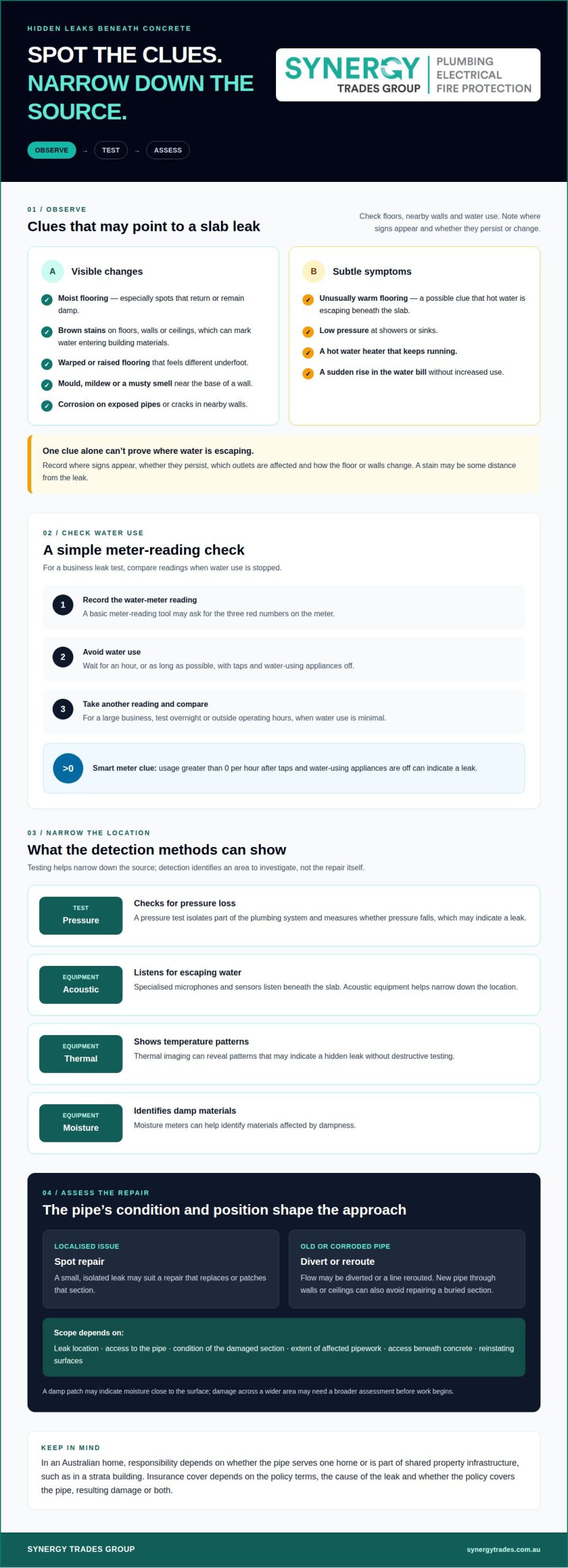
- Notice damp flooring, warm patches, musty smells or unexplained changes in water use, as these can point to a leak beneath a slab.
- Understand how pressure testing, thermal imaging and acoustic detection can help narrow down a hidden leak’s location.
- Learn why ageing or poorly fitted pipes, shifting soil and excessive water pressure can contribute to leaks under concrete.
- See how the pipe’s condition and position can shape the repair approach, from a localised fix to rerouting.
- Find out when hot water system repairs may be relevant and how Synergy Trades Group can help with that plumbing issue.
What about hidden leaks?
A pipe beneath a concrete slab can leak out of sight. To locate the fault, a plumber can compare meter readings, test the plumbing and use detection equipment to narrow down the source.
For a business leak test, record the water-meter reading, avoid water use for an hour or as long as possible, then take another reading. For a large business, test overnight or outside operating hours, when water use is minimal. A basic meter-reading tool may ask for the three red numbers on the meter. With a smart meter, usage greater than 0 per hour after taps and water-using appliances are off can indicate a leak.
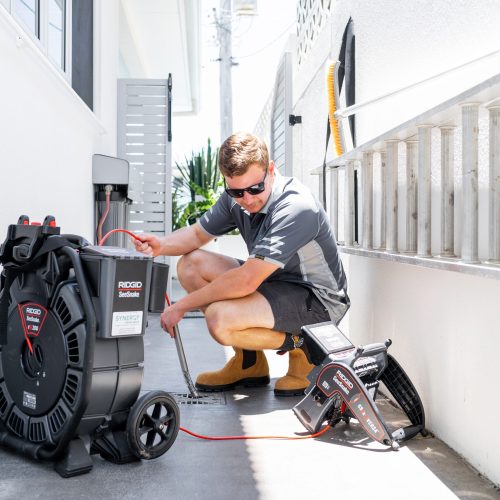
Electronic leak detection uses specialised microphones and sensors to listen for water escaping beneath the slab. Acoustic equipment helps narrow down the location, while moisture meters can identify damp materials. Thermal imaging can reveal temperature patterns that may indicate a hidden leak without destructive testing. A pressure test isolates part of the plumbing system and measures whether pressure falls, which may indicate a leak.
When choosing a leak detection service, look for testing suited to the plumbing layout and the signs you’ve noticed. A pressure test can show whether an isolated section is losing pressure, while acoustic equipment can help narrow down where water is escaping. Ask for a clear explanation of the findings, the suspected location and how they inform the next step. Detection identifies an area to investigate; it does not determine the repair on its own.
Assessing slab leak damage
Assessing slab leak damage means checking how escaping water has affected the flooring, slab and nearby parts of the property. The repair plan depends on both the damaged pipe and the path the water has taken. A damp patch may indicate moisture close to the surface, while damage across a wider area may require a broader assessment before work begins.
Slab leak repair methods
Slab leak repairs may address the damaged pipe directly or reroute water around the affected section. A small, isolated leak may be suited to a spot repair that replaces or patches that section. Other options include diverting flow or rerouting a line, particularly if the pipe is old or corroded. Running new pipe through walls or ceilings can also avoid repairing a buried section.
The work involved depends on the leak’s location, access to the pipe, the damaged section’s condition and the repair approach. Accessing pipe beneath concrete, the extent of affected pipework and reinstating surfaces can also affect the scope of the job.
In an Australian home, responsibility depends on whether the pipe serves one home or is part of shared property infrastructure, as in a strata building. Insurance cover depends on the policy terms, the cause of the leak and whether the policy covers the pipe, resulting damage or both.
Visible and hidden signs of leaks
A leak beneath a concrete floor can leave clues above the slab, even while the pipe remains hidden. Check for changes to flooring, nearby walls and household water use, and note where and when they occur.
Visible indicators of water loss
Changes to surfaces or materials may indicate escaping water. Their location and pattern can help distinguish a local damp patch from moisture spreading through a room. For example, a wet area near a bathroom warrants attention if it persists after normal water use has stopped.
Check floors, walls and exposed plumbing for changes such as:
- Moist spots on flooring, especially when they return or remain damp.
- Brown stains on floors, walls or ceilings, which can mark water entering building materials.
- Warped or raised floor sections that feel different underfoot.
- Mould or mildew near the base of a wall, alongside a damp or musty smell.
- Visible corrosion around exposed pipes, or cracks in nearby walls.
Record where each sign appears and what it looks like. A ceiling stain, for example, may be some distance from the pipe or leak, so the mark alone won’t pinpoint the fault. Comparing the affected area over time can show whether the dampness is spreading or changing.
Subtle slab leak symptoms
Changes in temperature, water delivery or plumbing behaviour can occur without an obvious wet patch. These subtle symptoms matter because a concealed leak may affect the home before water becomes visible. An unusually warm area of flooring, for example, can be a clue that hot water is escaping beneath the slab.
Pay attention to combinations of signs. Low pressure at showers and sinks, a hot water heater that keeps running, or a sudden rise in the water bill without increased use can each signal hidden water loss. A musty smell may also develop as moisture reaches the foundation and encourages mould or mildew.
One clue alone can’t identify the pipe or prove where water is escaping. Consider each sign alongside its location: warmth near a hot-water line, for example, is useful information to share during an assessment. Note whether symptoms persist, which outlets are affected and whether the floor or walls have changed.
If you’ve noticed persistent dampness, unexplained warmth or changing water pressure, arrange an assessment of the leak signs so the source can be investigated.
Common causes of leaks under concrete
Pipes beneath a slab can leak because of gradual wear or sudden movement. Understanding the possible cause helps explain how the leak developed and what the pipe’s condition may mean for repairs.
Ageing and corrosion: Older plumbing can corrode and develop holes or cracks. Galvanised steel and cast iron pipes, for example, may deteriorate over time. Water escaping through a small opening can leak beneath concrete, while corrosion across a pipe may point to more widespread wear. The pipe material and its condition help distinguish a local fault from a larger problem.
Poor installation or support: Pipes that weren’t fitted or secured properly can shift as a home settles. Movement may strain a joint or pipe section until it leaks. A pipe rubbing against surrounding material, for example, may be more vulnerable than one held securely in place. The leak may relate to movement, not just the pipe’s age.
Excessive water pressure: High pressure can strain plumbing beneath concrete and weaken pipes over time. A weakened section or connection may then become a leak point. Pressure is one possible contributor, not proof of the cause. A pressure test can help establish whether an isolated section of the plumbing system is losing pressure.
Changing soil conditions: Soil can shift, settle or expand beneath a home, putting pressure on pipes in the foundation and potentially causing cracks or breaks. A pipe crossing an area affected by soil movement may be stressed at a joint or along its length. The pipe’s location and the pattern of ground movement can help explain where damage may occur.
Corrosive substances in water: Substances in the water supply, including chlorine, can accelerate pipe deterioration and contribute to pinhole leaks. These small openings can form as pipe material breaks down. The pipe material and the condition of the affected section help determine whether corrosion may be involved.
Tree roots: Roots seek water and can penetrate underground plumbing, causing cracks or breaks. A pipe near growing roots may be affected if a root reaches an opening or weakened section. Root intrusion is one possible cause where underground pipes run near trees, but the pipe still needs assessment to establish the damage.
Causes can overlap. An older, corroded pipe may also be affected by shifting soil or pressure. Note the property’s plumbing history, any known pipe material, nearby trees and changes to the ground. These details can help relate the leak’s location to possible stresses on the pipe, while testing helps locate the fault and assess the system.
Post-repair considerations
After a slab leak repair, check that the plumbing is working as expected and consider conditions that could strain pipes again. Follow-up can include checking the household water meter, watching the repaired area and considering water pressure and property drainage.
Start with the water meter. Turn off taps and water-using appliances, wait 15 minutes, then check whether the meter has moved. Movement can indicate continuing water use or a leak that needs attention. Keep a note of the reading and repeat the check if you need to compare results. This check is useful after work because it gives you a simple way to monitor water use.
Inspect the repaired area and nearby surfaces for changes. Note whether a previously damp section of flooring remains affected or new moisture appears along an adjoining wall. Record the room, location and change you’ve observed. Specific notes can help distinguish a lingering surface issue from a new sign of escaping water.
Water pressure is another consideration. Maintaining it at safe levels can help reduce stress-related slab leaks. If pressure has been identified as a contributing factor, include it in the follow-up discussion about the plumbing system. Pressure acting on weakened pipework can add strain, so prevention involves addressing the conditions that affect the repaired line, not just the original damaged spot.
Property drainage matters too. Water collecting around a home’s foundation can put pressure on pipes beneath it. Check whether downpipes or surface water direct flow towards the building, and whether water pools beside the foundation after rain. Improving drainage can help prevent water from accumulating around the foundation and adding pressure to buried plumbing.
For an older home, regular plumbing inspections can help identify potential slab leak issues early. An inspection can assess accessible plumbing and recurring signs around the repaired area. Keep a record of the repair location and later observations so changes are easier to describe during future maintenance.
- Use the 15-minute meter check to look for movement when household water use is off.
- Note new dampness or changes around the repaired section.
- Keep water pressure at safe levels to help limit stress on pipes.
- Look for water pooling near the foundation and improve drainage where needed.
- Arrange regular plumbing inspections for an older home, particularly after a slab leak.
These steps help you monitor the repaired plumbing and its surroundings. A change in the meter, returning dampness, pressure concerns or water pooling beside the foundation gives you a clear issue to investigate.
Finding leaks in complex plumbing systems
A complex plumbing layout can make a leak harder to trace, particularly when several pipe branches run beneath one floor. A systematic investigation links test results with the layout and the affected area to narrow down the source.
Start by identifying which parts of the property share the suspected plumbing. In a home with separate hot- and cold-water lines, compare symptoms at nearby taps and fixtures. In a commercial building, several areas may connect to one network. Recording affected rooms, outlets and water use can help distinguish a local branch problem from a wider system issue.
Where the layout allows, isolate sections of the plumbing. A pressure test can show whether an isolated section is losing pressure and help narrow the investigation. If one branch shows a significant pressure drop while another holds steady, attention can focus on the affected section. This comparison is more useful than treating the whole building as a single system.
Detection tools provide further evidence. Electronic leak detection uses specialised microphones and sensors to listen for water escaping beneath a slab. Acoustic readings can help narrow down the suspected location, while a moisture meter checks whether nearby materials are damp. Thermal imaging can reveal temperature patterns that may indicate a hidden leak without destructive testing. Each result adds to the picture when pipe routes are complicated.
For example, a warm patch near one room may align with a hot-water pipe route, while a pressure drop affects a different branch. These clues could point to separate issues rather than one leak causing every symptom. Comparing test results with the building’s plumbing plan, visible damp areas and affected outlets helps avoid relying on a single clue.
Keep a simple record as testing progresses. Note the isolated section, pressure-test result, equipment used and location of any sound or moisture reading. In a multi-room property, mark findings by room or on a floor plan. This creates a clear record from the first symptom to the suspected pipe section.
Narrow the system in stages: map affected outlets, isolate pipe sections, compare pressure-test results, then use detection equipment to refine the likely location. This approach is especially useful when several branches, floors or building areas share plumbing. It turns scattered clues into a focused investigation.
If a hidden leak is affecting several outlets or parts of your property, book a plumbing leak assessment to investigate the system and narrow down the source.
Synergy Trades Group: Hot Water System Repairs
Synergy Trades Group provides Hot Water System Repairs when the fault involves the hot water unit itself, rather than a pipe beneath the concrete slab. If testing points to a system fault, repairs can address that separate plumbing issue. A hidden pipe leak needs detection to locate its source, while a hot water system fault calls for attention to the unit and its operation.
Keeping the issues distinct helps clarify what needs investigating next. Share the signs you’ve noticed, such as changes in hot water or dampness near the floor, so the plumbing issue can be described clearly.
Contact Synergy Trades Group for help with a hot water system repair.
Take the next step towards a clear diagnosis
If you’re unsure what a damp patch or unusual water use means, note where it occurs and what changes when water is switched off. These observations give a plumber a useful starting point. Detecting water leaks under concrete is easier to approach when you can clearly describe the signs, affected outlets and plumbing history.
Synergy Trades Group provides water leak detection to investigate the source, and Hot Water System Repairs when the fault involves the hot water unit. The team also offers Blocked Drain Clearing and RPZ Backflow Testing for those separate plumbing needs. Describing the specific issue helps focus the next step on the problem you need addressed.
When you’re ready to discuss a plumbing concern, contact Synergy Trades Group. A clear description of what you’ve noticed can help start the conversation and move you towards a practical plan.
Frequently Asked Questions
I have a leak, how do I find it?
Start by narrowing down where the water loss may be occurring. Turn off taps and water-using appliances, then check the water meter after 15 minutes. If it has moved, record the reading and note which areas or fixtures show changes. On a Sunshine Coast property, sharing those observations with a plumber can help focus water leak detection on the relevant plumbing, rather than relying on one damp patch alone.
What is a Slab Leak?
A slab leak is water escaping from plumbing beneath a home’s concrete floor, often from a pipe running under the foundation. Because the pipe is covered by concrete, the leak may remain hidden while water travels through flooring or adjoining materials. A damp area in one room, for example, may be some distance from the pipe fault. Identifying the affected plumbing helps distinguish a slab leak from a leak elsewhere.
What are the signs of a water leak under a concrete slab?
Possible signs include persistent dampness, a musty smell, a warm patch on the floor or changes in water pressure at taps. You may also notice unexplained water use or a hot water system that keeps running. Consider the pattern: if one shower has reduced flow but other outlets work normally, that detail may help narrow down the affected section. A single sign alone won’t pinpoint the leak.
How can you confirm a leak beneath concrete without breaking the slab?
Detecting water leaks under concrete without breaking the slab starts with plumbing tests and non-destructive detection tools. A plumber can isolate a section, test whether its pressure falls, then use acoustic equipment or thermal imaging to narrow down the likely location. Moisture readings can provide further evidence nearby. These checks help identify where to investigate before deciding whether the concrete needs to be accessed.
What methods do Australian plumbers use to detect leaks under concrete?
Methods can include pressure testing, electronic acoustic detection, moisture meters and thermal imaging. Each checks a different clue: pressure testing assesses whether an isolated pipe section loses pressure, while acoustic equipment listens for escaping water. Thermal imaging shows surface temperature patterns that may help locate a hidden leak. The plumbing layout and reported symptoms guide which methods to use together, particularly where several branches run beneath a Sunshine Coast property.
How do acoustic leak detection, thermal imaging and tracer gas compare?
Acoustic detection uses specialised microphones and sensors to listen for the sound of escaping water. Thermal imaging looks for surface temperature differences that may help locate a hidden hot-water leak. Tracer gas testing involves introducing detectable gas into an isolated pipe and locating where it escapes. These methods rely on different clues, so the pipe access, leak type and building conditions affect which approach is suitable.
What steps should I take if I suspect a slab leak?
Record the affected room, visible changes, water-pressure symptoms and any movement on the meter. Don’t cut into the floor or attempt plumbing repairs yourself. It’s safest to have a plumber assess concealed pipework and handle any needed repairs. Before any plumbing repair, shut off the main water supply. Clear notes about when symptoms appear can help the plumber investigate the right section of the system.
Can I use my water meter to test for a hidden leak?
Yes. Turn off taps and water-using appliances, wait 15 minutes, then check whether the meter has moved. Movement can indicate water is still flowing somewhere in the property. For a smart-meter check, wait a few minutes after stopping water use and review the hourly reading; usage greater than 0 per hour may indicate a leak. Make sure other occupants aren’t using water during the test.