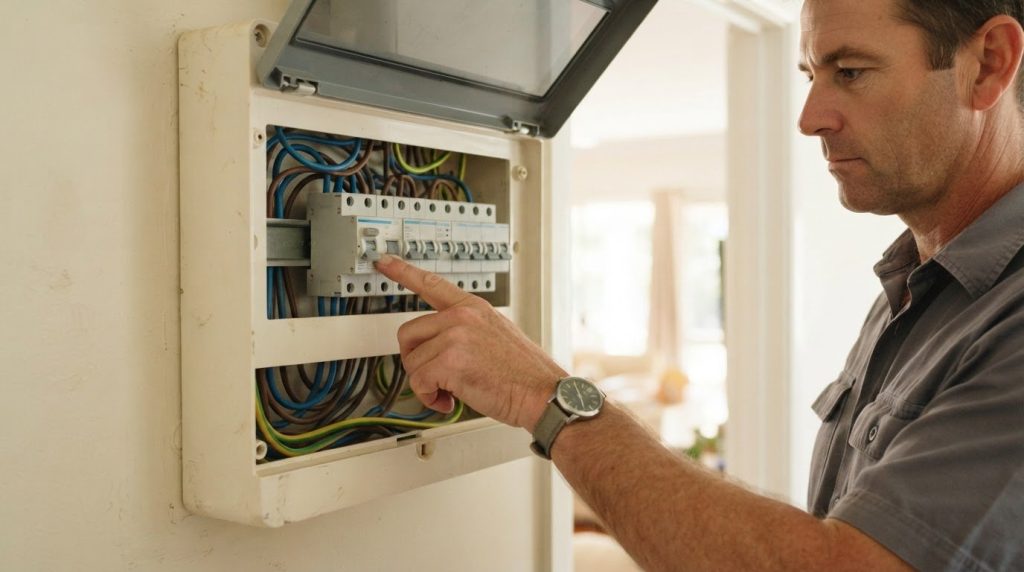
They aren’t interchangeable. The difference between a safety switch and a circuit breaker is the electrical hazard each detects. A safety switch detects current leaking from its intended path and disconnects power to reduce the risk of electric shock. A circuit breaker responds to overloads and short circuits to protect wiring from excessive current. They provide complementary protection, so a home may need both.
It’s easy to confuse them, especially because both devices sit in the switchboard and can cut power when a fault occurs. But a tripped circuit breaker doesn’t necessarily mean the circuit has protection against electric shock, and a safety switch doesn’t replace overload protection.
This guide explains how each device works, which circuits may need safety-switch protection, and how combined devices fit in. You’ll also learn what to look for in a switchboard and how regular testing helps keep safety switches working as intended.
Key Takeaways
- A safety switch detects current leakage and helps reduce the risk of electric shock; a circuit breaker responds to overloads and short circuits.
- These devices protect against different hazards, so one does not replace the other.
- Safety switch protection applies to the circuits connected to it. Check which circuits in your home are covered.
- Use the Test button to check a safety switch, and test it every three months in Queensland.
- If you need additional safety switches installed in Queensland, the work should be done by a licensed electrician.
What’s the difference between a safety switch and a circuit breaker?
The difference between a safety switch and a circuit breaker is the hazard each detects. A safety switch responds to current leakage to help protect people from electric shock, while a circuit breaker responds to excess current to protect wiring.
Safety switch protection from electric shock
A safety switch, also called a residual current device (RCD), monitors electrical flow and disconnects power when it detects current leaking from its intended path. Leakage can occur if electricity travels through a person or another unintended route, such as from a faulty appliance. The switch protects the circuit it’s connected to, rather than detecting every type of electrical fault.
A safety switch can cut power to a circuit within 0.03 of a second or less to reduce the risk of electric shock. Its purpose differs from a circuit breaker: it responds to leakage, not simply to an overload or short circuit. An RCD offers the same protection as a safety switch and is essentially the same device.
Circuit breaker protection from excess current
A circuit breaker detects high current caused by an overload or short circuit, then interrupts the supply to its circuit. An overload can happen when connected appliances draw more current than the circuit is designed to carry. A short circuit creates an unintended path for current, which can also cause a sudden increase in current.
By disconnecting power during these faults, a circuit breaker helps prevent wiring from overheating and reduces the risk of electrical fires. For example, if several appliances overload one circuit, the breaker may trip and stop further current flowing through it. Unlike a safety switch, it doesn’t detect current leakage to protect a person from electric shock.
| Device | What it detects | Main protection | Example response |
|---|---|---|---|
| Safety switch or RCD | Current leakage | People from electric shock | Disconnects power when leakage is detected |
| Circuit breaker | Overload or short circuit | Wiring and electrical systems | Trips when current becomes excessive |
The table shows why one device can’t substitute for the other. A circuit breaker may trip during an overload, but that doesn’t mean the circuit has safety-switch protection against leakage. Likewise, a safety switch can respond to leakage without providing overload or short-circuit protection.
Some switchboard devices combine a safety switch and circuit breaker in one unit. This arrangement provides both forms of protection for the connected circuit. Separate safety switches and circuit breakers can also provide both functions, but each device responds to its own type of fault.
For example, if a faulty appliance leaks current, the safety switch is designed to detect that hazard. If too many appliances overload wiring, the circuit breaker responds to excess current. Protection should account for both risks: electric shock and overloads or short circuits.
Choosing devices for different circuits and hazards
Choose protection by matching each device to the fault it detects and the circuit it serves. In a Queensland home, consider both personal protection from electric shock and protection for wiring.
Combined safety switch and circuit breaker devices
A combined device, often called an RCBO, brings safety-switch and circuit-breaker functions together for a circuit. It takes up less switchboard space than two separate devices, and if it trips, it doesn’t affect other circuits. By contrast, an RCD may disconnect all circuits connected to it. The choice affects the switchboard layout and which parts of the home lose power during a fault.
Why homes need both devices
Homes need protection against both current leakage and excessive current because these are different hazards. A safety switch responds to leakage that could cause electric shock, while a circuit breaker responds to overloads and short circuits. A combined RCBO provides both functions for its circuit. Separate devices can also provide both types of protection, but coverage depends on how the switchboard circuits are connected.
Risks without safety switch protection
A circuit breaker without safety-switch protection can still respond to an overload or short circuit, but it isn’t designed to detect current leakage. If an appliance fault sends current along an unintended path, the breaker may not trip because of that leakage. The person using the appliance could therefore remain exposed to an electric-shock hazard that a safety switch is designed to detect.
Think about how each circuit is used, rather than assuming one device protects the whole home. A safety switch protects the circuit or circuits connected to it, so one device may leave other circuits without that protection. Consider coverage for:
- Lighting circuits, where a fault could affect several rooms.
- Power points used for portable appliances.
- Air conditioning, ovens and hot-water units.
- Pool equipment and outdoor power points.
These examples help organise a coverage plan, but they don’t mean every home has the same switchboard arrangement. A separate safety switch may serve connected circuits, while an RCBO can trip only its affected circuit. That difference can matter during an electrical fault: if circuits share an RCD, a fault on one may interrupt power to other areas.
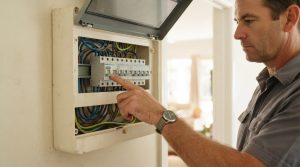
Homeowners can look for safety switches and circuit breakers in the switchboard. A safety switch can also be fitted at an individual power point. Check which circuits each switch covers, rather than relying on the number of devices visible in the board. In Queensland, only a licensed electrician should install additional safety switches.
If a switchboard review identifies a circuit needing this protection, you can arrange a safety switch installation. The right device depends on the circuit’s use, existing board layout and the protection already in place.
What are the different electrical safety mechanisms?
If a safety switch or circuit breaker keeps tripping, don’t keep resetting it. Unplug the appliance on the affected circuit if it’s safe to do so, then have a licensed electrician investigate the fault.
A safety switch monitors the flow of electricity through the live and neutral wires. If those currents become unbalanced, it detects leakage and automatically disconnects power. For example, a damaged appliance may allow current to escape its normal path. That imbalance is the fault signal, rather than the high current associated with an overload.
A circuit breaker responds to a different electrical fault: excessive current caused by an overload or short circuit. A surge diverter has another role, protecting property from voltage surges, including those caused by lightning. These devices address separate hazards, so identifying which switch has tripped can help narrow down what happened.
In Queensland, test each safety switch every three months using its Test button. The test checks whether the device trips and disconnects power to its circuit. Follow these steps:
- Tell household members that power to the connected circuit will stop.
- Press the safety switch’s Test button and check that it trips.
- Restore power by switching the device back to ON.
After the test, wait 2-3 minutes before restarting a fridge or air-conditioner on the affected circuit. That pause gives these appliances time before they are switched back on. Check lighting and other connected equipment too, as each may lose power while the safety switch is tripped.
Professional testing uses equipment that simulates a fault condition. This checks whether the safety switch responds and cuts off power, rather than relying only on the Test button. Regular testing can help reveal a device that fails to respond. If a safety switch doesn’t trip during the button test, contact an electrician.
Keep a simple record of the three-month testing dates and any unusual results. Note which circuit lost power, whether the switch tripped, and whether it reset successfully. If the same safety switch trips again after an appliance is unplugged, that pattern gives an electrician useful information about the fault.
Electrical maintenance also includes inspections for wiring issues and outdated protection devices. A licensed electrician can assess the switchboard and connected circuits, including lighting, to identify problems that a button test won’t reveal. Testing checks a device’s response; an inspection considers the wider installation.

Circuit breaker operation and applications
A circuit breaker sits in a switchboard and controls the supply to an electrical circuit. It monitors current and trips when an overload or short circuit creates excessive current. Tripping opens the circuit, cutting power so current doesn’t continue flowing through wiring under fault conditions. The affected appliances stop working until the cause is addressed and power is restored.
An overload can occur when appliances on one circuit draw more current than it can carry. For example, several high-demand appliances operating together may cause a breaker to trip. The breaker’s response helps limit how long wiring carries excessive current, which can otherwise overheat wires and contribute to electrical fires.
A short circuit is a different fault: current takes an unintended path, producing a sharp increase in flow. The breaker detects the excess and interrupts the supply. In either case, a trip is a protective response, not proof that the breaker itself is faulty. Note which appliances were running and which circuit lost power.
Breakers are selected for the electrical circuits they protect, including circuits supplying power points, lighting or fixed appliances. A kitchen circuit, for instance, may serve different appliances from a lighting circuit. Circuit labels can help identify the affected area when a breaker trips. If labels are unclear, note which rooms or equipment lose power when the circuit is off.
After a trip, switch off or unplug appliances on the affected circuit, if it’s safe to do so. Then reset the breaker once. If it trips again, leave it off and arrange an assessment by a licensed electrician. Repeatedly restoring the supply without addressing the fault can leave the cause unresolved.
A breaker and a safety switch respond to different faults, even if their switches look similar in a board. Look for the device label and any test button. A test button is associated with a safety switch, not a standard circuit breaker. Some switchboard devices combine both functions, so labels and markings can help distinguish them.
For a practical check, use this sequence when a circuit loses power:
- Identify the tripped switch in the switchboard without removing its cover.
- Note the appliances or lights that stopped working on that circuit.
- Turn off or unplug relevant appliances before resetting the breaker once.
- Leave the breaker off if it trips again, and have the fault assessed.
This approach helps separate an appliance-related overload from a persistent circuit fault. For example, if the breaker trips again with appliances unplugged, the problem may involve the circuit or its wiring. A circuit breaker protects against excess current, but it doesn’t test wiring condition or detect every electrical hazard. A licensed electrician can investigate the circuit and its protection devices.
Earth-leakage detection
Earth leakage occurs when some electrical current escapes its intended path. A safety switch monitors the flow of electricity through a circuit and detects an imbalance between the live and neutral wires. That difference signals that current may be travelling elsewhere, such as through damaged insulation or a faulty appliance. A circuit breaker responds to excess current, not leakage alone.
In Queensland, a safety switch turns off electricity within milliseconds when it detects an unsafe situation such as a current leak. This rapid disconnection helps reduce the risk of electric shock, but it doesn’t make contact with faulty equipment safe. A safety switch usually has 30 mA printed on it in Australia. That marking identifies its sensitivity to leakage current, not the amount of current the circuit can carry.
Consider a damaged appliance with a fault that allows current to escape its normal path. The safety switch can detect the imbalance and trip, even if the fault hasn’t caused the high current that would trip a circuit breaker. This is why the two devices address different hazards. A circuit breaker or surge diverter doesn’t provide personal protection against electric shock.
A tripped switch can point to leakage, but it doesn’t identify the source by itself. Note what was being used when power stopped, such as a kettle, washing machine or outdoor appliance. If the same circuit trips again, leave the switch off and arrange an assessment by a licensed electrician. Repeatedly resetting it won’t correct the underlying electrical fault.
Water near electrical equipment can make a suspected fault especially concerning. Don’t touch wet appliances, switches or damaged wiring. Keep clear of the affected area and arrange professional help. For a suspected water leak near electrical equipment, book water leak detection to help locate the source of the water.
Queensland households should test safety switches every three months using the device’s Test button. If it fails to trip, contact an electrician rather than relying on it for protection. Professional testing can simulate a fault and check whether the switch responds and disconnects power. These checks can help identify issues before they become serious, but they don’t replace an inspection of damaged wiring or equipment.
When a switch trips, the affected circuit loses power, which may include lights or appliances connected to it. Identify what stopped working, but don’t remove a switchboard cover or attempt electrical repairs. A licensed electrician can test the device and investigate the circuit, wiring and appliances to find where current is escaping.
Synergy Trades Group: Hot Water System Repairs
Synergy Trades Group provides Hot Water System Repairs when a hot-water unit stops working or develops a fault. If the concern is a tripping safety switch or circuit breaker, that’s a separate electrical protection issue that needs assessment by a licensed electrician. A hot-water repair doesn’t replace electrical fault-finding or switchboard protection.
If an electrical fault affects the power supply to your hot-water system, keep the distinction clear: the switchboard device responds to an electrical hazard, while a repair addresses the hot-water system itself. Synergy Trades Group also handles Blocked Drain Clearing, RPZ Backflow Testing and Bidet Supply & Installation.
For help with a hot-water system problem, contact Synergy Trades Group to discuss a repair.
Make a clear next move for your switchboard
Understanding the difference between a safety switch and a circuit breaker gives you a useful starting point, but your switchboard’s labels and circuit layout determine what protection is actually in place. If a device keeps tripping, fails its test, or you’re unsure which circuits it protects, arrange a professional assessment rather than repeatedly resetting it.
Synergy Trades Group offers Safety Switch Installation and RCD Testing & Certification. It also provides Blocked Drain Clearing and RPZ Backflow Testing for separate plumbing needs. The right next step depends on the issue, so describe the fault or the protection you want reviewed.
Contact Synergy Trades Group to discuss your electrical safety needs. A clear understanding of your switchboard can help you make a more informed decision about your home’s protection.
Frequently Asked Questions
Are Safety Switches Mandatory In Australia?
Australian law requires safety switches in new homes, rental properties and workplaces. For a Sunshine Coast property, check the switchboard to see which circuits have protection, because a safety switch only covers its connected circuits. A device on one circuit doesn’t automatically protect every power point, light or fixed appliance in the home. A switchboard assessment can clarify where coverage is installed.
What about a combination of the two?
A combined safety switch and circuit breaker is commonly called an RCBO. It provides both types of protection for its connected circuit and trips only that affected circuit. This differs from an RCD that may disconnect several circuits connected to it. Check device labels in the switchboard, as the combined unit’s appearance may not make its two functions obvious.
What about an RCD?
An RCD is another name for a safety switch, rather than a separate kind of protection. The letters stand for residual current device. If you’re identifying one in a switchboard, look for a Test button or a marking that indicates its function. Don’t assume a nearby circuit breaker has the same capability, even if both switches can trip and interrupt power.
What do they prevent?
Safety switches help reduce the risk of electric shock by disconnecting power when they detect leakage. Circuit breakers help prevent wiring from overheating during overloads and short circuits, reducing the risk of electrical fires. Neither device is a surge diverter: a voltage surge, including one caused by lightning, calls for surge protection rather than relying on either switch.
What do they protect?
A safety switch protects people from some electrical-shock hazards on the circuits it covers. A circuit breaker protects wiring and electrical systems from excessive current. For example, a breaker can disconnect a circuit supplying several appliances if an overload occurs. Check the switchboard’s circuit labels to understand which rooms or equipment may lose power when each device trips.
What is an RCD?
An RCD, or residual current device, detects leakage by monitoring electricity flowing through a circuit. It compares current in the live and neutral wires and trips when it detects an imbalance. For example, a fault in a plugged-in appliance may cause current to escape its intended path. An RCD detects leakage current; check the switchboard to see whether overload and short-circuit protection are also provided.
What is the difference between a safety switch (RCD) and a circuit breaker in Australia?
The difference between a safety switch and a circuit breaker is the fault each responds to. An RCD detects current leakage and helps reduce electric-shock risk; a circuit breaker trips on excessive current caused by an overload or short circuit. In an Australian switchboard, one device doesn’t automatically mean both protections are present. Look for an RCBO if the circuit has combined protection.
What does a safety switch protect against, and what does a circuit breaker protect against?
A safety switch protects against current leakage that could expose someone to electric shock, while a circuit breaker protects against excess current that can overheat wiring. For example, leakage from a faulty outdoor appliance is a safety-switch concern; too many appliances overloading one circuit is a breaker concern. Both hazards matter, so check that the relevant circuits have suitable protection.