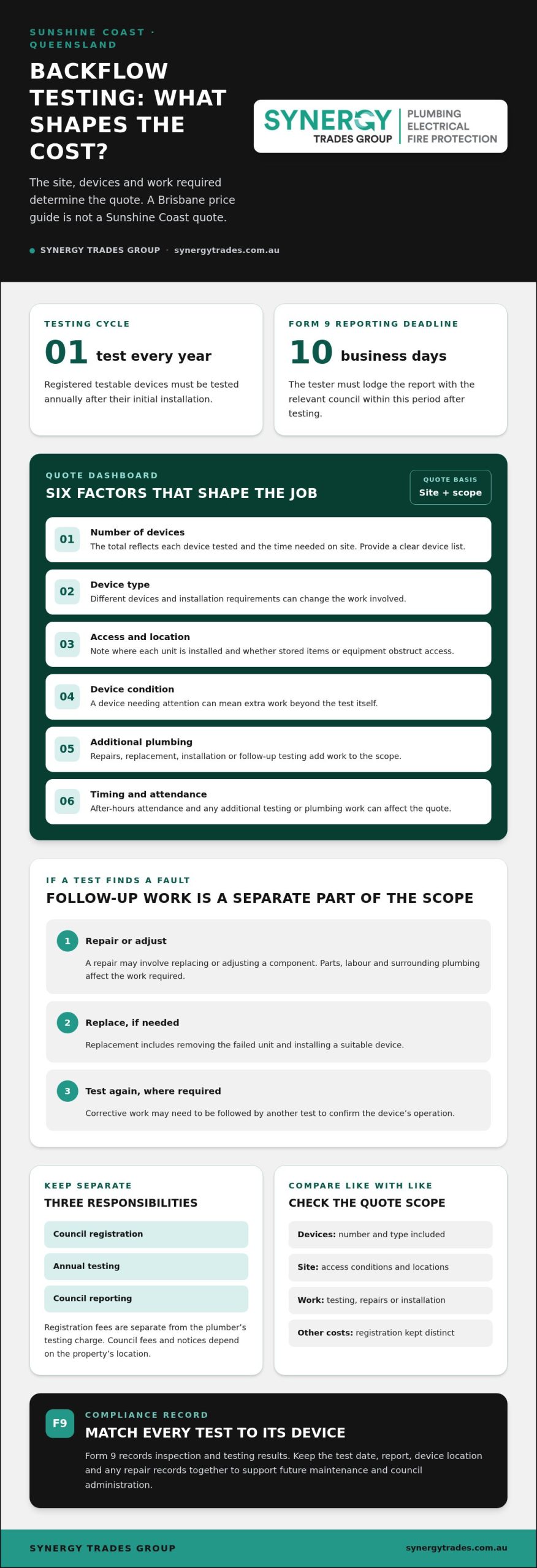
For Sunshine Coast property owners, the backflow testing cost in QLD depends on the number and type of devices, how accessible they are and their condition, and whether plumbing work is needed. Testable backflow devices must be tested annually after installation, making testing an ongoing maintenance responsibility.
It’s understandable to want clarity on the cost and paperwork before arranging a test. Synergy Trades Group provides reliable local plumbing services, helping you meet these obligations while protecting drinking water supplies with results properly documented and reported using Form 9.
This article explains what affects testing costs, which properties may need a testable device, and how Queensland’s annual testing and reporting requirements work. It also explains how backflow prevention helps protect your water supply.
Key Takeaways
- Compare the first-device charge with the rate for additional devices tested during the same visit, and consider access and device condition when budgeting.
- Regular testing of testable backflow devices can help keep them functioning as intended.
- Form 9 records the test results, and the report must be lodged with the council within 10 business days of testing.
- Commercial sites should consider their water-use hazards and device requirements when planning testing and maintenance.
- Backflow prevention helps protect drinking water by stopping contaminated water from entering the supply.
How much does backflow testing cost in Brisbane?
On the Sunshine Coast, backflow testing costs depend on the devices on site and the work required. The number and type of devices, their condition and accessibility, and any additional plumbing work all affect the quote. A Brisbane price guide is not a Sunshine Coast quote: the site and job scope determine the actual cost.
For a property with several devices, the total reflects each device tested and the time needed on site. A clear device list helps define the scope. Note where each device is installed and whether equipment or stored items obstruct access. Restricted access or a device needing attention can mean extra work beyond the test itself.
Registration is a separate part of the ongoing expense. Testable backflow prevention devices must be registered with the local council and tested annually in Queensland. Keep council notices and device records together to identify which units need testing and plan for the separate testing and registration responsibilities.
If a test identifies a fault, the next cost depends on what the device needs. A repair may involve replacing or adjusting a component; replacement includes removing the failed unit and installing a suitable device. Device type, parts, labour and surrounding plumbing all affect the scope. Corrective work may also need to be followed by another test.
Installing a device is different from testing an existing one. Valve type, size and the plumbing layout influence the work, and an RPZ installation may need a suitable drain arrangement. Removing a device is not a way to avoid testing: tampering with or removing a backflow prevention device without approval is a criminal offence in Queensland.
To understand a Sunshine Coast estimate, compare the same scope of work. Check that it identifies the number of devices, testing, access conditions and any repairs or installation. For multiple devices, confirm whether the visit covers each one. This helps you compare like with like, rather than a test-only visit with work that includes repairs.
After-hours attendance can affect a quote, as can additional testing or plumbing work. Note any known faults and provide device locations when describing the job. Make sure the quote separates testing costs from council registration and corrective work.
For a local estimate, the price depends on the job and is provided after a quote request. Describe the device type and quantity, condition and access, along with any plumbing work required.
Queensland annual testing and Form 9 reporting requirements
Across Queensland, owners of testable backflow prevention devices need to manage registration, annual testing and council reporting. Sunshine Coast property owners should keep these requirements alongside their device records.
Annual Testing for Registered Devices
A registered, testable backflow prevention device must be tested annually after its initial installation. This applies across Queensland, including the Sunshine Coast, making testing an ongoing responsibility rather than a one-off installation task.
Registration and testing are separate steps. Keep the council’s device details and reminder notices with the property’s maintenance records, then use them to plan the next test. This is especially useful at commercial sites with devices in different areas or buildings, where one reminder may relate to only part of the equipment.
The Plumbing and Drainage Act 2018 requires backflow device owners in Queensland to register their devices with their local council. Councils provide Annual Registration Fee Notices and Testing Reminder Notices, helping owners track the administrative and testing cycle. The registration fee is separate from the plumber’s testing charge, so record them as distinct expenses when planning maintenance.
Local council fees and notices matter for Sunshine Coast properties, but Brisbane City Council’s fee applies to Brisbane, not the Sunshine Coast. Keep the notice for the property’s location with the device records so the correct local registration details are clear.
Testing Frequency and Form 9 Reporting
Form 9 is the State Government report used for inspection and testing results for backflow prevention devices, registered air gaps and registered break tanks. The tester must lodge the report with the relevant council within 10 business days after testing.
This reporting step creates a formal record of the test. Keep the test date, report and device location together, particularly if the property has several devices. Matching each report to the right device helps owners track maintenance history and organise future testing.
For Sunshine Coast owners, the key compliance sequence is to register each testable device with the local council, arrange annual testing and ensure the Form 9 report is lodged on time. A council reminder can help with planning, but it doesn’t replace the owner’s responsibility to maintain the device’s testing record.
If a test identifies a fault, corrective plumbing work may be needed before a later test can confirm the device’s operation. Keep the report and repair records together so the property file shows the result and any follow-up work. This gives owners and site managers a clear record for future maintenance and council administration.
Backflow testing services in Brisbane and South East Queensland
Queensland backflow testing is regulated plumbing work, not a general visual check. A test includes inspecting the backflow prevention device, testing its function and documenting the result. In Brisbane and South East Queensland, the person carrying out a test must have the appropriate plumbing licence and backflow prevention endorsement.
Only licensed plumbers can perform backflow tests and submit the necessary paperwork to the local council. For an annual test of a testable device, the plumber must also be endorsed as a backflow tester. Queensland’s backflow prevention endorsement covers testing, commissioning and maintaining these devices, so the relevant endorsement is required alongside the plumbing licence.
The distinction is practical: an inspection can identify visible condition or access issues, but a functional test checks whether the device operates as intended. A professional test records the results. If a fault is found, corrective plumbing work may be needed before testing can confirm that the device is operating correctly.
Queensland backflow requirements sit under the Plumbing and Drainage Act 2018 and the Plumbing and Drainage Regulation 2019. The rules address device installation, testing and owners’ responsibilities. Queensland property owners must register testable devices with their local council and arrange required testing. Council reminders can help owners track the next test, but they don’t replace the owner’s responsibility.
Site containment is another part of Queensland’s prevention approach. Properties connected to the main water supply are required to have a site containment backflow prevention device. The hazard evaluation informs the type of protection needed, and the device must remain accessible for testing and maintenance. Clear access helps the licensed plumber inspect and test it without obstruction.
Responsibilities continue after installation. The endorsed plumber commissions the device, and required council records support its ongoing registration and testing. If a registered device is removed or tampered with without approval, that is a criminal offence in Queensland. A device should not be taken out of service as a shortcut around testing or repair.
Councils may issue a Penalty Infringement Notice when an owner fails to meet backflow device duties under Queensland plumbing and drainage laws. Keeping registration details, test records and council reminders together helps document the site’s compliance history. It also makes it easier to identify which device needs attention when a property has several water connections or risk areas.
For a Sunshine Coast property, start by identifying each testable device and its location. Then arrange testing with a licensed plumber endorsed for backflow testing. This keeps the inspection, functional test and required documentation within the proper plumbing process.
Do I need backflow testing on my commercial property?
Testing prices can differ for single and double check valves because the device type affects the test. Access, condition and the amount of work required also influence the total.
In Queensland, properties connected to the main water supply require site containment backflow prevention. Whether a commercial property needs a test depends on its installed devices and which are testable. A café, workshop or office should identify each backflow device on site and check its council registration and testing status.
Commercial costs depend on the number and type of testable devices, their condition and access. A hard-to-reach device can take more work to inspect than one with clear access. Repairs or additional plumbing work after a failed test can add to the total, as can after-hours attendance.
Property type can affect the number of devices and the work involved, but the building label alone doesn’t determine the price. A commercial supply or fire service may use a larger RPZ device than a small installation. Device size, location and surrounding plumbing all help shape testing or installation requirements.
Installing a device is a separate job from testing one already in place. For context, Brisbane installation estimates vary by valve type: a 20mm double check valve differs from a 20mm RPZ valve, while a 25-32mm RPZ for commercial supply or fire service has different installation requirements. A tundish or drain may also be needed for an RPZ installation.
To manage costs, arrange testing for multiple devices in one visit where practical. Keep each device accessible and provide a clear list of locations. This helps avoid wasted time locating equipment and lets the tester understand the scope before attending. Planning routine maintenance can also reduce the likelihood of device failures and follow-up repairs.
Brisbane owners should account for council registration separately from testing and corrective work. Keep the device register, previous test results and current council notice together. These records help identify which devices need testing and whether a quote covers testing alone or also repairs, replacement or installation.
Western Australia has different local requirements and market conditions, so its testing costs aren’t a useful substitute for Queensland estimates. For a Sunshine Coast commercial site, compare the same scope: number and type of devices, access, visit timing, reporting and any repairs. A clear scope makes estimates easier to assess without confusing testing with installation work.
Backflow prevention for drinking water supplies
Backflow prevention protects drinking water by helping stop contaminated water from entering the supply. It matters wherever a plumbing connection creates a risk of water flowing backwards into clean pipes.
Backflow can occur when water pressure drops unexpectedly. Contaminated water from the ground or a faulty supply may then enter connected pipes. A backflow prevention device is installed at a risk point to help stop this reverse flow. The device type depends on the hazard identified at the property, rather than being a one-size-fits-all choice.
Queensland hazard evaluations use AS/NZS 3500.1 to assess the plumbing risk and appropriate protection. The assessment considers the connection and what could contaminate the water supply. Devices must remain accessible for testing and maintenance, so location matters after installation too. A valve hidden behind stored equipment, for example, can make routine inspection harder.
Different plumbing arrangements use different prevention methods. Valves protect the supply at selected points, while an air gap provides physical separation. Air gaps also help maintain safe pressure in water storage areas. The choice depends on the system and hazard being managed. The aim is to protect drinking water before contamination can travel back through connected pipes.
Toilet douche outlets provide a specific example in AS/NZS 3500 Part 1 Water Services Clause 12.2.3. An outlet at least 25mm above the pan overflow level does not require a backflow device under that clause. An outlet less than 25mm above that level requires a high-hazard backflow prevention device. That device must comply with AS/NZS 2845.1 or AS 2845.2.
These measurements show why small plumbing details can affect the protection required. The outlet height is assessed against the pan overflow level, not simply by looking at the hose or fitting. A change to an outlet or surrounding plumbing may alter the hazard assessment, so the installed protection needs to suit the actual arrangement.
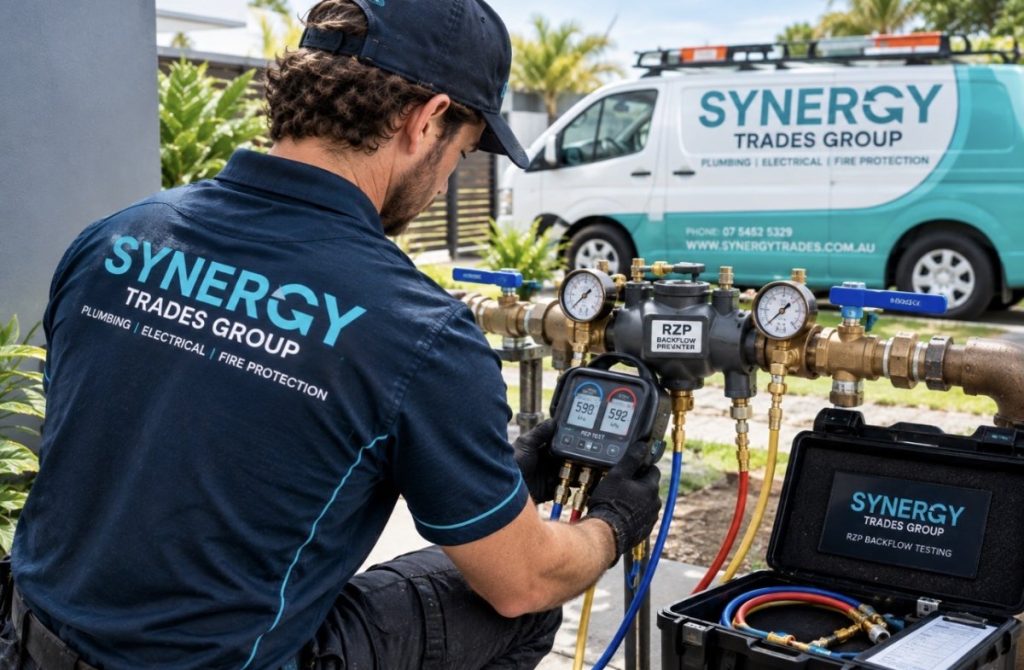
Testing checks whether a testable device is functioning and records its condition. The water supply may need brief isolation during the test. If corrective plumbing work is required, the device can be tested again afterwards. This links prevention, maintenance and testing: the right device manages the hazard, while testing checks its performance over time.
For a property with a testable device, arrange an inspection and test to help protect its drinking water supply. Book backflow testing for your property.
Synergy Trades Group: Hot Water System Repairs
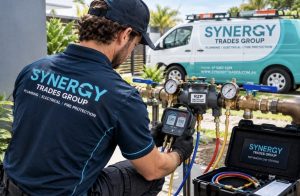
Synergy Trades Group provides RPZ backflow testing for property owners with a testable reduced pressure zone device. Arrange a test when the annual check is due, a council reminder arrives, or the device needs inspection after plumbing work.
Testing assesses whether the RPZ device is functioning and documents the results. Synergy Trades Group also handles hot water system repairs and blocked drain clearing. For a bidet project, the team provides bidet supply and installation.
Have the device location and any council notice details ready when arranging your backflow test. Contact Synergy Trades Group to discuss RPZ backflow testing on the Sunshine Coast.
Make your next maintenance decision with confidence
Knowing the backflow testing cost in QLD is useful, but the next step is making the work straightforward to manage. Keep device details and council correspondence together, then plan testing alongside other scheduled plumbing maintenance. Clear records help you track what has been done and what needs attention next, without waiting for a reminder.
If you’re arranging an RPZ test or have a question about the plumbing work involved, Synergy Trades Group can help you understand the next step for your property. You can contact Synergy Trades Group about backflow testing and share the details of your device and site. A considered plan makes it easier to keep your water protection in view and manage the work calmly.
Frequently Asked Questions
How often does a backflow device have to be tested?
A testable backflow device needs an annual test after its initial installation. In Brisbane, testing must occur at least once each calendar year, so owners should plan around the device’s council reminder and test history. Keep the latest report with the property’s maintenance records. For multiple devices, record each location and result separately to make future testing easier to organise.
What happens if I skip the annual test?
Skipping a required test can leave an owner non-compliant with backflow device duties. Queensland councils may issue a Penalty Infringement Notice when those duties aren’t met. An overdue test also means there is no current result documenting the device’s performance. Arrange the required testing and reporting to bring the device record up to date and support ongoing compliance.
Are backflow testing results submitted to the council?
Yes. The tester submits the Form 9 report to the relevant council within 10 business days after testing. The report documents the inspection and test result, giving the council a record for the registered device. Keep a copy with the property’s maintenance documents. If several devices are tested, matching each result to its device location helps avoid confusion during future maintenance.
What influences backflow testing prices?
Testing prices depend on device type and number, access, condition, and whether extra testing or plumbing work is needed. A hard-to-reach device may require more work than one with clear access. After-hours attendance can also affect the visit cost. For a useful quote, provide device locations and describe any known access or condition issues.
How much does backflow testing cost in Queensland?
The cost of backflow testing in Queensland depends on the devices and work involved; a price is provided after a quote request. The main factors are device type and quantity, access, condition, timing, and any additional testing or plumbing repairs. Separate testing from corrective work when reviewing a quote so you can see exactly what it covers.
What is the average price for backflow testing in Brisbane and regional Queensland?
There isn’t one price that applies across Brisbane and regional Queensland. The estimate depends on the devices being tested, site access, their condition and whether extra work is required. A multi-device visit can have a different scope from testing one device. For a useful comparison, use the same device count, locations and visit requirements for each estimate.
What factors affect the cost of a backflow prevention device test?
The main cost factors are device type and number, condition and how easily the tester can reach each device. Additional testing or plumbing work can change the scope, as can an after-hours visit. Before requesting a quote, note each device’s location and any known fault. This gives a clearer picture of the work required.
How often must backflow prevention devices be tested in Queensland?
Testable backflow prevention devices must be tested annually after initial installation in Queensland. Brisbane owners must arrange testing at least once each calendar year, with the local deadline set at 31 December. Check the council reminder against the device’s records, particularly if ownership or site management has changed. That helps keep the correct test date attached to each registered device.