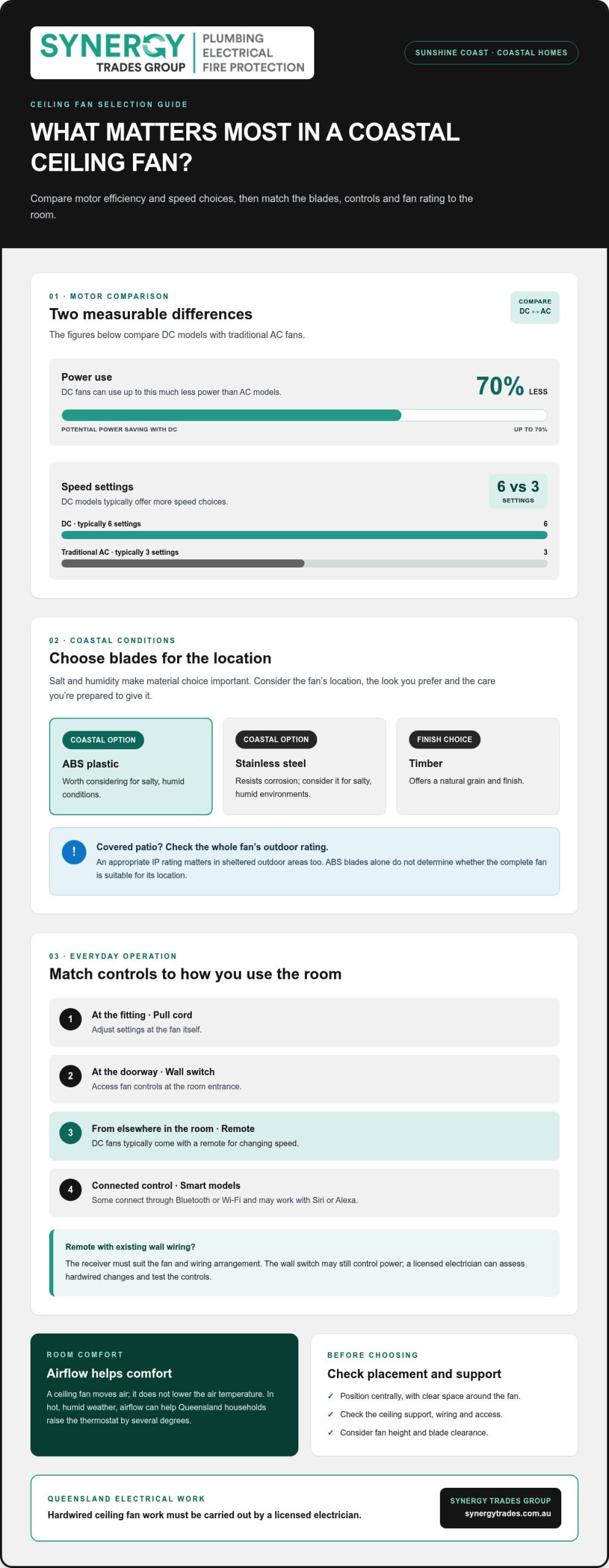
The best coastal ceiling fan isn’t just about the breeze. For ceiling fan installation and electrical work on the Sunshine Coast, a fan with ABS blades, a DC motor and remote control can suit a coastal home. DC models can use up to 70% less power than AC models, and typically offer six speed settings compared with three for traditional AC fans.
Salt and humidity make blade material an important part of the decision, so ABS is worth considering for coastal conditions. The right choice also depends on the room, the mounting point and whether you’re replacing an existing fan or installing a new one.
This guide compares AC and DC fans and explains what to consider when choosing blades and controls, plus what installation, replacement, repair and ceiling support involve. In Queensland, hardwired ceiling fan work must be carried out by a licensed electrician, so electrical and mounting requirements matter as much as choosing a fan that suits your home.
Key Takeaways
- Choose between AC and DC by weighing running efficiency, speed options and the controls that suit how you use the room.
- For coastal homes, consider blade materials suited to salty, humid conditions; outdoor fans also need an appropriate outdoor rating.
- Check the ceiling support, wiring and access before planning a new installation or replacement, as these affect the work involved.
- Place the fan centrally with clear space around it so air can circulate effectively through the room.
- Noise, unusual vibration, damaged blades, poor airflow or increased energy use can signal that a fan needs attention.
AC versus DC ceiling fans
For ceiling fan installation and electrical work on the Sunshine Coast, compare ABS blades, a DC motor and remote control with the room’s conditions. Coastal air can affect material choice, while the motor and controls influence everyday operation. Start by considering where the fan will go, how often it will run and who needs to operate it.
ABS plastic and stainless steel resist corrosion, making them options to consider in salty, humid environments. Timber blades offer a natural grain and finish, while ABS can be practical where coastal exposure matters. Choose based on the location, the look you prefer and the care you’re prepared to give the fan.
DC ceiling fans can use up to 70% less power than AC models. They typically provide six speed settings, compared with three for traditional AC fans. That gives you more speed choices, while AC models offer a familiar, simple control range. Compare the fan’s operating needs with how often you expect to use it.
In hot, humid weather, moving air improves circulation and can make an occupied room feel more comfortable. Ceiling fans don’t lower the air temperature, but airflow can help households in Queensland raise the thermostat by several degrees. A bedroom fan, for example, can keep air moving while occupants rest.
Controls affect how easily you use the fan. A pull cord lets you adjust settings at the fitting, while a wall switch gives access at the doorway. DC fans typically come with a remote for adjusting speed from elsewhere in the room. Some smart models connect through Bluetooth or Wi-Fi and may work with Siri or Alexa.
Can a ceiling fan remote control work with existing wall wiring? Yes, if the receiver suits the fan and wiring arrangement. The receiver connects to the fan’s electrical supply, and the wall switch may still control power. A licensed electrician can assess hardwired changes and test the controls after installation.
For ceiling fan installation and electrical work on the Sunshine Coast, decide whether ABS blades, DC operation and remote control suit the room. The receiver must be connected correctly, and the switch arrangement must suit the chosen controls. After installation, test each speed and any timer function included with the fan.
Retractable-blade fans fold their blades away when switched off, creating a different look from fixed-blade models. Reverse mode changes the airflow direction, which may suit different room conditions or seasons. Check how each feature is controlled, then consider whether it offers practical value for your household.
For a covered patio, select a fan rated for outdoor use. An appropriate IP rating matters because sheltered outdoor areas still differ from indoor rooms. ABS blades may suit coastal exposure, but the complete fan must be suitable for its location. In Queensland, hardwired fan installation must be done by a licensed electrician. For electrical work, consider how the wiring and controls will operate together.
Ceiling fan installation, replacement and repair
Noise, unusual vibration, damaged blades, weak airflow or higher energy use can signal that a fan needs attention. Note when the problem occurs: a wobble at every speed differs from a rattle that appears only at start-up. Check whether the issue affects one setting or all of them. These details help determine whether repair or replacement is the more suitable next step.
Some faults can be addressed without replacing the whole fan. A damaged blade, loose fitting or control fault may affect performance, while persistent motor noise or poor airflow can point to a worn unit. Don’t keep using a fan with visible damage or unusual vibration. Turn it off and arrange an assessment of the fan, mounting and electrical connections.
For a like-for-like replacement on an existing circuit, allow around 1-1.5 hours. That assumes the ceiling outlet, wiring and mounting point suit the new fan. Differences in the fan’s weight, fitting or controls can add work. Before selecting a replacement, compare the existing fan’s size and mounting arrangement with the new model’s requirements.
A new installation that needs a new circuit typically takes 2-3 hours, depending on access through the ceiling. The electrician needs to consider the route for wiring, the switch arrangement and access above the room. A high ceiling or difficult roof space can change the practical work involved. Discuss the intended fan and control type before installation begins.
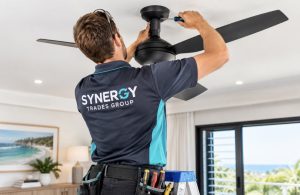
Replacement generally involves isolating the power, removing the old fan, checking the outlet and mounting, then connecting and testing the new unit. The fan’s height and blade clearance matter too. A fan that hangs too low can interfere with room use, while poor positioning may limit airflow. The new fan should be secure and operate without excessive movement.
Repair is worth considering when the fault is limited and the fan remains in good condition. Replacement may make more sense if the motor or blades are visibly damaged, or the fan continues to perform poorly. A technician can assess the wiring, controls and fitting together instead of treating one symptom in isolation. This helps clarify the work needed before the fan returns to regular use.
Prepare for an efficient visit by clearing furniture beneath the fan and noting the fault. Share whether the fan has a remote, wall switch or pull cord, and describe any recent changes in sound or airflow. For help arranging an electrical assessment, you can book a fan installation or replacement visit.
Ceiling fan installation and repair on the Sunshine Coast
Room layout affects where a Sunshine Coast ceiling fan should sit. A central position helps distribute moving air, while clearance from walls and furniture prevents obstructions. For an indoor bedroom, consider the bed position, ceiling height and existing lighting. In an open-plan room, note where people sit and spend time before choosing the fan location.
What should you check before hiring a Sunshine Coast electrician to install a ceiling fan? Confirm the electrician is licensed, then explain whether the job involves a new fan, replacement, light fitting or wall switch. Share the ceiling height, existing wiring and fan controls to clarify the scope.
Ask how the work will address the fan’s mounting point, electrical connection and operation. A new fan may need different wiring or switching from an existing fitting. Tell the electrician if you’ve chosen a remote-controlled model or want an integrated light. These details shape the installation plan.
Before the visit, choose the fan and identify its intended room. Note whether the current fitting is a fan or a light, and whether the new unit will use the existing wall switch. Clear furniture from beneath the installation area to give the electrician room to work and reduce disruption.
How long does professional ceiling fan installation take on the Sunshine Coast? Most installations take one to two hours, depending on wiring and mounting complexity. A replacement using an existing circuit may differ from a new installation. Ceiling access, the fitting and switch arrangement all affect the work involved.
When arranging a repair, describe the fault clearly. Note whether the fan makes noise, vibrates, runs intermittently or has stopped moving. Include when the problem occurs, such as only at a particular speed or after using the wall switch. This helps the electrician assess the fan and its electrical connection.
If the fan also provides lighting, check whether the light and fan behave differently. For example, report if the light works but the blades don’t turn. Don’t open electrical fittings yourself. A licensed electrician can assess the wiring, controls and fan as connected parts of the same installation.
Discuss the finished setup before work starts: fan position, switching method, remote control and any light function. A clear scope helps align the installation with how you use the room. For information about electrical services, consider how the fan and its controls will work with the existing room layout.
After installation or repair, operate each control and observe the fan while it runs. Check that the switch responds, the light works if fitted and the fan moves smoothly at its available settings. Report unusual noise or movement before the electrician leaves so it can be assessed during the visit.
Fan mounting and ceiling support requirements
A ceiling fan needs a stable mounting point, not just a light fitting. Moving blades can create vibration, so the support must suit the fan and its installation. A licensed electrician can assess the mounting location, ceiling structure and existing outlet before work begins. If the fan’s weight or fitting differs from the current one, the support may need attention.
Ceiling joists and beams can provide fixing points, while some installations need suitable support framing. The right approach depends on the ceiling construction and the fan manufacturer’s mounting instructions. Plasterboard alone shouldn’t be treated as structural support. Secure mounting helps the fan run steadily and directs airflow into the room.
What are common ceiling fan installation risks, including asbestos, ceiling access and structural support? An unsuitable mounting point can leave the fan unstable, while restricted ceiling access can make wiring and support work harder. If suspected asbestos-containing material may be disturbed, stop work and arrange appropriate assessment before proceeding.
Fan size also affects placement and support planning. For a small bedroom or study, a 1050-1200 mm diameter fan is a listed Sunshine Coast option. Medium bedrooms or dining rooms suit 1200-1320 mm models, while living rooms or open-plan spaces may suit 1320-1400 mm fans. Larger patios or alfresco areas may need 1400 mm or more.
Position the fan centrally, with enough clearance from walls and furniture for airflow. Check, for example, that a wardrobe door or bunk bed won’t sit within the blade path. Ceiling height matters too: the fan must be mounted securely without obstructing normal room use. The electrician can assess the location against the selected model’s fitting requirements.
Access above the ceiling can affect the installation. A roof cavity may provide a route to inspect joists and wiring, while a tight or obstructed space can limit access. Before the visit, identify the room, existing light or fan outlet and any access hatch. Move furniture from beneath the proposed mounting point.
Outdoor mounting requires a fan rated for outdoor use. A covered patio still differs from an indoor room, so choose a model suited to its location and exposure. The ceiling support must also suit the fan and mounting surface. Don’t assume an indoor fan is suitable just because the area has a roof.
Before installation, note the fan’s diameter, control type and intended position. Share these details with the licensed electrician, along with any visible ceiling damage or difficult roof access. This gives them useful context to assess support, wiring and clearance. Resolve any required changes to the ceiling structure before fitting and testing the fan.
Must a licensed electrician install Queensland ceiling fans?
Yes. In Queensland, hardwired ceiling fan electrical work must be performed by a licensed electrician. This applies to installing a new hardwired fan and replacing an existing one. A remote control or wall switch doesn’t change the electrical nature of the work. Arrange licensed electrical work before using a newly installed fan.
The requirement applies whether the fan replaces a ceiling light or another fan. Both jobs involve connecting electrical wiring, and the mounting point must suit the selected fitting. For example, replacing a light with a fan may require changes to the support, outlet and controls, not just the visible fitting.
Before booking, describe the job clearly. Say whether you need a new installation, a like-for-like replacement or a fault assessment. Mention the room, ceiling height, existing wall switch and fan controls. These details help the electrician understand the work and any access needed.
Choose a licensed electrician for the hardwired work and provide the fan’s make and model. If you’ve selected a DC fan with a remote, explain that before the visit. The receiver and controls must be connected as part of the installation. Share any instructions supplied with the fan so the electrician can follow its requirements.
For a new fan, the electrician can assess the existing wiring, outlet and ceiling support before fitting it. A replacement also requires removing the old fan and connecting the new unit. Differences in the mounting point, wiring or switch can affect the work. Don’t assume a previous fan’s setup automatically suits a different model.
Keep clear access to the installation area. Move furniture from beneath the fan and point out any ceiling damage or restricted roof access. If the fan will replace a light fitting, explain whether you want to retain the lighting. This clarifies the intended setup before electrical work begins.
Once fitted, the fan and controls should be operated to check their response. Tell the electrician whether the fan has a wall switch, remote or both. If it makes unusual noise, vibrates or fails to respond, stop using it and arrange an assessment rather than opening the wiring yourself.
Planning a hardwired fan installation or replacement? Arrange a licensed electrician visit and share the fan details, existing controls and ceiling access information.
Synergy Trades Group: Hot Water System Repairs
Synergy Trades Group provides hot water system repairs for households dealing with a hot water fault. Ceiling fan installation and repair are separate electrical work, so Queensland’s licensing requirements still apply. For plumbing needs, the team also handles blocked drain clearing, RPZ backflow testing and bidet supply and installation.
Turn to Synergy Trades Group for help with a hot water system repair or these plumbing services. Sharing the problem and relevant property details helps clarify the work required. For ceiling fan installation, use the guidance above to understand the electrician’s role and the mounting and wiring factors involved.
Contact Synergy Trades Group to discuss a plumbing service or visit synergytrades.com.au.
Plan a fan that fits your home
Before choosing a fan, consider how you use the room throughout the day. A bedroom used for sleeping may need different controls from a living area used for entertaining. Think about the look you want, how you’ll adjust the fan and whether it needs to work with existing lighting. These choices help you select a fan before installation begins.
For ceiling fan installation and electrical work on the Sunshine Coast, weigh ABS blades, a DC motor and remote control against the room’s conditions and your preferences. A clear plan gives the electrician useful context about the fan, controls and intended position. Bring those details together before arranging the work that suits your home.
For other property maintenance needs, Synergy Trades Group offers services including hot water system repairs, blocked drain clearing and RPZ backflow testing. Contact Synergy Trades Group to discuss your next step. A considered choice now can help your home feel more comfortable day to day.
Frequently Asked Questions
Are there fans suitable for coastal homes?
Yes. ABS plastic and stainless-steel fan materials resist corrosion, making them suitable options for salty, humid coastal conditions. ABS blades, for example, can be practical in a Sunshine Coast home exposed to coastal air. For a covered patio, choose a fan rated for outdoor use rather than placing an indoor model under a roof. Consider the fan’s location and exposure when selecting its materials and rating.
Can I put a ceiling fan on an existing light point?
Often, but an existing light point doesn’t automatically provide the right support, wiring or controls for a fan. A fan adds a moving load, so the ceiling mounting must suit the fitting. An electrician can assess the outlet and ceiling structure and determine whether the point needs alteration. In Queensland, a licensed electrician must carry out hardwired fan installation, including replacing a light with a fan.
Is it better to have a light on the fan?
A fan light can suit a room where one ceiling fitting needs to provide both airflow and general illumination. It may be less useful if the room already has well-positioned downlights or lamps, or if you want to control lighting separately. Consider whether the fan’s light will illuminate the areas you use, such as a dining table or reading chair. Check the selected model’s controls before deciding.
How do DC ceiling fans compare with AC fans for energy use, noise and price?
DC ceiling fans can use up to 70% less power than AC models and typically offer six speeds, compared with three for traditional AC fans. DC models generally carry a higher upfront price, while their lower energy use may help offset that difference over time. Noise depends on the fan model, fitting and operation, so compare product specifications and consider whether vibration or sound could affect the room.
What ceiling height, blade clearance and mounting requirements apply to ceiling fans in Australia?
Choose a position that leaves the blades clear of walls, furniture and people using the room. The suitable mounting height depends on the ceiling, fan design and intended space, so follow the model’s installation instructions. The fixing must attach to support suited to the fan, not unsupported plasterboard. For hardwired installation in Queensland, a licensed electrician can assess the ceiling structure and electrical connection together.