Need a Sunshine Coast electrician or sparky for ceiling fan or light switch work? Hardwired ceiling fan installation in Queensland must be done by a licensed electrician, and most electrical wiring work, including replacing a switch or light fitting, also requires one. That’s the key rule behind choosing an electrician or sparky for ceiling fan and light switch work on the Sunshine Coast.
It’s understandable to want electrical work completed safely and neatly, especially during a renovation or when updating switches and power points. The right approach depends on the task, whether you’re installing a ceiling fan or changing a light switch.
This guide explains which electrical tasks need a licensed professional, what can affect the work and how to plan your next step. You’ll also find practical guidance on ceiling fans, renovation fixtures and power outlets, so you can make an informed decision for your Sunshine Coast home or business.
Key Takeaways
- Hardwired ceiling fan installation in Queensland must be carried out by a licensed electrician. Most electrical wiring work, including replacing a switch or light fitting, also requires one.
- Plan how you want the fan and light controlled, such as whether they should operate separately, before deciding on a switch combination.
- Use room size to guide fan selection: 1050-1200 mm suits a small bedroom or study, while larger living and outdoor areas may call for a wider fan.
- For an outdoor installation, choose a ceiling fan rated for outdoor use and consider the conditions where it will be fitted.
- Before work begins, identify every fixture, switch and outlet involved so the electrician can assess the full scope and plan the job clearly.
NEED A SUNSHINE COAST ELECTRICIAN?
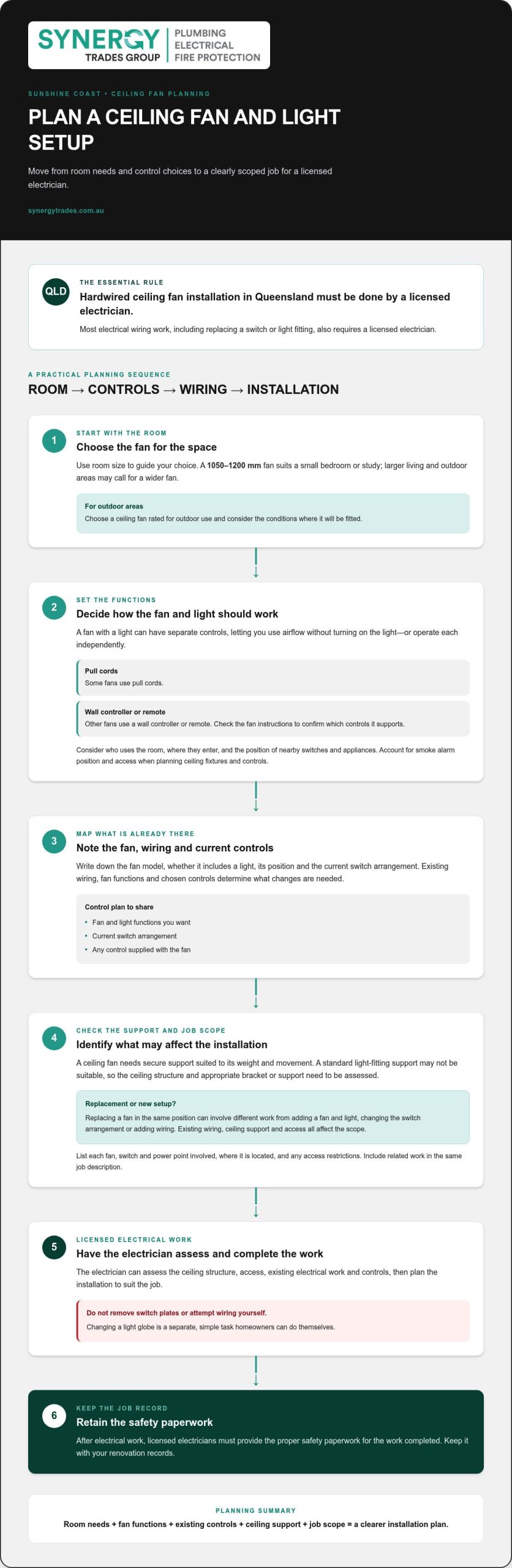
In Queensland, hardwired ceiling fan installation must be carried out by a licensed electrician. Most electrical wiring work, including replacing switches or light fittings, also requires a licensed electrician.
Ceiling fan installation and repairs
Installation may involve replacing an existing fan, fitting one where wiring is already present, or adding a fan-and-light combination. Repairs can address problems such as wobbling, unusual noise or unresponsive controls. When arranging an assessment, describe the fault and say whether the fan includes a light.
A ceiling fan needs secure support suited to its weight and movement. A standard light-fitting support may not be suitable, so the electrician can assess the ceiling structure and fit an appropriate bracket or support. For a replacement, note the existing fan’s position and controls before work begins.
Switch and socket installations
Electrical work on the Sunshine Coast may include replacing a worn switch, adding a power point or relocating an outlet during renovations. Tell the electrician which rooms and points are involved, and whether you need one outlet or several. This helps define the work and flag access considerations such as tiled walls or built-in cabinetry.
In Queensland, most wiring work, including replacing a switch or light fitting, must be completed by a licensed electrician. Don’t remove switch plates or attempt wiring yourself. Changing a light globe is a separate, simple task homeowners can do themselves.
Installation cost considerations
The scope of socket and switch work depends on the number and type of fittings, access to the wiring, and whether the job involves replacement or new wiring. A straightforward switch replacement differs from adding a power point across a room or changing several outlets during a renovation.
To request a useful quote, list each fitting and its location, describe any access restrictions, and include related work in the same request. The quote reflects the job’s scope, including the number of points, wiring changes and access requirements.
Choosing a Sunshine Coast electrician
Before arranging the work, check the electrician’s licence number with the QBCC and describe the job clearly, such as installing two ceiling fans and replacing a switch. Ask for a scope that identifies each fan, switch and power point, so the proposed work matches your list.
After electrical work, licensed electricians must provide the proper safety paperwork for the work completed. Keep it with your renovation records. For local service information, see the Sunshine Coast service area.
Ceiling fan and light switch combinations
Plan the controls alongside the fan and light so each works as you intend. The right setup depends on the fan’s design, existing wiring and how you’ll use the room.
Fan and switch control combinations
A ceiling fan with a light can have separate controls for airflow and illumination. That way, you can run the fan without turning on the light, or operate each independently. Consider who uses the room and where they enter before choosing control positions.
Some fans use pull cords, while others work with a wall controller or remote. Check the fan’s instructions to see which controls it supports. In a bedroom, for example, a wall switch near the entry can be convenient, while a remote lets you adjust the fan from elsewhere in the room.
Consider nearby appliances and existing switches, too. A clear layout helps household members distinguish the fan control from the light without guesswork. If the room has a smoke alarm, account for its position and access when planning ceiling fixtures and controls.
Wiring and control options
Installing a ceiling fan doesn’t always require new wiring. The existing wiring, fan functions and chosen controls determine what changes are needed. A fan and light may need separate control paths, while a compatible remote receiver or wall controller can provide another option.
Before choosing controls, identify the fan model and note whether it includes a light. Then decide whether you want separate wall switches, remote operation or another arrangement supported by the fan. The existing wiring and the fan’s instructions guide the final setup.
Hardwired ceiling fan installation in Queensland must be done by a licensed electrician. Most electrical wiring work, including replacing a switch or light fitting, also requires one. DIY wiring can cause electric shock or leave unsafe connections, so don’t remove switch plates or connect conductors yourself.
To prepare, write down the fan and light functions you want, the current switch arrangement and any control included with the fan. Share these details when arranging electrical work. If your plans include other household electrical changes, you can send a booking request with the job details.
Ceiling fan and light switch work
Installation time depends on the ceiling support, existing wiring and switch arrangement. A like-for-like replacement differs from fitting a fan that needs changes to its electrical connections or mounting support.
Before work starts, identify the fan’s position and the controls you want. Replacing a fan in the same location, for example, may involve different work from adding a fan and light to a room. The electrician assesses the ceiling structure, access and existing electrical work, then plans the installation accordingly.
Changing a switch can also affect the scope. Replacing one in the same position differs from adding separate fan and light controls or moving the switch during a renovation. Tell the electrician which functions you want to control independently, and mention any fault, such as a loose switch or an unresponsive fan.
Clear the work area before the appointment. Move furniture from beneath the ceiling fitting and make the switch plate accessible. Mention high ceilings, built-in cabinetry or limited access when describing the job. These details help the electrician plan safe access and suitable equipment.
- List each ceiling fan and light fitting involved.
- Describe the current switch layout and desired controls.
- Note whether the work is a replacement or a new installation.
- Point out access limits, visible damage or a recurring fault.
For a renovation, group related electrical work into one scope. A bedroom may need a fan, a light fitting and a switch change, while a living area may involve several fittings. A clear list separates the requested electrical work from other tasks, such as air conditioning installation, and makes it easier to review what’s been completed.
After installation or repair, discuss the work completed and any controls fitted. Licensed electricians must provide the proper safety paperwork for their work. Keep those records with renovation documents, especially when several electrical changes happen at once. For broader information about electrical services, consider the work involved across the property before organising the next stage.
The time required varies with the ceiling support, wiring, switch arrangement and access, and whether the job is a replacement or a new installation.
Treat that figure as an example of a listed task, not as a price for every fan or switch job. The work involved more than a single ceiling fitting, so consider the requested items and conditions when reviewing an estimate. A clear scope names each fan, light and switch, and notes whether existing fittings are being replaced or new ones added.
Before approving the work, check that the proposed scope reflects the controls you requested and the access conditions discussed. Ask the electrician to clarify any item that isn’t described, including whether related switch work is included. Once the job is complete, check each fitting and control against the agreed plan, and keep the safety paperwork with your renovation records. This helps you follow up on anything that needs attention and keep track of completed work.
Power outlets and switches
Plan outlet and switch changes around how each room is used. In a home office, for example, a power point near the desk can reduce the need for long leads. A kitchen upgrade may involve several appliances, while a bedroom may need a switch beside the entry. Mark each proposed location before discussing the work.
In Queensland, most electrical wiring work, including replacing a switch or light fitting, must be done by a licensed electrician. This includes adding or relocating a power point when wiring work is required. Don’t remove a switch plate or attempt wiring yourself. Describe the change you need, such as replacing a damaged outlet or adding a point for a wall-mounted appliance.
Distinguish a fitting replacement from a broader wiring upgrade. Replacing a switch in the same position differs from moving it across a wall. Adding an outlet may require access through plaster, cabinetry or another finished surface. The location, existing wiring and number of points all shape the work, so provide a room-by-room list rather than a general request for “more outlets”.
- Write down each room and the outlet or switch location.
- Note whether the work replaces an existing fitting or adds a point.
- List the appliances or equipment that will use each outlet.
- Identify access issues, such as tiled walls or fixed cabinetry.
For a Sunshine Coast sockets and switches task, the reported average is 2 offers per task. That figure describes offers, not installation prices. The price depends on the case and is given after a quote request; the number of points, wiring changes and access affect the cost. A clear scope helps define what the quote covers.
Ask for the proposed work to distinguish each item. For example, a request might list one replacement switch, a new power point in a study and an outlet relocation in a living room. This makes it easier to compare the scope with the finished work. Licensed electricians must provide the proper safety paperwork for work completed, so keep those documents with renovation records.
A switch or outlet issue may be separate from circuit protection. If you’re planning a safety upgrade, consider whether safety switch installation is relevant. A list of affected rooms, existing fittings and planned appliance locations gives the electrician practical details for assessing the work.
Which licensed electricians on the Sunshine Coast install or repair ceiling fans and light switches?
Use a licensed electrician for hardwired ceiling fan installation in Queensland. Licensed electricians also carry out wiring work, including replacing switches and light fittings. For work on the Sunshine Coast, describe the job clearly: a fan repair, a replacement fan or a switch that no longer works properly.
Start by checking the electrician’s licence number with the QBCC. Explain whether the work is at a home or commercial property, and identify each affected room. A clear description helps distinguish a fan fault from a control or wiring issue. Include details such as unusual noise, wobbling, intermittent operation or a light that stops working.
For a replacement, note whether the new fan will use the existing ceiling position. For a repair, describe when the fault occurs and which controls you’ve tried. Don’t open the fan, remove a switch plate or attempt wiring yourself. These details help the electrician assess the work while keeping household members away from electrical hazards.
Ask for the written scope to name each task, such as removing a fan, installing its replacement and changing a wall switch. If the renovation involves several rooms, list each fitting separately. This gives you a useful record of the requested and completed work.
- Record the fan or switch location and the problem observed.
- Identify whether the task is repair, replacement or new installation.
- List any light function or control involved.
- Keep the electrician’s safety paperwork with property records.
Licensed electricians in Queensland must provide the proper safety paperwork for their work. Keep those documents with renovation or maintenance records, especially when several electrical jobs happen together. Before work begins, confirm the agreed scope includes the fan, controls and any switch changes you described. This makes it easier to compare the completed work with your original request.
For a separate safety switch installation, you can submit a booking request with the property and job details. Describe the switchboard concern and the type of property, so the request clearly relates to safety switch work.
For ceiling fan or switch work on the Sunshine Coast, use a licensed electrician and check their licence number with the QBCC before arranging the job.
These are listed task amounts, not a confirmed quote for your property. The quote should set out the work and price for your specific job.
Newer ceiling fans with plastic blades are a family-friendly option for Queensland homes. Ceiling fans help improve airflow and air circulation by keeping air moving, and are more cost-effective than air-conditioning units. Consider the fan type and the controls you want when discussing installation or replacement with a licensed electrician.
Synergy Trades Group: Hot Water System Repairs
Synergy Trades Group helps with plumbing and property maintenance needs that may arise alongside electrical upgrades. If your renovation also involves an unreliable hot water system, the team provides Hot Water System Repairs. Other services include Blocked Drain Clearing, RPZ Backflow Testing and Bidet Supply & Installation.
Ceiling fan and switch work is an electrical task, while a leaking or faulty hot water system needs plumbing attention. When arranging service, describe the issue and relevant property details so your request clearly explains the work needed.
For help with a hot water system repair or another plumbing service, contact Synergy Trades Group to discuss the next step.
Plan your next home maintenance step
Before arranging work, note what you want changed and how each room needs to function. A clear plan helps separate electrical work from plumbing maintenance and makes the next step practical. For ceiling fan or switch work, choose a licensed electrician. For a separate plumbing concern, Synergy Trades Group provides Hot Water System Repairs, Blocked Drain Clearing and RPZ Backflow Testing.
If you’re looking for an electrician or sparky for a ceiling fan or light switch on the Sunshine Coast, use the guidance in this article to define the work and prepare the details. For a plumbing request, you can contact Synergy Trades Group about your job. A well-described request is a useful first step towards getting the right work organised for your property.
Frequently Asked Questions
Why Hire a Local Maroochydore Electrician?
A local Maroochydore electrician can discuss the work needed at your Sunshine Coast property. Before arranging a visit, note the room, fitting type and symptoms, such as a humming fan or flickering light. These details help explain the job and plan access. In Queensland, hardwired ceiling fan installation must be completed by a licensed electrician. Keep the agreed scope and safety paperwork with your home maintenance records.
How much does it cost to replace or add a wall switch for a ceiling fan?
The quote depends on the job. Replacing a switch like for like may involve different work from adding a switch or changing the fan’s controls. The number of switches, existing wiring, access to the wall and need for new wiring all affect the scope. Describe the switch location, fan functions and changes you want so your quote request clearly covers the work.
Can an existing light switch control a ceiling fan and its light separately?
Separate control is possible when the fan, light and wiring support it. An existing single switch may operate both together rather than control each independently. Check the fan’s instructions for its control options, then have a licensed electrician assess whether the existing setup suits your needs. For example, explain if you want the light on while the fan is off, or vice versa.