Could the right response to Legionella in household plumbing be more than a one-size-fits-all “treatment”? If you’re searching for “Legonella Legionnaires plumbing treatment”, first separate the bacteria from the illness they can cause. Legionella bacteria may grow in warm, stagnant water. Legionnaires’ disease is a lung infection people can contract by inhaling contaminated water droplets, such as those produced by a shower.
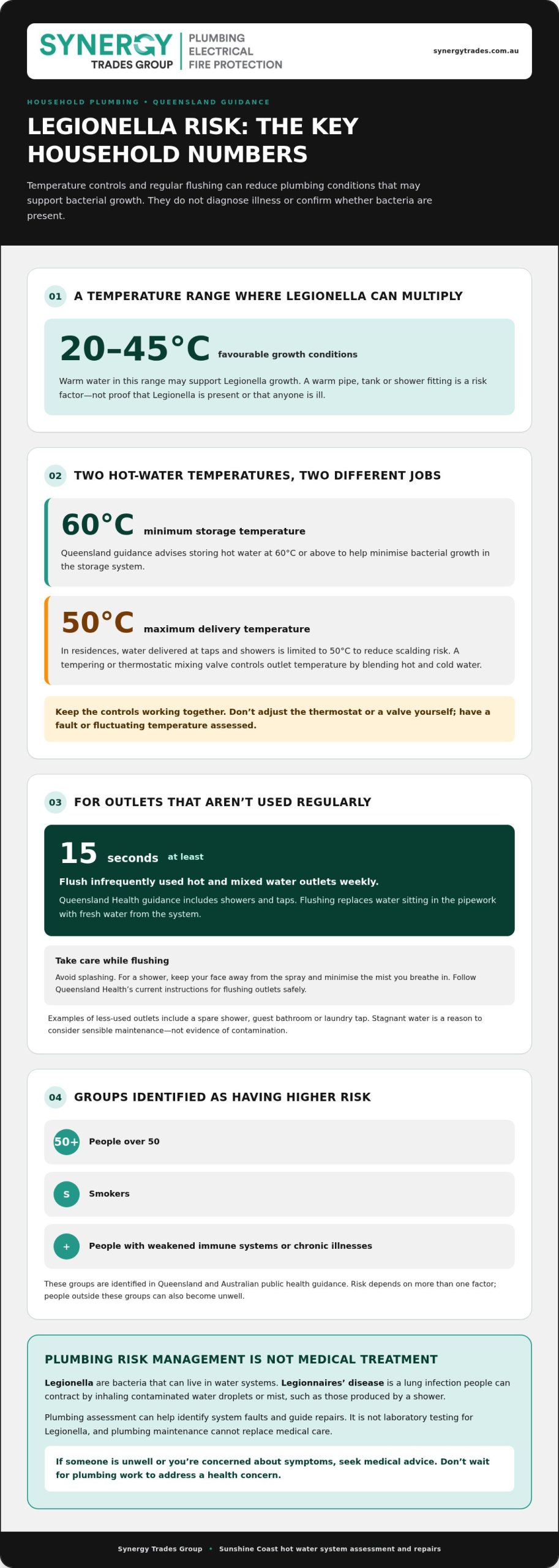
It’s understandable to wonder whether your hot water system or an infrequently used outlet needs attention. Queensland guidance recommends storing hot water at 60°C or above to limit bacterial growth, while tempering it so water delivered to household taps and showers is no hotter than 50°C to reduce scalding risk. Don’t adjust your system’s thermostat yourself.
This fact sheet explains the difference between plumbing risk reduction and medical treatment, outlines household conditions to notice, and sets out practical next steps. It also explains when a plumbing assessment may help identify hot water system issues. If someone is unwell, seek medical advice. Plumbing maintenance isn’t a substitute for healthcare.
Key Takeaways
- Understand how Legionella bacteria differ from Legionnaires’ disease, and why plumbing risk management isn’t medical treatment.
- Notice conditions that may warrant attention, including water that sits unused in outlets or parts of the plumbing system.
- Distinguish routine prevention and plumbing assessment from care provided by a health professional.
- Follow current Queensland public health guidance and seek medical advice if someone is unwell.
- A hot water plumbing assessment can help identify system faults and guide repair next steps for Sunshine Coast homes.
What are Legionella bacteria, and how are they linked to plumbing?
Concern about bacteria in household water is understandable, but a plumbing concern isn’t the same as a diagnosis. Legionella are bacteria that can live in water systems. Legionnaires’ disease is a lung infection caused by breathing in Legionella bacteria, usually in tiny contaminated water droplets or mist. This can happen around outlets such as showers, which disperse water into the air. Legionnaires’ disease isn’t spread from person to person.
Legionella pneumophila is a species associated with Legionnaires’ disease. Water-system conditions can influence whether bacteria may grow, but a warm pipe, tank or shower fitting does not prove Legionella is present. Nor does it mean anyone has become ill.
Water-system risk management means identifying and reducing plumbing conditions that may support bacterial growth, such as water sitting unused in parts of a system. It addresses the water system, not a person’s health. Medical assessment and treatment of suspected Legionnaires’ disease are matters for a health professional. Plumbing maintenance cannot replace them. That distinction is central to understanding what people mean by “Legonella Legionnaires plumbing treatment”.
Where can Legionella risks arise in household water systems?
Potential areas of concern include hot water storage tanks, pipework, showerheads and other outlets that release water as droplets. Water left sitting in an infrequently used section of plumbing may become stagnant. Legionella can multiply in warm water, with favourable growth conditions described in the range of 20°C to 45°C. These are risk factors, not proof of contamination. An unused shower, for example, is a reason to consider sensible maintenance, not evidence that it contains Legionella.
If you’re concerned about a fault or inconsistent operation in your hot water system, a plumber can assess it and advise on repairs. Synergy Trades Group provides hot water system repairs on the Sunshine Coast. An assessment can address system faults, but it should not be confused with laboratory testing for Legionella.
Who may face a higher risk of Legionnaires’ disease?
Queensland and Australian public health guidance identifies people over 50, smokers, and people with weakened immune systems or chronic illnesses as groups at higher risk. This doesn’t mean exposure will inevitably cause illness, or that people outside these groups cannot become unwell. Risk depends on more than one factor, and household plumbing conditions alone can’t diagnose an infection.
If you’re concerned about symptoms or possible illness, speak with a medical practitioner or seek advice from Queensland Health. Don’t wait for plumbing work to address a health concern. For a household water-system question, note which outlet or system behaviour concerns you and whether it is used regularly. That information can help focus a plumbing assessment, while health decisions remain with qualified health professionals.
How hot water plumbing conditions can affect Legionella risk
Water use, temperature and plumbing layout all affect how water moves and where it may sit. A regularly used outlet is flushed through during normal use. By contrast, a guest bathroom, spare shower or little-used tap may hold water in its branch of pipework for longer. Stagnation can create conditions that favour bacterial growth, especially where water remains warm. This is a reason to follow sensible maintenance guidance, not evidence that an outlet is contaminated.
Queensland guidance includes practical steps for householders, alongside separate controls for storage and delivery temperatures. These measures reduce conditions that may support Legionella, but they don’t confirm whether bacteria are present or guarantee that a system is free of risk. If you notice a hot water system fault, such as an unexpected change in operation, an assessment can help identify what needs attention.
Why hot water storage and delivery temperatures are different
Queensland guidance advises storing hot water at a minimum of 60°C to help minimise bacterial growth in the storage system. But water at that temperature can scald, so the temperature inside the storage tank and the temperature delivered at a household tap or shower serve different purposes. In residences, delivery is limited to 50°C at outlets to reduce scalding risk. A tempering valve or thermostatic mixing valve blends hot and cold water to control the outlet temperature.
These controls need to work together. Don’t change a thermostat or adjust a valve yourself. If water is too hot, not heating properly or fluctuating, have the system assessed. A plumber can investigate faults and carry out relevant hot water system repairs. The aim is to address the plumbing issue safely, not to diagnose or treat illness.
What to do about infrequently used showers and taps
Flushing an outlet replaces water that has been sitting in its pipework with fresh water from the system. This can be a useful routine for outlets that aren’t used regularly, such as a spare shower or laundry tap. Queensland Health recommends flushing infrequently used hot and mixed water outlets, including showers and taps, weekly for at least 15 seconds.
Take care while doing this. Avoid splashing, and follow Queensland Health’s current instructions for flushing outlets safely. For a shower, keep your face away from the spray and minimise the mist you breathe in. If an outlet is difficult to operate or your hot water system isn’t behaving as expected, don’t try to correct its temperature settings yourself. A hot water system assessment can help identify plumbing faults that may need repair.
If you’re weighing up “Legonella Legionnaires plumbing treatment”, start by following public health guidance and noting how the system is functioning. If a hot water fault needs attention, you can request a plumbing assessment for your Sunshine Coast property.
What Legionella plumbing treatment may involve, and what it does not mean
The phrase “Legionella plumbing treatment” can sound like one procedure that solves every concern. In practice, water-system risk management and medical care address different problems. Routine prevention follows public health advice to reduce conditions that may support bacterial growth. A plumbing assessment looks at the system’s condition and faults. Neither is a diagnosis or treatment for a person who may be ill.
There isn’t one universal response for every property. A rarely used outlet, a hot water system fault and suspected Legionnaires’ disease each call for different next steps. This distinction matters if you’re searching for “Legonella Legionnaires plumbing treatment”: managing plumbing risk mustn’t be mistaken for treating an infection.
| Type of response | What it addresses | What it doesn’t do |
|---|---|---|
| Routine prevention | Everyday risk reduction, such as following public guidance for water outlets and keeping plumbing in normal use. | It doesn’t prove water is bacteria-free or guarantee that illness can’t occur. |
| Plumbing assessment | The condition and operation of plumbing, including hot water system faults that may need repair. | It isn’t Legionella testing, a medical diagnosis or a treatment protocol for infection. |
| Health-professional care | Assessment of symptoms, diagnosis and medical care if illness is suspected. | It doesn’t repair plumbing faults in the property. |
When is routine prevention different from a plumbing assessment?
Routine steps are sensible habits, not a test result. Following Queensland Health advice can help reduce avoidable water stagnation, but it can’t establish whether bacteria are present. A plumbing assessment is more relevant if a hot water system repeatedly fails, its operation changes unexpectedly, or a plumbing issue persists. A plumber can inspect the system and identify faults requiring repair. That is different from testing for Legionella or applying a standard treatment to every home.
For example, a tap that hasn’t been used regularly calls for public health guidance on outlet use. A system that isn’t heating or operating as expected may warrant an assessment. If the concern is a fault, hot water system repairs can address the plumbing issue. Don’t change thermostat settings yourself or assume a repair confirms the water is free of bacteria.
Why Legionnaires’ disease needs medical care
Plumbers assess plumbing systems. Health professionals assess symptoms and illness. If someone has concerning respiratory symptoms or you suspect Legionnaires’ disease, seek prompt medical advice and explain the concern to a medical practitioner. Don’t wait for a plumbing appointment, and don’t rely on maintenance work to diagnose, treat or prevent an individual infection.
Keeping these roles separate makes the next step clearer: follow public guidance for general household risk reduction, arrange plumbing help for system faults, and leave health concerns to medical professionals. Plumbing work can address the system, but it can’t replace healthcare.
What should Sunshine Coast homeowners do about a plumbing concern?
A concern about a household water outlet doesn’t automatically mean there’s a problem with the whole plumbing system. Start by identifying what you’ve noticed, then follow current Queensland public health advice and decide whether the issue is a routine maintenance question, a plumbing fault or a health concern. This sequence helps you take an appropriate next step without assuming that “Legonella Legionnaires plumbing treatment” means the same thing in every situation.
A practical response for householders
Before arranging plumbing help, make a short note of what’s happening. Include which outlets are rarely used, what seems unusual about the hot water, and when you first noticed the concern. These details can help make an assessment more focused.
- Record the concern. Note whether the issue affects one tap or shower, several outlets, or the hot water system more generally. Don’t draw conclusions about contamination from appearance or temperature alone.
- Follow Queensland Health advice. Use current guidance for routine household precautions, including advice about outlets that aren’t used often. Don’t improvise a flushing routine or assume a household precaution confirms water quality.
- Arrange an assessment for a persistent fault. If hot water is inconsistent, the system isn’t operating as expected, or the concern keeps returning, a plumber can assess the system and identify repair needs.
Don’t change thermostat settings yourself or pour chemicals into tanks, pipes or outlets in an attempt to disinfect them. An unsuitable intervention could create safety or plumbing issues, and it isn’t a substitute for an appropriate assessment. The right response depends on the system and the specific fault, rather than one treatment being suitable for every home.
When to seek plumbing help or medical advice
Plumbing help is appropriate for system faults, inconsistent hot water or maintenance concerns. For example, if the hot water repeatedly cuts out or behaves differently across outlets, record what you observe and arrange an assessment. This Sunshine Coast hot water system repair guide explains repair-related warning signs and what information may be useful when describing an issue.
Health concerns need a different response. If someone has concerning respiratory symptoms or you’re worried about possible illness, seek medical advice promptly from a medical practitioner. You can also consult Queensland Health for public health information. Don’t wait for a plumber to assess a system before seeking care for someone who may be unwell.
A plumbing service call addresses the water system; medical care addresses a person’s symptoms and health. Keep that distinction clear, even if the concern began with a household outlet. If you’ve noticed a hot water system fault at your Sunshine Coast property, you can request a hot water plumbing assessment as a practical next step.
Arrange a Sunshine Coast hot water plumbing assessment
If your concern is about how a hot water system is operating, a plumbing assessment can help identify faults and determine whether repairs are needed. It won’t establish whether Legionella is present or treat an illness. Keeping those roles clear makes it easier to choose a sensible next step rather than assuming every concern needs the same response.
Synergy Trades Group provides plumbing and hot water system repair services for homes and businesses on the Sunshine Coast. A plumber can assess a reported system issue and discuss appropriate repair work. For general system maintenance and repair information, explore our hot water system services.
What to share when booking a plumbing appointment
A few clear details can help explain why you’re seeking an assessment. Be ready to describe the property and hot water system, what you’ve noticed, and which outlets are affected. Mention any shower or tap that is rarely used. It can also help to explain when the concern began and whether the hot water issue happens consistently or only at certain outlets.
- Describe the system concern: for example, hot water that fluctuates or a system that isn’t operating as expected.
- Identify affected outlets: note whether the issue is limited to one tap or shower, or seems to involve several outlets.
- Mention patterns of use: include any outlets that have had little use for an extended period.
These details help a plumber understand the plumbing concern, but they don’t confirm bacterial contamination. Don’t adjust thermostat settings or add chemicals to the system yourself. Any work should be based on the plumbing issue identified, and health concerns need a separate response from a medical professional.
How local hot water system support can help
For Sunshine Coast homeowners, professional plumbing help is a practical option when a hot water system has a fault, behaves inconsistently or needs repair. An assessment can focus on the system’s operation and the concern you describe, helping establish whether plumbing work is appropriate. It isn’t Legionella testing, disinfection or a substitute for medical care.
The phrase “Legonella Legionnaires plumbing treatment” can make it sound as if plumbing work treats both a water system and an illness. It doesn’t. Plumbing support addresses system faults; a health professional assesses symptoms and provides medical care. If someone is unwell or you’re concerned about possible illness, seek medical advice rather than waiting for a plumbing appointment.
If you’ve noticed a persistent hot water concern at your Sunshine Coast property, sharing the details and arranging an assessment is a straightforward next step. Book a plumbing appointment to discuss your hot water system concern.
Take the next step with confidence
Start with a clear description of the issue. Note what you’ve noticed and which part of the system is affected, then decide whether you need plumbing support or medical advice. Keeping those needs separate helps you choose the right next step without assuming that “Legonella Legionnaires plumbing treatment” means one solution for every concern.
For a hot water system fault, a plumbing assessment can help identify whether repair work is needed. Synergy Trades Group is a family-owned Sunshine Coast business, operated by Paul and Lynda, providing local plumbing and hot water system repair services. Plumbing work addresses the system, not a person’s health, so seek medical advice for illness concerns.
If you’re ready to discuss a hot water system concern at your Sunshine Coast property, book a Sunshine Coast plumbing appointment.
Frequently Asked Questions
What is the difference between Legionella and Legionnaires’ disease?
Legionella is a group of bacteria; Legionnaires’ disease is a lung infection caused by some Legionella bacteria. A possible plumbing issue doesn’t establish that bacteria are present, and detecting bacteria in water doesn’t by itself confirm that a person is infected. Water-system concerns call for plumbing or public health guidance, while symptoms or suspected illness should be discussed with a medical practitioner.
Can Legionella grow in a home hot water system?
Yes, Legionella can grow in a home water system if conditions are favourable, including warm water that sits unused in parts of the plumbing. Water may remain in pipework serving an infrequently used guest bathroom, for example. This possibility doesn’t mean every home system is contaminated. If your concern is a fault or unusual hot water performance, describe what you’ve noticed and which outlets are affected when seeking plumbing advice.
What temperature should a Queensland hot water system be set to?
Queensland guidance recommends storing hot water at a minimum of 60°C, while household water delivered to taps and showers should be no hotter than 50°C to reduce scalding risk. These are different points in the system: a tempering valve or thermostatic mixing valve controls delivery temperature. Don’t alter the thermostat yourself. If you’re unsure how your system is operating, have a plumber assess it.
How often should unused showers and taps be flushed?
Queensland Health recommends flushing infrequently used hot and mixed water showers and taps weekly for at least 15 seconds. This replaces water that has been sitting in the outlet’s pipework. Follow current public guidance and take care to minimise splashing and water mist, particularly around showerheads. If an outlet is difficult to operate or you’re unsure how to flush it safely, seek appropriate plumbing advice rather than forcing the fitting.
Does plumbing treatment cure Legionnaires’ disease?
No. Plumbing work addresses a water-system issue; it doesn’t diagnose or cure an infection in a person. The phrase “Legonella Legionnaires plumbing treatment” can blur those different needs, so keep them separate. If someone may have Legionnaires’ disease or has concerning symptoms, seek medical advice promptly. A medical practitioner can assess the person and decide on appropriate care. Don’t wait for plumbing work before getting help for illness concerns.
Should I use chemicals to treat Legionella in household plumbing?
Don’t pour chemicals into a hot water tank, pipes, showerhead or tap as a do-it-yourself treatment. An unsuitable product or use may create plumbing or personal safety risks, and it won’t provide a medical assessment or guarantee that bacteria have been removed. Follow Queensland public health guidance for household precautions. If you suspect a plumbing fault, arrange a plumbing assessment instead of trying an unverified disinfection method.
When should I call a plumber about a hot water system concern?
Arrange plumbing help if your system repeatedly stops heating, delivers inconsistent hot water, or shows another persistent fault. Note whether the problem occurs at one outlet or across several, and whether it began after the system’s use or operation changed. This information can help explain the issue. A plumber can assess and repair plumbing faults, but suspected illness needs medical attention, not a plumbing appointment alone.