More than 50% of domestic construction defect claims across Queensland stem from internal water leaks. It’s a sobering statistic, but it highlights a simple truth: a flawless space depends entirely on the hidden pipework behind the walls, not just the designer finishes on top. If you’re looking for a trusted Sunshine Coast plumber – bathroom renovation planning must prioritise sound drainage, correct water pressure, and watertight junctions long before any tiling begins.
It’s completely normal to feel overwhelmed by the technical details, whether you’re worried about hidden leaks destroying custom cabinetry or trying to make sense of QBCC permits and Form 4 certifications. You deserve absolute confidence that your home is protected and fully compliant. In this guide, we’ll walk through the entire sequence from rough-in to final fit-off, helping you select the right licensed trade specialist so your new bathroom is built to last.
Key Takeaways
- Understand the critical two-stage plumbing sequence to ensure drainage falls and concealed pipework are fully tested before waterproofing begins.
- Learn why Queensland compliance essentials, such as QBCC Form 4 lodgements and WaterMark fixtures, are vital for preserving your home insurance policy.
- Assess your existing hot water system capacity upfront so luxury additions, such as rainfall showers and backflow-compliant bidets, perform at full pressure.
- Discover the essential licensing checks and multi-trade coordination skills needed when engaging a trusted Sunshine Coast plumber – bathroom renovation partner.
The Vital Role of Plumbing in a Sunshine Coast Bathroom Renovation
Walk into a newly completed bathroom, and your eyes immediately land on the stone basins, textured tiles, and brushed brass tapware. Yet, the long-term success of the space depends entirely on the hidden pipework encased behind those surfaces. While design magazines celebrate aesthetic choices, the structural reality is straightforward: premium fixtures are only as dependable as the drainage and water lines feeding them. Engaging an experienced Sunshine Coast plumber – bathroom renovation specialist guarantees that the engineering behind the sheeting is sound before any tiling commences.
Our sub-tropical climate poses distinct challenges for residential wet areas. High ambient humidity combined with elevated summer temperatures creates ideal conditions for mould to thrive. When a slow, concealed leak develops inside a stud wall, moisture gets trapped behind the waterproofing membrane. Over time, that hidden moisture rots timber framing, swells joinery, and debonds tiles from their substrate. Modern high-flow fixtures make pipe dynamics even more critical. Sizing your pipes correctly prevents sudden drops in volume when running twin shower heads alongside vanity mixers.
Why Surface Aesthetics Rely on Solid Behind-the-Wall Plumbing
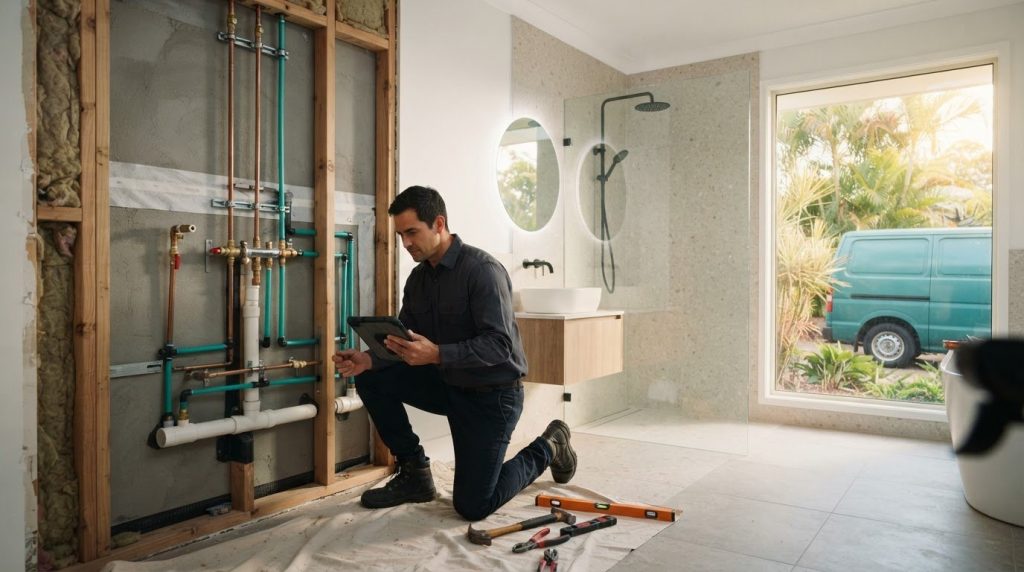
Every pristine finish relies on millimetre-perfect rough-ins. If pipe brackets flex or breech pieces sit slightly off-square, tapware handles will not sit flush against the finished tiles, leading to gaps where water can penetrate. Even worse, leaving legacy infrastructure untouched during a makeover invites disaster. Prior to sealing the walls, completing a thorough water leak detection assessment identifies pinhole corrosion in ageing copper or brittle polybutylene before fresh plasterboard covers them up.
Coastal Plumbing Challenges Unique to the Sunshine Coast
Local homes face environmental factors that standard suburban builds never encounter. Designing resilient plumbing systems and fixture installations means accounting for our specific coastal conditions:
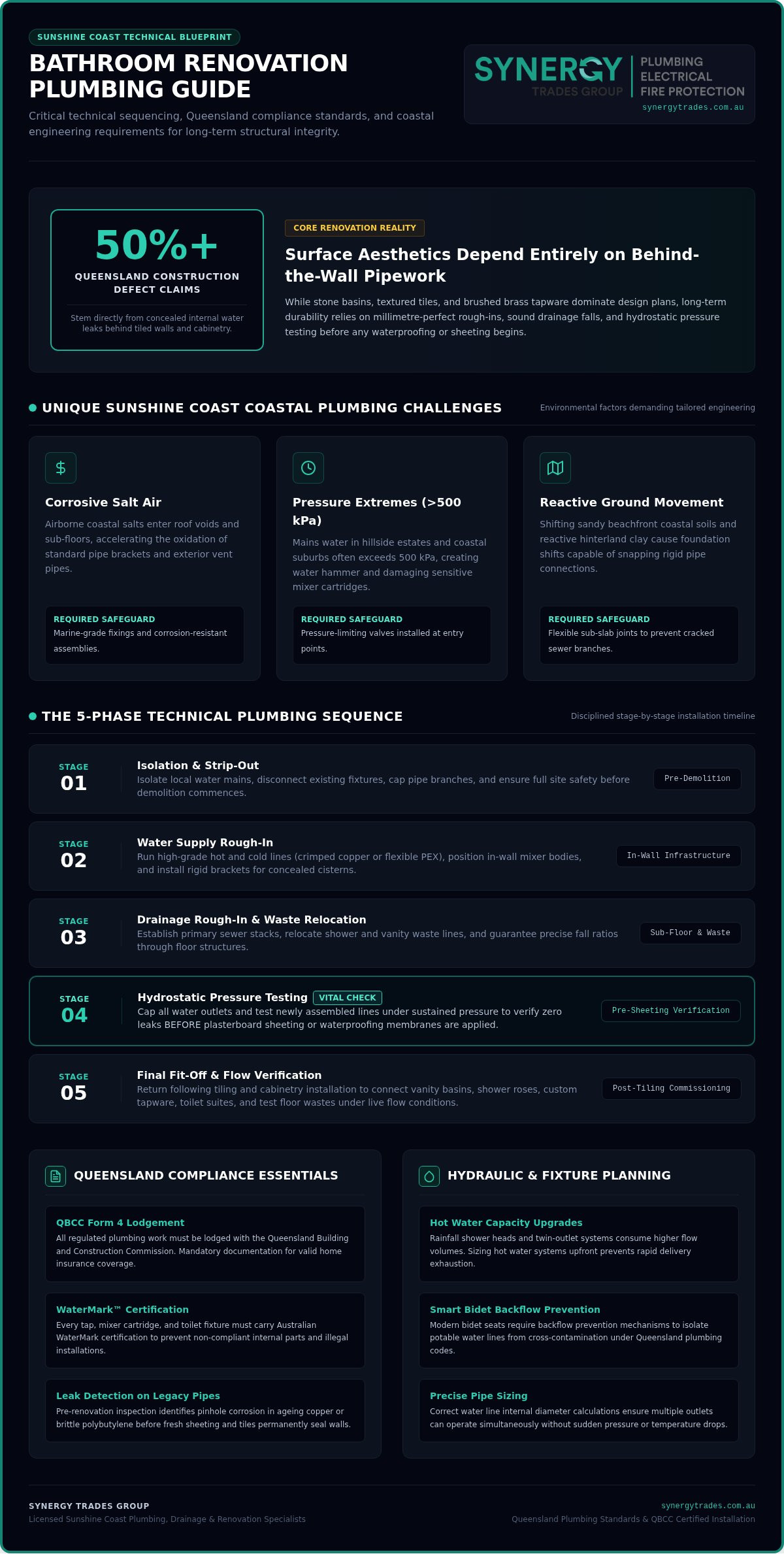
- Corrosive salt air: Airborne salts penetrate roof voids and sub-floors, rapidly oxidising standard metal brackets and exterior vent terminations unless marine-grade fixings are specified.
- Water pressure extremes: Coastal supply lines vary substantially. Hillside areas and newer estates often experience mains pressure exceeding 500 kPa, which requires pressure-limiting valves to stop water hammer and protect delicate mixer cartridges.
- Reactive ground movement: Shifting sandy foundations along beachfront strips and expanding clay soils in the hinterland demand flexible sub-slab drainage joints to prevent cracked sewer branches.
Partnering with a dedicated Sunshine Coast plumber – bathroom renovation team protects your financial investment against these unique regional factors from day one.
Key Stages of Bathroom Renovation Plumbing: From Rough-In to Fit-Off
Successful bathroom remodels follow a disciplined technical order. You cannot simply pull down old tiles and immediately begin installing new tapware. Instead, licensed trade work happens in distinct, coordinated phases that align closely with carpenters, plasterers, and waterproofers. Understanding this process helps you see why engaging a dedicated Sunshine Coast plumber – bathroom renovation contractor is vital to running your project on schedule.
Every transformation unfolds across five main milestones:
- Phase 1 (Isolation and strip-out): Isolating local water mains, disconnecting old fixtures, capping pipe branches, and ensuring the site is safe for demolition work.
- Phase 2 (Water rough-in): Running new hot and cold supply lines (such as crimped copper or flexible PEX), positioning in-wall mixer bodies, and setting brackets for concealed cisterns.
- Phase 3 (Drainage rough-in): Establishing primary sewer stacks, relocating shower and vanity waste runs, and securing strict fall ratios.
- Phase 4 (Hydrostatic pressure testing): Capping all water outlets and testing the assembled lines under full pressure to confirm every joint is watertight before sheeting or waterproofing begins.
- Phase 5 (Final fit-off): Returning after tiling and cabinetry are completed to fit vanity basins, shower roses, custom tapware, toilet suites, and test all floor wastes under live flow.
The Rough-In Phase: Drainage Falls, Pipe Relocation, and Water Supply
Moving a shower or shifting a toilet pan requires significant structural forethought. Running PVC waste pipes through timber floor joists demands precise notching that preserves structural load limits, while sub-slab relocations may require diamond core drilling. Under AS/NZS 3500 and relevant QBCC plumbing work regulations, drainage lines must strictly maintain adequate downward fall gradients to move waste reliably and prevent recurrent sediment buildup. Plumbers also wrap internal waste drops in acoustic lagging so flushing noises do not disrupt adjacent bedrooms.
The Fit-Off Phase: Installing Basins, Showers, and Custom Tapware
Fit-off brings the room together, transforming functional pipe runs into a finished living space. Wall-hung vanities require robust in-wall timber nogging installed during framing so heavy stone benchtops remain rock solid. During this final phase, your tradesperson calibrates tempering valves to ensure hot water delivered to personal hygiene areas stays at or below 50°C, guarding against accidental scalding. Plumbers also inspect puddler flanges and puddle collars beneath floor wastes, verifying that minor tile drainage flows directly into the trap rather than pooling beneath the screed. If you are preparing to map out your upcoming build, you can schedule a renovation plumbing consultation to review your layout and pipework requirements early.
Queensland Plumbing Compliance: QBCC Licences, WaterMark, and Form 4
Plumbing legislation in Queensland is among the strictest in the country. Under the Plumbing and Drainage Act 2018 and the Queensland Building and Construction Commission Act 1991, regulated plumbing and drainage work requires a licensed trade contractor at any dollar value. Unlike general carpentry or tiling, where non-structural handyman tasks are permitted under $3,300, plumbing has zero monetary threshold for licensing. Cutting pipes, re-routing sewer branches, or adjusting supply junctions without proper credentials is not just illegal; it automatically voids your domestic building insurance if a concealed leak subsequently floods your home.
Working alongside an accredited Sunshine Coast plumber – bathroom renovation specialist guarantees that your upgrades comply with local council by-laws and national standards. Beyond protecting your physical home, verified paperwork gives you complete peace of mind when it comes time to insure or sell the property.
Understanding QBCC Form 4 Notifiable Work in Bathroom Remodelling
Most plumbing alterations carried out during a remodel fall directly under the category of Notifiable Work. Under the Plumbing and Drainage Regulation 2019, this includes moving existing fixtures, running extended supply lines, and configuring fresh drainage. Your licensed trade professional is legally required to lodge a Form 4 directly with the QBCC within 10 business days of completing the installation or issuing your final invoice.
Once registered, you must be provided with an official copy for your records. Holding documented Form 4 certifications proves invaluable when selling property across the Sunshine Coast. Local conveyancers and savvy buyers regularly check council records, and missing certificates for unapproved wet area alterations can delay settlements or force renegotiation.
WaterMark Certification and Australian Standards for Fixtures
Buying stylish designer tapware directly from overseas discount websites might look like an easy way to save, but it carries immense risk. In Australia, the National Construction Code mandates that all items connected to your water or drainage systems must be certified under the WaterMark Certification Scheme. These guidelines enforce rigid manufacturing criteria:
- Mandatory certification: A licensed tradesperson cannot legally install taps, mixers, or valves lacking an authentic WaterMark logo and valid WELS star rating.
- Lead-free standards: Australian standards mandate that copper alloy tapware in contact with drinking water contains no more than 0.25% lead, verified by the official Lead Free WaterMark emblem.
- Burst protection: Uncertified flexi-hoses are notoriously prone to sudden ruptures under fluctuating mains pressure, causing catastrophic structural flooding.
Consulting your Sunshine Coast plumber – bathroom renovation expert before purchasing fittings ensures your chosen fixtures meet strict regional requirements, keep your manufacturer warranties valid, and protect your home against costly plumbing failures.
Modern Fixture Planning: Hot Water Demand, Smart Bidets, and Filtration
Today’s bathroom designs embrace luxury: twin rainfall shower roses, deep freestanding soaking tubs, and integrated bidet suites. While these features deliver a spa-like retreat at home, they also place immense operational pressure on your existing domestic water systems. Without evaluating system capacity before walls are sheeted, you risk stepping into a lukewarm shower or dealing with persistent water pressure drops. An accomplished Sunshine Coast plumber – bathroom renovation specialist checks these hydraulic demands early, ensuring your utility supply matches your lifestyle vision.
Water quality is another essential factor often overlooked during modern refits. Tapware in brushed nickel, gunmetal, and matte black looks stunning on display, but high mineral content in local municipal or tank supplies causes chalky scale build-up. Integrating targeted whole-home or point-of-use water filtration during the rough-in stage protects these premium finishes, stops limescale from clogging aerators, and extends cartridge lifespans.
Aligning Hot Water System Capacity with High-Flow Bathroom Fixtures
A conventional 250-litre electric hot water cylinder struggles to keep up when a soaking bath and a twin shower system run back-to-back. High-flow fixtures can empty an older off-peak storage unit in minutes. Plumbers assess household usage patterns to determine whether essential hot water systems servicing will suffice, or if transitioning to high-efficiency continuous flow gas or modern heat pump units is required. High-capacity continuous flow units generate continuous hot water on demand, never run out during morning rush hours, and free up external yard space by eliminating large storage tanks.
Backflow Prevention Rules for Modern Bidet and Douche Spray Installations
Smart toilets and handheld douche spray wands are rapidly replacing conventional toilet pans across coastal homes. However, because these spray heads sit adjacent to or below the toilet pan flood rim, Queensland plumbing laws classify them as high-hazard cross-connections. To prevent contaminated water from siphoning back into your household drinking supply, AS/NZS 3500.1 mandates rigorous safeguards:
- Air gap protection: Certified smart toilets with integrated atmospheric vacuum breakers or physical air gaps comply straight out of the box.
- Testable backflow devices: Retrofitted handheld bidet spray hoses usually require an external Reduced Pressure Zone (RPZ) valve.
- Council registration: RPZ valves must be registered with the local council and undergo mandatory annual testing to remain compliant.
Cutting corners on cross-connection safety risks drinking water contamination across your home. To ensure your new fixtures are safe and fully certified, book your modern fixture and bidet installation with a qualified trade specialist who understands regional compliance inside out.
Choosing the Right Sunshine Coast Plumber for Your Bathroom Renovation
Vetting trades is often the most stressful part of any home improvement journey. In a wet area, you need tradespeople who respect sequencing deadlines, communicate clearly with adjoining contractors, and stand behind their workmanship long after the job is finished. When hiring a Sunshine Coast plumber – bathroom renovation success depends on verified trade credentials, transparent scopes of work, and proven local reliability.
Always verify that your plumber holds a current QBCC trade contractor licence rather than just an employee licence, along with active public liability cover and worker compensation. A dependable contractor provides an itemised written quote that clearly differentiates between the rough-in and fit-off stages. This clarity ensures there are no surprises regarding fixture connections, testing protocols, or site sign-offs.
Essential Questions to Ask Before Hiring a Renovation Plumber
Before locking in your trades, ask targeted questions to clarify scope and regulatory responsibilities:
- Compliance paperwork: Do you manage the hydrostatic pressure testing and lodge the mandatory QBCC Form 4 documentation directly?
- Rough-in hardware: Does the quote include in-wall pressure-limiting valves, mini isolating taps, and floor waste collars, or are those extra?
- Local network standards: How familiar are you with Unitywater connection guidelines and regional building specifications across the Coast?
Establishing these details upfront prevents frustrating delays once demolition starts.
The Advantage of Local Multi-Trade Experience on the Coast
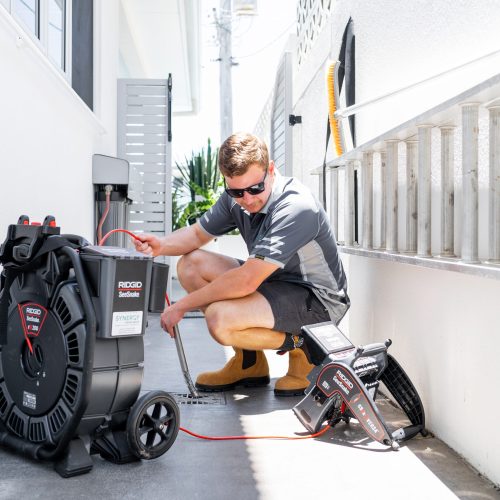
Modern bathrooms rarely require plumbing alone. High-output exhaust fans, backlit mirrors, under-tile heating, and heated towel rails all demand synchronized electrical cable rough-ins alongside your water lines. Synergy Trades Group is family-owned and locally operated by Paul and Lynda, offering over 70 years of combined industry trade experience across Queensland. Their integrated plumbing and electrical capabilities eliminate friction between separate contractors, ensuring every fixture is positioned accurately and wired safely. If you are preparing to upgrade your home, contact Synergy Trades Group for dependable guidance and licensed trade expertise.
Build Your Dream Bathroom on Solid Plumbing Foundations
A truly luxurious bathroom is built from the inside out. While premium tapware and elegant stone basins define the look, it’s the concealed pipework, correct drainage falls, and certified QBCC Form 4 documentation that protect your home from devastating water damage. When you partner with a dependable Sunshine Coast plumber – bathroom renovation milestones flow smoothly from early rough-in pressure testing through to final handover.
Locally owned and operated by Paul and Lynda, Synergy Trades Group brings over 70 years of combined trade experience across Queensland to your project. With fully licensed specialists across plumbing, drainage, and electrical maintenance, our team ensures your fixtures perform reliably from the very first shower. Ready to turn your design plans into reality with total peace of mind? Speak with our licensed Sunshine Coast plumbing team today to plan your compliant, watertight bathroom.
Frequently Asked Questions
Do I need a licensed plumber to renovate a bathroom on the Sunshine Coast?
Yes, absolutely. Under Queensland’s Plumbing and Drainage Act 2018, all regulated plumbing and drainage work requires an appropriately licensed contractor regardless of project cost. Unlike non-structural carpentry, there is no $3,300 unlicensed threshold for plumbing. Engaging a licensed Sunshine Coast plumber – bathroom renovation specialist guarantees your installation meets statutory standards and ensures your domestic home building insurance remains fully protected against water damage claims.
What is QBCC Form 4 notifiable work in a bathroom renovation?
A Form 4 is a statutory lodgement submitted directly to the QBCC registering regulated notifiable work. In a bathroom remodelling project, relocating existing water supply lines, adding fixtures, or altering sanitary drainage triggers this requirement. Your licensed contractor must lodge the Form 4 within 10 business days of completion and provide you with an official copy, giving you clear legal documentation that protects future property resale.
Can I change the location of my toilet, shower, and vanity during a renovation?
Yes, but moving fixtures requires careful structural planning for water feeds and drainage falls. Shifting a toilet or shower on a timber sub-floor involves re-routing waste lines between joists, while slab-on-ground homes may require concrete trenching or core drilling. Drainage lines must maintain strict minimum falls under AS/NZS 3500 to ensure smooth discharge and prevent chronic blockages, making early rough-in planning essential before laying fresh screed.
Why do bidet installations require specialised backflow prevention devices?
Bidet spray nozzles and handheld douche hoses sit close to or below the toilet pan rim, creating a high-hazard cross-connection. If mains pressure suddenly drops, contaminated water could siphon back into your clean drinking supply. Queensland regulations mandate that these fixtures feature certified air gaps or registered testable backflow prevention devices, such as RPZ valves, which require precise installation and ongoing council compliance testing.
How long does the plumbing rough-in take during a standard bathroom renovation?
For a standard residential bathroom, the initial plumbing rough-in typically takes between one and two working days. This timeframe allows your tradesperson to strip redundant pipework, reposition hot and cold water lines, set in-wall mixer bodies, reconfigure drainage, and complete hydrostatic pressure testing. If your layout requires extensive slab penetrations or complex drainage reconfigurations, allow an additional day before wall sheeting commences.
Will my existing hot water system support high-flow twin shower heads?
It depends on the delivery rate and storage capacity of your current unit. Standard electric cylinders often drain rapidly under twin rainfall heads running simultaneously. An experienced Sunshine Coast plumber – bathroom renovation contractor can calculate your peak household flow rate and recommend whether your existing setup is sufficient, or if upgrading to a continuous flow gas or heat pump system is necessary to maintain steady water temperatures.
Can unbranded tapware bought online be installed by a licensed Queensland plumber?
No, licensed plumbers cannot legally install tapware lacking valid Australian WaterMark certification. Under the National Construction Code, every fixture connected to the mains water supply must carry the WaterMark stamp and comply with lead-free brass requirements (maximum 0.25% lead content). Fitting uncertified, imported products breaches state plumbing laws, risks burst flexi-hoses, and voids both manufacturer warranties and private household insurance policies.