You’ve just stepped into the shower on a brisk winter morning, only to be met by a bracing blast of icy water instead of the usual warmth. It’s a frustrating way to start the day, especially when you’re already juggling a busy family schedule. When your system fails, finding reliable hot water repairs sunshine coast becomes your top priority. You need more than just a quick fix; you need a solution that stands up to our unique coastal environment and keeps your energy bills from skyrocketing.
We understand how stressful a sudden breakdown can be, and the confusion that follows when trying to decide between a simple repair or a system upgrade. It’s perfectly normal to feel overwhelmed by rising utility costs and complex technical jargon. This 2026 guide is designed to give you clarity and peace of mind. You’ll learn how to troubleshoot common issues, understand the factors affecting maintenance costs, and discover which technologies offer the best long-term value for your home. From identifying early warning signs to navigating the latest energy-efficient options, we’ve organised everything you need to make an informed, cost-effective decision for your household’s comfort.
Key Takeaways
- Learn to identify the subtle warning signs of a failing system, such as discoloured water or fluctuating temperatures, to catch issues before they escalate.
- Understand how the Sunshine Coast’s salt air and hard water impact your unit, and why specialised hot water repairs sunshine coast are vital for coastal homes.
- Apply the “50% Rule” and the 10-year age benchmark to confidently decide whether repairing or replacing your system is the most economical choice.
- Discover the essential five-year maintenance schedule and simple DIY checks that can save you thousands in premature replacement costs.
- Gain insights into why a dual-licensed approach to plumbing and electrical work provides a more seamless and reliable solution for your household.
Recognising the Signs: When to Call for Hot Water Repairs
Most homeowners don’t give their hot water system a second thought until the water runs cold. However, your unit usually provides several subtle warnings before it fails completely. Recognising these signs early can be the difference between a simple part replacement and an expensive full system installation. If you’re noticing changes in your water quality or temperature, it’s time to consider the necessity of hot water repairs sunshine coast residents rely on to keep their homes running smoothly.
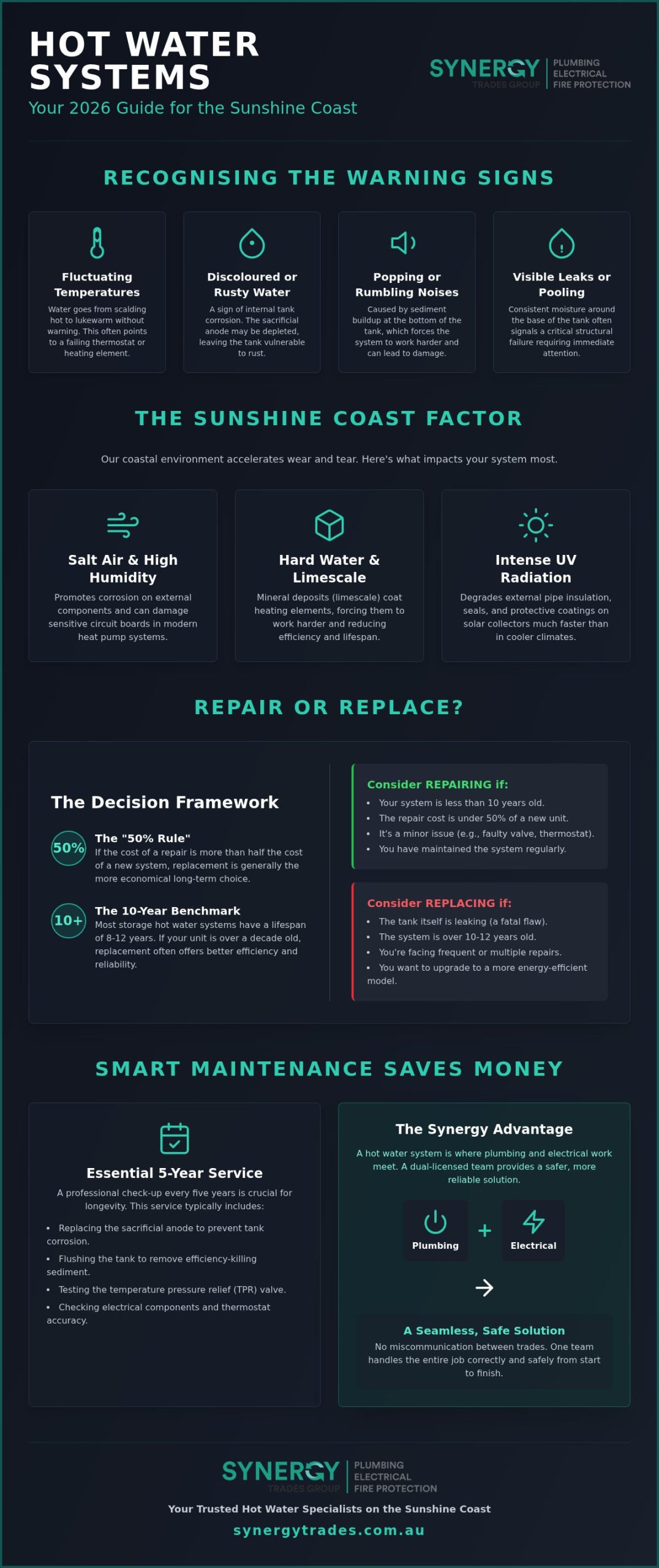
Fluctuating temperatures are often the first red flag. If your water is scalding one minute and tepid the next, your heating element or thermostat is likely struggling. Similarly, discoloured or “rusty” water suggests that internal corrosion has begun. This is often linked to the sacrificial anode, which protects the tank from the inside out. When you hear strange popping or rumbling sounds, it’s usually a sign of sediment buildup. This “kettling” effect happens when minerals settle at the bottom, creating a barrier that makes the system work harder and eventually leads to tank damage. Finally, keep an eye on visible leaks. While a small amount of water from the pressure relief valve is normal during a heating cycle, consistent pooling at the base of the tank often signals a structural failure.
The Anatomy of a Failing Hot Water System
A standard storage water heater relies on a delicate balance between electrical and plumbing components. The thermostat acts as the brain, monitoring the temperature and telling the heating element when to switch on. If these two don’t communicate correctly, you’ll experience inconsistent heat or no water at all. Safety is also built into the system through the tempering valve, which is a mandatory requirement in Queensland. This valve mixes hot and cold water to ensure the temperature at your taps doesn’t exceed 50°C, preventing accidental scalds for your family. The sacrificial anode is a magnesium or aluminium rod designed to corrode in place of the steel tank, effectively acting as a lightning rod for rust to prolong the life of your hot water systems.
Immediate Actions for Homeowners
If you discover a major leak or suspect an electrical fault, taking quick action can prevent further property damage. Start by isolating the system. Locate your switchboard and turn off the circuit marked “hot water” to remove any electrical risk. Next, find the cold water isolation valve near the base of the unit and turn it clockwise to stop the flow of water. It’s also worth checking your switchboard for any tripped safety switches, as a simple electrical surge can sometimes mimic a system failure. While a tiny drip might seem minor, any leak that persists or originates from the tank itself is a plumbing emergency that requires professional hot water repairs sunshine coast experts should handle to ensure your home stays safe and dry.
The Sunshine Coast Factor: Why Local Systems Fail Faster
The Sunshine Coast offers a lifestyle many envy, yet our unique environment presents specific hurdles for household infrastructure. From the salt-laden breezes of Mooloolaba to the high humidity of the hinterland, local conditions accelerate the wear and tear on essential appliances. When residents seek hot water repairs sunshine coast wide, the cause is frequently tied to these environmental stressors rather than simple mechanical age. Addressing these mineral and atmospheric issues is a core part of the maintenance routine for any coastal property.
High humidity levels, particularly during our tropical summer months, can wreak havoc on the sensitive circuit boards found in modern heat pump systems. Moisture ingress leads to short circuits and premature component failure if the unit isn’t properly sealed or maintained. Similarly, the intense Queensland UV radiation doesn’t just affect our skin; it degrades the insulation on external piping and the seals on solar collectors much faster than in cooler climates. Following official energy efficiency guidance is a great starting point, but local expertise is required to manage these specific coastal variables effectively.
Hard Water and Limescale Challenges
In many pockets of the Coast, the water supply contains high levels of dissolved minerals. As this “hard water” is heated, minerals like calcium and magnesium precipitate out, forming a hard crust known as limescale. This scale acts as an insulator, coating the heating element and forcing it to run hotter and longer to reach the desired temperature. Eventually, the element simply burns out under the strain. Beyond the element, these deposits can block valves and reduce water pressure throughout your home. Regular flushing of the tank is a non-negotiable task for homeowners in these areas to prevent sediment from hardening into a permanent problem.
Coastal Corrosion Protection
For those living in suburbs like Noosa or Mooloolaba, salt air is the primary enemy of outdoor units. Salt is highly corrosive, eating through standard metal casings and damaging the delicate fins on heat pump evaporators. To combat this, it’s essential to select systems with coastal-grade coatings or stainless steel components. We often recommend a simple routine of rinsing the exterior of your unit with fresh water to remove salt buildup. This small act can add years to the lifespan of your hot water systems Sunshine Coast wide. If you’re concerned about how the salt air is affecting your unit, you might want to schedule a professional health check to ensure your system remains protected.
Repair vs. Replace: Making the Cost-Effective Choice
Deciding between a quick fix and a total system upgrade is a major financial decision for any household. For many, the choice isn’t just about the current breakdown but about avoiding a repeat performance next month. When assessing hot water repairs sunshine coast, we recommend the “50% Rule”. If the cost of the repair exceeds half the price of a brand-new system, your money is usually better spent on a replacement. This framework helps you avoid the trap of sinking funds into a unit that is fundamentally reaching its end.
Age is the next critical factor. Most electric storage tanks have a design life of about 8 to 12 years. If your unit is pushing a decade, its internal components are likely reaching their limit. In these cases, even a successful repair might only buy you a few months of service. Modern technology has also changed the landscape. Upgrading to a heat pump can offer significant energy efficiency gains, often paying for itself through reduced electricity bills over a few years. Before committing to any path, always check your manufacturer’s warranty. You might find that a major component is still covered, making a repair the obvious choice without the heavy price tag.
When a Repair is the Best Move
If your tank is less than seven years old and the problem is isolated to a specific part, a repair is almost always the smarter move. Minor components like thermostats, heating elements, or tempering valves are relatively straightforward to replace. These parts can fail due to electrical surges or simple wear without affecting the integrity of the tank itself. Addressing an external leak from a valve or fitting is also a cost-effective way to extend the life of your system. We often find that replacing the sacrificial anode in a high-end system can breathe new life into a unit that might otherwise have failed within the year. It’s about being proactive rather than reactive with your maintenance.
Signs It is Time for a Full Replacement
There are some issues that even the best technician can’t fix. A fractured inner tank is the most common deal-breaker. Once the steel cylinder begins to weep or gush from a structural crack, the unit is effectively a write-off. Frequent breakdowns are another clear signal. If you’ve called for help three times in eighteen months, you’re “throwing good money after bad”. Your household needs might have also changed. A system that served a couple might struggle with a growing family. When you finally decide that hot water repairs sunshine coast services are no longer the answer, a full replacement becomes the only logical step. For more detail on these choices, check our Hot Water System Repairs Sunshine Coast Guide. Seeking government advice on hot water systems can also help you understand the long-term benefits of switching to more efficient models during a replacement.
Preventative Maintenance to Avoid Future Repairs
Most homeowners only think about their hot water system when the tap runs cold. However, adopting a proactive approach can significantly extend the lifespan of your unit and keep your running costs low. A professional service every five years is the gold standard for maintaining efficiency. These inspections allow a technician to identify worn components before they cause a total breakdown, potentially saving you thousands in premature replacement costs. When you invest in regular maintenance, you reduce the likelihood of needing urgent hot water repairs sunshine coast wide, ensuring your family always has a reliable supply of warmth.
Safe operation also depends on the Pressure & Temperature Relief (PTR) valve. This valve is designed to release small amounts of water as the tank heats up to prevent pressure buildup. You should safely test this valve every six months by gently lifting the lever for a few seconds. If water doesn’t flow or if it continues to leak after you release the lever, it’s time for a professional check. Additionally, keep a close eye on your quarterly water bills. A sudden, unexplained spike often indicates a hidden leak in the hot water circuit. It’s also vital to keep the area around outdoor units clear of garden debris, mulch, and pests like ants, which can damage electrical components or block airflow in heat pumps.
The Critical Anode Replacement
The sacrificial anode is arguably the most important component inside your tank. This metal rod is designed to attract corrosive minerals in the water, sacrificing itself so the steel tank doesn’t rust. In the specific water conditions found across the Sunshine Coast, we recommend checking the condition of the anode every three to five years. Replacing a depleted anode is a simple task that usually costs between $150 and $300, yet it can prevent the failure of a tank that might cost $2,000 or more to replace. It is one of the most cost-effective ways to protect your investment.
Homeowner Maintenance Checklist
Building a few simple habits into your routine can prevent major headaches later. We recommend the following checks:
- Perform a monthly visual inspection of the tank base and pipe connections for signs of moisture or rust.
- Check your switchboard after heavy storms to ensure safety switches haven’t tripped, which can cut power to your heating circuit.
- Listen for any new or unusual noises during the heating cycle, as these can signal sediment buildup.
If you suspect a hidden issue or notice damp patches around your property, see our water leak detection services for a thorough investigation. Staying on top of these small details ensures your system remains in peak condition year-round. If it’s been more than five years since your last professional inspection, you can book a maintenance service today to secure your home’s hot water supply.
Why Sunshine Coast Locals Trust Synergy Trades Group
Synergy Trades Group isn’t just another service provider; we’re a family-owned business that has grown alongside the local community. Paul and Lynda lead a team with over 70 years of combined industry experience, positioning us as a stable pillar of the region. When you’re searching for hot water repairs sunshine coast residents can depend on, you want a team that understands the local climate challenges we’ve discussed. Our approach is built on traditional service values like punctuality, clear communication, and a genuine commitment to pride in workmanship.
One of our most significant advantages is our dual licensing in both plumbing and electrical maintenance. Most hot water systems are complex hybrids that require both skill sets to troubleshoot correctly. By choosing a team that can handle the entire problem in a single visit, you save time and avoid the stress of coordinating multiple tradespeople. We operate as your “Trusted Expert Guide,” providing transparent advice without the high-pressure sales tactics often found with larger national chains. Our goal is always your peace of mind, ensuring you have the most cost-effective long-term solution for your home.
The Synergy Trades Difference
Our deep roots in the area mean we have an intimate knowledge of Sunshine Coast suburbs and their specific infrastructure. This local insight allows us to provide efficient service while maintaining the highest standards of clean workmanship. We treat every home with the same respect we’d show our own, ensuring our work area is tidy and your property is protected. Because we manage both the plumbing and electrical safety aspects of your system, we provide a seamless experience that larger, less specialised companies simply can’t match. It’s about providing a reliable, one-stop-shop experience that prioritises your comfort.
Booking Your Repair Today
We’ve organised our booking process to be as low-friction as possible. When you reach out, you can expect a thorough initial assessment where we listen to your concerns and inspect your system’s components carefully. We believe in total transparency, which is why we provide clear, upfront quotes before any work begins. There are no hidden fees or surprise costs; just honest, professional advice tailored to your household’s needs. We’re proud to serve our neighbours across the entire region, providing expert hot water repairs sunshine coast wide, including Noosa, Buderim, and Caloundra. If you’re ready to restore your home’s comfort with a team that truly cares, we’re ready to help.
Securing Your Home’s Hot Water for the Years Ahead
Managing your household’s hot water doesn’t have to be a source of stress. By staying alert to early warning signs and prioritising simple maintenance like anode replacements, you can protect your system from the harsh coastal elements. Whether you’re applying the 50% rule to a current breakdown or planning a transition to a more efficient heat pump, making informed choices today will save you significant time and money in the future. When you need reliable hot water repairs sunshine coast, choosing a team that understands our local environment is essential.
Synergy Trades Group brings over 70 years of combined industry experience to every job. As a family-owned and operated business, Paul and Lynda are dedicated to providing the transparency and professional standards our community deserves. Our team of licensed plumbing and electrical specialists ensures that your system is handled with total technical proficiency. You can get your hot water sorted today with Synergy Trades Group. We look forward to helping you restore comfort to your home with a solution that lasts.
Frequently Asked Questions
How much does a typical hot water repair cost on the Sunshine Coast?
Industry data suggests standard hot water repairs sunshine coast wide range from $145 to $485. The final price depends on the specific fault, such as a thermostat issue or a valve replacement. For more complex problems involving internal tank damage, the costs can increase. It’s always best to get an upfront, transparent quote before work begins. This ensures you understand the scope of the fix and can decide if it’s the most cost-effective path.
Why is my hot water system making a loud banging noise?
A loud banging or popping noise usually signals a significant buildup of sediment at the bottom of your tank. This happens when minerals in our local water supply settle and harden over time. When the burner or element heats the water, steam bubbles trapped under the sediment layer burst, creating the noise. Regular flushing of the system can prevent this “kettling” effect, which otherwise forces your unit to work harder and reduces its overall design lifespan.
How long should a hot water system last in a coastal environment?
In a coastal environment like the Sunshine Coast, a standard electric hot water system typically lasts between 8 and 12 years. The salt-laden air and local water hardness can accelerate corrosion, particularly for outdoor units. Regular maintenance, such as replacing the sacrificial anode every few years, can help push your system toward the longer end of that range. Systems without protection often fail much earlier due to the aggressive nature of the salt air.
Can a plumber fix an electric hot water system, or do I need an electrician?
You often need both, as hot water systems are hybrid appliances. A plumber handles the water connections and valves, while an electrician is required for the thermostat and heating element. This is why many residents choose hot water repairs sunshine coast services that hold both licences. Having a dual-licensed technician means the entire problem can be diagnosed and resolved in a single visit, saving you the hassle and extra cost of coordinating two different tradespeople.
What should I do if my hot water system starts leaking from the bottom?
If your system is leaking from the base, turn off the power at your switchboard and isolate the water supply immediately. A leak from the bottom of the tank often indicates the inner cylinder has rusted through or fractured. While a dripping valve can be replaced, a leaking tank usually requires a full system replacement. Acting quickly prevents water damage and ensures the safety of your home’s electrical circuits before a professional technician arrives to assess the unit.
Is it worth repairing a hot water system that is more than 8 years old?
It depends on the nature of the fault and the overall condition of the unit. We generally suggest the “50% Rule” for systems approaching the 10-year mark. If the repair cost is more than half the price of a new unit, an upgrade is usually the smarter financial move. Newer models are significantly more energy-efficient, which means the long-term savings on your utility bills can often outweigh the immediate cost of a brand-new installation.
Why is my hot water not as hot as it used to be?
A drop in water temperature is often caused by a failing heating element or a faulty thermostat. In Queensland, it could also be a sign that your tempering valve is struggling. This valve is a mandatory safety feature that mixes hot and cold water to prevent scalding. If the valve fails, it may restrict the flow of hot water to your taps. Identifying the exact cause requires a professional assessment to ensure your system remains both safe and efficient.
How often should I have my hot water system serviced?
We recommend a professional service every five years to keep your system running at peak performance. This interval allows for a thorough check of the sacrificial anode and all safety valves. For homeowners, it’s also a good idea to perform a simple test of the Pressure & Temperature Relief valve every six months. Regular servicing identifies small issues before they become major emergencies, ensuring you aren’t caught off guard by an unexpected cold shower on a busy morning.