Could a single overlooked safety switch be the difference between a productive Monday morning and a heavy fine for your business? It’s a question that keeps many local business owners awake at night, especially as we approach the updated 2026 standards. Staying on top of commercial electrical safety sunshine coast requirements can feel like chasing a moving target, particularly when you’re trying to balance daily operations with strict Queensland regulations. We know how stressful it is to worry about whether your property is truly up to code or if a surprise audit might halt your work.
We understand that the fear of non-compliance and the anxiety of business downtime are significant burdens for any professional. This guide is designed to remove that confusion by providing a clear, expert roadmap to commercial electrical compliance. We’ll walk you through the essential safety switch and smoke alarm standards you must meet, showing you how to maintain a safe workplace without the stress of unexpected disruptions. You’ll learn exactly what the 2026 regulations require and how to partner with a local expert who values your time as much as your safety. By the end, you’ll have a practical plan to protect your business and your people with total peace of mind.
Key Takeaways
- Understand your legal obligations under the Electrical Safety Act 2002 to protect your business from heavy fines and avoidable legal risks.
- Learn why safety switch (RCD) installation and regular testing are the most effective ways to prevent electrical accidents in the workplace.
- Discover how a proactive maintenance schedule for commercial electrical safety sunshine coast can prevent costly business downtime and ensure you meet 2026 standards.
- Identify how keeping detailed maintenance records protects your business from insurance claim denials and ensures long-term property safety.
- Find out how partnering with a local, family-owned expert can simplify your compliance by integrating electrical and plumbing safety audits.
Understanding Your Commercial Electrical Obligations in Queensland
Commercial electrical safety is the systematic management of electrical risks within a workplace. It’s not just about fixing a flickering light or a tripped breaker; it’s a proactive strategy to prevent injury, fire, and equipment damage. In Queensland, this isn’t a suggestion. It’s a strict legal requirement governed by the Electrical Safety Act 2002. For businesses across the region, maintaining high standards of commercial electrical safety sunshine coast is the first step toward a secure and compliant workplace.
The core of this legislation revolves around the “Person Conducting a Business or Undertaking” (PCBU). Whether you’re a shop owner, a landlord, or a site manager, you have a primary duty of care to ensure your electrical installations and equipment don’t pose a risk to workers or visitors. This is where Electrical safety principles become practical. By maintaining a comprehensive Electrical Safety Management Plan, you create a documented trail of your commitment to safety. This plan acts as your blueprint, outlining how you’ll identify hazards and implement controls like safety switch testing and smoke alarm checks.
The Legal Framework for Sunshine Coast Businesses
Every commercial property must follow AS/NZS 3000, known as the Wiring Rules. These standards dictate how systems are designed and installed to prevent fire and shock. Local factors in Noosa or Maroochydore, like salt air corrosion, can influence your maintenance frequency. WorkSafe Queensland enforces these commercial electrical safety sunshine coast standards, so staying updated on their latest compliance directives is a non-negotiable part of doing business. Regular audits ensure your infrastructure remains resilient against our unique coastal conditions.
Landlord vs. Tenant: Who is Responsible?
One of the most common points of confusion involves who actually pays for maintenance. Generally, the landlord manages fixed infrastructure like switchboards and hard-wired safety switches. The tenant typically looks after portable equipment, such as computers and tools, which need regular testing and tagging. Clear documentation is essential here to avoid legal disputes during an audit. Whether it’s a safety switch installation or equipment testing, keeping a central logbook ensures both parties meet their specific obligations without friction.
The Core Pillars of a Safe Commercial Environment
A resilient strategy for commercial electrical safety sunshine coast rests on more than just high-quality components. It requires a multi-layered approach where every safety device works in harmony. Staying on top of commercial electrical safety sunshine coast isn’t just about avoiding fines; it’s about building a culture of reliability and trust within your team. While we previously looked at your legal duties, this section focuses on the physical hardware that keeps your staff safe. Relying on a single point of failure is risky. Instead, we look at the frontline defences that prevent accidents before they happen.
Safety Switch (RCD) Installation and Testing
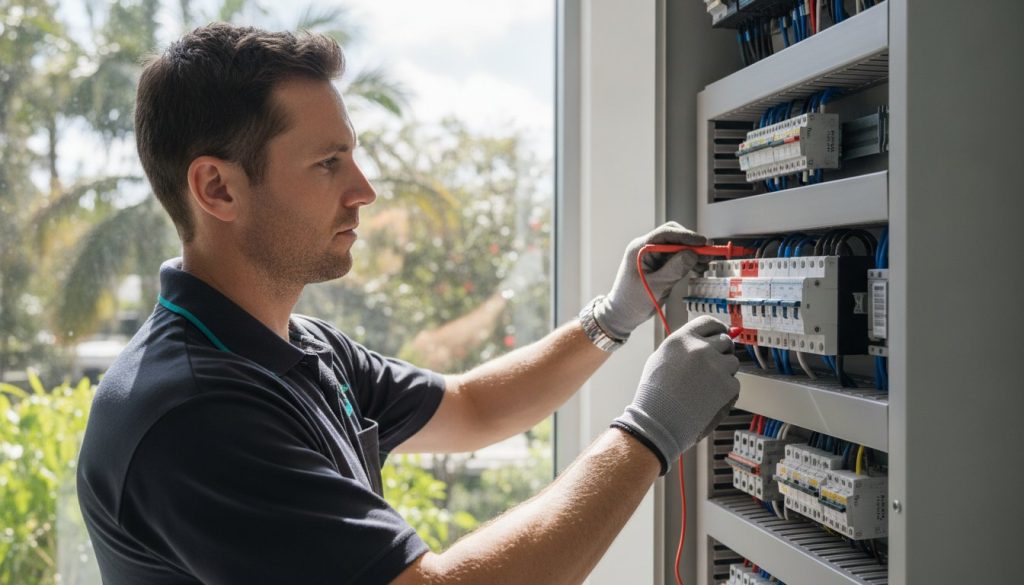
Safety switches, or Residual Current Devices (RCDs), are the most critical components in your switchboard. Unlike residential units, commercial RCDs must handle varied electrical loads and specific machinery requirements. If a fault occurs, these devices cut the power in milliseconds. To stay compliant with Queensland’s electrical safety laws, these switches need regular testing. Under AS/NZS 3760, testing intervals vary. Some high-risk environments require checks every six months, while others might only need annual verification. We ensure your RCDs are correctly rated for your specific equipment, preventing nuisance tripping that causes business downtime.
Interconnected Smoke Alarms and Fire Safety
By 2026, the standards for smoke alarm compliance will be even stricter for commercial properties. All alarms must be interconnected. This means if one unit detects smoke in a back storeroom, every alarm in the building sounds simultaneously. This provides the maximum possible warning time for evacuation. We recommend photo-electric alarms because they’re more effective at detecting smouldering fires, which are common in office and retail settings. You can find more details on these specific requirements through our guide on smoke alarm installation sunshine coast.
Portable equipment also needs consistent attention. Every kettle, drill, or laptop charger in your workplace is a potential hazard if the cord becomes frayed or the internal wiring fails. Regular testing and tagging identify these faults that aren’t visible to the naked eye. It’s a simple process that forms a vital part of your safety record. If you’re unsure about your current setup, it’s a good idea to organise a professional site audit to identify any gaps in your protection.
The Risk of Non-Compliance: Protecting Your Operations
Ignoring commercial electrical safety sunshine coast standards isn’t just a legal gamble; it’s a direct threat to your business’s survival. While a fine from a regulator is painful, it’s often the smallest consequence of a major electrical failure. When safety protocols are skipped, you aren’t just risking a penalty notice. You’re risking the lives of your team and the physical integrity of your property. A single electrical fire can level a building in minutes, often starting from a fault that a simple safety switch check would have caught.
Beyond the immediate physical danger, the financial fallout of negligence is staggering. Many business owners don’t realise that their liability doesn’t end with a payout from an insurer. If a safety audit proves that you were aware of a fault or failed to maintain your equipment to Queensland standards, the reputational damage can be permanent. Clients and staff want to know they are in a safe environment. If that trust is broken, recovering your brand’s standing in the local community is a long and expensive road.
Insurance Implications for Local Businesses
Most Australian commercial insurance policies contain strict clauses regarding property maintenance. If a fire occurs and you can’t produce a valid compliance certificate for your safety switches or smoke alarms, your insurer may deny the claim entirely. This leaves you liable for potentially millions of dollars in property damage and third-party claims. Conversely, keeping a meticulous log of regular testing can help lower your professional indemnity or property insurance premiums. Insurers view a proactive approach to commercial electrical safety sunshine coast as a sign of a low-risk, well-managed operation.
Preventing Electrical Fires and Equipment Failure
In high-use environments like commercial kitchens or busy workshops, electrical systems are under constant load. A small fault in a circuit or a frayed lead on a heavy-duty mixer can quickly escalate into a catastrophic fire. Beyond fire risks, consider the cost of your specialised gear. A single power surge can fry A$20,000 worth of office IT infrastructure or medical equipment in an instant. Installing high-grade surge protection as part of your maintenance plan is a small investment compared to the cost of replacing your entire digital backbone.
Consider the hidden cost of downtime. A 24-hour power outage caused by a preventable switchboard fault often costs far more in lost revenue and staff wages than a decade of scheduled maintenance. Proactive care ensures your doors stay open and your equipment remains under warranty. It’s about protecting your bottom line just as much as your people.

Building Your Annual Electrical Maintenance Schedule
Creating a structured plan is the most effective way to manage commercial electrical safety sunshine coast without feeling overwhelmed. Instead of reacting to faults as they occur, a schedule allows you to organise compliance into small, non-disruptive chunks throughout the year. It’s about being methodical and proactive. We find that businesses with a clear calendar for audits and testing experience significantly less stress when it comes time for official inspections or insurance renewals. A well-maintained property is a predictable property.
The first step is always identifying your assets. A proactive schedule organises your obligations so that nothing falls through the cracks. By determining testing intervals based on the “harshness” of your environment, you ensure that high-use equipment gets the attention it needs while lower-risk items aren’t over-serviced. This balanced approach keeps your costs down and your safety standards high.
Step 1: The Professional Site Audit
Everything starts with a thorough site audit. This isn’t just a quick walk-through; it’s a detailed evaluation of every electrical asset on your premises. We focus on identifying high-risk areas such as commercial kitchens, outdoor zones, and workshops where equipment is frequently exposed to moisture, heat, or heavy physical use. During this audit, we evaluate the age and condition of existing safety switches and ensure all smoke alarms are within their 10-year expiry window. If an alarm was installed in 2015, it’s already nearing the end of its reliable life and will need replacement before the 2026 deadline.
Step 2: Scheduled Testing and Tagging
Testing and tagging involves the physical inspection and electrical testing of portable appliances to ensure they are safe for continued use. Following the updated AS/NZS 3760:2022 standards, we determine how often your gear needs checking. To minimise disruption to your daily operations, we often schedule these sessions during off-peak hours. Recording every result in a centralised digital log is a vital part of the process. This provides you with an instant, audit-ready trail of your commitment to commercial electrical safety sunshine coast.
Maintaining these records digitally ensures you can produce compliance certificates for inspectors or insurers at a moment’s notice. It’s this level of organisation that separates a truly safe workplace from one that is merely “getting by.” If you want to take the guesswork out of your property management, you can book a comprehensive commercial safety audit with our experienced team to establish your annual maintenance plan.
Why Sunshine Coast Businesses Trust Synergy Trades Group
Choosing a partner for commercial electrical safety sunshine coast is a decision that directly impacts your staff’s welfare and your business’s legal standing. At Synergy Trades Group, we bring over 70 years of combined industry experience to every project. We’re a family-owned and operated business, led by Paul and Lynda, which means we treat your commercial property with the same care and professional rigour we’d give our own. Our focus is on providing a dependable, high-standard service that removes the technical stress of compliance from your daily to-do list.
We believe that transparency is the foundation of a good working relationship. That’s why we provide detailed reporting and clear, upfront pricing for every audit or installation. You won’t have to guess about the state of your switchboard or the expiry dates of your alarms. Instead, you’ll have a clear, documented roadmap that proves your commitment to safety. By acting as a single point of contact for both electrical and plumbing compliance, we help you streamline your property management and reduce the administrative burden of hiring multiple contractors.
Expert Safety Switch and Smoke Alarm Services
Our team takes a methodical approach to every safety switch installation and smoke alarm check. We don’t just look for a green light; we verify that every component is correctly rated for the specific demands of your commercial environment. With the 2026 smoke alarm legislation approaching, we’re currently helping local owners upgrade their systems to ensure they meet the new interconnected standards well ahead of time. By integrating these electrical checks with our Commercial Plumbing Maintenance services, we offer total site care that keeps your business running smoothly. This combined approach ensures your compliance reporting is consistent, professional, and audit-ready.
Local Knowledge, Professional Standards
Our roots are firmly planted in the region, and we take pride in being your local Sunshine Coast neighbours. We understand the specific environmental challenges faced by businesses from Caloundra to Noosa, such as how salt air can accelerate the wear on external electrical components. We’re committed to traditional service values, prioritising punctuality and clear communication with every property manager and business owner we assist. Whether you’re running a small retail shop or a large industrial workshop, we provide the specialised expertise needed to maintain commercial electrical safety sunshine coast standards. We’re large enough to handle complex commercial sites but small enough to value every individual interaction and ensure your peace of mind.
Taking the Next Step for Your Workplace Compliance
Managing your legal duties shouldn’t be a source of constant stress for your team. By focusing on the core pillars of safety switch testing and interconnected smoke alarms, you’re doing more than just meeting the 2026 standards. You’re building a resilient foundation for your daily operations that protects both your people and your property. Regular maintenance prevents the hidden costs of business downtime and ensures your insurance coverage remains valid when you need it most.
At Synergy Trades Group, we bring 70 plus years of combined industry experience to every site we visit. As a locally owned and operated business run by Paul and Lynda, we’re dedicated to helping our neighbours maintain the highest standards of commercial electrical safety sunshine coast. We provide detailed compliance reporting for every audit, giving you an audit-ready trail of your property’s safety status at a moment’s notice.
Ready to clear the confusion and secure your premises? You can book your commercial electrical safety audit with Synergy Trades Group today. Let us handle the technical details so you can focus on running your business with total confidence and peace of mind.
Frequently Asked Questions
How often should a safety switch be tested in a commercial building?
Safety switches in commercial buildings require regular testing to stay compliant with AS/NZS 3760 standards. Generally, you should perform a push-button user test every six months and a professional operating time test every 12 months. In high-risk environments like commercial kitchens or workshops, these intervals may be more frequent. Keeping a log of these tests is vital for your insurance and meeting commercial electrical safety sunshine coast requirements.
Who is legally responsible for electrical safety in a leased commercial space?
Responsibility for electrical safety is shared between the landlord and the tenant under the “Person Conducting a Business or Undertaking” (PCBU) definition. Typically, the landlord manages the fixed wiring and safety switches in the switchboard. The tenant is responsible for the safety of portable appliances and any equipment they bring into the space. Clear communication and documented agreements help ensure all commercial electrical safety sunshine coast obligations are met without confusion.
What is the penalty for non-compliance with electrical safety laws in QLD?
Penalties for failing to meet Queensland electrical safety laws are severe and can include significant fines reaching hundreds of thousands of dollars. For serious breaches involving a risk of death or injury, individuals and corporations can face prosecution under the Electrical Safety Act 2002. Beyond government fines, non-compliance often leads to denied insurance claims and legal liability if an accident occurs on your premises.
Do all commercial buildings on the Sunshine Coast need interconnected smoke alarms?
Yes, all commercial buildings must transition to interconnected photoelectric smoke alarms to meet the 2026 Queensland legislation requirements. This means when one alarm triggers, every alarm in the building sounds simultaneously to provide maximum warning time. This standard applies to retail spaces, offices, and industrial units alike. Getting your system upgraded early ensures you avoid the rush and remain compliant with local fire safety standards.
What is the difference between a residential and commercial electrician?
Commercial electricians handle much larger electrical loads and more complex distribution systems than those found in standard homes. They must be experts in specific commercial regulations, such as AS/NZS 3760 for testing and tagging and high-capacity safety switch installations. While residential work focuses on basic comfort, commercial experts manage industrial machinery, complex fire safety systems, and the rigorous documentation required for business audits and insurance compliance.
How long does a typical commercial electrical safety audit take?
A typical safety audit for a small retail shop or office usually takes between one and two hours. Larger industrial sites or multi-level office buildings can take a full day or more depending on the number of electrical assets. We focus on being thorough yet efficient to minimise any disruption to your staff. Once finished, we provide a detailed report outlining your current compliance status and any necessary repairs.
Can I do my own test and tag for my small business?
You shouldn’t attempt to test and tag your own equipment unless you are a “competent person” with the specific training and equipment required by Australian Standards. For most small businesses, hiring a licensed professional is the safest way to ensure testing is accurate and legally valid. A professional technician has the calibrated tools to detect internal faults that a visual inspection won’t find, protecting your business from liability.
Does Synergy Trades Group provide compliance certificates after testing?
Yes, we provide comprehensive compliance certificates and detailed digital logs after every safety audit or testing session. These documents are essential for your insurance records and are often requested during WorkSafe Queensland inspections. Our reporting is designed to be clear and easy to understand, giving you proof that your property meets all current commercial electrical safety sunshine coast standards and the upcoming 2026 requirements.