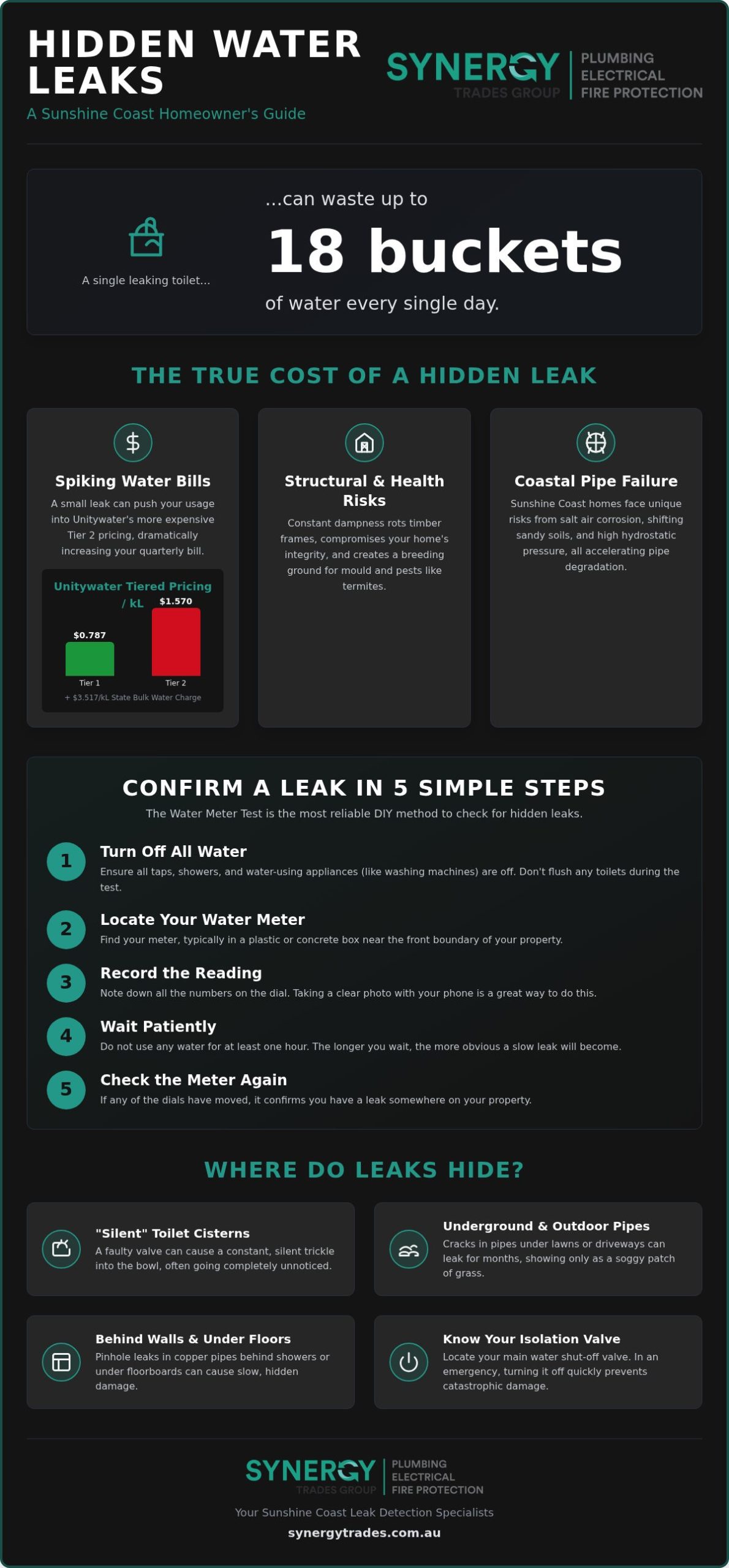
Did you know that a visibly leaking toilet can waste up to 18 buckets of water every single day? On the Sunshine Coast, where our humid climate can turn a small patch of dampness into a major mould problem overnight, water leaking isn’t just a nuisance. It’s a direct threat to your home’s structural integrity and your family’s health.
It’s incredibly stressful to open a Unitywater bill and see a sudden spike in charges that doesn’t match your actual usage. You’re likely worried about hidden damage behind your walls or wondering if that wet patch in the yard is your responsibility or the council’s. We understand that these technical headaches can feel overwhelming, especially when you can’t see the source of the problem.
This guide will help you regain peace of mind. You’ll learn how to conduct a simple DIY meter test to confirm if a leak exists, how to spot hidden signs of moisture, and how to protect your property from costly repairs. We’ll walk you through the process of locating the source and getting a permanent fix that keeps your home safe and dry.
Key Takeaways
- Learn how to identify hidden signs of moisture and perform the “Quiet House” test to detect water leaking before it causes structural damage.
- Locate your main isolation valve immediately so you can shut off the water supply and prevent further property damage during a plumbing emergency.
- Discover why “silent” leaks in toilet cisterns and outdoor pipes often go unnoticed and how to inspect these common problem areas yourself.
- Understand the benefits of non-invasive leak detection technology that pinpoints the exact source of the problem without needing to tear up your floors or walls.
- Save money on your Unitywater bills by understanding which repairs are your responsibility and how early detection prevents costly long-term maintenance.
Understanding Water Leaks: Why Every Drop Counts on the Coast
When most homeowners think about water leaking, they imagine a dramatic burst pipe flooding the lounge room. In reality, residential leaks are usually much quieter and far more deceptive. A leak can be anything from a pinhole opening in a copper pipe behind your shower wall to a hairline crack in an underground PVC line or a simple dripping tap in the laundry. While these might seem like minor issues, they represent a constant, 24-hour drain on your home’s resources and structural health.
On the Sunshine Coast, we face a specific financial reality with our water supply. Unitywater uses a tiered pricing system that penalises high usage. As of July 2026, Tier 1 usage (up to 822 litres per day) is charged at $0.787 per kilolitre, but once a hidden leak pushes you into Tier 2, that price jumps to $1.570 per kilolitre. When you add the State Government bulk water charge of $3.517 per kilolitre, a “small” leak can easily add hundreds of dollars to your quarterly bill before you even realise there is a problem.
The Hidden Costs Beyond Your Water Bill
The damage caused by moisture follows a “slow creep” pattern. Water is patient; it slowly soaks into timber house frames, softening the wood and compromising the structural integrity of your home. In our humid Queensland climate, this dampness creates a perfect breeding ground for mould and mildew, which can spread through wall cavities and impact your family’s respiratory health. Beyond the structure itself, hidden moisture is a beacon for local pests. Termites and cockroaches are naturally drawn to damp environments, meaning a plumbing leak often leads to a costly pest infestation if left unaddressed.
Coastal Factors: Why Sunshine Coast Pipes Fail
Living near the ocean brings unique challenges to plumbing systems that inland residents don’t have to worry about. Our environment is beautiful, but it can be harsh on infrastructure. We see three main factors contributing to local pipe failure:
- Salt Air Corrosion: The salt-laden air on the coast accelerates the oxidisation of exposed metal fittings and hot water units, leading to premature thinning of pipe walls.
- Sandy Soil Movement: Many Sunshine Coast properties are built on sandy or reactive soils that shift during heavy rain events, putting immense physical stress on underground PVC pipes and causing them to crack.
- Hydrostatic Pressure: This is the pressure exerted by a fluid at equilibrium due to the force of gravity, which can intensify in coastal areas during high water table events and cause weakened pipes to finally burst.
Because these issues are often hidden from view, modern professional leak detection methods are essential for finding the exact source of the trouble without unnecessarily digging up your garden or tearing down walls. Taking action early doesn’t just save water; it protects the long-term value of your coastal investment.
How to Tell if You Have a Hidden Water Leak
Detecting a leak early is the best way to prevent the structural damage and mould issues we discussed earlier. While some leaks make themselves known with a spray of water, most are subtle. You can start by performing a “Quiet House” test. Late at night or early in the morning, turn off every appliance and sit quietly. Listen for the sound of hissing, whistling, or rushing water behind your walls or under the floorboards. If you hear water moving when no taps are on, you likely have water leaking somewhere in your internal plumbing.
It’s also helpful to distinguish between a leak in your pipes and a fault with the meter itself. If the meter dial spins even when your main isolation valve (the stop tap) is turned off, the fault might lie with the meter or the council’s side of the line. However, if the dial only moves when your main valve is open but your house taps are shut, the leak is definitely on your property. To help you chase down leaks at home, we recommend following a methodical inspection routine once a month.
The 5-Step Water Meter Test
This is the most reliable DIY method to confirm a leak exists. It takes less than an hour and requires no special tools.
- Step 1: Turn off all taps, showers, and water-using appliances like your dishwasher or washing machine. Don’t forget to check that nobody flushes the toilet during the test.
- Step 2: Locate your water meter. On the Sunshine Coast, this is usually found in a plastic or concrete box near the front boundary of your property.
- Step 3: Lift the lid and record the numbers on the dial. Pay close attention to the red digits, as these indicate individual litres.
- Step 4: Wait at least 30 to 60 minutes without using any water. This includes ice makers in fridges or automatic garden irrigation.
- Step 5: Check the dial again. If the numbers have changed, even slightly, you have a leak that needs attention.
Telltale Signs Inside and Outside Your Home
Visual clues often appear before the water bill arrives. Inside, look for bubbling paint, discoloured “tea-coloured” patches on the ceiling, or sagging plasterboard. If you have timber floorboards, look for cupping or warping. Damp carpets that never seem to dry out are another major red flag. Outdoors, keep an eye on your lawn. If one patch of grass is significantly greener or growing faster than the rest of the yard, it may be feeding on a cracked underground pipe. If you notice these signs, booking a professional leak detection service can help you find the exact source before the damage gets worse.
Common Culprits: Where Leaks Hide in Your Property
Every room in your home that has a water connection is a potential site for trouble. In the kitchen, the area under the sink is often the first place to check, while the laundry is frequently affected by leaking washing machine taps or worn hoses. While some instances of water leaking are obvious, such as a spray from a burst pipe, others are far more deceptive. Outdoor leaks are particularly dangerous for your budget. If your property has a long driveway or extensive gardens, an underground pipe can burst and lose thousands of litres into the sandy soil before a single puddle appears on the surface.
High water pressure is another common factor we see across the Sunshine Coast. While strong pressure feels great in the shower, it can be devastating for modern tap seals and appliances. If your home’s pressure exceeds 500kPa, it puts constant, unnecessary strain on every fitting in the house, leading to premature failure and those annoying “silent” leaks that only show up on your Unitywater bill.
Leaking Hot Water Systems
Your hot water unit is one of the most hardworking appliances in your home. Common failure points include the temperature pressure relief (TPR) valve, which should only discharge a small amount of water during a heating cycle. If it’s running constantly, you’re literally pouring money down the drain. Because these units involve both water and electricity, a leak is a serious safety concern that can trip your safety switch and leave you in the dark. In our salt-heavy coastal environment, tanks tend to rust faster than they do inland. If your system is over a decade old and the tank itself is weeping, a replacement is often a wiser investment than a temporary repair to ensure your family’s peace of mind.
Toilets and Taps: The Silent Water Wasters
Toilets are the most frequent cause of unexplained water loss. A faulty cistern seal can waste up to 18 buckets of water a day without making a sound or showing a ripple in the bowl. You can easily test this yourself by placing a few drops of food dye into the cistern. If the colour appears in the bowl after ten minutes without you flushing, you have a leak. Many of these common household issues are preventable if you catch them before they escalate.
Dripping taps are more than just a late-night annoyance. Whether the issue is a simple worn rubber washer or a more modern ceramic disc, that steady rhythm is a sign of wasted resources. We also recommend a quick monthly check of the flexible braided hoses under your sinks. If you see any signs of rust, fraying, or “bulging” in the metal braid, these hoses are at high risk of bursting. Replacing a $20 hose today is much better than dealing with a flooded kitchen tomorrow.
Immediate Action: What to Do When You Find a Leak
Finding a pool of water in the kitchen or hearing the hiss of a burst pipe behind a wall is enough to make any homeowner panic. However, staying calm and following a methodical approach is the best way to prevent further damage and save money on repairs. When you discover water leaking in your home, your immediate actions can be the difference between a simple patch-up and a full-scale structural renovation.
Safety must be your first priority. If you see water dripping near electrical outlets, light switches, or appliances, do not touch them. Check your electrical switchboard to see if a safety switch has already tripped. If it hasn’t, and you can safely reach the board without stepping through water, turn off the power to the affected circuits. Once the area is safe, take clear photos and videos of the leak and any resulting damage. This documentation is essential for insurance purposes, as it provides evidence of the source and the extent of the issue before repairs begin.
How to Turn Off Your Water Mains
Every adult in your household should know the location of the “Stop Tap.” This is the main isolation valve that controls the flow of water into your property. You’ll usually find it inside the water meter box near your front boundary. To shut off the water, turn the handle or wheel firmly in a clockwise direction until it stops. Once the main valve is closed, go to the lowest point on your property and open a garden tap. This allows the remaining water trapped in your pipes to drain out safely rather than continuing to leak into your walls or floors. Never force an isolation valve if it feels seized or stuck; applying too much pressure can cause the valve to snap and create a much larger problem.
Mitigating Damage and Preparing for a Plumber
With the water supply isolated, you can focus on protecting your belongings. Move furniture, rugs, and electronics away from the damp zones immediately. In our humid Sunshine Coast climate, moisture can lead to mould growth in as little as 24 to 48 hours. Open all nearby windows and use floor fans or air conditioning to begin the drying process. This ventilation is vital for protecting your plasterboard and timber frames.
Before the plumber arrives, check your water meter to confirm the “responsible party.” If the meter dial is still spinning while your main valve is shut, the leak is likely on the council’s side of the line, and you should contact Unitywater. If the dial is stationary, the leak is on your side. If you need assistance with a private property repair, you can book a licensed plumber to identify the exact fault and provide a permanent solution.
Professional Leak Detection and Repair on the Sunshine Coast
The days of “search and destroy” plumbing are fortunately a thing of the past. In years gone by, finding a leak often involved a plumber guessing the location and smashing through bathroom tiles or digging up large sections of a garden just to find the fault. Modern technology has completely changed this process. We now use non-invasive detection methods that allow us to pinpoint the exact source of water leaking without causing unnecessary damage to your property. This approach doesn’t just save your tiles; it saves you the significant cost of restoration work once the plumbing repair is finished.
Hiring a local specialist who understands Sunshine Coast building styles is essential. Whether your home is a classic beach house on stumps or a modern build on a thick concrete slab, the way water travels through the structure varies. A professional repair provides long-term value that a DIY “quick fix” simply cannot match. While a bit of plumbing tape might stop a visible drip temporarily, it doesn’t address the underlying pressure issues or corrosion that caused the fault in the first place. Getting it fixed right the first time is the only way to ensure your home remains a safe, dry sanctuary for your family.
Advanced Tech Used by Local Experts
We use a suite of high-tech tools to find what the naked eye cannot see. These methods are fast, accurate, and completely safe for your home:
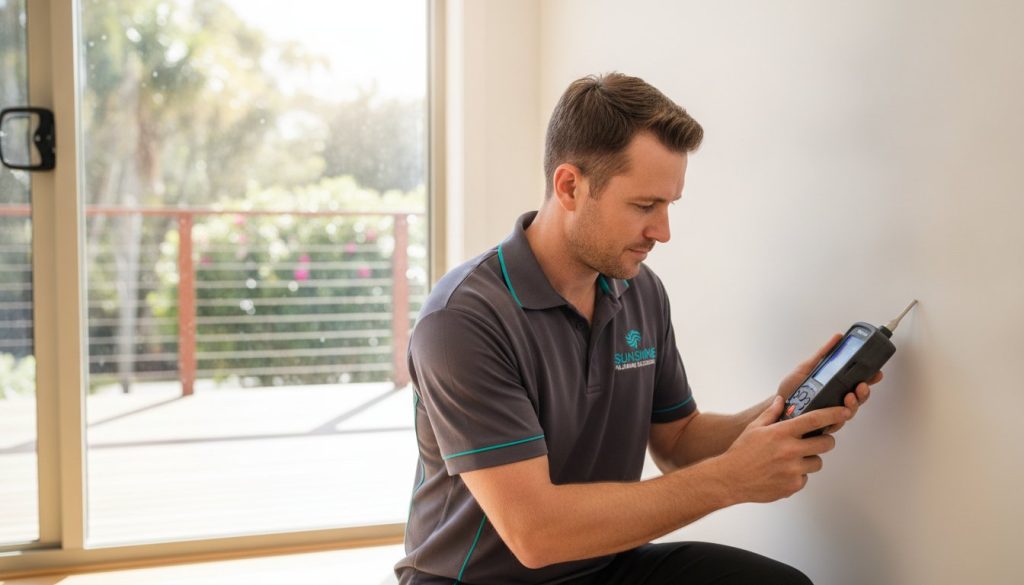
- Acoustic leak detection: We use highly sensitive microphones to “listen” for the specific frequency of water escaping from a pipe under pressure, even through thick concrete or deep soil.
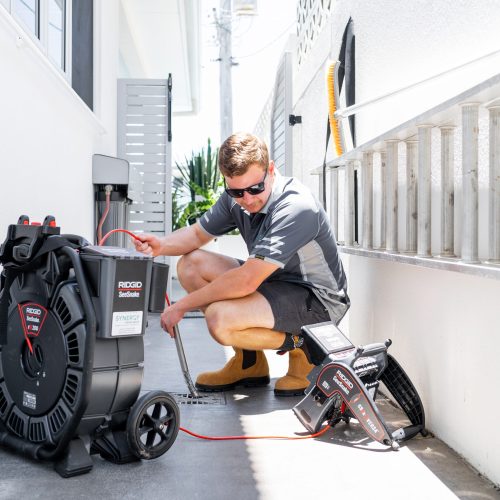
- Thermal imaging cameras: These cameras allow us to see temperature differences behind your walls. Because damp areas are usually cooler than dry ones, we can visualise the spread of moisture without peeling back a single sheet of plasterboard.
- Tracer gas: For the most stubborn pinhole leaks, we introduce a safe, non-toxic, and odourless gas into the plumbing lines. We then use a specialised sensor to detect where the gas escapes at the surface.
Why Choose Synergy Trades Group?
Synergy Trades Group is a family-owned and operated business led by Paul and Lynda. With over 70 years of combined industry experience, we have seen every type of leak the Coast can throw at us. We take great pride in our reputation for transparency and reliability, ensuring you feel supported from the moment you call us until the job is complete.
Our unique advantage is our dual expertise. Because we are licensed in both plumbing and electrical maintenance, we provide a comprehensive safety check that most plumbers can’t offer. If water leaking has affected your home’s wiring or tripped your safety switch, we can handle the entire resolution in one visit. As a fully licensed electrical team, we also help Queensland homeowners stay ahead of important home safety requirements, including smoke alarm compliance QLD regulations ahead of the 2027 deadline. This service-first mentality is designed to give you total peace of mind. Book a professional leak detection service with Synergy Trades today to protect your home and your budget.
Take Control of Your Home’s Water Security
A hidden leak doesn’t have to be a source of constant stress or rising Unitywater bills. By mastering the 5-step meter test and knowing exactly where your main isolation valve is located, you’ve already taken the most important steps toward protecting your property. Remember that early detection is your best defence against the structural damage and mould growth that our humid coastal climate can accelerate.
If you’ve confirmed that water leaking is occurring on your property, the next step is ensuring a permanent, non-invasive fix. Synergy Trades Group is a family-owned and operated business run by Paul and Lynda. We bring over 70 years of combined industry experience to every job we undertake. Because we are licenced in both plumbing and electrical maintenance, we ensure your entire property remains compliant and safe throughout the repair process.
Protect your home from water damage; contact Synergy Trades Group for expert leak detection today. We are here to provide the professional guidance and technical expertise you need to keep your Sunshine Coast home in top condition.
Frequently Asked Questions
How can I tell if a water leak is my responsibility or Unitywater’s?
You are responsible for all plumbing on your side of the water meter. Unitywater is responsible for the water main in the street and the meter itself. If you perform a meter test and the dial stops when your main isolation valve is closed, the leak is within your property boundaries. If the meter continues to spin with your valve shut, you should contact Unitywater to report a fault on their infrastructure.
Is a small dripping tap really worth calling a plumber for?
Yes, a single dripping tap can waste more than a bucket of water per week and often signals a failing seal or ceramic disc. While it seems minor, the constant moisture can lead to water leaking into cabinetry or walls, causing rot and mould. Addressing the issue early prevents a small repair from turning into a major renovation project. It’s a simple, low-friction fix that protects your home and your budget.
Will my home insurance cover the cost of water leak detection and repairs?
Most standard Australian home insurance policies cover “resultant damage” caused by a leak, such as replacing water-damaged carpets or plasterboard. However, the cost of the actual plumbing repair to the pipe itself is often excluded. You should check your specific Product Disclosure Statement (PDS) to see if your policy includes a “leak detection” allowance, which can help cover the cost of a specialist finding the source of the trouble.
How do plumbers find leaks that are hidden deep underground or behind walls?
We use non-invasive technology to locate faults without needing to dig up your yard or tear down walls. Specialist equipment like acoustic listeners can hear the sound of water escaping under pressure, while thermal imaging cameras detect temperature drops caused by moisture behind plasterboard. For complex cases, tracer gas can be used to pinpoint the exact location of a pinhole opening. These methods ensure a precise repair with minimal disruption to your home.
Can a water leak cause my safety switch to keep tripping?
Yes, water leaking near electrical wiring or into appliances like hot water units is a common cause of safety switch triggers. When moisture enters an electrical circuit, it creates a fault that your switchboard detects instantly. Because we are licenced in both plumbing and electrical maintenance, we can safely assess both systems to ensure the water hasn’t created a long-term electrical hazard for your family.
What is the most common cause of water leaks in Sunshine Coast homes?
Sandy soil movement and high water pressure are the most frequent culprits in our local area. As the ground shifts during heavy rain, it puts physical stress on underground PVC pipes, leading to cracks. Additionally, the salt-heavy air on the coast can accelerate the corrosion of exposed metal fittings. Regularly checking your water meter is the best way to catch these environmental issues before they cause significant property damage.
How much water can a leaking toilet actually waste in a day?
A visibly leaking toilet can waste up to 18 buckets of water every single day. This is often caused by a simple worn-out rubber seal in the cistern that allows water to trickle constantly into the bowl. Because these leaks are often “silent,” they can go unnoticed for months, leading to a massive spike in your Unitywater bill. Performing a simple food dye test is an easy way to check for this problem.
Can I fix a leaking pipe myself with tape or sealant as a temporary measure?
While waterproof tape or sealant might slow a leak, they are never permanent solutions and shouldn’t be relied upon. Domestic water lines are under significant pressure, which will eventually push past any external patch. A temporary fix can also mask the problem while water continues to seep into your home’s structure. It’s always safer to isolate the water at the main valve and wait for a professional, permanent repair.