Water leak detection on the Sunshine Coast involves inspecting signs of water loss, tracing the likely source and reporting what needs attention. For concealed plumbing leaks, acoustic equipment can help locate escaping water by listening for sounds within pipes. The findings then guide a repair quote and the next steps.
A damp patch or unexplained water use can be worrying, especially when you can’t see the leak or its source may be elsewhere. Water leak detection on the Sunshine Coast starts with a careful inspection to narrow down the cause rather than relying on guesswork.
This guide explains what an inspection can involve, how quoting, repair and reporting fit together, and how acoustic methods can help locate hidden plumbing leaks. You’ll also learn what information to share so the process is clearer, from the initial inspection to the proposed repair.
Key Takeaways
- Leak detection follows a clear path from inspecting signs of water loss to locating the source and outlining repair steps.
- A damp patch may not sit directly below a roof leak, so trace the water’s path rather than assuming the stain marks the entry point.
- Acoustic equipment can help locate concealed plumbing leaks by listening for escaping water within pipes.
- Keep notes on where and when you’ve noticed dampness or unusual water use to help focus the inspection and reporting.
- Once a leak is identified, match the next step to the problem, including arranging Hot Water System Repairs if the hot water system is involved.
What does leak detection involve?
Leak detection is a structured process for finding where water is escaping and identifying the likely cause. A plumber begins by discussing the signs, such as a damp wall, dripping sound or unexplained water use. They then inspect relevant fixtures, pipework and affected areas before choosing suitable tests. For a hidden plumbing leak, acoustic equipment can help locate the source without opening every wall or floor.
Sunshine Coast service areas include Caloundra, Kawana, Maroochydore, Buderim and Noosa. These locations cover a broad stretch of the coast, so the suburb and access details help shape inspection planning. A property in Noosa and one in Caloundra have different travel routes, while site access can affect where specialists begin. The Sunshine Coast service area page outlines the local coverage.
Leak detection may cover internal plumbing, hot water connections, taps, toilets or pipework beneath a garden. The signs help narrow the search, but don’t always reveal the precise source. Water, for example, can travel through building materials before appearing as a ceiling stain. The inspection follows the clues back towards the leak instead of treating the visible mark as proof of its location.
Choose a licensed and insured leak detection plumber by asking to see their current Queensland plumbing licence and evidence of insurance. Confirm that the proposed work includes locating the leak and explaining the findings, not just repairing visible damage.
Queensland insurance policies can treat leak detection, pipe repairs and resulting damage differently. Read the policy wording for cause-of-loss terms, maintenance exclusions and claim requirements before assuming inspection or repairs are covered.
Some plumbing businesses arrange urgent or same-day visits, while others book routine inspections. Their response depends on operating arrangements, current workload, location and access to the affected area. Explain whether water is actively escaping, where it appears, and whether you can isolate the supply. Those details help the business understand the urgency.
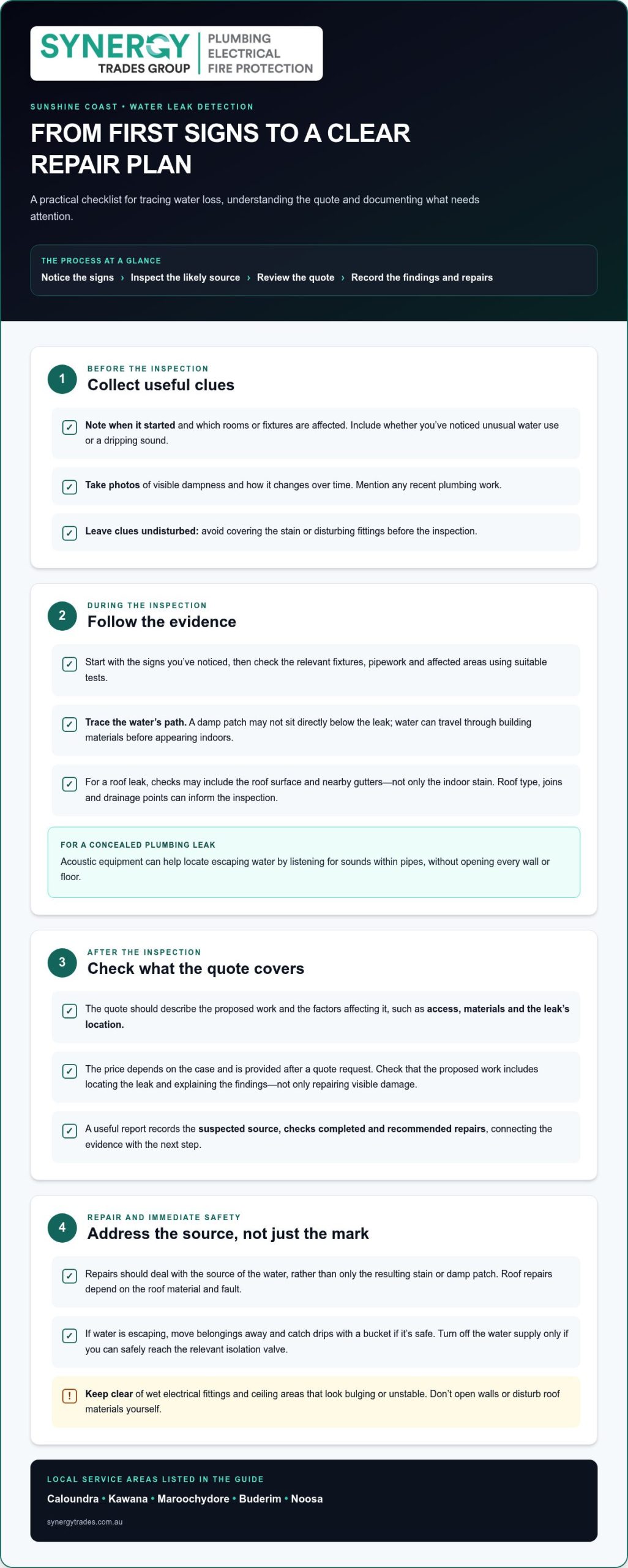
Before an inspection, note when you first noticed the problem and which rooms or fixtures are affected. Photos can show how a damp patch changes over time, while details of recent plumbing work can help focus the checks. Avoid covering the stain or disturbing fittings beforehand, as this can remove useful clues.
A useful outcome connects the observed signs with a likely leak location and practical next steps. A report can record the findings and help distinguish the source from secondary damage. The next section explains how inspection, quoting, repair and reporting fit together.
Inspection, quoting, repair and reporting process
A clear process links inspection findings to a repair plan and written record. The steps can differ for a concealed pipe leak and a roof leak, where access and weather conditions matter.
Inspection, quoting and reporting
The inspection starts with the signs you’ve noticed, such as a ceiling mark, dripping sound or water around a fixture. The plumber checks relevant areas and uses suitable tests to narrow down the likely source. For roof leak detection, this may include inspecting the roof surface and nearby gutters, rather than relying only on an indoor stain.
After the inspection, the quote should describe the proposed work and the factors affecting it, such as access, materials and the location of the leak. The price depends on the case and is given after a quote request. A useful report records the suspected source, the checks completed and recommended repairs, so you can understand how the findings support the next step.
Keep photos of visible damage and note when it appeared. These details can help connect the inspection findings with changes inside the property.
Leak repairs and maintenance
Repairs should address the source of the water, not just the resulting stain or damp patch. Roof repairs depend on the roof material and fault. Tiled, metal and Colorbond roofs each need inspection suited to their surfaces, joins and drainage points. Gutter and downpipe checks matter too, because a blockage or damaged connection can affect rainwater flow.
After major storms, roof damage may not be visible from the ground, so an inspection can help identify issues before water travels indoors. Minor Sunshine Coast roof leaks can often be repaired on the same day when the roof is safe to access and suitable materials are available. Preventive maintenance includes clearing debris from gutters and looking for loose tiles, damaged flashing or signs of water entry.
For a repair quote, describe the roof type, where water appears indoors and whether the property was recently exposed to a storm. These details help focus the inspection.
Responding to a water leak
If you find a leak at home, move belongings away from the water and catch drips with a bucket if it’s safe. If you can safely reach the relevant isolation valve, turn off the water supply to limit further leakage. Keep clear of wet electrical fittings and ceiling areas that look bulging or unstable.
Take photos, note which room or fixture is affected, and record whether the leak continues. Don’t open walls or disturb roof materials yourself, as this can worsen damage or obscure useful evidence. For a roof leak, report where the indoor dampness appears and any visible gutter or downpipe concerns.
Once immediate risks are managed, arrange an inspection to identify the source and discuss repairs. Request an inspection for a water leak with details about the signs and access to the affected area.
Leak detection for concealed plumbing leaks
A concealed plumbing leak can sit behind a wall, beneath a floor or underground, with no visible spray. Look for clues such as persistent dampness, a musty smell, peeling paint or unusually soft ground. These signs help direct an inspection, but don’t identify the pipe or prove the exact source. The aim is to trace the evidence before disturbing building materials.
Leaks behind walls can cause staining, swelling or changes to paint and plaster. Under a slab, escaping water can travel through surrounding soil and emerge some distance from the pipe fault. The nearest visible damp patch may not mark the leak’s position. A specialist considers the property layout, pipe routes and affected areas together to narrow down where further investigation is needed.
Underground leaks can be harder to spot because water may disperse through soil before reaching the surface. A Sunshine Coast customer example involved a leak located more than a metre below the surface beneath a front garden. A developing hollow, persistently wet ground or unexpected water movement can help point towards an underground problem. The inspection must distinguish a leaking supply pipe from water arriving elsewhere.
Leaks in sewer pipes and stormwater drains need a different investigation from a pressurised water pipe. A sewer carries wastewater away from the property, while stormwater drains carry rain runoff. Note whether the issue appears after rain, near a drain or alongside ongoing dampness. This helps identify the system involved and focus the inspection.
Undetected water leaks can damage plasterboard, flooring, cabinetry and stored belongings. Continued leakage can also erode soil beneath a foundation or pool deck, affecting the surrounding ground. A roof leak can cause similar indoor damage, but its source is the roof or rainwater system rather than concealed plumbing. Identifying the system early helps prevent a small defect from affecting more materials.
Before the inspection, note where dampness appears, when it changes and whether nearby fixtures are in use. Photograph visible damage and mark the affected area without covering it. If water is actively escaping, isolate the relevant supply if safe, then explain what you observed. These details give the inspection a clear starting point.
Detection findings should identify the likely leak location and distinguish the source from secondary water damage. That matters when planning repairs: fixing a pipe addresses the leak, while damaged finishes may need separate attention. For persistent wet patches, unexplained dampness or a suspected underground leak, arrange a focused inspection before digging or opening walls. Targeted investigation helps limit unnecessary disturbance to the garden, slab or room.
Non-invasive acoustic leak detection
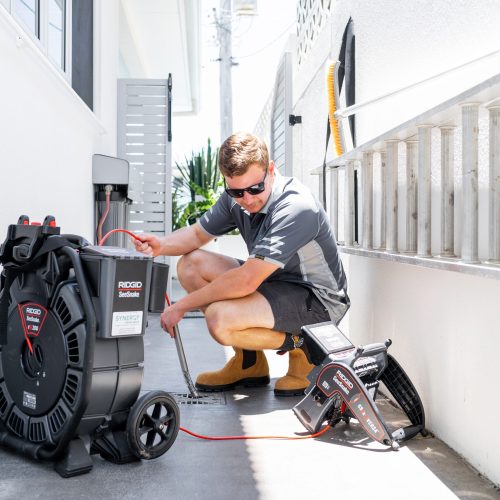
Acoustic detection helps trace concealed plumbing leaks by listening for sound from escaping water. A specialist compares readings around a suspected pipe route to narrow down where further inspection should focus.
Acoustic detection equipment
Acoustic leak detection uses sensitive listening devices, such as contact or ground microphones. A contact sensor picks up vibrations through an accessible pipe or surface. A ground microphone listens for sound travelling through soil above an underground pipe. The operator moves the equipment along likely pipe routes and compares changes in sound to find the strongest clue.
Surfaces affect how sound travels. Concrete, tiles, timber and soft garden soil transmit different levels of vibration, so detection equipment is used methodically rather than at a single point. A listening check might start near an accessible pipe, then continue across the floor towards the damp area. Nearby taps, appliances and traffic can create background noise, so quieter conditions help with interpretation.
Acoustic methods detect sound associated with water escaping under pressure. The sound may travel along the pipe or through surrounding materials before reaching the surface. A careful operator checks multiple positions and considers the pipe layout, access points and visible signs. Comparing readings helps distinguish a likely leak signal from ordinary household sounds, such as a running tap or water pump.
Non-invasive doesn’t mean no access is ever needed. It means the investigation aims to locate the leak with minimal disturbance before opening walls, floors or soil. Once a likely point is identified, the findings help focus any necessary access and repairs. This targeted approach can reduce unnecessary damage to finishes, paving or garden beds.
Acoustic and thermal imaging methods
Thermal imaging records surface temperature patterns, while acoustic equipment listens for leak-related sounds. A warm or cool patch on a thermal image can help identify an area for closer inspection, particularly around a suspected pipe route. It doesn’t show the pipe itself or prove water is escaping. The operator interprets the image alongside acoustic readings and physical signs.
For example, damp flooring with a temperature difference provides two useful clues. Acoustic checks can then compare sounds at nearby points. If the suspected leak is beneath a slab, these observations help narrow the search before invasive work begins. Pipe materials and floor coverings affect readings, so the operator also considers the building layout.
After detection, ask which observations support the proposed leak location and what access the repair requires. A clear explanation should distinguish measured clues from the repair plan. This helps you understand why a particular area needs attention, rather than assuming every damp patch marks the pipe fault. For concealed plumbing, accurate interpretation combines equipment readings with visible evidence at the property.
Concealed plumbing and water leak detection
Hidden plumbing leaks can be difficult to pinpoint because water may travel before appearing indoors. A water bill that rises without a clear change in household use can be one clue. Others include damp flooring, musty smells or water sounds near a wall. Roof leaks can also cause indoor dampness, so the location and timing of marks help distinguish roof water from plumbing leaks.
To check your water meter, turn off taps and water-using appliances, then note the meter reading. Leave the property’s water unused for a quiet period and check the reading again. If it has changed, water may still be flowing somewhere on the property, but the meter test won’t locate the leak.
Before testing, check that washing machines, dishwashers and toilets aren’t using water. A slowly refilling toilet cistern can affect the reading even without a concealed pipe leak. Record the meter reading or take a clear photo at each check. If it changes, repeat the test after confirming all water use has stopped.
A steady meter reading doesn’t rule out every leak. Some leaks occur only while a tap, appliance or hot water system is operating. Others involve roof leaks or stormwater, which won’t necessarily register as water passing through the property’s meter. Compare meter observations with damp patches, water sounds and changes to the water bill to build a clearer picture.
Detection methods depend on the suspected plumbing route and the property’s construction. Acoustic listening can help identify sounds from water escaping through a pipe. Thermal imaging can show surface temperature differences that guide further checks. Neither method pinpoints a leak on its own: readings need to be interpreted alongside pipe layouts and visible signs.
For a suspected leak under a slab, note which rooms or outdoor areas show changes. A wet garden patch, warm floor section or damp skirting board can help direct the inspection. Avoid digging or cutting into walls before the likely source is traced. Targeted investigation can reduce unnecessary disruption to paving, flooring and plasterboard.
Keep a simple log of meter readings, water bill changes and when dampness appears. Include whether a toilet, tap or appliance was running during each observation. These details help focus the inspection on relevant plumbing and suitable detection methods. They can also help distinguish continuous leakage from a fault that appears only during water use.
If your meter test or visible signs point to a concealed plumbing leak, request a water leak detection inspection to help trace the source and plan the next step.
Synergy Trades Group: Hot Water System Repairs
Synergy Trades Group provides Hot Water System Repairs when an inspection points to a fault in the hot water system. A leak around the unit, its connections or nearby pipework may need a different repair from a concealed leak elsewhere. Sharing where and when you notice water helps explain the issue and guide the next step.
If the issue is a blocked drain, RPZ backflow testing or bidet supply and installation, Synergy Trades Group provides these services too. The right service depends on the source of the plumbing issue, so clear inspection findings help keep the repair focused.
For help with a hot water system fault, contact Synergy Trades Group or visit synergytrades.com.au.
Take the next step towards a clear repair plan
A suspected leak is easier to address when you turn observations into a practical next step. Note changes in water use, keep photos of visible signs, and record where and when they appear. These details can help focus water leak detection on the Sunshine Coast and make the findings easier to act on.
Synergy Trades Group provides Water Leak Detection for residential and commercial properties on the Sunshine Coast, alongside Hot Water System Repairs, Blocked Drain Clearing and RPZ Backflow Testing. A clear understanding of the problem helps identify which service fits your property and what repair work should follow.
If you’re ready to discuss a suspected leak or plumbing concern, contact Synergy Trades Group to arrange the next step. With the source identified and a repair plan in view, you can move forward with greater clarity.
Frequently Asked Questions
How do you find a water leak underground?
A plumber narrows down the likely pipe route, then checks for signs of escaping water along it. Acoustic listening equipment can detect leak-related sounds through soil or hard surfaces, helping focus further investigation. Ground that stays wet during dry weather or a soft patch near a buried pipe can guide the search. Avoid digging until the suspected location has been assessed, as water may travel away from the leak.
Who provides water leak detection services on the Sunshine Coast, Queensland?
Synergy Trades Group provides water leak detection on the Sunshine Coast for residential and commercial properties. The team also handles plumbing concerns such as hot water system repairs and blocked drain clearing. For plumbing repairs, choose a qualified professional. Describe the signs you’ve noticed, where they appear and whether they change after rain or water use, to help explain the issue.
What are the signs of a hidden water leak in a home?
Signs can include unexplained dampness, a persistent musty smell, bubbling paint or flooring that feels warped underfoot. Check around cupboards, skirting boards and the base of internal walls, where moisture may become noticeable before a larger stain appears. A damp patch that grows without a clear spill deserves attention. Note whether it’s near a bathroom, kitchen or hot water system, as the location can help narrow the search.
What methods and equipment do Sunshine Coast leak detection plumbers use?
Plumbers may combine acoustic listening equipment with a visual inspection and, where useful, thermal imaging. Acoustic tools detect sounds or vibrations linked to escaping water, while thermal cameras show surface temperature patterns that guide further checks. These methods suit different clues and surfaces, so readings need to be interpreted alongside pipe routes and visible conditions. For example, a temperature change beside a bathroom wall can identify an area for closer investigation.
Does insurance cover water leak detection and resulting damage in Queensland?
Queensland insurance policies can treat leak detection, pipe repairs and resulting damage differently. Check the policy’s cause-of-loss terms, maintenance exclusions and claim requirements before assuming they’re covered.