Could the right rainwater tank for your Sunshine Coast home be smaller than you think? Capacity matters, but it is only one part of the decision. A successful rainwater tank installation on the Sunshine Coast starts with the roof catchment, available space and the water you intend to use.
It is easy to feel unsure about sizing a tank, choosing a safe location or understanding the plumbing requirements. Your gutters and downpipes also need to be considered: if they cannot direct water effectively, the tank will not collect as intended. Working through these details early can help prevent a poor fit and avoidable changes later.
This guide explains how to compare household demand with roof catchment, assess possible tank locations and prepare for the installation. It also outlines the local requirements to check for your property and the plumbing questions to resolve before finalising a plan. Synergy Trades Group provides plumbing and gutter services on the Sunshine Coast, which can help address roof drainage concerns as part of your planning.
Key Takeaways
- Decide how you want to use collected water, from garden watering to possible indoor connections.
- Choose capacity by weighing household demand against roof catchment, rainfall and available space.
- Compare above-ground and underground locations for access, groundwork and ongoing maintenance.
- For rainwater tank installation Sunshine Coast planning, check current Sunshine Coast Council and Queensland requirements for your property and proposed setup.
- Before discussing plumbing, note the roof and gutter condition, preferred tank location, overflow route and intended water uses.
Rainwater tank installation on the Sunshine Coast: what to plan first
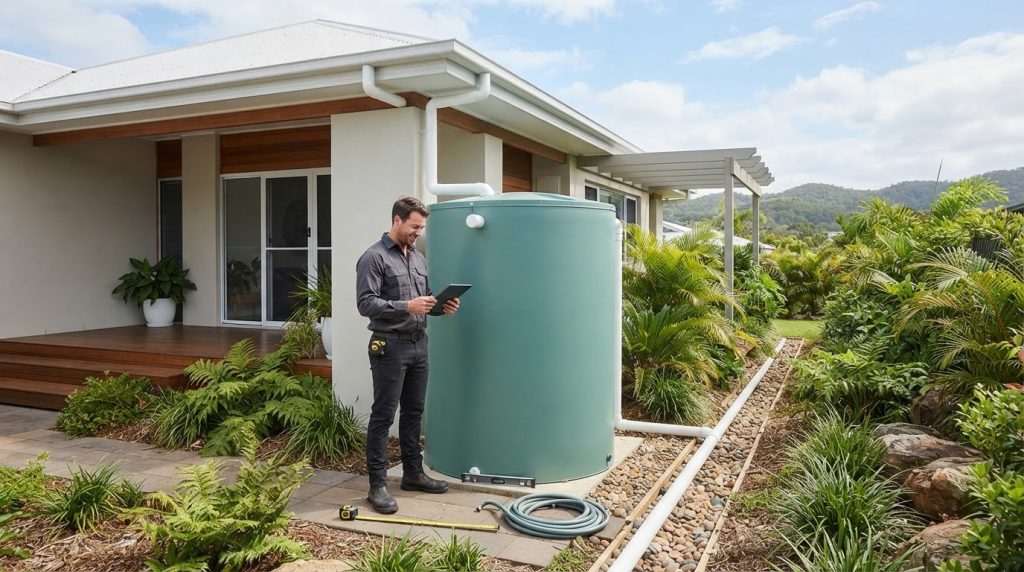
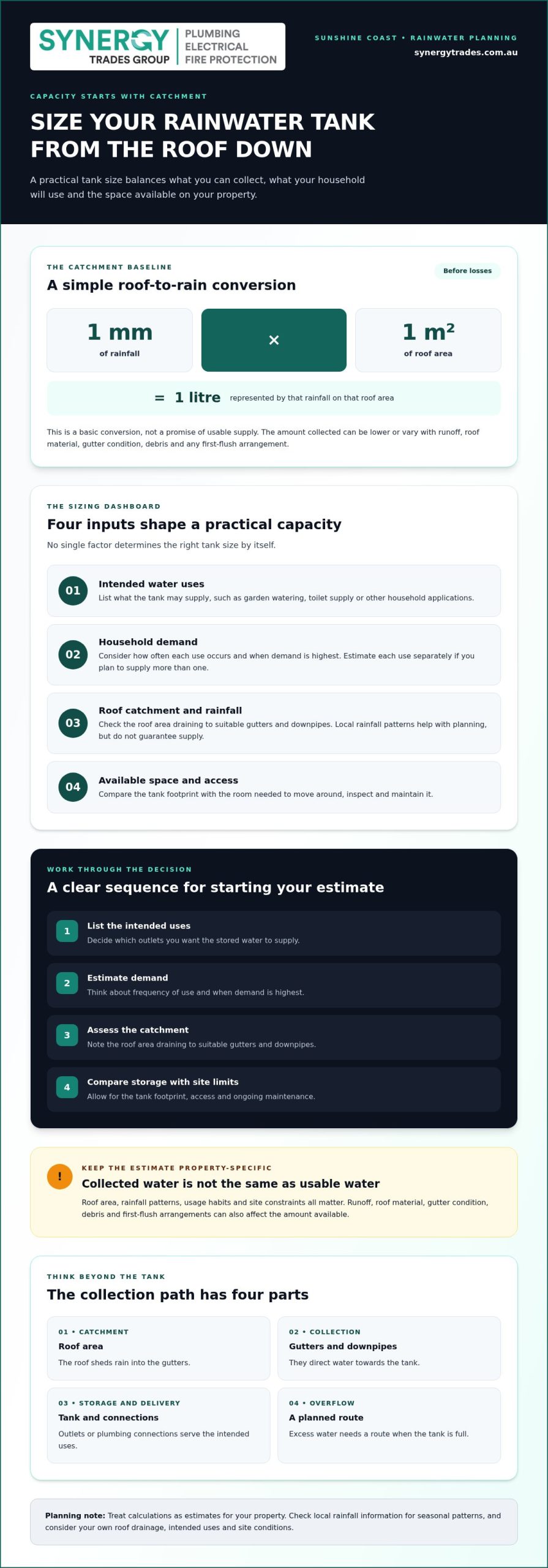
A rainwater tank system captures water from a roof, directs it through gutters and downpipes, stores it, then supplies it to selected outlets. The tank is just one part of the setup. Depending on how you intend to use the water, the system may also need inlet screening, an overflow route and plumbing connections.
Rainwater harvesting is the collection and storage of rain for later use. Start with four practical questions: what will the water supply, how much roof can feed the tank, where can the tank fit, and which parts of the project need attention first?
For homeowners comparing rainwater tank installation Sunshine Coast options, it helps to break the system into these parts:
- Catchment: the roof area that sheds rain into gutters.
- Collection: gutters and downpipes that direct water towards the tank.
- Storage and delivery: the tank and the outlets or plumbing connections for its intended uses.
- Overflow: a planned route for excess water when the tank is full.
What can a household rainwater tank supply?
Garden watering may need a different connection setup from an indoor use such as toilet flushing. Indoor applications require suitable plumbing, and the intended use affects water-quality and maintenance considerations. Do not assume stored rainwater is automatically suitable for drinking. Decide which outlets you want to supply before planning the connections, and seek appropriate advice about treatment and safe use.
Why Sunshine Coast property conditions matter
Roof catchment and downpipe positions affect how water can reach the tank. Slope, access and the available footprint influence where it can sit. Check the Bureau of Meteorology rainfall information for your area as one planning input, not as a promise of how much water your roof will collect. Sunshine Coast properties vary, so consider your own roof drainage and site conditions. You can also view our Sunshine Coast service area information.
Assess the roof and gutters together, including their condition and the route from each downpipe to a possible tank location. Gutter repairs or replacement may be worth planning if the existing system needs attention before collecting water. Make a note of your intended uses, possible tank locations and site constraints. These details give you a clearer starting point for the rest of the project.
How to size a rainwater tank for your Sunshine Coast home
Tank capacity depends on how much water you can collect, how much you expect to use and how much space you can allocate. A larger tank is not automatically a better fit. If roof catchment is limited or the tank would obstruct access around your home, extra storage may not suit the property.
Use this sequence to start sizing:
- List intended uses: for example, garden watering, toilet supply or other household applications.
- Estimate demand: consider how often each use occurs and when demand is highest.
- Assess catchment: note the roof area that drains to suitable gutters and downpipes.
- Compare storage with site limits: allow for the tank footprint, access and maintenance.
Roof catchment, local rainfall and household demand all inform a practical capacity. No single factor determines the right size by itself.
Estimate roof catchment and potential collection
In simple terms, a larger roof catchment can collect more water from the same rainfall than a smaller one. As a basic conversion, 1 millimetre of rain falling on 1 square metre of roof represents 1 litre before losses. The amount you can use will be lower or vary with runoff, roof material, gutter condition, debris and any first-flush arrangement.
Use the Bureau of Meteorology’s local rainfall information to understand seasonal patterns, not to treat an average as guaranteed supply. Check the relevant location and time period, then consider how dry spells or rain concentrated in certain months could affect availability.
Match tank capacity to household use and space
Consider when you need water as well as how much. Garden use may peak during drier periods, while toilet demand is spread across the week. If you plan to supply more than one use, estimate each separately. This gives a clearer picture of likely demand than choosing a tank size first.
Compare your estimate with the available footprint and access. A tank with more storage may take up more room, and even a compact location needs practical access for inspection and maintenance. Treat any calculation as a property-specific estimate, not a universal recommendation. Roof area, rainfall patterns, usage habits and site constraints all matter.
A useful starting point for rainwater tank installation Sunshine Coast planning is to bring together your intended uses, roof and gutter details, and possible tank locations. If you need to address roof drainage or plumbing considerations as part of your plans, arrange a conversation with the local team.
Compare tank locations, connections and water uses before installation
A tank’s position affects more than its appearance. It can change the groundwork involved, how easily the system can be inspected and how simply water can reach the outlets you have in mind. Consider placement and intended use together before settling on a layout.
Above-ground or underground tank: which layout fits?
An above-ground tank is visible and needs a suitable footprint, but the tank and its service points may be easier to access. An underground tank can preserve usable yard space, though excavation, site access and ongoing inspection need careful thought. Sloping ground, visual impact and existing underground services can all affect what is practical. No single layout suits every Sunshine Coast property, so assess the site constraints before deciding.
| Choice | Planning questions |
|---|---|
| Above-ground | Is there enough level space, and will the tank leave clear access around the property? |
| Underground | Can excavation be carried out safely, and have underground services and future access been considered? |
| Garden-only supply | Where should the outlet sit for convenient hose or garden use? |
| Indoor connection | What plumbing changes and water-quality considerations relate to the intended use? |
Roof runoff, gutters and downpipes
A tank can only collect water that reaches it. Gutters need to carry roof runoff, and downpipes need a workable route to the proposed tank position. Check that gutters are clear and functioning, and whether the existing roof drainage needs attention before collection begins. If repairs or replacement are needed, include that work in the roof-water plan.
Leaf screens and first-flush devices are design considerations that can help manage debris and initial roof runoff, with kits from Leaf Stopper offering protection tailored to different roof profiles. Their suitability depends on the roof and system design, so treat them as choices to assess rather than automatic requirements. Keep gutters, downpipes and tank service points accessible after installation. A layout that blocks routine inspection can make ongoing care more difficult.
For rainwater tank installation Sunshine Coast planning, compare each possible location against the roof drainage route, access, slope and intended water use. A garden-only setup may need a different connection plan from an indoor supply. Clarifying those needs early helps shape a system around the property rather than forcing the property to fit the tank.
Sunshine Coast installation checklist: site checks, rules and preparation
Preparation makes it easier to discuss a proposed tank layout and identify questions to resolve before work begins. For rainwater tank installation Sunshine Coast planning, gather practical information about your roof, site and intended water uses, then verify the current requirements that apply to your property. This checklist helps organise the details; it is not a substitute for property-specific regulatory or plumbing advice.
What to assess around the property
Walk the proposed route from the property entrance to the tank location. Consider delivery access, ground conditions and whether the site is sloping. Note nearby buildings and the direction overflow could travel, so you can consider drainage impacts early. Identify underground services before planning excavation or other ground works.
- Location and access: record the possible tank footprint, access around it for inspection and any obstacles along the delivery route.
- Roof catchment: identify the roof areas, gutters and downpipes that could feed the tank, including any condition issues.
- Drainage: note where overflow might go and whether it could affect buildings, neighbouring land or areas of the yard.
- Connections: mark nearby plumbing and the outlets you hope to supply, such as a garden tap or indoor fixtures.
- Household priorities: list intended water uses and which matter most if the proposed layout needs to change.
Photos of the roof drainage, likely tank location and access route can make a project discussion clearer. Keep your notes together, including site constraints and any questions to resolve.
Which local requirements need checking?
Requirements can depend on the property and proposed setup. Consult current Sunshine Coast Council and Queensland Government guidance about development, plumbing work, overflow and connections before proceeding. Check the details for your specific site and intended use rather than assuming approval is always needed or never applies.
Use official guidance to identify what applies, then note any approvals or plumbing steps it describes. This is a planning prompt, not legal advice. If roof drainage needs attention during preparation, Synergy Trades Group provides gutter repairs and replacement on the Sunshine Coast.
Once you have recorded the location, catchment, drainage and intended uses, you will have a more focused starting point for the plumbing side of the project. Book a plumbing enquiry to discuss your property’s roof drainage and plumbing considerations.
Plan your rainwater tank project with practical local plumbing support
A clear plan connects your household’s water needs with the roof drainage and plumbing details of your property. For rainwater tank installation Sunshine Coast planning, follow a simple sequence: define what you want the water to supply, assess the site, verify current requirements, then plan any plumbing connections. Resolve site and compliance questions before finalising the system details.
What information to have ready for a project discussion
A few practical notes can make a plumbing discussion more focused. Record the approximate roof catchment you are considering, your preferred tank location and each intended use, such as garden watering or an indoor connection. Photos or a simple site sketch can show how the gutters and downpipes relate to the proposed location.
- Roof and gutters: note the relevant roof area, downpipe locations and any visible gutter issues.
- Space and access: mark the proposed tank footprint, delivery route and any known site constraints.
- Drainage: describe the slope and possible overflow direction.
- Water use: list the outlets you hope to supply and which uses are the priority.
- Guidance: keep any council or Queensland information relevant to your property and proposed setup handy.
These details help identify which roof drainage or plumbing questions need attention. They also give everyone a clearer picture before decisions are made about tank size, location or connections.
A clear next-step sequence for Sunshine Coast homeowners
Start with household uses, then compare roof catchment and possible locations. Check the current requirements for your property and intended setup, including relevant plumbing or overflow considerations. Once those points are understood, the plumbing plan can be shaped around the actual site rather than assumptions.
Synergy Trades Group provides plumbing and property maintenance services on the Sunshine Coast, including gutter repairs and replacement. The business is family-owned and operated by Paul and Lynda, with more than 70 years of combined industry experience. Its local roof-water and plumbing perspective can help make a discussion about your project practical and clear.
You do not need every detail settled before starting a discussion. Bring your notes about the roof, gutters, available space, drainage and intended water uses, then work through the relevant plumbing considerations. Book a plumbing enquiry to discuss your property’s roof drainage and plumbing considerations.
Take the next step with a clear tank plan
A well-planned rainwater system starts with the property, not a tank size chosen in isolation. Match intended water uses with roof catchment and household demand, then compare possible locations for space, access and maintenance. Before finalising the setup, check current council and Queensland requirements for your property and proposed plumbing connections.
For rainwater tank installation Sunshine Coast planning, keep a few details ready: roof and gutter condition, downpipe positions, possible tank locations, drainage considerations and the outlets you hope to supply. These notes make a plumbing discussion more practical and focused.
Synergy Trades Group is family-owned and operated by Paul and Lynda, with more than 70 years of combined industry experience. Its local plumbing and gutter repair services are relevant to the roof-water and drainage considerations around your project.
When you are ready to discuss your property’s roof drainage and plumbing considerations, book a plumbing enquiry.
Frequently Asked Questions
Is a rainwater tank worth installing on the Sunshine Coast?
A rainwater tank can be useful if its capacity, roof catchment and intended uses suit your household and property. Consider how much roof area can feed it, how often you will use stored water and whether you have room for a practical tank location. Check current local rainfall information to inform your expectations, but remember it cannot guarantee how much water your roof will collect.
How do I choose the right size rainwater tank for my home?
Start by listing what you want the tank to supply, such as garden watering or toilet flushing, then estimate how often those uses will draw water. Factor in roof catchment, local rainfall and the space available for the tank. For a rainwater tank installation on the Sunshine Coast, treat online sizing calculators as a starting point and check their assumptions about runoff and rainfall against your property.
Do I need council approval to install a rainwater tank on the Sunshine Coast?
It depends on your property and the proposed tank, plumbing and drainage arrangement, so check current Sunshine Coast Council and Queensland Government guidance before work starts. Do not rely on a rule of thumb or advice written for another council area. If you plan to connect the tank to indoor plumbing, check the requirements for that connection too. Verify the rules for your specific setup before finalising plans.
Can rainwater from a tank be used for drinking?
Stored rainwater is not automatically safe to drink. Suitability depends on factors such as roof and gutter materials, tank condition, collection and storage arrangements, and any treatment or testing. Garden watering and toilet supply have different considerations from drinking water. If you are considering potable use, seek current authoritative health guidance and plan for appropriate treatment and ongoing maintenance before relying on the water for drinking.
Where should a rainwater tank be placed?
Choose a position that suits the tank footprint, roof and downpipe connections, delivery access, maintenance access and overflow route. Check the ground, slope, underground services and nearby structures before settling on a location. Above-ground tanks need suitable surface space, while underground options involve excavation and continued access for inspection. The right layout depends on your property, so balance appearance with practical connections, drainage and maintenance.
What should I check before a rainwater tank installation?
Before arranging work, note your intended water uses, roof catchment, gutter and downpipe condition, available space, access route and likely overflow direction. Identify site constraints and check current council and Queensland requirements for your property and proposed connections. Keep the tank accessible for inspection and maintenance. These details help clarify your plans before choosing a tank or finalising related plumbing decisions.