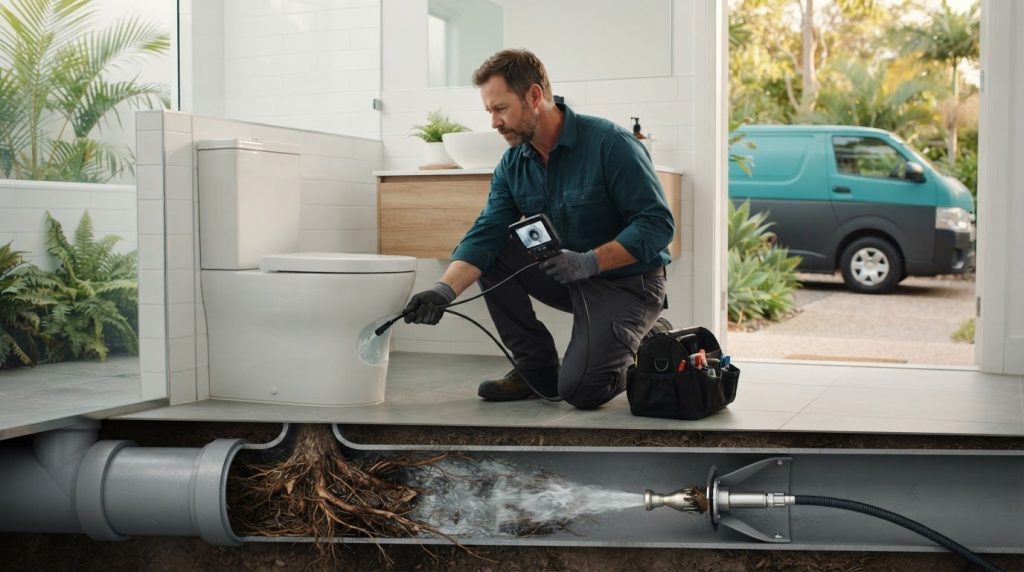
Could a drain camera show what’s causing your blocked toilet before a jetter is used? If you’re searching for a “blocked toilet jetter drain camera” solution, you likely want to know how to locate the blockage and whether hydro-jetting is suitable for your pipes.
A slow, blocked or overflowing toilet is stressful, especially when the cause isn’t obvious. The sensible approach is to assess the problem first, then choose a clearing method that suits the drain. A camera can help inspect an accessible pipe when there’s a reason to investigate further. Hydro-jetting uses high-pressure water to clear suitable obstructions.
This guide explains what inspection and clearing can involve, when jetting may not be the right option, and what you can safely do while waiting for help. You’ll also learn when to arrange blocked-drain assistance on the Sunshine Coast. Synergy Trades Group provides blocked-drain clearing and hydro-jetting for residential and commercial properties.
Key Takeaways
- Repeated blockages, slow drainage, bubbling or water rising after a flush can signal a drain problem that needs assessment.
- A blocked toilet jetter drain camera assessment can help determine what’s visible inside an accessible pipe, but the right clearing method depends on the obstruction and pipe condition.
- Mechanical clearing, camera inspection and hydro-jetting have different purposes. The suitable option depends on the drain and the blockage.
- If the bowl is rising, stop flushing and prevent more water entering. Use an accessible toilet isolation valve only if you can do so safely.
- Synergy Trades Group provides blocked-drain clearing and hydro-jetting for Sunshine Coast residential and commercial customers.
Blocked toilet symptoms: when might a jetter or drain camera help?
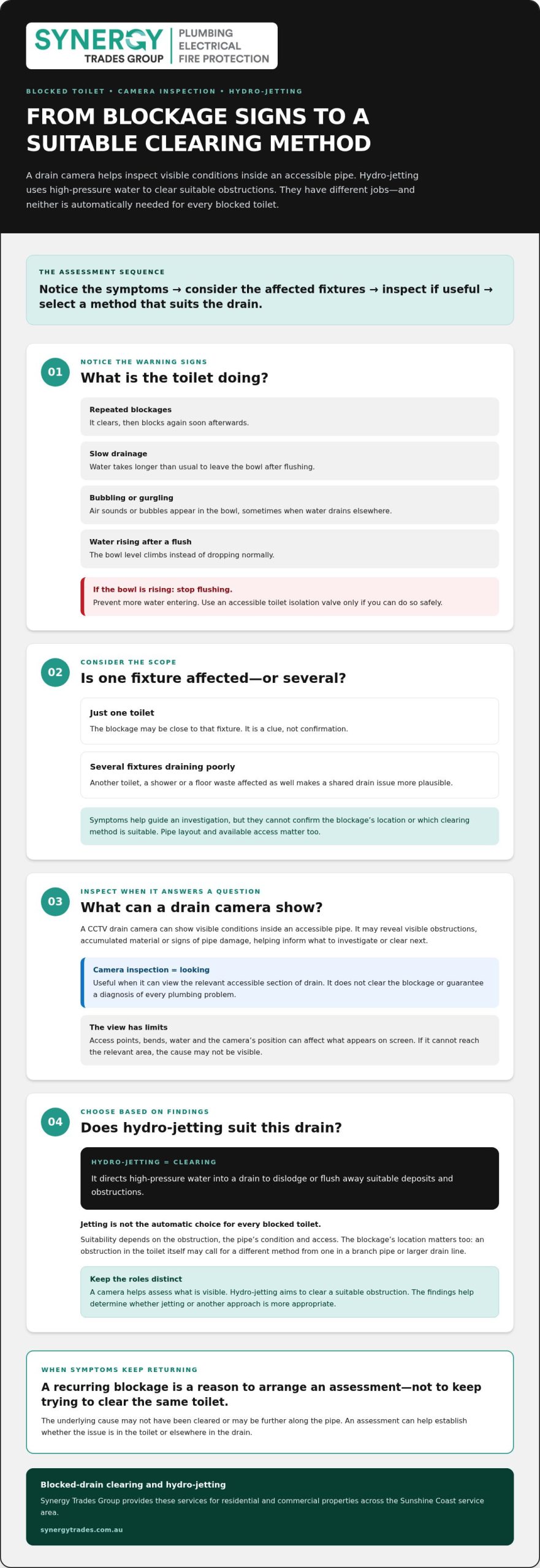
A toilet that won’t flush properly can disrupt a household and quickly become stressful. A slow bowl or recurring blockage may come from an obstruction close to the toilet, or it can signal an issue further along the drain. Symptoms help guide an investigation, but they can’t confirm the blockage’s location or which clearing method is suitable.
Look out for these warning signs:
- Repeated blockages: The toilet clears, then blocks again soon afterwards.
- Slow drainage: Water takes longer than usual to leave the bowl after flushing.
- Bubbling or gurgling: Air sounds or bubbles appear in the bowl, sometimes when water drains elsewhere.
- Water rising after a flush: The bowl level climbs instead of dropping normally. Stop flushing to reduce the risk of overflow.
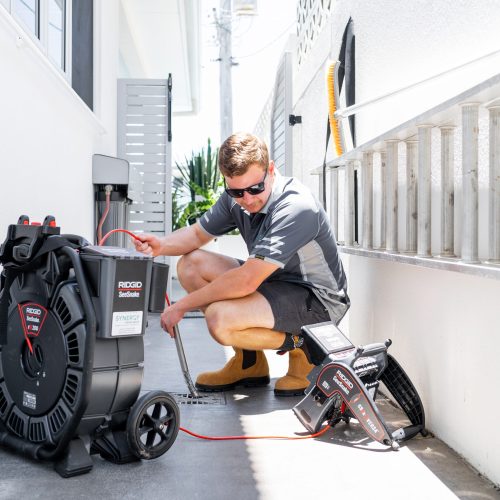
These signs can point to a blockage in the toilet trap, the branch pipe serving that fixture, or a larger drain. A blocked toilet jetter drain camera assessment may help clarify what’s happening, but symptoms alone don’t establish that a camera or jetter is needed. A CCTV drain camera is an inspection tool for viewing conditions inside an accessible pipe. What it can show depends on access and the pipe being inspected.
How can you tell whether the blockage is in the toilet or drain?
If just one toilet is affected, the blockage may be close to that fixture, but this is only a clue. If several fixtures, such as another toilet, a shower or a floor waste, are draining poorly, a shared drain issue becomes more plausible. A plumber considers these symptoms alongside the property’s plumbing layout and available access before deciding how to investigate.
When does a recurring blockage need professional assessment?
A one-off blockage may follow a particular obstruction, while repeated symptoms can mean the underlying cause hasn’t been cleared or is further along the pipe. Recurrence is a good reason to arrange an assessment rather than repeatedly trying to clear the same toilet. The next step may involve checking the accessible drain and choosing a suitable clearing method.
Quotable takeaway: If a toilet blocks repeatedly, arrange a professional assessment to find out whether the cause lies in the toilet or further along the drain.
Synergy Trades Group provides blocked-drain clearing and hydro-jetting for residential and commercial customers across the Sunshine Coast service area. A useful starting point is to describe the symptoms and identify whether one fixture or several are affected. The drain can then be assessed before a clearing method is selected.
How a drain camera and hydro-jetter work on a blockage
A search for “blocked toilet jetter drain camera” brings together two tools with different jobs. A drain camera helps inspect visible conditions inside an accessible pipe. Hydro-jetting uses directed, high-pressure water to clear suitable obstructions. One can inform an assessment, while the other is a clearing method. Neither is automatically needed for every blocked toilet.
What can a drain camera reveal inside a pipe?
A drain camera can show visible obstructions, accumulated material or signs of pipe damage. The view may help indicate where further investigation or clearing could be useful, but it can’t guarantee a diagnosis of every plumbing problem. Access points, bends, water and the camera’s position can limit what appears on screen. Any footage needs to be considered alongside the symptoms and pipe layout.
Inspection is most useful when it answers a practical question, such as whether a suspected obstruction is visible in an accessible section of drain. If the camera can’t pass a bend or reach the relevant area, the view may not show the cause. A camera inspection can inform the next step, but it doesn’t clear the blockage by itself.
How does hydro-jetting clear a suitable drain?
Hydro-jetting directs high-pressure water into a drain to dislodge or flush away suitable deposits and obstructions. It may be considered when the drain and blockage are appropriate for this method. It isn’t the right choice for every toilet blockage: the obstruction, pipe condition and access all matter. If the pipe’s condition raises concerns, the clearing approach should reflect those findings rather than rely on jetting by default.
Inspection helps assess what’s visible inside the drain; hydro-jetting aims to clear a suitable obstruction. Keeping those roles distinct helps avoid treating a diagnostic tool and a clearing method as interchangeable. The findings guide whether jetting is appropriate or whether another approach is more suitable.
Synergy Trades Group provides blocked-drain clearing and hydro-jetting for Sunshine Coast residential and commercial properties. Read about blocked-drain clearing or request assistance with a blocked drain.
Is hydro-jetting safe for a blocked toilet? Compare methods before clearing
Hydro-jetting can clear some drain obstructions, but it isn’t automatically suitable for every blocked toilet. The decision depends on what’s causing the blockage, the condition of the pipe and whether there’s suitable access. An assessment helps determine whether jetting is appropriate or if another approach makes more sense.
The blockage’s location matters too. An obstruction in the toilet itself may call for a different method from a blockage in a branch pipe or larger drain line. Using a drain-clearing technique without understanding where the problem lies could be ineffective or unsuitable for the pipe. Neither a camera inspection nor a jetter is required in every situation.
Jetter versus mechanical clearing: what is the difference?
Mechanical clearing may suit an accessible, localised obstruction, such as one close to a fixture. Hydro-jetting directs high-pressure water into a suitable drain to dislodge or flush away deposits and obstructions. These methods serve different purposes, and neither guarantees that every blockage will clear or won’t return. An assessment helps match the method to the likely location and condition of the drain.
In simple terms, the options can be considered by purpose:
- Mechanical clearing: May address an accessible obstruction near the toilet or within a drain.
- Camera inspection: Can help assess visible conditions and the likely location of an issue when the pipe is accessible.
- Hydro-jetting: May be used to clear suitable obstructions and deposits in a drain line.
When could a drain camera help decide the next step?
A camera inspection may help when there’s a reason to investigate further and the suspected section of pipe can be accessed. It can show visible conditions that inform the choice of clearing method, but its view is limited by access and the pipe’s layout. Findings, symptoms and pipe condition should guide the decision, rather than treating a camera inspection as a default step for every toilet blockage.
For example, if the suspected issue is inside the toilet, an inspection of a downstream pipe may not answer the immediate question. If the blockage appears to sit further along an accessible drain, a camera view may provide useful information before clearing begins. The aim is to select a method that suits the problem, not to use every available tool.
For Sunshine Coast properties, Synergy Trades Group provides blocked-drain clearing and hydro-jetting. Learn more about blocked-drain clearing and how an assessment can help determine an appropriate next step.
What to do before help arrives for a blocked toilet
A blocked toilet can become messy quickly, but a few calm steps can limit the risk of overflow and help the plumber understand what’s happening.
- Stop flushing. If the bowl is draining slowly or the water level is rising, don’t flush again to test it.
- Prevent more water entering. If the toilet has an accessible isolation valve near its base, turn it gently clockwise to shut off the supply. Don’t force a stiff valve. If it’s difficult to reach or starts leaking, leave it alone and keep clear of the water.
- Keep the area safe. Keep children away from the toilet and any spilled water. Avoid direct contact with wastewater, and wash your hands thoroughly if you’ve touched the affected area.
- Observe what’s affected. Note whether the problem is limited to one toilet or includes other fixtures, and whether you’ve noticed gurgling, slow drainage or water rising elsewhere.
What should you avoid doing with a blocked toilet?
Repeated flushing can make an overflowing bowl worse. Don’t mix chemical cleaners, and follow product label directions if a cleaner has already been used. Avoid forceful improvised tools, which can damage the toilet or push an obstruction further into the pipe. Tell the plumber about any products or clearing attempts so they can take them into account.
What information helps assess a blocked drain?
A few details can make it easier to understand the issue and plan an assessment. You don’t need to diagnose the blockage yourself.
- Which fixtures are affected: one toilet, several toilets or other drains as well.
- When the problem began and whether it has happened before.
- Any unusual sounds, overflow or nearby drainage symptoms.
- What you’ve already tried, including any products used.
If you’ve been searching “blocked toilet jetter drain camera”, remember that the appropriate assessment or clearing method depends on the situation. These observations help explain the symptoms, but they can’t confirm the cause remotely. Synergy Trades Group provides blocked-drain clearing and hydro-jetting for Sunshine Coast properties.
Share what you’ve noticed and request help with a blocked drain.
Blocked toilet and drain clearing on the Sunshine Coast: your next step
A blocked toilet can be difficult to manage, especially if the cause isn’t clear. Note the symptoms, consider whether one fixture or several are affected, and arrange an assessment. The blockage’s likely location and the condition of the plumbing help guide the clearing method. A camera or hydro-jetter may be relevant in some cases, but neither is automatically needed for every toilet blockage.
Synergy Trades Group provides blocked-drain clearing and hydro-jetting for residential and commercial customers across the Sunshine Coast. Read about local blocked-drain services and view the Sunshine Coast service area.
What to expect when arranging blocked-drain help
Share what you’ve noticed: whether the toilet is slow, unusable or repeatedly blocked, when the issue began, and whether other fixtures are affected. Mention any overflow, unusual sounds, previous clearing attempts or products used. These details help describe the problem, but they don’t replace an on-site assessment. The plumber considers the symptoms and plumbing conditions before selecting a suitable way to investigate or clear the drain.
People searching for “blocked toilet jetter drain camera” are often trying to understand which tool will solve the problem. The answer depends on the assessment. A camera can assist with inspection where appropriate access is available; hydro-jetting may suit certain drain obstructions. The blockage and pipe condition guide the decision, rather than a set procedure being used for every job.
How to book help for a blocked toilet
If the toilet remains unusable, the blockage keeps returning, or other drains are affected, arranging blocked-drain help is a sensible next step. Synergy Trades Group provides blocked-drain clearing and hydro-jetting for Sunshine Coast properties. Describe what’s happening and where you’ve noticed it to help explain the problem.
For a practical next step, arrange blocked-drain help.
Take the next step towards a clear toilet
A slow, recurring or overflowing toilet needs a considered response. Note which fixtures are affected and when the problem began. That information helps guide an assessment, but symptoms alone can’t confirm where the blockage is or which clearing method is right.
A blocked toilet jetter drain camera assessment may involve different tools for different purposes: a camera can help inspect accessible pipework, while hydro-jetting may clear suitable drain obstructions. The choice depends on the blockage, access and pipe condition, so neither method is right for every situation.
Synergy Trades Group provides blocked-drain clearing and hydro-jetting for residential and commercial properties across the Sunshine Coast. If your toilet remains unusable, the blockage keeps returning or other drains are affected, you can arrange blocked-drain help.
With clear information and a suitable assessment, you can take the next step with confidence.
Frequently Asked Questions
Can a jetter clear a blocked toilet?
Hydro-jetting can clear some suitable drain-line blockages, but it isn’t right for every toilet problem. An obstruction may be in the toilet trap, or the pipe condition may make another method more suitable. A plumber considers the symptoms, access and likely blockage location before choosing how to clear it. If the bowl is filling or the water is rising, stop flushing to avoid adding more water.
Is hydro-jetting safe for toilet pipes?
Hydro-jetting can suit some drains when the blockage, pipe condition and access have been assessed first. It isn’t a universal fix, as pressure-based clearing may not suit certain pipework or obstructions. The toilet itself is also different from the drain line connected to it, so the blockage’s location matters. An assessment helps determine whether jetting is appropriate or another approach is safer.
What does a drain camera show in a blocked pipe?
A drain camera can show visible conditions inside an accessible pipe, such as an obstruction, buildup or a visible defect. What appears depends on access, bends in the pipe, water and the camera’s view. It may not explain every cause of a blockage or show every part of the plumbing system. A plumber interprets the footage alongside the symptoms and other relevant conditions.
Do I need a drain camera for every blocked toilet?
No, a camera inspection isn’t automatically needed for every blocked toilet. The symptoms, affected fixtures, likely blockage location and access all help guide the decision. A search for “blocked toilet jetter drain camera” may bring up both tools, but they serve different purposes: a camera can help inspect an accessible drain, while a clearing method addresses the obstruction. Some blockages can be assessed without camera inspection.
What should I do if my toilet is blocked and overflowing?
Stop flushing straight away, as another flush can add more water to the bowl. If you can safely reach the toilet’s isolation valve, turn it off gently to limit further water entering. Keep children and others away from contaminated water, and avoid contact with waste. Don’t mix drain chemicals. Note whether other fixtures are affected so you can describe the problem clearly when arranging help.
Why does my toilet keep blocking after it has been cleared?
A recurring blockage may mean the underlying cause remains, or that the obstruction is further along the drain. Buildup or a visible pipe issue may also be involved, but symptoms alone can’t confirm the cause. Keep track of how often the blockage returns and whether nearby fixtures are affected. Sharing these details can help a plumber assess the issue and choose a suitable next step.
Can I use chemical drain cleaner before a plumber arrives?
Follow the product label and never mix drain chemicals, as combining products can create dangerous reactions. A chemical cleaner may not remove a solid obstruction or resolve a blockage further along the drain. If you’ve already used a product, keep others away from the toilet and tell the plumber its name. Don’t add more products or repeatedly flush a bowl where the water is rising.