If your smoke alarms haven’t been upgraded to the new interconnected standard yet, is your home technically non-compliant as we head toward the 2027 deadline? We understand that keeping up with the evolving smoke alarm testing requirements qld homeowners must follow can feel like a moving target. Between distinguishing photoelectric from ionisation sensors and worrying about the cost of a full system overhaul, it’s easy to feel overwhelmed by the technical details of fire safety legislation.
You aren’t alone in this confusion, and your family’s safety is far too important to leave to guesswork. This guide will clear the air by showing you exactly how to test your system and what you need to do to meet the January 1, 2027, deadline for all Queensland dwellings. We’ll provide a clear checklist for 2027 compliance, explain the specific installation locations required by law, and help you gain the confidence that your home is fully protected by a reliable, modern system.
Key Takeaways
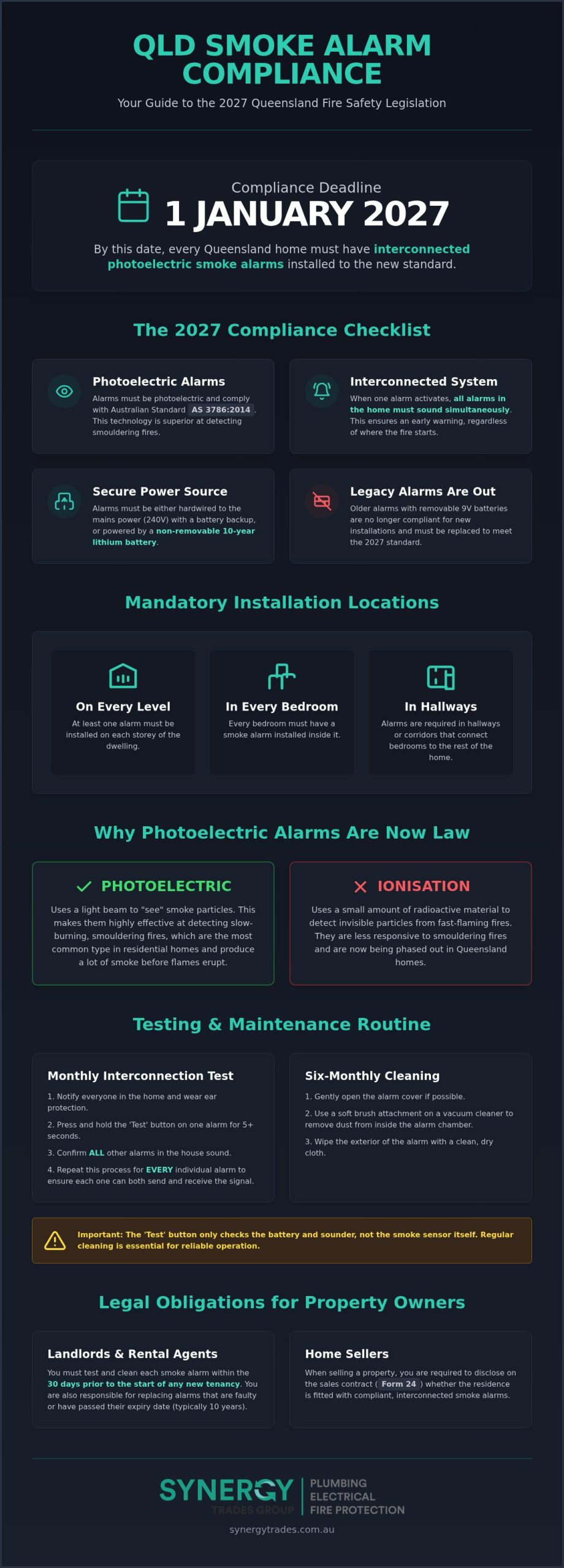
- Understand the 1 January 2027 deadline that requires all Queensland homes to have interconnected photoelectric smoke alarms installed on every level.
- Learn how to perform a proper interconnection test rather than a simple battery check to ensure every alarm in your home sounds simultaneously.
- Stay compliant with the latest smoke alarm testing requirements qld homeowners must follow, including monthly testing and six-monthly cleaning routines.
- Identify your specific legal obligations as a landlord or seller, such as the mandatory 30-day testing window before a new tenancy begins.
- Discover why photoelectric alarms are now the legal standard for their superior ability to detect slow-burning, smouldering household fires.
What are the Smoke Alarm Testing Requirements in QLD for 2026?
The countdown to a safer Queensland is entering its final stages. While the rollout of new fire safety laws began back in 2017, the most significant milestone for the average homeowner is now just around the corner. By 1 January 2027, every existing private home, townhouse, and unit in the state must comply with the updated safety standards. This shift moves us away from basic, standalone units toward a sophisticated life-safety system designed to give your family the earliest possible warning during a fire.
Modern smoke alarm testing requirements qld residents must follow are built around photoelectric technology. Older ionisation alarms, which were common for decades, are being phased out because they often struggle to detect the slow-burning, smouldering fires that typically occur in residential settings. To understand the technical shift, you can read more about Photoelectric vs Ionisation Alarms. Photoelectric sensors use a light source to detect smoke particles, making them much more effective at identifying house fires before they become life-threatening. This change in legislation was largely prompted by the 2011 Slacks Creek fire, Australia’s deadliest domestic house fire, which highlighted the critical need for better early-warning systems.
The 2027 Compliance Countdown
Compliance isn’t just about the type of alarm; it’s about where they sit and how they talk to each other. The law requires alarms to be “interconnected.” This means that if an alarm detects smoke in the downstairs kitchen, every other alarm in the house will sound simultaneously. It ensures that a fire in a remote part of the home won’t go unnoticed by someone sleeping at the other end of the building. To meet the 2027 deadline, you must have these interconnected alarms installed in every bedroom, in every hallway connecting bedrooms to the rest of the house, and on every level of the dwelling.
Key Technical Standards to Look For
When you are checking your existing hardware or purchasing new units, you need to look for specific markings to ensure they are legal. Every alarm must comply with Australian Standard AS 3786:2014. You will usually find this printed on the back or side of the unit. There are two main ways to power these compliant systems:
- Hardwired (240v): These are connected to your home’s main power supply by a licensed electrician and include a battery backup.
- 10-Year Lithium Battery: These are standalone units powered by a non-removable, sealed battery designed to last a full decade.
The days of the 9v replaceable battery are over for new installations. While those older units served us well, the risk of a homeowner forgetting to change the battery or “borrowing” it for a TV remote is a risk the new Queensland laws aim to eliminate entirely.
How to Test Your Smoke Alarms: A Guide for Homeowners
Testing your alarms is about more than just making a loud noise once a year. Keeping up with the smoke alarm testing requirements qld residents must follow means moving beyond the basic “press and forget” method. There is a significant difference between a battery check and a full interconnection test. While a battery check ensures the unit has power, an interconnection test confirms that your entire safety network is communicating correctly. It is vital to remember that the “Test” button on your unit is designed to check the electrical circuit and sounder, not the physical smoke sensor itself.
To keep your system reliable, we recommend a monthly testing routine and a thorough cleaning every six months. Before you begin, notify everyone in the house and perhaps even your neighbours. Compliant alarms are required to reach at least 85 decibels, which is loud enough to cause physical discomfort. Protect your ears by wearing earplugs or industrial earmuffs during the process. Current Queensland smoke alarm legislation mandates that alarms are kept in working order, which involves this hands-on maintenance from the homeowner or a qualified professional.
Step-by-Step Interconnection Testing
Testing an interconnected system requires a bit more legwork than old standalone units. Follow these steps to ensure every room is covered:
- Step 1: Press and hold the test button on the first unit for at least five seconds.
- Step 2: Have a second person walk through the house to verify that every other alarm in the circuit is sounding.
- Step 3: Repeat this process for every individual alarm in the house. This is crucial because a unit might be able to receive a signal but fail to send one, which would leave a gap in your safety net.
Cleaning and Maintenance Procedures
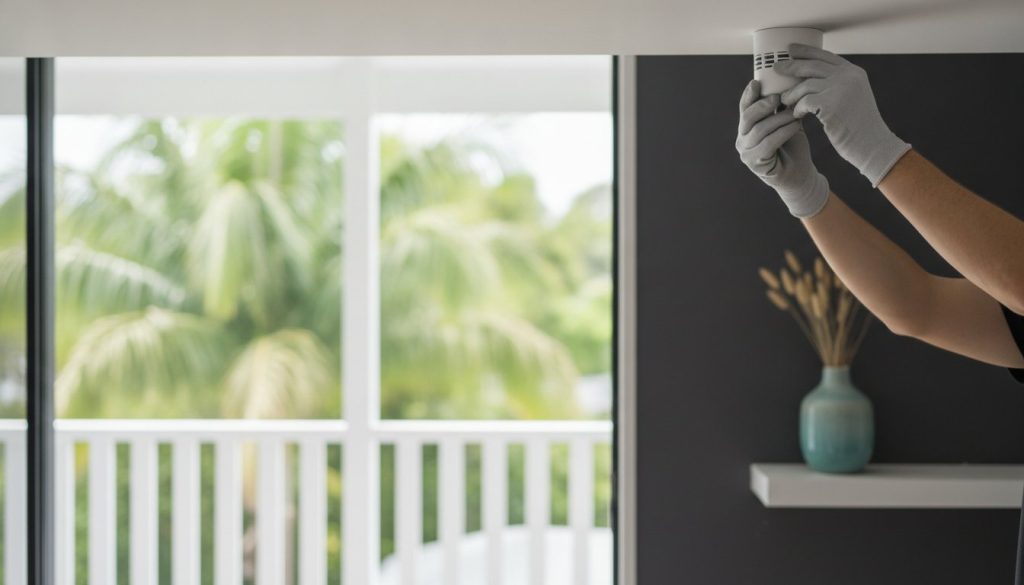
Dust, cobwebs, and small insects are the primary causes of false alarms and sensor failure. Use a vacuum cleaner with a soft brush attachment to gently clear the vents around the rim of each unit every six months. This prevents debris from settling inside the photoelectric chamber. For a true safety check, you can use “canned smoke” or an approved aerosol tester. This simulates the presence of smoke particles to see if the photoelectric sensor actually reacts. Never use candles, incense, or matches for testing. These methods can leave oily residues on the sensor or, worse, start an actual fire. If you find the technical side of these checks daunting, a professional smoke alarm testing and safety check can provide total peace of mind.
Photoelectric vs Ionisation Alarms: Why the Law Changed
The shift in smoke alarm testing requirements qld homeowners face isn’t just about red tape; it’s about the physics of how fires start in modern homes. Most fatal house fires involve smouldering materials like foam-filled furniture, curtains, or bedding. Photoelectric alarms use a light-sensing chamber to detect these larger smoke particles. When smoke enters the chamber, it scatters the light beam onto a sensor, triggering the alarm. Research shows that photoelectric alarms react up to 30 minutes faster to smouldering fires than ionisation types, providing a massive window for a safe evacuation.
Ionisation alarms, which were the standard for years, work differently. They use a tiny amount of radioactive material to ionise the air, making them very sensitive to the small particles produced by fast-flaming fires. However, they often fail to trigger during the long, smoky smouldering phase of a fire. They are also notorious for nuisance alarms caused by burnt toast or bathroom steam. By switching to photoelectric technology, you’re not only meeting the Queensland smoke alarm requirements, but you’re also reducing the likelihood of your alarm going off every time you use the griddle.
Identifying Your Current Alarms
It’s easy to check if your current system is outdated. Remove an alarm from its base and look for a small “radioactive” trefoil symbol on the back. If you see it, you have an ionisation alarm that needs replacing. You should also check the manufacture date. All smoke alarms have a 10-year lifespan. If your unit is approaching its tenth birthday, it’s legally required to be replaced, regardless of whether it still beeps when tested. Reliable brands like Clipsal, Red, and Cavius offer models that are fully compliant with the 2027 standards.
The Interconnection Advantage
Interconnection is the real game-changer for home safety. In the past, if a fire started in a downstairs lounge, a standalone alarm might not be loud enough to wake someone behind a closed bedroom door upstairs. Interconnection ensures that when one unit detects smoke, every alarm in the house activates. You can achieve this through physical wiring or wireless Radio Frequency (RF) technology, which is a fantastic option for older Queenslanders where running new cables is difficult. Many homeowners choose to bundle these upgrades with other electrical services to ensure their entire switchboard and safety switch system is up to modern standards.
Legal Obligations for Landlords, Sellers, and Owner-Occupiers
Understanding the smoke alarm testing requirements qld enforces depends largely on your relationship to the property. While every resident has a role in fire safety, the law places specific burdens of proof on those who own, rent, or sell homes. A common point of confusion for many is the difference between “testing” and “certification.” Testing is the routine check you perform yourself to ensure the alarm sounds; certification is a professional assessment from a licensed electrician confirming the system meets every technical standard of the 2016 Amendment Act.
For landlords, the rules are strict and time-sensitive. You must test and clean every smoke alarm within 30 days before a new tenancy starts or an existing lease is renewed. This is a non-negotiable safety check that protects both your tenants and your investment. Tenants also have a part to play; they’re responsible for testing and cleaning each alarm at least once every 12 months during their stay. In townhouse complexes or units, the Body Corporate typically manages alarms in common areas, but the responsibility for the alarms inside your specific dwelling usually sits with the individual owner.
Compliance for Rental Properties
Maintaining a rental property involves more than just a quick beep of the alarm. Most insurance providers now require an annual compliance certificate to validate your policy. If a tenant reports a faulty alarm, the legislation requires a swift response. Many property managers follow a 24-hour rule for repairing or replacing non-functional units to mitigate risk. Engaging a professional for these checks is often the smartest move for landlords, as the service is generally tax-deductible and provides a clear paper trail of your commitment to safety.
Selling Your Home on the Sunshine Coast
When you put your house on the market, you must state whether compliant smoke alarms are installed on the Contract of Sale (Form 24). Selling a property without meeting the 2027 standards can lead to legal complications or delays in settlement. Providing a Certificate of Compliance to the buyer builds trust and ensures a smoother transaction. While you’re preparing for a sale, it’s also a great time to look at other critical infrastructure like hot water system repairs sunshine coast to ensure your property is in top condition for inspections. Many savvy sellers also take the opportunity to modernise their bathrooms with upgrades such as professional bidet installation on the Sunshine Coast, which can add genuine appeal and value for prospective buyers. To make sure your home is fully ready for the market, you can book a professional compliance audit with our experienced team today.
Professional Smoke Alarm Solutions on the Sunshine Coast
Living on the Sunshine Coast brings unique challenges for home maintenance that go beyond simple aesthetics. Our beautiful coastal environment means your electrical systems are constantly exposed to high humidity and salt-laden air. These conditions can lead to the premature corrosion of internal components and sensitive photoelectric sensors, potentially causing system failure or frequent false alarms. Meeting the smoke alarm testing requirements qld mandates isn’t just a legal hurdle; it’s a necessary step to ensure your hardware survives our local climate and functions perfectly when it matters most.
We often suggest combining your smoke alarm check with a comprehensive electrical safety audit. This methodical approach ensures your safety switches and switchboard are also up to the task, providing total peace of mind for your family. By managing the 2027 upgrades now, you avoid the inevitable rush and hardware shortages that often occur as major legislative deadlines approach. Our team focuses on providing a low-friction experience, ensuring your home is compliant without the stress of navigating complex technical standards alone. The same high humidity that affects your smoke sensors can also cause issues elsewhere in your home — if you’ve noticed a persistent musty odour coming from your bathroom, it may be worth reading our guide on why does my drain smell and how to banish bathroom odours for good.
Why Choose a Licensed Electrician?
While homeowners can and should perform monthly cleaning and testing, the installation of 240v hardwired units must be performed by a licensed electrician. This isn’t just a recommendation; it’s a legal requirement in Queensland. A professional installation ensures the interconnection is robust and won’t trigger frustrating false alarms due to poor wiring or signal interference. Perhaps most importantly, a professional installation provides you with a formal record of compliance. This documentation is often essential for your insurance provider to validate your home or landlord policy in the event of a claim.
The Synergy Trades Difference
Synergy Trades Group is a family-owned and operated business led by Paul and Lynda. With over 70 years of combined industry experience, we’ve seen firsthand how poorly maintained systems can fail. We take immense pride in our workmanship and our commitment to traditional service values. This means we show up when we say we will, we keep our work sites spotless, and we provide transparent pricing so you know exactly where you stand. If you need a reliable electrical near me consultation to secure your 2027 compliance, our team is here to guide you through every step of the process with a friendly, professional touch.
Securing Your Home for a Safer Future
Navigating the transition to a fully interconnected home doesn’t have to be a source of stress. The shift toward photoelectric technology is a significant win for family safety, providing those critical extra minutes needed to evacuate during a smouldering fire. By staying on top of the smoke alarm testing requirements qld mandates, you’re doing more than just ticking a compliance box; you’re ensuring that your safety net is ready to perform when it matters most. Remember to keep up with your monthly button checks and six-monthly vacuuming to protect your sensors from the Sunshine Coast’s salt and humidity.
If you’re feeling unsure about your current setup or the 2027 deadline is approaching faster than you’d like, we are here to help. As a family-owned and operated business with over 70 years of industry experience, Paul and Lynda’s team are your local Sunshine Coast experts in property maintenance and electrical safety. We can handle the technical heavy lifting and provide the certification you need for total peace of mind. Get your home 2027-compliant with a professional smoke alarm audit from Synergy Trades Group today. Let’s work together to keep your household safe and compliant for years to come.
Frequently Asked Questions
Do I need to replace my smoke alarms if they are still working?
Yes, you must replace any alarm that is more than 10 years old or is an ionisation model. Even if the test button produces a sound, the internal sensors that detect smoke particles degrade over time. The 10-year lifespan is a hard limit set by Australian Standards. You can usually find the manufacture or expiry date printed on the back of the unit.
What is the 1 January 2027 deadline for smoke alarms in QLD?
This date marks the final phase of Queensland’s smoke alarm legislation. By the start of 2027, every single domestic dwelling in the state must be fitted with interconnected photoelectric smoke alarms. This includes all owner-occupied houses, townhouses, and units. If you haven’t upgraded your system yet, you have until this date to ensure your home meets the current safety standards.
Can I install my own smoke alarms in Queensland?
You can only install battery-powered smoke alarms yourself if they are the 10-year sealed lithium battery type. However, any smoke alarm that requires connection to your home’s 240v mains power must be installed by a licensed electrician. Because many compliant systems require at least one hardwired unit, most homeowners will need professional assistance to ensure their interconnection is legally valid and reliable.
How many smoke alarms do I need in my house?
The number of alarms depends on your floor plan. You are legally required to have a compliant alarm in every bedroom and in the hallways that connect those bedrooms to the rest of the house. Additionally, you must have at least one alarm on every storey of the home. This ensures that a fire starting in any area provides an immediate, audible warning to everyone.
Why do my smoke alarms keep going off for no reason?
Nuisance alarms are usually caused by dust, small insects, or high humidity levels. Because photoelectric sensors use light to detect particles, they can sometimes mistake a stray cobweb or steam for smoke. Regular cleaning is one of the smoke alarm testing requirements qld residents should prioritise. Vacuuming around the vents every six months can significantly reduce these frustrating and unnecessary middle-of-the-night wake-up calls.
What happens if I don’t have compliant smoke alarms when I sell my house?
Failing to have compliant alarms when selling a property can lead to significant legal issues. You are required to disclose the status of your alarms on the Contract of Sale using Form 24. If the alarms aren’t up to standard, a buyer might negotiate a lower price or delay settlement. It’s much simpler to ensure compliance before you list the property for sale.
Is it a legal requirement to have interconnected smoke alarms in rentals?
Yes, this has been a mandatory requirement for all rental properties since 1 January 2022. Landlords are legally obligated to ensure the property has interconnected photoelectric alarms in all the required locations. They must also ensure that smoke alarm testing requirements qld are met by checking and cleaning the units within 30 days of any new tenancy agreement or lease renewal.
How do I know if my smoke alarm is photoelectric or ionisation?
You can identify the type by looking at the label on the back of the unit. Ionisation alarms are required to display a small black trefoil radioactive symbol. Photoelectric alarms, which are the current legal standard, often have the word Photoelectric or the letter P clearly marked. If you see a radioactive symbol, your alarm is outdated and must be replaced to meet the 2027 deadline.