Imagine stepping into the shower on a crisp morning, only to be greeted by a sudden blast of icy water that leaves you gasping. It is a frustrating way to start the day, yet many families across the region ignore the subtle warnings their units give off until the damage is already done. When it comes to reliable hot water sunshine coast homeowners often assume that if water is still flowing, the system is healthy. In reality, your unit might be struggling under the surface, quietly driving up your electricity bills and inching toward a total breakdown while you sleep.
We know how confusing it can be to decide if a strange rumbling noise requires a quick repair or a full upgrade. This guide provides a professional audit checklist to help you evaluate your system’s health with confidence. You will discover the exact signs of impending failure, from hidden tank corrosion to sediment issues, and learn how to maintain your unit like a local pro. By taking ten minutes to check your system today, you can extend its lifespan, avoid the stress of emergency call-out fees, and ensure your family never has to face an unexpected cold shower again.
Key Takeaways
- Learn to identify subtle warning signs like fluctuating temperatures and strange tank noises before they lead to a total system failure.
- Master a simple 5-point health audit, including how to safely test your PTR valve and spot hidden moisture around your unit.
- Understand how the unique coastal environment and water hardness impact the lifespan of your hot water sunshine coast system.
- Apply the “50% Rule” to determine if a repair is a smart investment or if it is time to consider a more efficient replacement.
- Discover why choosing a local family-owned specialist with 70+ years of experience ensures transparent advice and reliable long-term solutions.
Warning Signs: Is Your Sunshine Coast Hot Water System Struggling?
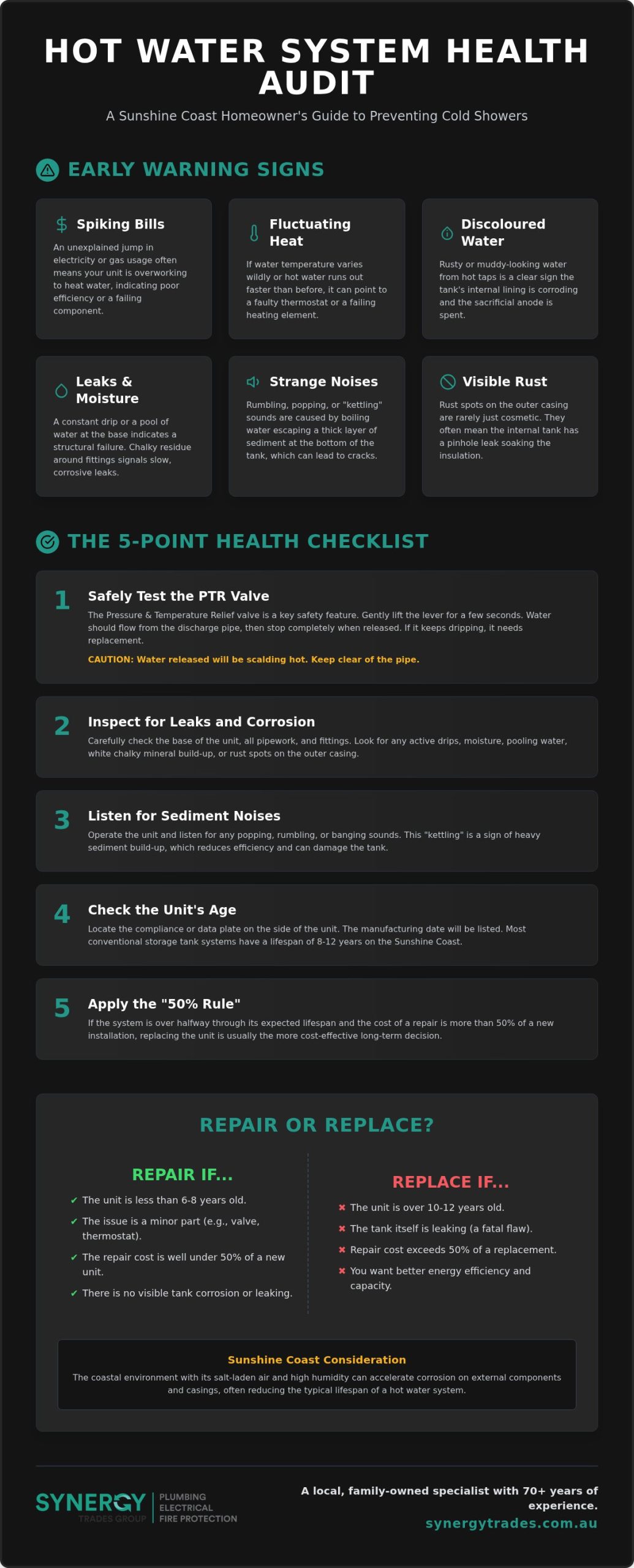
Most homeowners assume their system is in good health until they are greeted by an icy blast in the shower. However, hot water units rarely fail without leaving a trail of breadcrumbs first. When assessing the state of your hot water sunshine coast residents should look for patterns rather than one-off glitches. A sudden, unexplained jump in your quarterly electricity or gas bill is often the first financial warning. This usually happens because the unit is struggling to reach the set temperature, forcing it to run for longer periods and consume more energy than necessary.
The “Cold Shower” Prelude
If your hot water seems to run out much faster than it did a year ago, your system is likely under significant stress. This drop in capacity often points to a failing heating element or a thermostat that is no longer accurately sensing the water temperature. Before you assume the tank is gone, it is worth investigating your off peak hot water configuration. In some cases, your household water usage may have simply outpaced your current heating schedule, though a professional check can confirm if a mechanical fault is the true culprit.
Water quality provides another vital clue to the unit’s internal condition. If you notice rusty or muddy-looking water coming specifically from the hot taps, the internal lining of your tank is likely deteriorating. Gaining a basic understanding of how water heaters work helps explain this process. Most tanks rely on a sacrificial anode rod to prevent corrosion. Once this rod is spent, the water begins to eat away at the steel tank itself, creating the rust and sediment you see at the tap.
Visual Cues of Internal Corrosion
A quick walk-around of your unit can reveal issues before they turn into a flooded garage or cupboard. Keep a close eye on these physical indicators:
- Weeping vs. Leaking: It is normal for the Pressure Temperature Relief (PTR) valve to release a small amount of water during a heating cycle. However, a constant flow or a pool of water at the base of the tank suggests a structural breach.
- Rust Spots on the Casing: Visible rust on the outer jacket is rarely just a cosmetic issue. It often means the internal tank has developed a pinhole leak that is soaking the insulation and reaching the outer shell.
- Mineral Build-up: Look for white, chalky residue around the valves and pipe connections. This is a sign of “slow leaks” where water evaporates quickly but leaves behind minerals that eventually corrode the fittings.
Audible warnings are just as important as visual ones. If you hear popping, rumbling, or banging sounds coming from the tank, it is usually caused by a thick layer of sediment at the bottom. As the water trapped under this sediment boils, it creates steam bubbles that “pop” through the layer. This is not just annoying; it creates hot spots that can eventually cause the tank to crack or the element to burn out prematurely.
The 5-Point Hot Water Health Checklist
Maintaining a reliable supply of hot water sunshine coast wide requires more than just crossing your fingers. A proactive ten-minute check every six months can be the difference between a simple valve replacement and an expensive emergency installation. Use this structured audit to assess your system’s current condition and identify small faults before they escalate into major plumbing headaches.
Testing the PTR Valve Safely
The Pressure Temperature Relief (PTR) valve is the most important safety feature on your tank. It manages internal pressure to ensure the unit operates within Australian safety standards. To test it, locate the small lever near the top of the tank. Gently lift the lever for a few seconds. You should see water flow out of the discharge pipe. Once you release the lever, the flow should stop completely. If the valve is stuck or continues to drip after testing, it is failing to seal and needs immediate attention. Always keep your feet and hands away from the end of the drain pipe, as the water released will be scalding hot.
While you are at the tank, inspect the base and all visible pipework for moisture. On the Sunshine Coast, we often see “slow leaks” that don’t cause a flood but create constant dampness. This moisture can rot the base of the unit or attract pests. Similarly, listen for “kettling” noises. If your tank sounds like a boiling kettle or makes deep rumbling sounds, sediment build-up is likely overheating the bottom of the tank, which significantly reduces energy efficiency.
The Age Factor: Reading Your Compliance Plate
Every hot water unit has a metal compliance plate, usually located on the side of the outer casing. This plate lists the manufacture date, which is your most reliable indicator of risk. Most electric storage systems have an expected lifespan of 8 to 12 years. If your unit is approaching its tenth birthday, it has entered the “danger zone” where internal components are likely near the end of their functional life. Our local humidity can also cause the external casing to rust faster than in drier climates, potentially hiding internal structural issues.
Finally, consider the condition of the sacrificial anode. This magnesium or aluminium rod sits inside the tank to attract corrosive minerals, sacrificing itself to save the steel tank. If your system is over five years old and the anode has never been checked, the tank may no longer be protected from the inside out. If you notice any of these red flags during your audit, it might be wise to organise a professional hot water inspection to see if a simple part replacement can extend your unit’s life.
Sunshine Coast Specific Factors: Salt, Sand, and Sun
Living in a coastal paradise like the Sunshine Coast offers an enviable lifestyle, but the local environment is notoriously tough on household appliances. While a system might last fifteen years in a dry, inland climate, the combination of high humidity and salt spray can significantly shorten that lifespan here. Coastal corrosion is the oxidation of metal components accelerated by airborne sea salt. This process doesn’t just affect the visible outer casing; it can penetrate the internal electrical components and fittings of your hot water sunshine coast system, leading to premature failure if left unmanaged.
Fighting Salt-Air Corrosion
For beachfront properties in suburbs like Noosa, Mooloolaba, or Caloundra, the choice of materials is critical. Stainless steel tanks are often the preferred option because they lack the enamel lining that can crack and expose the steel underneath to salt-driven rust. If you have a standard vitreous enamel tank, you can still protect your investment by ensuring the unit is housed in a well-ventilated cover or positioned away from direct salt-laden winds. When the time comes to upgrade to energy-efficient hot water systems, always ask about “coastal grade” finishes that are specifically designed to withstand our local conditions. Residents closer to the beach may also want to review what a hot water installation Caloundra specialists recommend for coastal-proof materials and compliant setups.
Positioning also plays a major role in the health of your unit. On the Sunshine Coast, units installed on western-facing walls endure the full brunt of the afternoon sun. This intense heat can perish plastic caps, brittle the wiring insulation, and make it harder for the system to regulate temperature efficiently. If your unit is baked by the sun every day, it is worth checking the external fittings for signs of UV damage or cracking, which can allow moisture to seep into the electrical housing.
The Sacrificial Anode: Your Best Defence
The sacrificial anode is the unsung hero of your hot water tank. This long rod, usually made of magnesium or aluminium, sits inside the tank and is designed to corrode so that your tank doesn’t have to. Because our local water can vary in hardness depending on whether you are in a coastal pocket or the hinterland, these rods tend to deplete faster than manufacturers suggest.
We recommend that Sunshine Coast residents have their anode checked or replaced every 3 to 5 years. This simple maintenance task usually costs between A$150 and A$300, which is a small price to pay when you consider it can prevent a total tank failure. Spending a few hundred dollars on a new anode can effectively double the life of your unit, saving you from a A$3,000 replacement bill and the stress of an unexpected breakdown. It is one of the most cost-effective ways to ensure your system remains reliable year after year.
Repair or Replace? Making the Right Call for Your Home
Deciding whether to fix an old unit or invest in a new one is a common headache for hot water sunshine coast homeowners. We often suggest the “50% Rule” as a reliable framework for this decision. If the cost of a single repair exceeds half the price of a brand-new system, it is usually wiser to upgrade. You should also check your warranty status before making a choice. Many Australian-made tanks come with a 7 to 10-year warranty on the cylinder. If you are still within this period, a major repair might only cost you the price of labour, making it a very cost-effective option.
When a Repair is the Best Choice
If your tank is less than 6 years old and shows no signs of structural damage, a repair is almost always the smarter financial move. Many common issues are caused by replaceable components rather than the tank itself. Faulty thermostats, burnt-out heating elements, or leaking valves can be swapped out quickly and affordably by a professional. For a deeper dive into these specifics, refer to our Repair or Replace Your Hot Water System? A Sunshine Coast Guide. Even for older Australian-made models, parts are often readily available, allowing us to extend the life of your unit without the high cost of a full replacement.
Signs It is Time for a New System
There are certain “red flags” where a repair simply isn’t an option. The most obvious is an internal tank leak. If you see water pooling around the base of the cylinder and it is coming from the tank wall rather than a valve, that is a structural failure. We often call this the “puddle of doom” because a breached internal liner cannot be patched or welded. Once the tank itself fails, the unit is beyond saving.
Another factor to consider is long-term running costs and energy efficiency. While an electric storage unit is cheaper to buy, a modern heat pump can be significantly more efficient, often using up to 70% less energy. Depending on your household usage and energy tariff, a new system might pay for itself in energy savings in just a few years. If your family is growing or you are facing frequent breakdowns that require multiple call-outs, upgrading provides peace of mind and ends the cycle of expensive fixes. If you are unsure which path to take, you can book a professional hot water assessment to get an honest, transparent recommendation for your home.
Expert Hot Water Support on the Sunshine Coast
When you search for reliable hot water sunshine coast services, it is easy to feel like just another number in a corporate database. Large franchises often prioritise quick sales over quality service, but Synergy Trades Group takes a different path. As a family-owned business operated by Paul and Lynda, we bring over 70 years of combined industry experience to every job. This deep expertise allows us to perform complex diagnostics that others might miss, ensuring we find the root cause of your trouble rather than just treating the symptoms.
Our philosophy is simple: we look to repair first. We understand that a new system is a significant investment, so if your current unit can be safely and viably restored, that is exactly what we will recommend. We manage hot water system repairs sunshine coast wide with a focus on minimal fuss and maximum reliability. By choosing a local specialist who values transparency, you avoid the high-pressure sales tactics common in the industry.
The Synergy Trades Difference
We treat every home like our own. This means showing up on time, respecting your property, and providing clear communication from start to finish. Transparency is at the heart of our service. We offer both fixed-fee and hourly-rate options, so you know exactly what to expect when the bill arrives. Unlike many providers who only handle one side of the trade, we have fully licensed plumbing and electrical expertise under one roof. This is a major advantage for hot water work, as these systems often require both trades to work in tandem for a safe and compliant result.
Book Your System Health Check Today
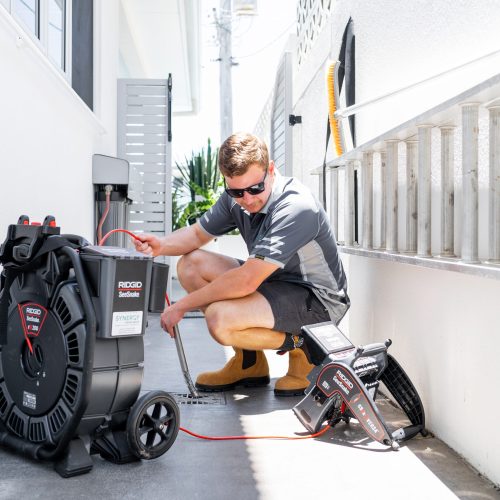
If your DIY audit revealed a few red flags, or if you simply want the peace of mind that comes with a professional opinion, our health check is the perfect solution. During a Synergy Trades audit, we don’t just glance at the tank. We perform a comprehensive assessment of the internal components, electrical connections, and safety valves. We then provide you with a detailed report on your system’s remaining functional lifespan and any preventative maintenance required to keep it running smoothly. If you are ready to get your hot water sorted, contact the Synergy Trades team today to book your inspection with a local expert you can trust.
Secure Your Home’s Hot Water Future
Taking ten minutes to audit your system today can prevent a week of cold showers and expensive emergency fees tomorrow. By identifying early warning signs like strange tank noises or mineral build-up, you can address minor issues before they lead to a total structural breakdown. Remember that living near the coast means your unit faces unique challenges from salt-air corrosion, making regular maintenance even more vital for extending the life of your hot water sunshine coast system.
Deciding whether to repair or replace doesn’t have to be a stressful experience. As family-owned locals with over 70 years of combined industry experience, we are committed to providing honest advice and a “repair first” approach whenever it’s safe to do so. Our team of licensed plumbing and electrical specialists is here to ensure your home remains comfortable and efficient without any hidden surprises. If you’ve noticed any red flags during your audit, we invite you to Book Your Expert Hot Water Audit with Synergy Trades. We will help you understand your system’s health so you can move forward with total confidence and peace of mind.
Frequently Asked Questions
How long should a hot water system last on the Sunshine Coast?
Most storage systems last between 8 and 12 years. In our local area, salt air can accelerate corrosion on external casings, which sometimes shortens this timeframe. Regular maintenance, such as replacing the sacrificial anode every 3 to 5 years, is the best way to ensure your unit reaches its full life expectancy. If your system is over 10 years old, it is wise to start planning for its eventual replacement.
Why is my hot water system leaking from the top?
A leak from the top usually points to a loose cold water inlet connection or a failed seal around the heating element. It could also be a sign that the internal tank has corroded through at the top. You should have this inspected immediately to prevent water from reaching the electrical components inside the housing. Ignoring a top leak can lead to a short circuit or permanent damage to the unit’s internal wiring.
Can I change my hot water system from electric to gas or heat pump?
You can certainly switch fuel sources when upgrading your system. Many residents are moving toward heat pumps because they use significantly less energy and are well-suited to our warm climate. This transition requires a licensed plumber to modify the pipework and an electrician to ensure the power supply is safe and compliant. We can help you determine which fuel source offers the best long-term savings for your household usage.
Is it normal for my hot water tank to make a sizzling noise?
Sizzling noises are generally not normal and often indicate that water is dripping onto a hot heating element. This usually happens when the element’s gasket has failed or the tank has developed a small internal leak. It can also be caused by heavy sediment build-up at the base of the tank, which creates hot spots. If you hear this sound, it is a clear signal that your system needs a professional inspection.
How much does it cost to have a hot water system serviced?
The cost of a service depends on the type of system you have and the specific parts that need replacing, such as valves or anodes. While we don’t provide flat-rate pricing without an inspection, a professional audit is a small investment compared to the cost of an emergency breakdown. Regular servicing helps maintain energy efficiency and prevents the stress of an unexpected cold shower on a busy morning.
Do I need an electrician or a plumber for hot water repairs?
Most hot water sunshine coast repairs require the skills of both a plumber and an electrician. Plumbers handle the water connections and valves, while electricians manage the thermostats and heating elements. Choosing a provider that holds both licenses simplifies the process and ensures the entire job is completed in one visit. This integrated approach saves you time and ensures that all safety aspects of the installation are handled professionally.
What is the best hot water system for a coastal home?
Stainless steel tanks are the gold standard for homes near the beach because they resist salt-air corrosion better than vitreous enamel models. For energy efficiency, heat pumps are an excellent choice for our region. They take advantage of the ambient warmth in the air to heat your water, which can drastically lower your quarterly bills. We always recommend choosing “coastal grade” components to ensure the longest possible lifespan for your unit.
How often should I test the relief valve on my hot water tank?
You should test your Pressure Temperature Relief (PTR) valve every six months. This simple “lift and release” check ensures the valve isn’t seized and can still release pressure if the system overheats. If the valve doesn’t release water or won’t stop dripping after the test, it needs to be replaced by a licensed professional. Keeping this valve functional is a critical safety requirement for every Australian household.