Australian households used an average of 174 kilolitres of water in 2023-24, according to the Australian Bureau of Statistics. If you’re wondering how to save water at home without disrupting your daily routine, start by checking for leaks. A dripping tap or hidden fault can waste water continuously, often without being obvious.
It’s not always clear which habits make the biggest difference, or whether a higher bill points to a plumbing problem. A few simple checks can help you find water waste and focus on changes that suit your household.
This guide explains how to spot signs of a leak or unusual water use, then work through practical ways to use less water in the bathroom, kitchen, laundry and garden. You’ll also learn what to consider when choosing water-efficient fixtures and appliances, including how to use WELS ratings, and when persistent leaks or faulty taps may need professional attention. The aim is to help you choose sensible changes for your home and local conditions.
Key Takeaways
- To learn how to save water at home, focus on changes that fit your household’s routines and outdoor needs.
- Use WELS labels to compare eligible fixtures and appliances when you’re considering an upgrade.
- Match garden watering and rainwater use to local conditions, rather than assuming rainwater will always be available.
- Check for visible leaks and record meter readings consistently, following the meter’s guidance when interpreting them.
- Recurring dampness, unexplained meter movement or a tap that keeps dripping can signal a fault that needs professional assessment.
How to save water at home starts with finding where it goes
You can use less water without making everyday routines impractical. First, get a sense of where water is used in your household, then look for waste you can prevent. Water efficiency means using less water to achieve the same purpose, whether that’s washing clothes, preparing dinner or keeping a garden healthy.
Household water use varies with the number of people at home, the fixtures and appliances installed, daily habits and outdoor needs. A household with a large garden may have different opportunities from one in a unit with no outdoor taps. For practical ideas from rainwater harvesting to water-saving technology, see this overview of water conservation strategies.
Preventable waste is water lost through leaks or avoidable use; necessary household water is what your home needs for everyday routines. The aim isn’t to cut water use indiscriminately. It’s to find changes that make sense for your household.
Which household activities use water every day?
Bathrooms, laundry, kitchens, pools and gardens are useful places to start. Consider how long showers usually run, whether the washing machine is used for small loads, how often taps are left running during food preparation, and whether outdoor watering matches your garden’s needs. For homes with a pool or spa, engaging specialists like Pool Professionals can help maintain equipment and prevent undetected leaks from quietly wasting water.
There’s no single activity that uses the most water in every home. The best opportunities depend on your routines and installed fixtures. A household with older fittings may have different options from one that has already made efficiency upgrades. Look at what happens in your own home before deciding where to focus.
Why start with leaks and unusual water use?
A dripping tap or running toilet can waste water quietly, even when the rest of the household is being careful. Check taps and toilets for ongoing flow, then take a meter reading when no water is being used. Follow the meter’s instructions and compare readings consistently. If the meter still moves, investigate further rather than assuming the cause.
For households on the Sunshine Coast, Synergy Trades Group provides water leak detection if a possible fault needs professional attention. Checking for a leak is a sensible first step before changing established household routines. Once you’ve checked for hidden waste, look at everyday habits and fixtures to decide where further savings may suit your home.
How household fixtures and habits affect water use
Once you’ve checked for obvious waste, look at the small choices built into daily routines. Shorter showers, full washing machine loads and turning taps off between tasks can help reduce water use without making household jobs harder. The best changes are usually the ones you can keep doing.
Which everyday habits can help save water?
In the bathroom, try shortening showers and turn off the tap while brushing your teeth. In the kitchen, don’t leave water running while washing dishes by hand. Fill the sink or a washing-up bowl instead, then rinse efficiently.
For laundry, match each load to your washing machine’s instructions and your household’s needs. Waiting until you have a suitable load can avoid running the appliance for just a few items, but don’t overload it. Follow clothing care labels and choose a cycle that suits the load.
These steps won’t look the same in every home. If you’re deciding how to save water at home, start with the habits and fixtures you use most often, then choose adjustments that feel practical to maintain.
What to check when choosing water-efficient fixtures
Toilets, showerheads and taps all affect how water is used. If you’re replacing a fixture or appliance, the Australian Government’s guide to Water Efficiency Labelling and Standards (WELS) explains how the scheme helps shoppers compare labelled products. A WELS label gives you a consistent way to compare the water efficiency of eligible products before you buy.
A WELS rating helps you compare the water efficiency of labelled products, so you can make a more informed choice for your household. Check that a product suits your existing fittings, plumbing and intended use, and confirm any installation requirements before buying. A higher rating alone won’t tell you whether a particular fixture is right for your home.
Replacing a fixture may be worth considering if it no longer works well, but don’t overlook faults. A tap that keeps dripping or a toilet that continues running may need attention rather than a routine upgrade. If the problem persists, a plumber can assess the cause. Synergy Trades Group provides tap replacement and water leak detection on the Sunshine Coast. If you’ve found a possible plumbing fault, you can request plumbing assistance.
Water-saving choices for gardens, rainwater and Sunshine Coast conditions
Outdoor water use can vary with garden size, plant needs, rainfall and the time of year. On the Sunshine Coast, conditions change from season to season, so a routine that works after rain may not suit a drier spell. Before watering, check current restrictions and advice from Sunshine Coast Council or your water provider. Follow the rules that apply to your property and water supply.
How can households reduce garden water use?
Start with a simple check rather than watering by habit. Feel the soil near plants, look for signs of stress and consider recent rainfall. Different plants and garden areas may need different amounts of water, so avoid treating the whole garden as if it has the same needs.
Where local guidance permits, watering during cooler parts of the day can help limit evaporation. Adjust your routine after rain, and check restrictions before using treated drinking water outdoors. For homes with a swimming pool, keeping water properly balanced avoids the need for draining and refilling, where regular care from specialists like Pool Blitz helps prevent needless outdoor water waste. These changes take little effort and may suit households that don’t want to change indoor fixtures. If outdoor watering is a regular part of your routine, local guidance can help you choose suitable days and times.
Can rainwater help reduce mains water use?
A rainwater tank may supplement some household uses, depending on the property, tank capacity, rainfall, plumbing connections and system design. It isn’t a guaranteed supply, particularly during periods with less rain, and it won’t suit every home. Consider the available space and what you want the water for before deciding whether a tank is practical.
Be clear about the intended use. Water collected for a garden or another non-drinking purpose shouldn’t automatically be treated as safe to drink. Drinking-water use depends on the system being designed and maintained appropriately. Ask a qualified professional to confirm the tank’s maintenance needs, plumbing connections and any local requirements before installation or changes to an existing system.
There’s a practical trade-off to consider: adjusting watering habits is often a straightforward first step, while adding a tank or changing plumbing needs more planning. Replacing an inefficient household fixture may be more relevant for a property with little outdoor space. The most suitable way to save water at home depends on local conditions and everyday routines, not a one-size-fits-all solution.
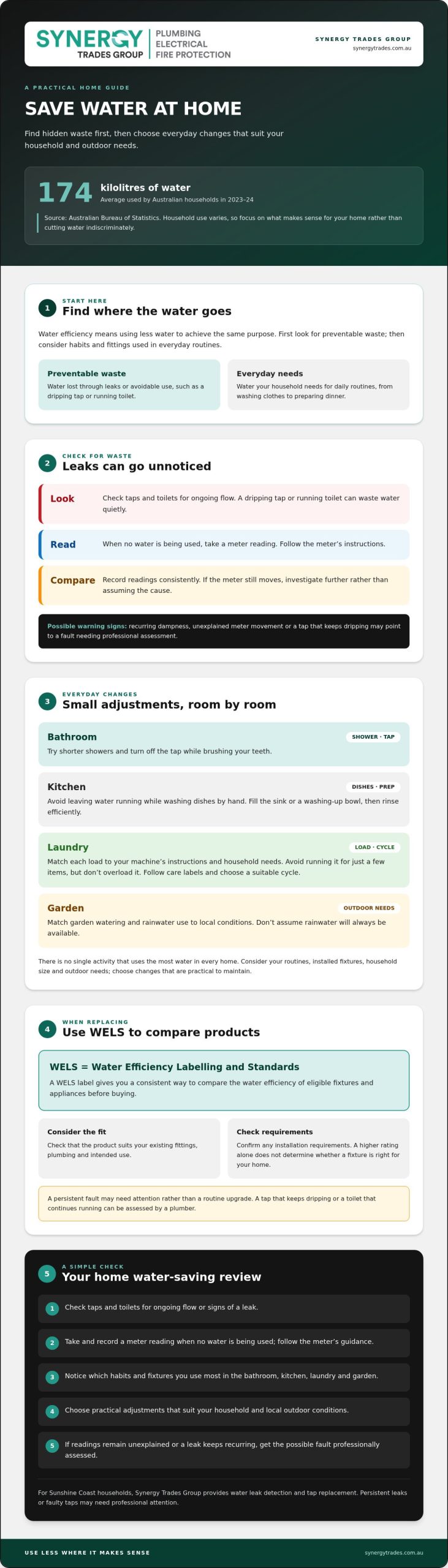
A simple home water-saving check you can do this week
A short, repeatable check can help you spot water waste and decide what needs attention. Work through these steps in order and note what you find so you can compare results later.
- Look for visible leaks. Check taps, around toilet cisterns, exposed pipework and the hot water system for drips, damp patches, corrosion or signs of water pooling. Don’t remove covers or interfere with equipment.
- Listen and observe. After flushing, check whether the toilet continues to run. Look beneath sinks and around fittings for fresh moisture. A fault may be intermittent, so a quick inspection can’t rule out every leak.
- Record the water meter reading. Find your meter and check its instructions or your water supplier’s guidance before interpreting the display. Write down the reading and the time.
- Pause household water use and check again. Make sure taps, appliances and other water outlets aren’t being used, then take a second reading after a consistent interval. Follow the meter guidance. Unexpected movement may indicate water is flowing somewhere, but it doesn’t prove there’s a leak or show its location.
- Repeat and follow up. If the reading changes unexpectedly, repeat the check under similar conditions and record both readings. If the movement persists, or you find recurring dampness or an active drip, arrange a professional investigation.
How to prioritise fixes and track changes
Start with an active leak. Preventing water from escaping is a direct first step while a fault continues. Once you’ve checked for leaks, choose one or two routine changes that suit your household, such as adjusting shower length or running the washing machine with an appropriate load.
Keep a simple note of meter readings, checks and changes you make. Compare readings taken in a consistent way, and avoid drawing conclusions from a single result. Household use varies, and a moving meter can indicate water flow without identifying its cause.
If you’ve repeated the check and still suspect a leak, a plumber can investigate further. Synergy Trades Group provides water leak detection and tap replacement on the Sunshine Coast. You can book a plumbing assessment for a suspected leak.
When a water-saving fix needs a Sunshine Coast plumber
Simple habit changes, such as turning off a tap between tasks, are easy to manage yourself. A persistent leak is different. Recurring dampness, a tap that continues to drip, a toilet that keeps running or unexpected meter movement when no water is being used may point to a fault that needs proper diagnosis.
When should you call a plumber about water loss?
Arrange a professional assessment if you notice recurring moisture, unexplained water use or a leak that returns after a basic check. A visual inspection can show where water is appearing, but not necessarily where it’s coming from. Some leaks may be hidden behind a wall, beneath flooring or within pipework, so tracing the source can take more than a household check. Synergy Trades Group provides water leak detection on the Sunshine Coast.
Keep a note of what you’ve observed and when it happens. A damp patch that appears after using a particular tap, for example, may offer a useful clue. Don’t assume that unexplained meter movement proves there’s a leak or identifies its location. If it persists after you’ve repeated your check according to the meter guidance, tell the plumber what you found.
What to expect when arranging plumbing help
Before arranging a booking, note the symptom, when you first noticed it, whether it comes and goes, and which checks you’ve already completed. A clear description helps explain the issue, though it can’t confirm the cause or outcome in advance. Avoid trying to access concealed pipework yourself.
Synergy Trades Group serves residential and commercial properties on the Sunshine Coast, with water leak detection and tap replacement among its relevant services. If a faulty tap keeps dripping or you suspect water is escaping somewhere in your plumbing, request a plumbing booking. Having a possible fault assessed can help you decide what to do next.
Make your next water-saving step count
Knowing how to save water at home starts with finding waste, then choosing practical changes you can maintain. Check for leaks before focusing on everyday habits, and use WELS labels to compare eligible products when considering an upgrade. In the garden, adjust watering to plant needs and current Sunshine Coast conditions.
If a tap keeps dripping, dampness returns or water use remains unexplained, a professional assessment can help identify the issue. Synergy Trades Group provides water leak detection and tap replacement on the Sunshine Coast. Family-owned and operated by Paul and Lynda, the team can help investigate a suspected plumbing fault.
If you’ve noticed a persistent leak, book a plumbing assessment. Start with one useful check today, then build on what you learn. Small, well-chosen steps can make water-conscious routines easier to sustain.
Frequently Asked Questions
How can I save water at home every day?
Use less water by making small changes you can keep up with. Turn off the tap while brushing your teeth or washing dishes by hand, take shorter showers and run the washing machine with a suitable load. Check taps and toilets for ongoing drips or flow, and adjust garden watering to plant needs and current local guidance. The best steps depend on your household’s routines and fixtures.
Can a leaking tap make my water bill higher?
Yes, a leaking tap can add to water use, which may affect your bill depending on how your provider charges for water. Even a slow drip can continue between uses, so don’t overlook it if you’re trying to reduce consumption. Check whether the tap is still dripping after it’s turned off. If the fault persists, a plumber can assess it and advise whether tap replacement is appropriate.
How do I check whether I have a water leak at home?
Inspect taps, toilet cisterns, visible pipework and the hot water system for drips, damp patches or signs of water pooling. You can also check your water meter when household water use is stopped, following the meter or supplier’s instructions. Record readings consistently and repeat the check if they change unexpectedly. A meter movement may indicate water flow, but it doesn’t prove there’s a leak or locate its source.
Do water-efficient showerheads actually save water?
They can reduce water use compared with less efficient showerheads, but the result depends on the product, your water pressure and how long you shower. Check the WELS label to compare the rated water efficiency of eligible products, and confirm the showerhead suits your existing fittings before buying. Shorter showers can also reduce use. If your current showerhead is faulty or leaking, have the issue assessed before replacing it.
Is rainwater safe to use around the home?
Rainwater may supplement some household uses, depending on the tank, plumbing connections and system design. Water collected for garden use or other non-drinking purposes shouldn’t automatically be considered safe to drink. Drinking-water use depends on appropriate system design and maintenance. Before installing or changing a tank system, check its maintenance needs, plumbing connections and relevant local requirements with qualified professionals. Rainwater supply can also vary with rainfall and season.
What should I do if my water meter moves when everything is turned off?
First, check that taps, appliances and other water outlets aren’t in use, then follow the meter’s instructions and your supplier’s guidance. Record the reading, repeat the check under similar conditions and note any unexpected movement. It can indicate water is flowing somewhere, but it doesn’t confirm a leak or reveal its location. If the movement continues, arrange a professional investigation and share your readings and checks.
Are there water restrictions on the Sunshine Coast?
Water restrictions can change, so check current advice from the relevant local council or water provider before watering your garden. The Sunshine Coast’s water supply is managed by Seqwater, while Unitywater provides water and sewerage services in its service area. Check which authority’s guidance applies to your property, and follow any current watering days, times or other measures. Don’t assume yesterday’s advice is still current.