What if the water flowing from your kitchen tap was actually being pulled backwards from a garden hose or an industrial drain? It’s a confronting thought, but without a functioning prevention device, this “silent” contamination is a genuine risk for many homes and businesses. If you’ve recently received a compliance notice from the Sunshine Coast Council, you might feel more confused than concerned. We understand that managing these requirements can feel like a headache, especially when you’re unsure which backflow valve maintenance tips you can handle yourself and which require a specialist.
You aren’t alone in wanting to keep your water supply pristine while avoiding hefty Queensland non-compliance penalties. This guide will help you master the essentials of backflow prevention so you can protect your property’s health and meet every legal obligation with ease. We will outline your specific responsibilities as a property owner, provide a simple checklist for monitoring your device, and explain exactly how the annual testing process works to give you total peace of mind.
Key Takeaways
- Understand the vital difference between potable water backflow and sewerage backwater valves to ensure your family’s health is properly protected.
- Learn practical backflow valve maintenance tips you can perform at home, such as managing garden vegetation and checking for signs of surface water pooling.
- Identify common warning signs of a failing device, including sudden drops in water pressure or unusual odours coming from your taps.
- Navigate Queensland’s strict annual RPZ testing requirements and the Form 9 submission process to avoid council fines and stay compliant.
- Discover why partnering with a Sunshine Coast specialist with decades of local experience ensures your annual compliance cycle is managed without the stress.
Understanding Backflow Prevention: Your First Line of Defence
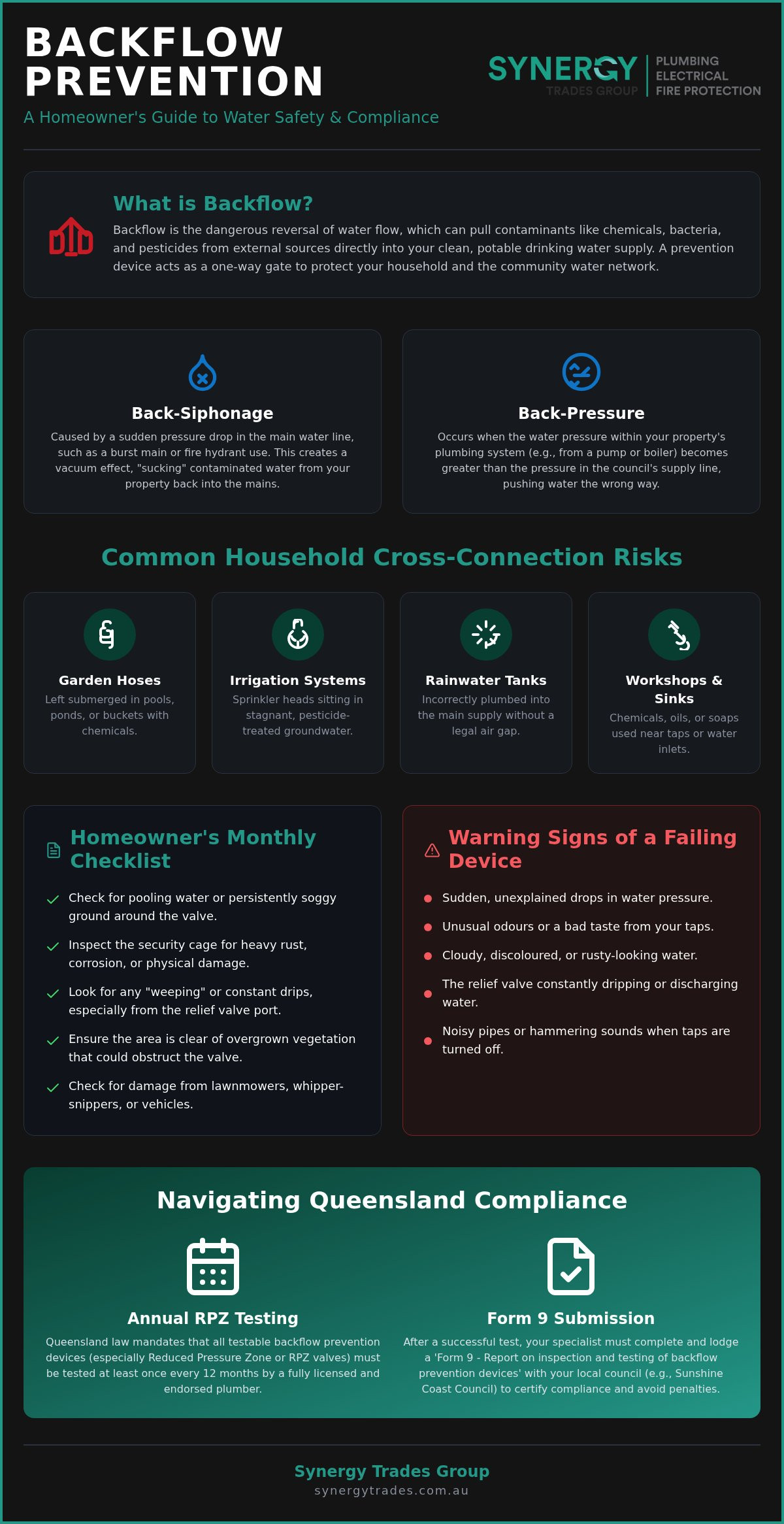
Backflow occurs when contaminated water reverses its flow and enters your clean drinking water supply. This isn’t just a minor plumbing glitch; it’s a significant public health risk that can introduce chemicals, bacteria, and heavy metals into your taps. To prevent this, a backflow prevention device is installed at the boundary of your property to act as a mechanical one-way gate. While searching for backflow valve maintenance tips, many property owners confuse these with backwater valves. It’s a crucial distinction. A backwater valve stops sewerage from backing up into your home during a flood, whereas a backflow device protects the potable water you drink, cook with, and use for your morning shower.
For Sunshine Coast properties, especially those with high-hazard connections like commercial kitchens, dental surgeries, or complex irrigation systems, maintenance is non-negotiable. These devices work by maintaining a delicate hydraulic pressure balance between your private pipes and the public mains. If that balance fails and the valve isn’t regularly serviced, the results can be dangerous for both your family and the wider community. Local regulations require these valves to stay in peak condition to ensure the safety of our shared water network.
The Mechanics of Backflow: Back-siphonage vs Back-pressure
There are two main ways water can be forced backward into your pipes. Back-siphonage happens when there’s a sudden drop in pressure in the main water line. This could be caused by a burst water main down the street or fire-fighters using a nearby hydrant to tackle an emergency. The sudden drop in pressure “sucks” water from your property back into the mains. Conversely, back-pressure occurs when the pressure within your property’s plumbing exceeds the pressure in the council’s supply line, effectively pushing water the wrong way. A well-maintained valve prevents both scenarios by snapping shut the moment a pressure shift is detected.
Common Cross-Connections in Australian Homes
A cross-connection is any point where your clean water supply could potentially meet a contaminant. You might be surprised by how common these are in local yards. Typical examples include:
- Garden hoses left submerged in swimming pools, ponds, or buckets of fertiliser.
- Irrigation and sprinkler systems that sit in stagnant groundwater or areas treated with pesticides.
- Rainwater tanks that are incorrectly plumbed into the main supply line without proper air gaps.
- Home workshops where chemicals, oils, or soaps are used near water inlets.
Keeping these areas clear and ensuring hoses aren’t left in puddles is one of the most effective backflow valve maintenance tips you can follow between your professional annual inspections.
The Homeowner’s Backflow Maintenance Checklist
While Queensland law requires a licensed specialist to perform the actual testing and repairs, you play a vital role in the day-to-day health of your water system. Incorporating a few simple backflow valve maintenance tips into your regular garden routine can prevent minor issues from becoming expensive plumbing emergencies. Your primary job is to act as the eyes and ears on the ground, spotting physical changes before they lead to water contamination or council fines. Organisations like the American Backflow Prevention Association highlight that consistent monitoring is the best way to ensure these mechanical devices perform as intended throughout their lifespan.
Start by checking the ground around the valve for any unusual pooling water or soggy patches. While some valves are designed to discharge a small amount of water during pressure fluctuations, a constant puddle usually indicates a failing seal or a cracked body. You should also inspect the protective security cage. Sunshine Coast salt air can be harsh, so look for signs of heavy rust or structural damage that might leave the valve vulnerable to tampering or accidental impact from vehicles and equipment. Finally, ensure you keep a dedicated logbook or digital folder for your documentation. Having your previous test dates and technician notes ready makes the annual compliance visit much faster and more efficient.
Monthly Visual Inspection Steps
Once a month, take a moment to look closely at the device for “weeping” or steady drips. Pay particular attention to the relief valve port, as this is often where the first signs of trouble appear. The relief valve is the primary indicator of internal seal failure. You should also check for physical damage caused by lawnmowers, whipper-snippers, or heavy garden tools. If you notice the valve is dripping constantly or has been struck by equipment, it’s a good idea to reach out to a local specialist to ensure the internal components haven’t been compromised.
Maintaining the Area Around the Device
Accessibility is a major factor in successful backflow valve maintenance tips. You must clear at least 300mm of space in every direction around the valve assembly. This ensures there is adequate ventilation and gives your plumber enough room to connect their testing gauges without wrestling with prickly bushes or muddy garden beds. Avoid the temptation to hide the valve behind thick foliage or bury it under mulch, as this can lead to corrosion and blockages. It is also vital to keep harsh chemicals, fertilisers, and pesticides away from the device. These substances can degrade the brass or plastic components and, in the event of a leak, could be drawn into the very water supply the valve is meant to protect. Always make sure the serial number plate remains clean and legible, as council auditors need this information to verify your property’s compliance status.
Identifying Common Backflow Valve Issues and Warning Signs
Detecting a problem with your water supply often starts at the tap rather than at the device itself. While your monthly inspections are vital, internal mechanical failures can manifest in ways that affect your daily water use. One of the most common signs of a struggling valve is fluctuating water pressure. If you notice sudden drops in flow or inconsistent surges that can’t be explained by a neighbour’s usage or local main works, your backflow device might be restricting the supply due to an internal blockage or a failing spring. These pressure shifts are more than just an inconvenience; they suggest the valve’s ability to maintain a one-way flow is compromised.
Water quality changes are the most serious indicators of a cross-connection. Discoloured water or unusual metallic tastes and sulphur-like smells coming from your taps are major red flags that should never be ignored. You might also see visible debris or fine sediment appearing in your glass or clogging your showerhead filters. This often happens when the valve fails to stop “back-pressure” from pushing stagnant water or garden contaminants into your potable lines. Integrating these sensory checks into your regular backflow valve maintenance tips ensures you catch these “silent” failures before they pose a genuine health risk to your household.
Listen for loud vibrating or “chattering” noises when water is running elsewhere in the property. This sound usually occurs when the internal check valves are bouncing against their seats rather than sealing firmly. This mechanical chatter is a sign of wear and tear that, if left unaddressed, can lead to a complete failure of the device. Catching these sounds early allows for a simple seal replacement rather than a full unit overhaul.
The Relief Valve: What Constant Dripping Means
A healthy Reduced Pressure Zone (RPZ) valve might occasionally “spit” a small amount of water to balance pressure, but a steady, continuous flow is a disaster waiting to happen. Usually, this occurs because grit, sand, or mineral build-up has become lodged in the internal check valves, preventing them from creating a watertight seal. This allows water to bypass the safety mechanisms and escape through the relief port. You should never, under any circumstances, cap or plug a leaking relief valve. Doing so disables the safety feature entirely, which can lead to contaminated water being forced directly into your drinking supply or causing a pipe to burst under the trapped pressure.
External Damage and Environmental Factors
Living on the Sunshine Coast means our plumbing infrastructure faces unique environmental challenges. The high salt content in our coastal air can lead to accelerated pitting and corrosion on brass and copper components. If your valve is exposed to the harsh direct afternoon sun, “solar heating” can cause the water inside the unit to expand, putting unnecessary stress on the rubber diaphragms and O-rings. While rare, property owners in the hinterland should also be aware of frost damage during winter. Exposed pipework can freeze and crack the valve body. Using a weather-rated cover is one of the most effective backflow valve maintenance tips for protecting your investment against the elements.
Navigating QLD Compliance: Annual RPZ Testing and Form 9
In Queensland, staying on top of backflow valve maintenance tips isn’t just about water safety; it’s a strict legal obligation. The Queensland Building and Construction Commission (QBCC) mandates that every testable backflow prevention device must undergo a professional inspection once every twelve months. This isn’t a task for a general handyman. Only a licensed plumber who holds a specific Backflow Endorsement on their plumbing licence is legally authorised to perform these tests. This endorsement ensures the technician has the specialist training required to diagnose and repair complex mechanical devices like Reduced Pressure Zone (RPZ) valves. Once the inspection is complete, the results must be officially recorded on a document known as Form 9.
The Annual Testing Process: What to Expect
When a specialist arrives to test your device, they’ll use a calibrated test kit to measure the pressure differentials across the internal check valves. This precision equipment ensures the device will snap shut exactly when required to prevent contamination. The testing process usually takes between 30 and 60 minutes per device. It’s important to prepare for a short period without water, as the supply must be turned off to allow the plumber to test the valve’s integrity under various pressure scenarios. Your plumber is legally required to submit the completed Form 9 test results to the council within 10 business days of the inspection.
Sunshine Coast Council Requirements and Penalties
The Sunshine Coast Council maintains a detailed registry of every testable backflow device in the region. They typically send out annual reminders to property owners, and the registration fee for these devices is often included in your property’s rates notice. Failing to maintain your device or missing your testing deadline can lead to significant consequences. Under current Queensland regulations, a fine of up to 20 penalty units can be incurred for each device that hasn’t been tested or registered. With the penalty unit value set at $172.70 as of July 2026, this can result in a fine of up to $3,454 per device.
For landlords and investors, managing these dates alongside other plumbing obligations can be a challenge. It’s often helpful to integrate these checks with Property Management & Plumbing – Water Efficiency Certificates to ensure your entire rental portfolio remains compliant and cost-effective. Keeping your water supply safe shouldn’t be stressful. If your annual testing date is approaching, you can book a licensed RPZ testing specialist to handle the inspection and council paperwork for you.
Professional Backflow Solutions: Why Local Expertise Matters
Choosing a local specialist for your water safety isn’t just about convenience; it’s about deep regional knowledge. Sunshine Coast water pressure profiles can vary significantly between the salt-sprayed coastal strips and the elevated hinterland ranges. With over 70 years of combined industry experience, Synergy Trades Group understands these local nuances. This background allows us to provide more than just a standard test. We offer complex diagnostics that identify why a valve might be failing prematurely in a specific environment. While basic backflow valve maintenance tips can help you spot external issues, only a seasoned professional can ensure the internal mechanics are perfectly tuned to our local water grid.
We believe that managing your property should be straightforward and low-friction. That’s why we organise the entire compliance cycle for you, ensuring your annual obligations never slip through the cracks. Many of our clients find it efficient to bundle their plumbing safety checks with other critical home care. For instance, combining your annual valve inspection with Sunshine Coast Gutter Repairs and Replacement ensures your property is protected from both internal water contamination and external storm damage in one visit.
The Synergy Trades Advantage
As a family-owned and operated business led by Paul and Lynda, we take a personal interest in the safety of our community. We don’t view backflow testing as a simple box-ticking exercise; we see it as a vital health service for your family or tenants. To make the process as easy as possible, we provide a no-fuss compliance service where we handle all the Form 9 paperwork and submissions to the Sunshine Coast Council. We also offer transparent, fixed-fee testing options for both residential and commercial properties. This approach gives you total cost certainty without the worry of hidden charges or aggressive sales tactics.
Next Steps: Booking Your Annual Test
If you’re unsure when your device was last serviced, the easiest way to find out is to check the inspection tag attached to the valve. This tag should list the date of the previous test and the name of the licensed plumber who performed it. Following these backflow valve maintenance tips and staying ahead of your annual testing schedule is the only way to avoid the heavy fines mentioned earlier. You can organise a comprehensive plumbing health check alongside your test to catch any other hidden leaks or pressure issues. Contact Paul and Lynda today for honest, reliable advice on your water safety. We are here to ensure your property remains compliant, your water stays clean, and your peace of mind is restored.
Securing Your Water Safety and Council Compliance
Maintaining your property’s water safety doesn’t have to be a source of constant stress. By staying vigilant with simple backflow valve maintenance tips, like keeping the installation area clear and watching for sudden pressure changes, you’re already doing your part to protect your household. However, the mechanical heart of the system requires professional care to ensure it meets Queensland’s strict annual testing standards. This annual check-up is the only way to guarantee that your device will perform its life-saving function when it’s needed most.
As a local family-owned business with over 70 years of combined trade experience, Synergy Trades Group is here to simplify the entire compliance cycle for you. Our licensed RPZ testing specialists handle everything from the technical inspection to the precise Form 9 council submission. We take great pride in helping our neighbours avoid heavy fines while keeping the Sunshine Coast’s drinking water pristine. Book your annual RPZ backflow test with the Sunshine Coast experts at Synergy Trades Group today. Taking these small, proactive steps today ensures your water remains safe and your property stays fully compliant for the year ahead.
Frequently Asked Questions
Do I really need to test my backflow valve every year?
Yes, Queensland regulations mandate that all testable backflow prevention devices must be inspected and tested annually by a licensed plumber with a backflow endorsement. This requirement ensures that the mechanical components are functioning correctly to prevent contaminated water from entering the public supply. Staying on top of these annual checks is one of the most important backflow valve maintenance tips to avoid council fines and ensure your water remains safe for drinking.
Can I perform backflow valve maintenance myself?
While you can perform basic tasks like clearing vegetation and checking for external damage, you cannot legally test or repair the valve yourself. Queensland law requires these technical tasks to be carried out by a licensed specialist with specific accreditation. Attempting to dismantle or adjust the device without the proper training and tools can lead to water contamination risks and significant penalties from the Sunshine Coast Council.
What is the difference between an RPZ valve and a Double Check Valve?
A Reduced Pressure Zone (RPZ) valve is designed for high-hazard connections where the risk of contamination is severe, as it features a relief valve to discharge water if the system fails. A Double Check Valve is typically used for medium-hazard situations and does not have a relief port. Both devices require annual testing, but the RPZ offers a higher level of protection by physically preventing backflow even if the internal seals fail.
How much does a backflow test cost on the Sunshine Coast?
The total cost typically includes the plumber’s testing fee and the Sunshine Coast Council’s annual registration fee, which is often included in your property’s rates notice. While we cannot provide a specific quote here, costs vary based on the number of devices and their accessibility. It is best to contact a local specialist for a clear estimate that covers the inspection, equipment calibration, and the official submission of your compliance paperwork to the council.
What happens if my backflow valve fails the annual test?
If your device fails the inspection, it must be repaired or replaced immediately to maintain your property’s compliance. Most failures are caused by grit or mineral build-up preventing the internal seals from closing properly. A licensed technician can often clean or replace the internal rubber components on the spot. Once the repairs are finished, the device is re-tested to ensure it meets the required safety standards before the final report is submitted.
Does my residential property need a backflow prevention device?
Not every home requires a testable device, but they are common for residential properties with specific high-risk connections. This includes homes with large irrigation systems, greywater diversion setups, rainwater tanks connected to the mains, or swimming pools. If you aren’t sure whether your property has a registered device, you can check your council rates notice for a backflow registration fee or look for a valve near your water meter.
Will I lose water supply during the maintenance and testing process?
Yes, your water supply will need to be turned off for a short period while the testing is performed. This allows the plumber to connect specialised gauges and measure pressure differentials within the valve assembly without interference from active water use. For most standard residential or commercial devices, the water will only be unavailable for 30 to 60 minutes. We recommend planning your water usage accordingly to ensure minimal disruption to your daily routine.
What is a Form 9 and why is it important for my compliance?
Form 9 is the official Queensland Government document used to report the results of a backflow prevention device test. It serves as proof that your device has been inspected by a qualified professional and is functioning correctly. Your plumber is responsible for completing this form and submitting it to the Sunshine Coast Council within 10 business days of the test. Without a lodged Form 9, the council will consider your property non-compliant, which can lead to fines.