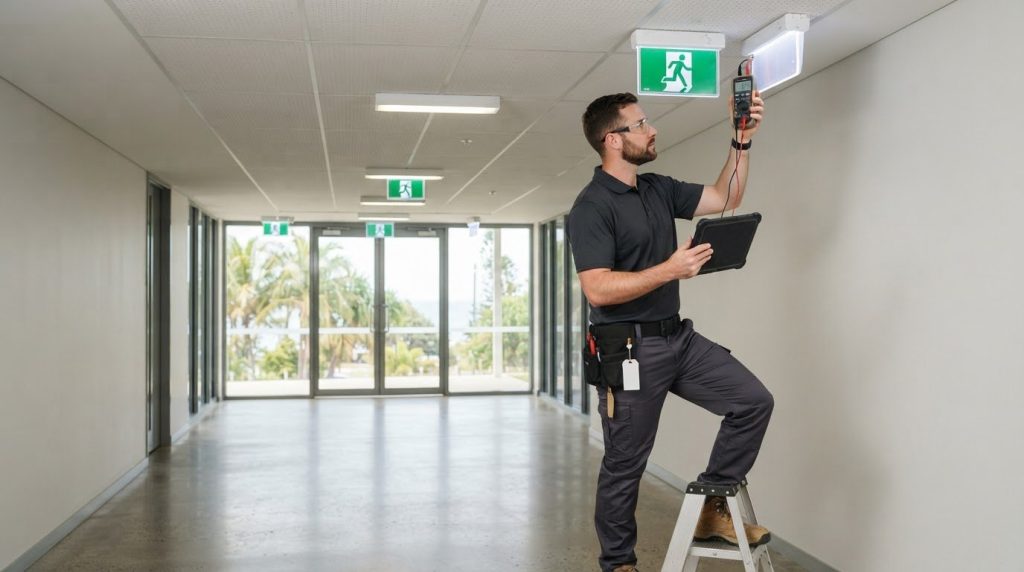
What if an exit sign looks ready but its battery can’t keep it operating during a power failure? Emergency Evacuation Lighting Discharge Testing checks whether self-contained emergency lights and exit signs can run on battery power for the required 90 minutes. It tests battery endurance, but it doesn’t prove that every part of an evacuation plan or lighting system is working as it should.
It’s understandable to be unsure what the test involves, which Australian Standard applies, or what to do when a fitting fails. In Queensland, emergency lighting maintenance is covered by the AS/NZS 2293 series, including AS/NZS 2293.2:2019 for routine service and maintenance. Testing is required every six months, and records help show what was checked and what needs attention.
This guide explains what a discharge test checks, how to prepare occupants and minimise disruption, and how to interpret results and follow up faults. You’ll also learn what useful maintenance records should capture and when local help may be appropriate. Synergy Trades Group lists emergency evacuation and exit lighting among its Sunshine Coast services, giving local building managers an option when organising this work.
Key Takeaways
- Emergency Evacuation Lighting Discharge Testing checks how emergency luminaires perform on their backup supply. A brief function test serves a different purpose.
- Check the current AS/NZS 2293 requirements, NCC provisions and equipment instructions that apply to your building and lighting system.
- Before testing, review system records, confirm access arrangements and let affected occupants know what to expect.
- Use clear test results to identify failed fittings, organise follow-up work and keep maintenance records useful for future checks.
- When arranging local service, ask about the test basis, system coverage, reporting and how faults will be followed up.
What emergency evacuation lighting discharge testing checks
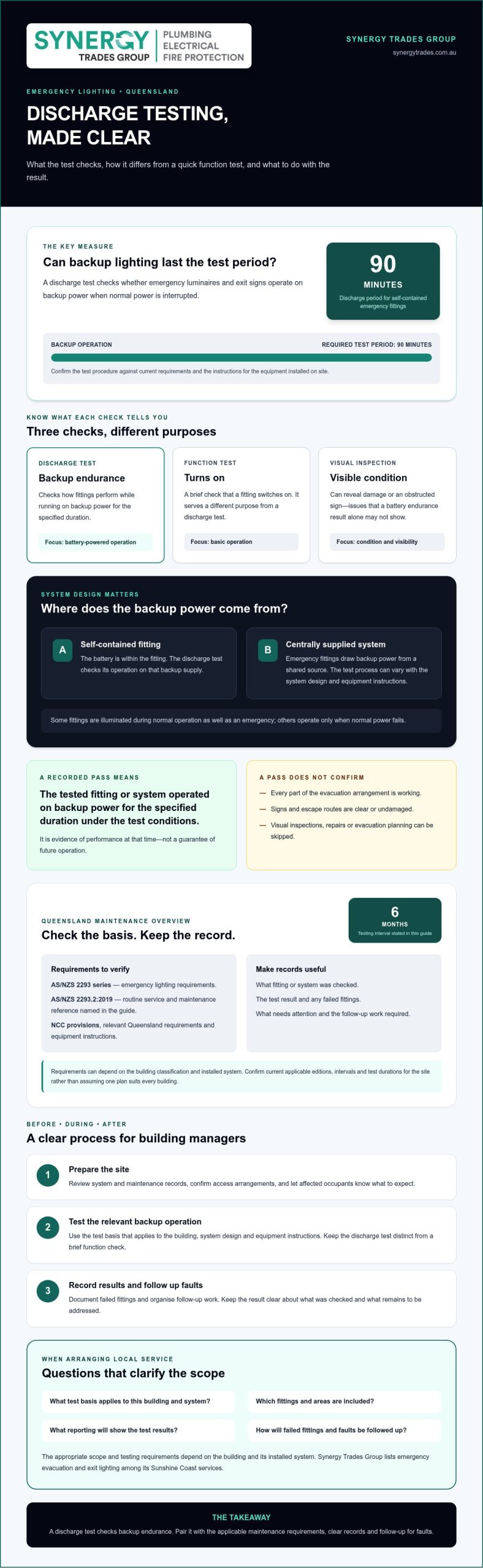
Emergency Evacuation Lighting Discharge Testing checks whether emergency luminaires and exit signs operate on their backup supply for the required test period when normal power is interrupted. In Australia, the discharge test period for self-contained emergency fittings is 90 minutes. Confirm the procedure against current requirements and the equipment instructions for the site.
This differs from a quick function test, which checks that a fitting turns on, and from a visual inspection, which can reveal damage or an obstructed sign. Routine maintenance is broader: it may include inspections, recording results and arranging repairs. A discharge test focuses on performance while fittings run on backup power.
What happens when emergency lighting runs on backup power?
Emergency luminaires light escape routes, while illuminated exit signs help identify exits. Depending on the system design, a loss of normal supply triggers emergency operation. In a self-contained unit, a battery sits within the fitting. In a centrally supplied system, emergency fittings draw backup power from a shared source. For a general overview of common emergency-light types and operation, see Emergency light.
Some fittings may be maintained, meaning they’re illuminated during normal operation as well as an emergency. Others operate only when normal power fails. A discharge test checks the relevant backup operation, but the process can vary with system design and equipment instructions.
What does a discharge test prove, and what doesn’t it prove?
A recorded pass indicates that the tested fitting or system operated on backup power for the specified duration under the test conditions. A failed fitting signals a fault that needs to be documented and followed up. The result is evidence of performance at that time, not a guarantee of future operation.
A pass doesn’t confirm every part of an evacuation arrangement. It doesn’t replace visual inspections, fault repairs, checks of signs and escape routes, or a site’s evacuation planning. A light may operate for the test period while a separate issue, such as an obstructed route or damaged fitting, still needs attention. Clear results help building managers see what was tested and what remains to be addressed.
For site-specific work, confirm the system type, applicable test basis and reporting arrangements with the service provider. Synergy Trades Group lists emergency and exit lighting services for Sunshine Coast customers. The appropriate scope and testing requirements depend on the building and its installed system.
How Australian requirements shape emergency lighting discharge tests
There isn’t one testing plan that should be assumed to suit every building. Emergency Evacuation Lighting Discharge Testing needs to be considered alongside applicable Australian requirements, the installed system and its equipment instructions. Use standards and building codes as references to verify the requirements for your site, rather than treating general information as site-specific compliance advice.
Fact to check: AS/NZS 2293.2:2019 covers emergency lighting inspection and maintenance, while the NCC contains relevant building provisions. Confirm the current applicable editions and requirements for your building classification and system before setting test intervals or durations.
Which Australian Standard should a building manager check?
Start with AS/NZS 2293.2, the standard for routine servicing and maintenance of emergency lighting. Check its current edition and any relevant NCC provisions, as well as the building’s approval and maintenance records. Requirements can depend on the building and the system installed. For a particular site, ask a competent professional to confirm the applicable basis for testing rather than relying on a generic interval or duration.
Keep the distinction clear: a standard may address system maintenance, while the NCC sets building-related provisions. Other applicable Queensland requirements may also need to be considered. If records don’t identify the system or the basis for its existing test schedule, verify the details instead of assuming that a particular rule applies or has been breached.
How can system type and site use affect the test plan?
Self-contained fittings have a battery within each unit. A central-battery system supplies emergency fittings from a shared source. This difference affects how the system is identified and tested, so confirm the configuration rather than assuming every fitting operates independently. Check the manufacturer’s instructions, service records and available system documentation before arranging work.
Building use and site operations also matter when planning access and reducing disruption. A professional can help confirm which fittings and supply arrangements are in scope, and what test method and duration apply. Don’t assume that a test schedule from another building is suitable for yours.
Before confirming a plan, gather the building classification, system details, previous test records and any known faults. Synergy Trades Group lists emergency and exit lighting among its Sunshine Coast services. If you’re organising site-specific work, you can send through a service request with the information available so the required scope can be discussed.
Discharge testing versus function tests: understand the difference
A light coming on during a quick check is useful, but it doesn’t show how long the fitting can operate on backup power. Visual inspections, function tests and discharge tests each reveal different information. Use them together, following the applicable maintenance requirements and the equipment instructions for your system.
| Check | Purpose | What the result tells you |
|---|---|---|
| Visual inspection | Look for visible damage, obstruction, dirt or signs a fitting needs attention. | Identifies issues you can see, but doesn’t confirm battery operation. |
| Function test | Briefly check that a fitting responds and illuminates under emergency operation. | Can reveal an obvious failure, but doesn’t establish how long it will run. |
| Discharge test | Assess emergency operation over the duration required for the system. | Shows whether the relevant fittings sustain operation for the applicable test period. |
What is checked during a routine function test?
A function test is a short operational check, often initiated using a test facility built into the fitting or system. It can uncover a lamp that won’t illuminate or a fitting that fails to respond. However, it doesn’t establish battery endurance under an extended discharge. Follow the maintenance plan, current requirements and manufacturer’s instructions for how and when to carry out checks.
What makes a discharge test different?
During Emergency Evacuation Lighting Discharge Testing, the relevant fittings operate from backup power for the applicable required period. The test assesses more than whether a light switches on. It can reveal a battery or fitting that stops operating before the test is complete. Procedures and durations depend on current requirements and equipment, so verify these before testing rather than assuming one process applies to every site.
Record results against identifiable fittings. Note units that fail, appear dim, are damaged or don’t operate, then track corrective work through to completion. A useful record includes the test date, outcome, fault details and follow-up status. This makes it easier to spot a recurring fault, such as the same fitting failing again, or work that remains outstanding between visits.
Read a pass alongside inspection findings and maintenance history. It describes performance during that test, not the condition of every fitting at all times. Clear records help the building manager distinguish a completed check from a fault that still needs attention.
How to prepare for a discharge test and respond to failures
A straightforward plan helps the test run smoothly and makes the results easier to act on. Before Emergency Evacuation Lighting Discharge Testing, gather available system information, coordinate access and let affected occupants know what to expect. After testing, record defects and track each action through to completion.
What should be organised before the test?
Start with previous test reports, fitting schedules, manufacturer information and known fault reports. Confirm which areas and fittings are included, how the tester will access them, and whether site operations need to be coordinated around the test. Notify affected occupants where appropriate, particularly if testing may interrupt normal lighting or routines. Don’t isolate or alter electrical systems yourself. Confirm any controls with the competent person responsible for the work.
Agree in advance how results and faults will be reported. A clear record should identify the test date, system or area, individual results, defects found, corrective actions and the person responsible for follow-up.
What should happen if a light or exit sign fails?
Record the fitting’s location and the observed fault, such as failure to illuminate, reduced brightness or physical damage. Arrange an appropriate assessment and rectification, then confirm whether follow-up testing or verification is required. Update the maintenance record so the original fault, work completed and outcome can be traced.
Until the issue is resolved, follow the building’s established process for managing an impaired safety system. Any interim measures should reflect the site’s risks and be decided by the responsible building personnel. Don’t assume a temporary measure is suitable for every building or leave a failed fitting untracked.
How can Sunshine Coast operators arrange local support?
When discussing a service, share the system information, previous records, access requirements and known defects. Ask which fittings and areas are in scope, what testing basis will be followed, how results will be documented and how faults will be followed up. This helps clarify the work before it begins. Synergy Trades Group lists emergency exit lighting services and provides information about its Sunshine Coast service area.
If you’re ready to discuss your site’s emergency lighting requirements, submit a service request with the details you have available. A clear starting picture can help establish what needs to be checked and what follow-up may be required.
Arrange emergency evacuation lighting testing with a local service team
Choosing a provider is easier when you know what to ask and what information to have ready. For Emergency Evacuation Lighting Discharge Testing, clarify which parts of the system are included, what requirements and equipment instructions will guide the test, how results will be reported, and how faults will be followed up. The answers help you understand the proposed scope before work is arranged.
What information helps a provider plan the work?
Share the property type, approximate fitting locations, access arrangements and any available system records. Previous test reports, fitting schedules and manufacturer information can help explain what’s installed. Mention known faults, such as a sign that doesn’t illuminate or a fitting recorded as defective. These details help start the conversation, but they don’t replace assessment of the actual site.
Ask the provider to confirm the work scope and timing for your building. Access constraints, occupied areas and site operations may affect how the work is organised. If you’re unsure which records matter, send what you have and ask what else is needed.
What should a useful test report include?
A clear report should identify the areas or fittings tested, the test date, results, faults found and any follow-up actions. Where remedial work is required, make sure the record shows what remains outstanding and who is responsible for progressing it. Keep the report with the building’s maintenance and compliance records so it can be reviewed alongside earlier results.
Confirm what documentation the service includes before booking. Don’t assume that a test report is a certificate or establishes compliance with every requirement. Its value depends on accurately recording the work completed and any issues that still need attention.
How can Sunshine Coast businesses take the next step?
Synergy Trades Group serves the Sunshine Coast and lists emergency evacuation and exit lighting among its offerings. Discuss your building’s needs and available records with the team, then confirm the proposed scope for your site.
If you’re ready to start that conversation, request emergency lighting service. Include access needs, system information and known defects where available. This gives the team useful context to discuss what may be required, without assuming the details can be confirmed before a site-specific assessment.
Keep your emergency lighting ready for the next test
A discharge test checks how emergency lights and exit signs perform on backup power for the applicable test period. A brief function check can show whether a fitting responds, but it can’t confirm how long it will operate. Confirm the requirements for your building and system, and keep clear records of results, faults and follow-up work.
Good preparation makes Emergency Evacuation Lighting Discharge Testing easier to organise. Share available system records, access needs and known defects with the service provider, then confirm what will be tested and how any failures will be reported and addressed.
Synergy Trades Group serves the Sunshine Coast and lists emergency evacuation and exit lighting among its services. To discuss your site’s requirements, request emergency evacuation lighting service. A clear plan and useful records can help you approach the work with confidence.
Frequently Asked Questions
What is an emergency lighting discharge test?
An emergency lighting discharge test checks whether emergency luminaires and exit signs operate from their backup supply for the applicable test period. For self-contained fittings, this involves assessing whether each unit’s battery sustains emergency operation, rather than simply checking that a light turns on. Emergency Evacuation Lighting Discharge Testing doesn’t replace visual inspections, repairs or evacuation planning. Confirm the test method and criteria against current requirements and the system’s instructions.
How often does emergency lighting need discharge testing in Australia?
For self-contained emergency luminaires and exit signs, testing is required every six months. Confirm the schedule that applies to your building, system type and current requirements before relying on a general interval. AS/NZS 2293.2 covers routine service and maintenance, while relevant NCC provisions may also apply. A competent professional can help check the requirements against your building’s records and installed equipment.
How long does an emergency lighting discharge test take?
The discharge test itself is generally conducted for 90 minutes for self-contained emergency fittings. The full service visit may take longer because it can include access, system checks, recording results and discussing faults. Confirm the applicable test duration and method for your equipment before work begins, as current requirements and manufacturer instructions should guide the site-specific plan.
Can a building stay open during a discharge test?
A building may be able to remain open, but the decision depends on the site, its operations and how the test affects lighting in occupied areas. Coordinate with the person responsible for the building, notify affected occupants and agree on suitable arrangements before testing. Don’t assume normal operations can continue unchanged. If the test creates a safety concern or affects access, follow the site’s procedures and confirm an appropriate plan with a competent professional.
What happens if emergency lighting fails a discharge test?
Record the fitting’s location and the fault, then arrange assessment and rectification by an appropriately qualified professional. A failed unit may need a battery or fitting replacement, depending on the fault and system. Follow the building’s process for managing any temporary impairment, and confirm whether the repair needs verification or a further test. Update the maintenance record with the action taken and outcome so unresolved faults remain visible.
Who can carry out emergency evacuation lighting discharge testing?
Arrange testing through a competent professional who is authorised for the work under current Queensland requirements. Before booking, ask about the person’s relevant credentials, the system types they can assess, the test basis and the report they provide. Requirements can depend on the building and installed equipment, so don’t treat a general online description as confirmation of who is authorised for your site. Verify the provider’s scope before work starts.
What records should be kept after an emergency lighting test?
Keep a report that identifies the test date, duration, system or area, and result for each fitting. Record faults, corrective actions, follow-up testing and the person responsible for outstanding work. Store the report with building maintenance and compliance records so results can be compared over time. Retention periods depend on applicable requirements and audit needs. Check what applies to your building and keep records accordingly.