The most troublesome leak may be the one you can’t see. Common water leaks in houses often come from worn washers and seals, corroded or loose pipes, blocked drains, faulty appliances, or a leaking hot water system. Damp patches, bubbling paint, unexplained bills and water around a unit can be warning signs. If you find a leak, turn off the water supply if you can do so safely, move belongings away and arrange for a plumber to locate and repair the source.
Hot water system leaks can be easy to miss. Water at the base may come from the tank, valves or seals, while rust-coloured water or gurgling can signal internal trouble. Respond promptly to help limit further damage, but the right next step depends on where the water is coming from.
Insurance may cover resulting damage, but the policy wording and circumstances matter. This guide explains common leak causes, what to do when you spot one, and how to assess potential insurance cover.
Key Takeaways
- Watch for hidden-leak clues such as damp walls, uneven paving, unexplained wet patches or a sudden change in water pressure.
- A toilet that keeps refilling may have a worn seal or faulty flapper; a simple dye test can help reveal a silent leak.
- Check around sinks, showers, toilets and kitchen plumbing for pooling water, and note where it appears before arranging repairs.
- Corrosion, cracks, loose joints and ground movement can all damage pipes, so the leak’s location and likely cause guide the repair.
- Insurance cover depends on the policy and the circumstances of the damage, so keep records and review your policy wording.
1. What do I do if I find a water leak in my home?
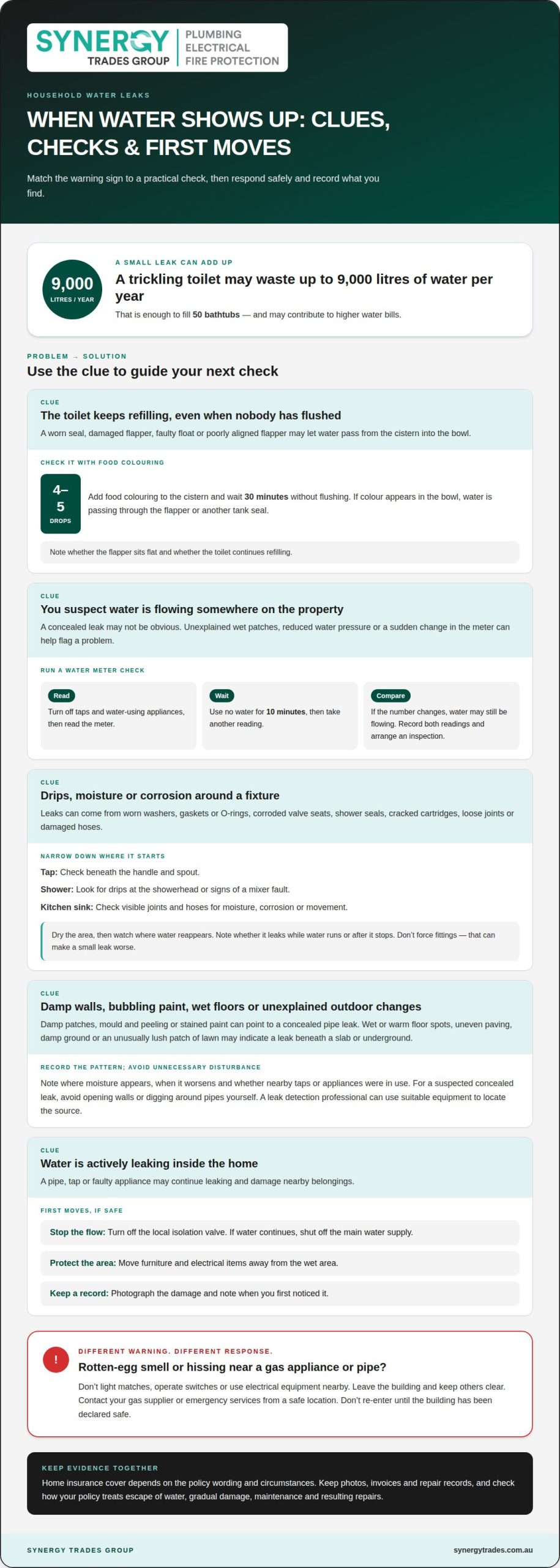
Act promptly when water appears inside your home. If a pipe, tap or faulty appliance is leaking, turn off its local isolation valve if you can reach it safely. If water continues to flow, shut off the main water supply, then move furniture and electrical items away from the wet area. Photograph the damage and note when you first noticed it. These details can help with repairs and an insurance claim.
A suspected gas leak needs a different response. A rotten-egg smell or hissing near a gas appliance or pipe may signal a leak. Don’t light matches, operate switches or use electrical equipment nearby. Leave the building and keep others clear, then contact your gas supplier or emergency services from a safe location. Don’t re-enter until the building has been declared safe.
Look up as well as around. A brown or yellow ceiling stain, peeling paint or bubbling plaster can indicate water coming from above. Water pooling in an attic or seeping through a ceiling may point to a roof leak. Keep people away from a sagging or visibly wet ceiling, and photograph the affected area from a safe distance. Damaged roofing material or faulty flashing may be the source.
On walls, look for damp patches, mould, and paint that bubbles, peels or stains. These signs often appear near the base of a wall or in corners, where a concealed pipe leak can go unnoticed. On floors, unexplained wet or warm spots, reduced water pressure or an unexpectedly high water bill may indicate a leak beneath a concrete slab. Damp ground, uneven paving or an unusually lush patch of lawn may point to a leaking underground water line.
How can you check your water meter for a leak in Australia? Turn off taps and water-using appliances, then read the meter. Wait 10 minutes without using water and take another reading. If the number changes, water may still be flowing somewhere on your property. Record both readings and arrange an inspection to locate the source.
Who is responsible for fixing water leaks in an Australian rental property? Notify the property manager or landlord promptly, sharing photos and details about where the leak appears. They can arrange the repair. If water is actively causing damage, follow the emergency repair process in your tenancy agreement and keep a record of your messages.
For a suspected concealed leak, avoid opening walls or digging around pipes yourself. Note where moisture appears, when it worsens and whether nearby taps or appliances were in use. A leak detection professional can use suitable equipment to locate the source and help limit unnecessary disturbance to walls, floors or gardens.
2. What causes water leaks?
Some common water leaks in houses start with a seal, washer or connection that no longer fits tightly. In a toilet, a worn seal or damaged flapper can let water escape from the cistern into the bowl. The leak may be silent, with the toilet briefly refilling even when nobody has flushed. A faulty float or poorly aligned flapper can also keep water flowing after flushing.
Test a toilet cistern with food colouring. Add 4 or 5 drops to the tank, then wait 30 minutes without flushing. If colour appears in the bowl, water is passing through the flapper or another tank seal. This simple test helps identify a hidden toilet leak without dismantling the cistern. If the result is positive, note whether the flapper sits flat and whether the toilet continues refilling.
A small, steady leak can waste a surprising amount of water. A trickling toilet can waste up to 9,000 litres of water per year, enough to fill 50 bathtubs. That ongoing flow may also contribute to higher water bills. A worn or broken flapper is one possible cause; a deteriorated seal or faulty valve may also need attention. Don’t ignore a toilet that refills repeatedly between flushes.
Check exposed plumbing around taps, showers and sinks for drips or loose connections. For a tap, look beneath the handle and spout: worn washers, gaskets, an O-ring or a corroded valve seat can let water through. At a showerhead, worn seals can cause drips, while a cracked cartridge may affect a single-handle mixer. Under a kitchen sink, check visible joints and hoses for moisture, corrosion or movement when touched. Don’t force fittings, as this can make a small leak worse.
To narrow down the cause, dry the area first, then watch where water reappears. A drip at the tap outlet suggests a different fault from water gathering beneath the vanity. Check one fixture at a time and note whether the leak occurs while water runs or after it stops. These details can distinguish a faulty fixture from a pipe or connection problem and help identify which common water leaks in houses may need attention.
If the toilet keeps refilling or a concealed leak remains unexplained, arrange a professional inspection rather than opening walls or altering pipework. Book a plumbing inspection to help identify the source and the repair needed.
3. Will my insurance cover a water leak?
Whether home insurance covers a water leak depends on your policy and what caused the damage. Check the wording for how it treats escape of water, gradual damage, maintenance and resulting repairs. Contact your insurer promptly, describe what happened, and keep photos, invoices and repair records. Don’t assume damage to a wall, floor or ceiling means every part of the repair is covered.
Kitchen and bathroom fittings are common places to look for leaks. Under a kitchen sink, water may escape from a loose connector, damaged pipe or faulty waste connection. A damaged dishwasher hose or worn gasket can leave water on the floor. In bathrooms, inspect the toilet base, shower fittings, basin tap and pipes beneath the vanity. A wet patch on the ceiling below a bathroom can indicate water travelling from plumbing or a fitting above.
If water is flowing, turn off the relevant isolation valve or the home’s main supply if it’s safe. Stop using the affected tap, toilet or appliance, place a container beneath a drip and move belongings away. Keep water clear of electrical equipment. Photograph the source and surrounding damage before cleanup, and note which fitting was operating. These steps help protect the property and provide useful information for an insurance claim.
How much does it cost to repair common household water leaks in Australia? The cost depends on the leak’s location, access, cause, parts and extent of damage; the repair price is provided after a quote request. A leaking tap may involve a different repair from a concealed pipe inside a wall or beneath a floor.
Arrange professional leak detection when water appears without an obvious source, returns after a basic repair, or affects walls, ceilings or flooring. A professional plumber can trace concealed leaks using suitable detection equipment and identify the repair needed. Finding the source matters: drying a ceiling stain without fixing the pipe or roof leak leaves the cause unresolved.
How can you prevent common water leaks in your house? Check visible hoses, tap connections and pipe joints for moisture, corrosion or movement. Fix dripping taps promptly, avoid overtightening fittings, and keep gutters and downpipes clear so rainwater drains away from the house.
For a leak that’s difficult to locate, professional water leak detection can help identify the source before repair work begins. Keep your photos and insurer’s claim details together, and arrange repairs promptly to limit further damage.
If you need help locating a leak, request a leak detection booking to take the next step.
4. Pipe leaks caused by corrosion, cracks or loose joints
Pipework can leak when corrosion weakens a pipe, a crack opens or a joint loosens. For example, a dripping connection under a bathroom vanity may wet the cabinet before water reaches the floor. Corroded fittings can also leave rusty marks or dampness near the pipe. The visible drip is only one clue: moisture can travel along a pipe or behind a wall before appearing elsewhere.
Age and movement both matter. Older houses may have ageing plumbing and worn fittings, while ground shifts or settling can crack or misalign buried pipes. A pipe that moves out of line may strain its joints, creating a small leak that grows over time. Tree roots can also enter underground sewer lines, contributing to blockages, fractures and leaks. When deeper sub-surface lines are compromised, extensive excavation and civil drainlaying may be necessary; examples of how complex underground drainage repairs and site works are managed can be reviewed at aucklandplumbingdrainageandcivilwork.netlify.app.
Installation problems are another possible cause. A pipe or fitting that wasn’t properly aligned or secured may strain a joint. Poor workmanship or unsuitable materials can also lead to leaks later. Around a newly installed tap, toilet or sink, watch for moisture at the connection after use. Water around a fixture’s base may come from a pipe, seal or nearby source, so its location alone doesn’t identify the fault.
Water pressure and blocked lines can put added stress on plumbing. Excessive pressure may strain pipes until they burst or develop leaks. A blockage beneath a kitchen sink can restrict flow and put pressure on pipes and connections, potentially opening a gap. Loose water connectors, damaged joints and degrading seals are other common causes. A sudden change in flow or an unexplained increase in the water bill can signal a developing problem.
To narrow down a suspected pipe leak, note where water first appears and whether it follows use of a particular tap or appliance. Look for dripping joints, corrosion, cracked pipework and damp patches, but don’t force or dismantle fittings. A leak hidden inside a wall or beneath a floor needs a professional assessment to trace the source without unnecessary damage.
Regular inspections and timely replacement of ageing pipes can help address deterioration before a joint or pipe fails. Where ground movement is a concern, regular checks and flexible piping materials can help reduce its effects. A pressure regulator can help maintain suitable pressure and protect plumbing. Watch exposed connections under sinks and around bathroom fixtures, especially after plumbing work or noticeable changes in water flow.
5. Hot water system leaks
Water pooling around the base of a hot water unit may come from its tank, valves or seals. Notice whether water is actively coming from a fitting or collecting beneath the tank. Dry the surrounding floor, then watch for fresh moisture without touching hot pipes or electrical components. A persistent puddle, rather than a brief trace after use, needs prompt attention because water can damage nearby flooring, walls and stored belongings.
The source determines the repair. A leaking valve or connection is different from a tank leak, and corrosion can weaken the tank itself. A faulty pressure-relief valve, corroded tank or cracked tank can each cause water to escape. Don’t assume the visible water marks the exact fault: it may run down the unit or along a pipe before pooling elsewhere. Note where the first drops appear and whether the leak continues.
Age can make tank corrosion more serious. As an older tank’s interior walls corrode, they can become brittle and weak. Temperature changes make the tank expand and contract, allowing cracks to form in weakened areas. Red or brown water may indicate rust or corrosion inside the unit. Gurgling noises can also point to internal damage and a possible leak. Note these changes, along with any loss of hot water.
Water pressure is another clue, but it doesn’t identify the fault on its own. A pressure-relief valve may release water if it fails, while a cracked tank can leak independently of pressure changes. Note whether pooling begins after the system heats water, whether it appears near a valve, and whether fixtures supplied by the unit have changed. These observations can help a plumber distinguish a faulty fitting from tank failure.
If water is collecting around the unit, contact a plumber rather than trying to open the tank or adjust its pressure-relief valve. If the leak is active, keep people clear of hot water and avoid wet electrical equipment. Turn off the water supply to the unit only if the shut-off is accessible and safe to operate. Follow the unit’s instructions for isolating power or gas, and don’t operate controls while standing in water.
Take a photo of the pooling and note any red or brown water, gurgling, or changes in hot-water supply. This gives the plumber practical details for assessing the leak and choosing the next step. Prompt attention can help limit damage to the property and nearby fixtures. For a leaking hot water system, request a hot water system repair.
Synergy Trades Group: Hot Water System Repairs
Synergy Trades Group provides Hot Water System Repairs when a unit is leaking, losing hot water or showing signs of tank or valve trouble. A plumber can assess whether the fault involves a connection, seal, pressure-relief valve or the tank itself, then determine the appropriate repair. If you notice water pooling around the unit, rust-coloured water or unusual gurgling, describe these signs when arranging help. Clear details can help identify the issue and guide the next step. If the leak comes from another concealed pipe, water leak detection can help locate its source. Contact Synergy Trades Group to discuss a hot water system repair for your property.
Make your next plumbing decision with confidence
A repaired leak can still offer useful information about your home. Keep a simple record of where it occurred, what was repaired and whether moisture returned. Over time, these notes can help you recognise patterns, especially if the same area becomes damp again or a fixture starts dripping. They can also give a plumber a clearer starting point if another issue develops.
Knowing how common water leaks in houses begin helps you respond to early warning signs before visible damage spreads. If water keeps appearing, the source is concealed, or your hot water system shows signs of leaking, professional help is a practical next step. Synergy Trades Group provides Hot Water System Repairs, Blocked Drain Clearing and RPZ Backflow Testing.
For help with a plumbing concern, contact Synergy Trades Group today. A clear description of what you’ve noticed can help start the conversation. Take the next step when you’re ready, and give your home a considered path towards repair.
Frequently Asked Questions
What causes water leaks?
Water leaks usually start when a seal, fitting or pipe can no longer hold water securely. For example, a worn tap washer may cause a drip, while a loose connector beneath a sink can leak during use. Corrosion, high water pressure, blocked lines, ground movement and poor installation can also contribute. The location and timing of moisture help narrow down which component may be faulty.
What do I do if I find a water leak in my home?
Stop the water flow if you can do so safely, using the fixture’s isolation valve or the main shut-off. Keep people and belongings clear of wet areas, especially near electrical equipment. Note where water appears and whether it changes when a fixture is used. For a plumbing repair, arrange a fully licensed plumber rather than dismantling concealed pipework or a hot water system yourself.
What happens when water gets in your walls?
Water trapped inside a wall can damage plasterboard, paint, insulation and nearby timber. A small damp patch may spread, while persistent moisture can contribute to mould and a musty smell. Water can also travel down framing before appearing far from the original leak. If a wall feels damp or its finish keeps changing, locate and stop the source before repairing the affected materials. For structural repairs and interior remediation, property maintenance and refurbishment firms like CFS group Limited highlight how comprehensive trade solutions can restore damaged wall linings, woodwork and finishes.
What type of water leak is the most common?
Dripping taps and leaking toilets are common household examples, but there isn’t enough information to name one type as the most common in every Australian home. A tap may drip because of a worn washer or seal; a toilet may leak silently from its cistern into the bowl. The home’s fixtures, plumbing condition and leak history all affect which problem occurs.
When should I worry about a water-damaged ceiling?
Take a ceiling leak seriously if the affected area is spreading, sagging, actively dripping or close to a light fitting. Water can weaken ceiling materials, and wet electrical components create an additional hazard. Keep people away from a bulging section and don’t touch nearby switches or fittings if they’re wet. Arrange prompt assessment to find whether the water is coming from plumbing or the roof.
What are the most common causes of water leaks in Australian homes?
Typical causes include deteriorating seals, corroded pipes, loose joints, excessive water pressure, clogged lines and tree roots entering underground pipes. Older plumbing can be more vulnerable to worn fittings and corrosion. In Sunshine Coast homes, check visible connections around household fixtures and appliances for moisture. The leak’s location, pipe material and surrounding conditions help determine the likely cause and suitable repair.
How can you identify a hidden water leak in a house?
Look for clues beyond visible drips: an unexplained change in water bills, reduced pressure, damp or mouldy walls, uneven paving, or a patch of lawn that stays unusually green. To test for a possible supply leak, stop using water for 10 minutes and compare two meter readings. A professional leak detection service can investigate when the source remains concealed.
What are the warning signs of a leaking roof, pipe, toilet or hot water system?
A roof leak may show up as a ceiling stain or water in the attic. A pipe leak can leave damp patches, corrosion or unexplained moisture near a joint. A toilet that briefly refills without use may be leaking from its cistern. Water pooling around a hot water unit, rust-coloured water or gurgling can signal a system fault. Note where each sign appears and when it occurs.