What if the reason your water bill is sky-high has nothing to do with how much you’re actually using? Many property owners across the Sunshine Coast open their quarterly statements only to find a figure that doesn’t match their lifestyle, leading to immediate stress and confusion. Whether you’re dealing with a shared meter or a secondary dwelling like a granny flat, a lack of clarity often leads to tension with tenants and a nagging worry about hidden maintenance issues.
We agree that you shouldn’t have to guess where your money is going or feel like you’re subsidising someone else’s usage. Understanding how water meters work is the first step toward regaining peace of mind. It’s about more than just a number on a dial; it’s about protecting your property and your bank account from the silent threat of underground leaks that often go unnoticed until it’s too late.
This article will help you master your usage and explain how sub-meters help you split bills fairly and legally. We’ll preview the latest 2026 Unitywater updates, explain the difference between council and private infrastructure, and show you how to spot a burst pipe before it becomes a costly emergency.
Key Takeaways
- Learn to distinguish between council-owned infrastructure and your private pipes so you only pay for the water you actually use.
- Follow our step-by-step guide to reading your meter and identifying hidden leaks that could be silently driving up your quarterly bill.
- Understand the transition from older mechanical models to the new smart water meters being introduced across the Sunshine Coast to help you track usage more accurately.
- Find out the legal requirements for installing sub-meters to ensure you can fairly and legally pass on water costs to tenants in secondary dwellings.
- Recognise the signs that it’s time to call in a professional for advanced leak detection to prevent long-term structural damage to your property.
Understanding Your Water Meter: The First Line of Defence Against High Bills
Your water meter is arguably the most critical piece of hardware on your property. While it might look like a simple dial tucked away in a box, it functions as the “cash register” for your plumbing system. Water metering is the process that determines your quarterly bill, but for savvy homeowners, it’s also a powerful diagnostic tool. By monitoring the dials, you can catch a silent leak before it causes structural damage or leads to a bill in the thousands.
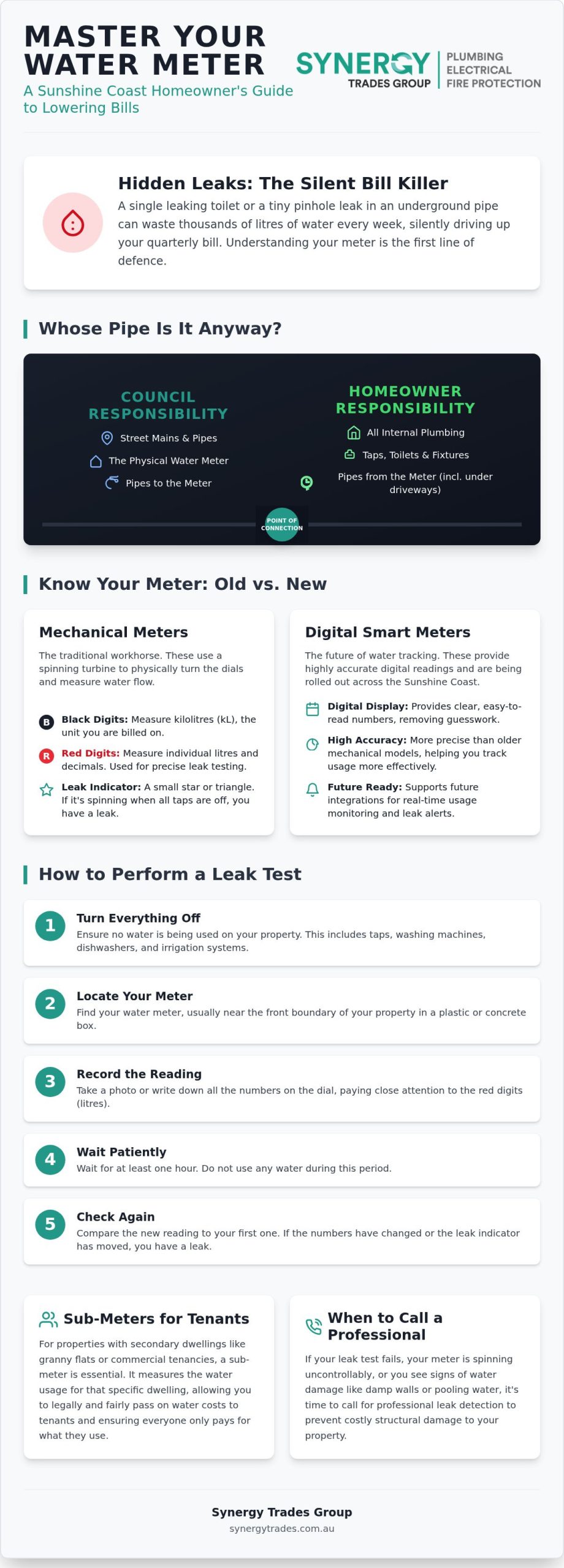
Understanding the “point of connection” is vital. This is the physical spot where the council’s responsibility ends and yours begins. Typically, Unitywater owns the pipes in the street and the physical meter itself. Everything from the outlet side of that meter leading into your home is your responsibility. If a pipe bursts under your driveway, the cost of the lost water and the repair falls on you. This is why water meters are so important; they tell the story of your home’s water efficiency. For landlords, a well-functioning meter is the backbone of a water efficiency certificate, which is required if you intend to pass water usage charges on to your tenants.
Small, unnoticed leaks are more common than you think. A single leaking toilet or a pinhole leak in an underground pipe can waste thousands of litres a week. Without checking your meter regularly, you might not realise there’s an issue until a massive bill arrives in the mail. Regularly observing your meter is the simplest way to ensure your plumbing system remains under control.
Where is my water meter located?
On most Sunshine Coast residential blocks, you’ll find your meter near the front boundary line, often housed in a plastic or concrete box at ground level. In newer estates, they’re usually easy to spot. However, in older areas, they can easily become buried under mulch or hidden by overgrown gardens. If you’re in a unit complex, water meters are typically clustered together in a utility cupboard or located near the main entrance to the block. If you can’t find yours, it’s worth clearing away some foliage or checking your property’s site plan.
Who is responsible for meter maintenance?
Responsibility is split at the meter. Unitywater manages the maintenance of the meter itself and any leaks occurring on the street side. If the meter dial is cracked or the connection to the main is dripping, that’s a call to the utility provider. However, if the meter shows water is spinning through while all your taps are off, you likely have a leak on your side of the property. In these cases, you’ll need professional water leak detection to find the source. Maintaining these pipes ensures your bills stay low and protects your property’s foundation from water damage.
Types of Water Meters in Australia: From Analogue to Digital Smart Meters
Property owners across the Sunshine Coast are currently seeing a shift in how their water usage is tracked. While most homes still rely on traditional mechanical water meters, the landscape is changing as utilities move toward more precise technology. Identifying the type of meter on your property is the first step in understanding your bill and managing your consumption effectively. Whether you have a legacy dial or a modern digital display, each system has specific indicators you can use to protect your property.
Mechanical meters and the spinning dial
The mechanical meter has been the workhorse of Australian plumbing for decades. These devices use an internal turbine that spins as water flows through, physically turning the dials on the display face. When you look at the display, you’ll see a series of numbers. The black digits represent kilolitres (one thousand litres), which is what you’re billed on. The red digits track individual litres and decimals. If you see those red numbers moving while every tap in the house is off, you have a problem. Most mechanical models also feature a small “leak indicator” in the form of a tiny star or triangle. If this symbol is rotating, even slowly, water is passing through the system. Over time, these mechanical parts can wear down, leading to less accurate readings or physical blockages within the unit.
The rise of Digital Smart Meters on the Sunshine Coast
Starting in early 2026, Unitywater is rolling out digital meters across Moreton Bay, Noosa, and the Sunshine Coast. Unlike their mechanical predecessors, these smart water meters don’t require a person to walk onto your property for a manual read. Instead, they use integrated technology or ultrasonic sensors to transmit data via a secure network. This shift provides near real-time data, allowing you to access usage portals or apps to monitor your daily habits. Data from Mackay shows that similar smart meter programs resulted in a reduction of per capita water consumption from 240 litres to 210 litres per day. These electronic units are typically battery-powered with a lifespan of around 10 to 15 years, requiring very little maintenance from the homeowner. If you’re unsure about the health of your current system, you can request a professional inspection to ensure everything is functioning as it should.
In commercial settings, you might encounter electromagnetic or ultrasonic meters. These are high-precision options designed for larger pipe diameters and higher flow rates. They have no moving parts, which makes them incredibly durable and resistant to the debris often found in larger water mains. Regardless of whether you have a traditional dial or a modern digital screen, knowing how your meter communicates your usage is essential for avoiding bill shock and catching leaks early.
How to Read Your Water Meter and Test for Hidden Leaks
Identifying a leak early can save you thousands of dollars in excess charges and prevent significant property damage. While some leaks are obvious, like a burst pipe in the garden, many are silent and occur underground or behind walls. Your meter is the most reliable tool you have to confirm whether water is escaping your system. By following a simple, methodical test, you can gain peace of mind or catch a problem before it escalates.
To perform a basic leak test, follow these five steps:
- Step 1: Ensure all taps, appliances like washing machines and dishwashers, and automatic irrigation systems are completely turned off.
- Step 2: Record the exact reading currently shown on your water meters. It is vital to write down every digit, especially the red ones that track individual litres.
- Step 3: Wait for a period of one to two hours without using any water at all. For the most accurate results, performing this test overnight is often the best approach.
- Step 4: Re-check the meter. If any of the numbers have changed, even by a small amount, you have a leak.
- Step 5: Contact a professional for water leak detection if the numbers have moved during your test period.
Interpreting the results: Is it a drip or a burst?
The scale of the movement on your meter tells you a lot about the nature of the problem. Small movements in the red digits usually point to minor but persistent nuisances, such as a dripping tap or a leaking toilet cistern. These might seem insignificant, but a leaking toilet can waste up to 25 litres a day. Conversely, rapid movement in the black digits is a major warning sign of a significant underground pipe failure. You should also take a moment to check your hot water system overflow pipe. If water is constantly running from this pipe into the drain, it could be the primary reason for your high usage.
The “Isolation Test” to narrow down the location
Once you’ve confirmed a leak exists, you can narrow down its location using the stopcock, which is usually found where the main pipe enters your home. Turn this valve off and watch the meter. If the dial continues to spin, the leak is located in the main line between the meter and your house. If the meter stops moving, the issue is within your internal plumbing. If the leak appears to be concentrated near your storage tank, you may require hot water system repairs to replace a faulty pressure relief valve or a corroded fitting. This simple isolation method helps your plumber find and fix the issue much faster.
Water Sub-Meters: Managing Usage for Granny Flats and Commercial Tenancies
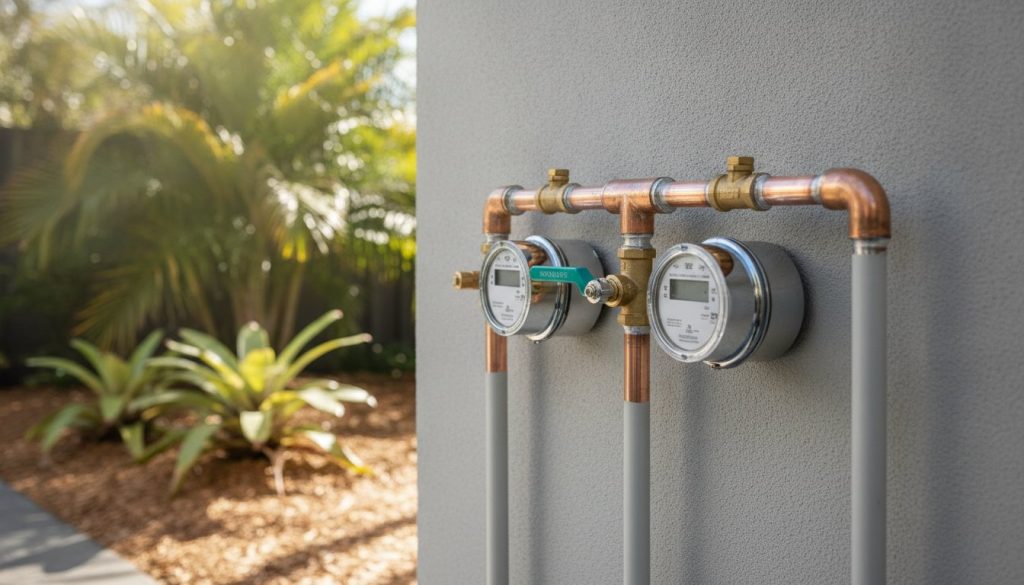
A water sub-meter is a secondary device installed downstream from your main council meter. While Unitywater only reads and bills based on the primary meter at your property boundary, a sub-meter allows you to track exactly how much water is being used by a specific part of your property, such as a granny flat or a commercial unit. This is the most effective way to eliminate the guesswork involved in shared water bills. Instead of splitting costs based on floor area or the number of occupants, you can rely on hard data to ensure everyone pays for what they actually consume.
In Queensland, the legal requirements for charging tenants for water are quite specific. For secondary dwellings like granny flats, which are typically Class 1 buildings, Unitywater’s policy is to only read and bill based on the master meter for the entire property. To legally pass these costs on to a tenant, the dwelling must be individually metered, meet water-efficiency standards, and have the arrangement explicitly stated in the tenancy agreement. For commercial property owners, sub-metering is often a regulatory requirement. New multi-unit and non-residential buildings, specifically those in building classes 2, 4, 5, 6, 7, or 8, must have sub-meters installed to allow for individual billing. This ensures a fair distribution of costs across different businesses or residential lots within a single complex.
Installing a sub-meter: What homeowners need to know
Installing a sub-meter is not a DIY weekend project. While some hardware stores sell the units, all work on water mains in Australia must be performed by a licensed professional. Our Sunshine Coast plumbers ensure that every installation complies with the AS4747:2025 standard for water meters, which guarantees accuracy and consistency. We typically place these meters near the branch line that feeds the second dwelling. It is important that the meter remains accessible for quarterly readings and is protected from garden mulch or debris. A professional installation ensures the device is calibrated correctly, giving you a reliable baseline for your internal billing.
Billing and transparency for tenants
Transparency is the key to maintaining a healthy landlord-tenant relationship. By using sub-meter data, you provide clear, indisputable proof of usage to your tenants, which significantly reduces the potential for disputes. This data also encourages water-wise behaviour. When occupants see exactly how many kilolitres they use each quarter, they are much more likely to report a leaking tap or be mindful of their garden irrigation habits. It shifts the responsibility of water conservation directly to the person using the resource. If you are ready to take the guesswork out of your property management, you can book a sub-meter installation today to start billing fairly and accurately.
Professional Meter Services: When to Call Your Sunshine Coast Plumber
If your DIY tests have confirmed that water is escaping somewhere on your property, the next step is to move from investigation to professional resolution. While water meters are excellent for identifying that a problem exists, they cannot tell you exactly where a pipe has failed. This is where specialised equipment and local expertise become essential. Leaving a leak to “self-repair” is a costly mistake; water under pressure will only cause more erosion and damage over time.
Advanced leak detection and repair
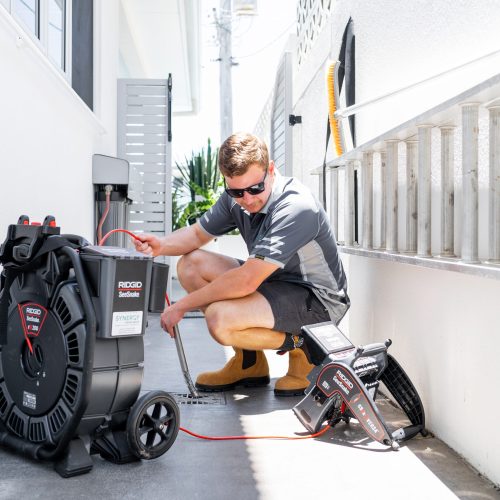
When a leak is hidden beneath a concrete driveway or deep in the soil, we utilise acoustic sensors and nitrogen gas tracing to hear or “smell” the leak from the surface. This technology allows us to pinpoint the breach with incredible accuracy, often within a few centimetres. We also employ thermal imaging to see temperature variations that indicate moisture behind walls or under floors. Guessing where a leak might be often results in multiple exploratory holes and expensive landscaping repairs, whereas professional detection is a non-invasive, surgical approach. Keep in mind that symptoms like dampness or gurgling sounds can sometimes be caused by blocked drains rather than a supply leak. Our comprehensive diagnostic process ensures we identify the correct issue before any digging begins.
Taking action today
Don’t let a manageable leak turn into a property-wide emergency. High bills are stressful, but the structural damage caused by water undermining your foundations is far worse. For many older Sunshine Coast homes, the original pipework from the meter to the house may be reaching the end of its functional life. Upgrading these corroded sections is a proactive way to ensure your water meters stay still when the taps are off. As a family-owned business with over 70 years of combined industry experience, Synergy Trades Group understands the specific soil conditions and plumbing challenges of our local area. We pride ourselves on transparent communication and punctuality, ensuring you feel supported throughout the repair process. A quick health check today can provide the peace of mind that your home is safe and your bills are accurate. Book your professional leak detection or meter consultation with Synergy Trades Group today to get your property back in top shape.
Secure Your Property and Simplify Your Billing
Taking control of your water usage doesn’t have to be a source of stress. By mastering how to read your water meters and implementing sub-metering for secondary dwellings, you transform a technical piece of hardware into a powerful tool for financial fairness and property protection. You now have the knowledge to spot a leak early and the legal understanding to manage shared bills with confidence.
When a simple DIY test reveals a problem that’s hidden from view, you don’t have to face it alone. As a family-owned team with over 70 years of combined industry experience, we specialise in protecting local homes from the damage and cost of undetected leaks. We use advanced acoustic leak detection technology to find the exact source of your trouble without unnecessary disruption to your garden or driveway. Whether you need to resolve a billing dispute or secure your home’s foundation, our experts are here to help. Book a Professional Leak Detection Service today and enjoy the peace of mind that comes with a healthy, efficient plumbing system.
Frequently Asked Questions
How do I find my water meter if it is hidden?
Start by checking the front boundary of your property near the street. Most Sunshine Coast meters are housed in a plastic or concrete box at ground level. If it’s buried under mulch or overgrown grass, look for a flat lid or a metal plate. In unit complexes, water meters are often clustered in a utility cupboard or near the main entry. You can also contact Unitywater for a site map if you’re truly stuck.
Can a water meter be faulty and record more water than I use?
It is very rare for mechanical meters to run fast; they usually slow down as they age due to wear and tear. However, if you suspect a fault, you can request an accuracy test from your utility provider. If the test shows the meter is within the standard margin of error, you’ll likely pay a testing fee. It’s far more common for a hidden leak to be the actual culprit behind high readings.
Is it my responsibility if the pipe is leaking under the footpath?
Responsibility depends on which side of the meter the leak occurs. If the leak is between the water main and the meter, it’s Unitywater’s job to fix it. If the leak is on the outlet side of the meter leading toward your house, even if it’s under a council footpath or verge, it’s generally the property owner’s responsibility. Always check the physical point of connection to determine who needs to take action.
How much water does a leaking toilet actually waste?
A leaking toilet cistern can waste between 10 and 25 litres of water every single day. While a slow drip might seem minor, it adds up to thousands of litres over a quarterly billing cycle. This hidden usage is a primary reason for “bill shock” on the Sunshine Coast. Performing a simple dye test in the cistern is a quick way to confirm if water is escaping silently into the bowl.
Can I install my own water sub-meter for a granny flat?
No, you cannot legally install your own sub-meter. In Australia, all work on water supply pipes must be completed by a licensed plumber to ensure the installation meets the AS4747:2025 standard. Professional installation ensures the meter is accurate for billing purposes and prevents cross-contamination of your water supply. This is essential if you intend to pass water costs on to a tenant legally under Queensland tenancy laws.
What should I do if my water meter is spinning but all my taps are off?
This is a definite sign of a leak on your property. Your first step should be to turn off the main isolation valve at the house to see if the spinning stops. If the meter continues to rotate, the leak is in the underground pipe between the meter and your home. You should call a professional for leak detection immediately to prevent foundation damage and rising water costs before the next bill arrives.
How often should I check my water meter for leaks?
We recommend checking your meter once a month to establish a baseline for your normal usage. Regular monitoring helps you catch small drips or failing valves before they become major emergencies. It’s also wise to check the meter before and after any long holidays. Keeping a simple log of the black and red digits can help you spot trends and stay ahead of potential plumbing issues on your property.
Does Unitywater offer a rebate for water lost through a burst pipe?
Unitywater may offer a “concealed leak” financial adjustment in specific circumstances. To qualify, the leak must have been hidden, such as an underground pipe, and repaired by a licensed plumber within a set timeframe. You’ll usually need to provide a copy of the plumber’s invoice as proof of repair. It’s important to note that rebates aren’t typically granted for visible leaks like dripping taps or faulty toilet valves that could have been easily spotted.