Imagine it’s a quiet Sunday evening on the Sunshine Coast when you suddenly notice the toilet water rising instead of draining. It’s a sinking feeling that quickly turns into genuine anxiety about raw sewage spilling onto your clean bathroom tiles. You aren’t alone in this frustration; most homeowners eventually face the stress of a stubborn blockage that refuses to budge. Whether you’re worried about the potential mess or the cost of hiring a blocked toilet plumber, the uncertainty of a plumbing emergency can feel quite overwhelming.
We understand that you want a clear solution without the fear of hidden costs or recurring issues. This guide will help you regain control by teaching you how to identify the root cause of the problem and which safe DIY methods you should try before picking up the phone. We’ll show you how to distinguish between a minor household blockage and a more serious sewer line failure that requires specialised equipment. You’ll gain a thorough understanding of how to protect your property and exactly when it’s time to call in a professional for a reliable, long-term fix.
Key Takeaways
- Identify the common culprits behind a blockage and how your toilet’s internal trap design affects its ability to clear waste.
- Master the correct plunging technique that relies on physics rather than force, helping you avoid a messy bathroom disaster.
- Discover how a professional blocked toilet plumber uses CCTV cameras to find hidden issues deep within your main sewer line.
- Learn the “Three Ps” rule and other simple maintenance habits that keep your Sunshine Coast pipes flowing freely year-round.
- Understand why local expertise and QBCC licensing are non-negotiable when choosing a tradesperson to protect your property’s value.
Why Is Your Loo Overflowing? Common Causes of Blocked Toilets
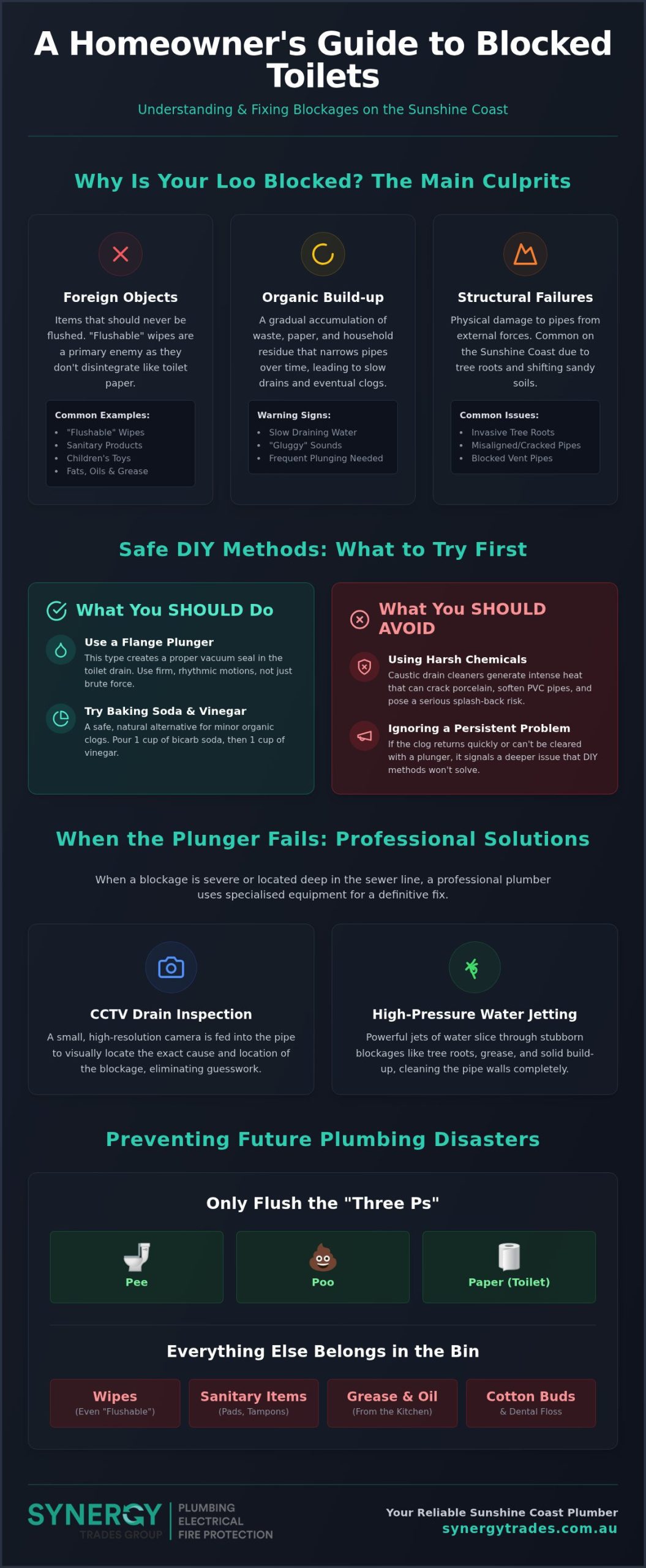
Understanding why your toilet has stopped working is the first step toward a permanent fix. Most issues we see on the Sunshine Coast fall into three main categories. These are often referred to as the “Big Three” culprits of plumbing failure:
- Foreign objects: Items that simply don’t belong in the pipes.
- Organic build-up: A gradual accumulation of waste and household residue.
- Structural failures: Physical damage to the pipes themselves.
Your toilet relies on a specific design, usually an S-trap or P-trap, to maintain a water seal that keeps sewer gases out of your home. This curved bend is also the most common spot for a clog to start. If your toilet makes a “gluggy” sound or drains slowly, it might actually be a vent pipe issue. Vent pipes regulate air pressure in your plumbing; if they’re blocked by bird nests or debris, the vacuum prevents a clean flush and causes the water to struggle.
Foreign Objects and the “Non-Flushable” Problem
Despite what the packaging says, “flushable” wipes are a primary enemy of Australian sewerage systems. Unlike toilet paper, which is designed to disintegrate quickly, these wipes stay intact and snag on pipe joints. We often find that common household items like sanitary products, children’s toys, or even clip-on air fresheners have fallen into the bowl. Another hidden culprit is fats, oils, and grease from kitchen sinks. In many homes, the kitchen and bathroom lines meet. When grease cools and solidifies, it catches debris and creates a stubborn mass that only a professional blocked toilet plumber can clear with specialised tools.
Structural and Environmental Blockages
Sometimes the problem isn’t what you’ve flushed, but what’s happening outside. On the Sunshine Coast, our beautiful coastal flora can be a nightmare for pipes. Tree roots are naturally drawn to the moisture and nutrients inside your drainage system. They can find even the smallest hairline crack in old earthenware pipes and grow into a thick mat that completely stops flow. Additionally, the sandy soils in areas like Caloundra or Noosa can shift over time. This ground movement leads to pipe misalignments where waste settles instead of flowing away. If you suspect your pipes have shifted or been invaded by roots, contacting a blocked toilet plumber is the safest way to prevent a total system collapse. Knowing whether your home has modern PVC or older earthenware pipes helps us determine if you’re dealing with a simple clog or a structural failure.
How to Unblock a Toilet: Safe DIY Methods Before You Call a Plumber
Before you attempt to clear a clog, safety and preparation are essential. Put on a pair of long rubber gloves and lay down some old towels around the base of the toilet to catch any splashes. It is tempting to reach for a bottle of caustic drain cleaner from the supermarket, but we strongly advise against it. These harsh chemicals generate intense heat that can crack porcelain or soften PVC pipes; they also pose a significant splash-back risk to your eyes and skin if the blockage doesn’t clear.
Successful DIY clearing is less about brute force and more about the physics of pressure. If you can’t shift the mass within a few minutes of steady effort, it is often a sign of a more stubborn issue deeper in the line. If you feel out of your depth, you can always request a booking with a professional to handle the mess for you.
Mastering the Plunger Technique
The secret to a successful plunge is the tool itself. While most homes have a standard cup plunger, a flange plunger (also called a toilet plunger) is far more effective. It has an extra fold of rubber that fits snugly into the toilet’s drain hole to create a proper vacuum. To start, ensure there is enough water in the bowl to cover the plunger head. Press down slowly to push out the air, then pull up and push down with a firm, rhythmic motion while maintaining the seal.
The “burp” technique involves tilting the plunger head as it enters the water to release trapped air pockets, ensuring the rubber cup is filled entirely with water for a stronger hydraulic push. This method prevents air from compressing and focuses all the energy directly on the blockage.
The Natural Alternative to Harsh Chemicals
For minor organic build-ups, a mixture of baking soda and vinegar can be surprisingly effective without damaging your plumbing. Pour one cup of baking soda into the bowl followed by two cups of white vinegar. Let the fizzing reaction work for about 30 minutes before pouring in a bucket of hot (not boiling) water. Boiling water can actually crack your toilet bowl, so stick to the temperature of a hot cup of tea.
If the clog remains, a closet auger is your next best option. This is a manual snake designed specifically for toilets. It features a protective rubber sleeve that prevents the metal cable from scratching your porcelain finish. Feed the cable in until you meet resistance, then rotate the handle to break up or hook the debris. If the water level starts rising in your shower or floor waste while you work, stop immediately. This indicates a downstream issue that only a blocked toilet plumber can safely resolve with specialised equipment.
When the Plunger Fails: Advanced Solutions a Blocked Toilet Plumber Uses
While a plunger works for surface clogs, it can’t reach a blockage sitting 10 metres down the line. When the bowl continues to fill despite your best efforts, the issue is often structural or located in the main sewer. This is where a professional blocked toilet plumber brings in specialised equipment to diagnose the exact point of failure. In the past, plumbers relied on “electric eels” or mechanical snakes. These tools are becoming outdated because they often just punch a small hole through a clog rather than clearing it entirely. They can also scratch the inside of modern PVC pipes or rattle old earthenware pipes until they crack.
CCTV Drain Inspections: Seeing Is Believing
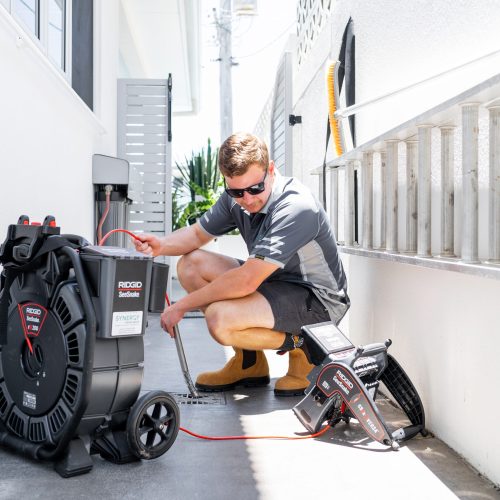
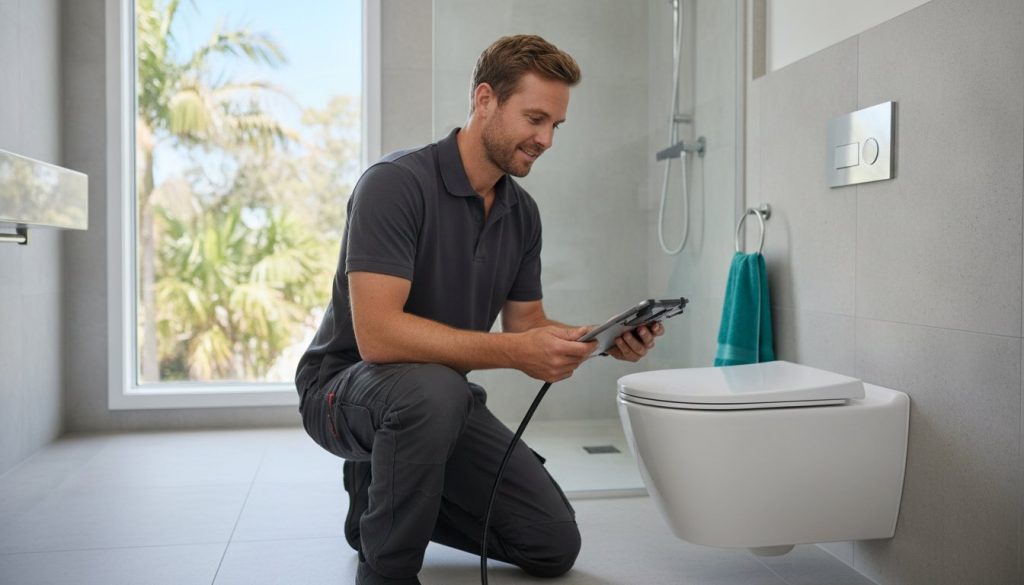
Modern plumbing has moved away from guesswork. We now use high-definition CCTV drain cameras to travel deep into your sewerage system. These cameras provide a real-time view of the pipe’s interior, allowing us to spot hairline cracks, invasive tree roots, or sagging sections where waste accumulates. This technology takes the “maybe” out of the equation. For homeowners, this transparency is vital. We can provide recorded footage which is often required for insurance claims or property management reports. If you have noticed damp spots in your yard alongside your toilet issues, we can also integrate water leak detection services to ensure your entire system is watertight and safe. Seeing the inside of your pipes allows us to offer a fixed solution rather than a temporary patch.
Hydro-Jetting: The Ultimate Clearing Tool
Once the camera identifies the problem, we use hydro-jetting to resolve it. This technology uses a specialised nozzle to blast water at incredibly high pressure, effectively scrubbing the internal walls of your pipes. While a mechanical root cutter might leave behind grease or small root fragments, hydro-jetting clears everything in its path. It is particularly effective for removing the “fatbergs” caused by oils and non-flushable wipes mentioned earlier. Choosing professional blocked drain clearing using a hydro-jet ensures your pipes aren’t just unblocked, but returned to a near-new condition. This thorough cleaning removes the “sticky” residue that catches toilet paper, which significantly reduces the chance of another emergency call-out. By investing in a proper diagnosis from a seasoned blocked toilet plumber, you avoid the cycle of temporary fixes and protect your home from the risk of a major sewer overflow.
Preventing Plumbing Disasters: Maintenance Tips for Sunshine Coast Homes
Preventative care is the most effective way to avoid the stress and mess of a sudden overflow. While we have discussed how to clear clogs, the goal for any homeowner should be to ensure those clogs never form in the first place. This starts with the “Three Ps” rule: only pee, poo, and paper should ever be flushed. Even products marketed as biodegradable or flushable can snag on minor pipe imperfections, eventually creating a mass that requires a blocked toilet plumber to remove. Educating everyone in your household about this simple rule can save you thousands in avoidable repairs over the life of your home.
Beyond what goes down the drain, you should regularly inspect your toilet’s hardware. Open the cistern lid every few months to check the flush valves and flappers. If you notice the water level is constantly running or if there is a phantom flush, you likely have a small leak. A simple trick is to place a few drops of food dye in the cistern; if colour appears in the bowl without flushing, your seals are failing. Catching these minor hardware issues early prevents the “weak flush” syndrome that often leads to stubborn clogs.
Managing Coastal Plumbing Challenges
Living on the Sunshine Coast presents unique environmental factors that can impact your plumbing health. Our salt-laden air and high humidity can accelerate the corrosion of exposed metal fixtures and internal cistern components. It is also vital to listen to your home. If you hear “gurgling” sounds from your floor wastes or shower drains when the toilet flushes, it is an early warning sign that air is struggling to move through the system. This often indicates a partial blockage or a venting issue caused by local debris. For residents requiring expert local advice, our plumbing services in Noosa are tailored to handle these specific coastal conditions before they escalate into emergencies.
Bathroom Upgrades for Better Hygiene
Modern technology offers excellent ways to reduce the load on your drainage system. Many homeowners are now opting for bidet installation on the Sunshine Coast to improve hygiene and significantly reduce their reliance on toilet paper. By using less paper, you lower the risk of organic build-up in your S-traps and main lines. Additionally, if you are renovating, consider choosing high-efficiency toilets with larger trapways. These modern designs provide superior flushing power using less water, making them much more resilient against everyday clogs. If you haven’t had your pipes inspected recently, you can schedule a comprehensive plumbing health check to ensure your home is protected against future disasters.
Choosing a Reliable Blocked Toilet Plumber on the Sunshine Coast
When the water level rises and DIY methods fail, your priority shifts to finding a professional who can solve the problem for good. Choosing a blocked toilet plumber on the Sunshine Coast involves more than just looking for the fastest arrival time. You need a tradesperson who understands local council sewerage requirements and the specific environmental factors of our region. For instance, the sandy soil conditions in Caloundra often lead to different pipe misalignment issues compared to the dense root systems commonly found in Noosa.
In Queensland, all regulated plumbing and drainage work must be performed by a licensed professional. You should always verify that your chosen plumber holds a current licence through the Queensland Building and Construction Commission (QBCC). This ensures they carry the necessary insurance and adhere to the Plumbing and Drainage Act 2018. A reputable expert will always be transparent about their process, providing a quote that includes a clear breakdown of the diagnostic steps and the proposed clearing method.
Questions to Ask Before Hiring a Plumber
To ensure you are receiving the highest standard of service, consider asking these three critical questions during your initial conversation:
- Do you use CCTV cameras to verify the blockage is completely cleared? Without a visual check, you might only be punching a temporary hole in a much larger problem.
- Are you a family-owned business with local industry experience? Family-operated teams often take a higher level of personal pride in their workmanship and community reputation.
- Can you provide a permanent solution rather than a temporary “unblock”? A professional should aim to restore your pipes to full health using tools like hydro-jetting, rather than just clearing the immediate obstruction.
The Synergy Trades Group Difference
At Synergy Trades Group, we bring a “Trusted Expert Guide” approach to every home we visit. Paul and Lynda lead a family-owned team with over 70 years of combined industry experience, specialising in advanced clearing techniques across the Sunshine Coast. We understand that a plumbing issue is stressful, so we prioritise clear communication and a service-first mentality. Our technicians use specialised hydro-jetting and CCTV technology to ensure we find the root cause of every clog, from simple foreign objects to complex tree root intrusions.
We take pride in our punctuality and our commitment to leaving your bathroom as tidy as we found it. Our focus remains on providing long-term reliability rather than a quick fix that might fail a week later. If you are dealing with a stubborn clog and need a reliable blocked toilet plumber, contact Synergy Trades Group for blocked toilet help and regain your peace of mind today.
Protect Your Home and Restore Your Peace of Mind
Dealing with a stubborn clog is more than just a minor inconvenience; it’s a signal about the health of your home’s drainage system. By understanding the common causes of clogs and sticking to the “Three Ps” rule, you can prevent most plumbing emergencies before they start. While basic plunging often solves surface issues, recurring problems usually point to deeper structural concerns like root intrusion or pipe misalignment that require a specialised approach.
Choosing a seasoned blocked toilet plumber ensures you get a permanent resolution rather than a temporary patch. At Synergy Trades Group, we bring over 70 years of combined plumbing and electrical expertise to every Sunshine Coast home. Our family-owned and operated team is equipped with the latest CCTV and hydro-jetting technology to diagnose and clear your lines with precision. Don’t let a simple blockage turn into a costly disaster that threatens your property.
Get your toilet flowing again with Synergy Trades Group and enjoy the confidence of a professionally maintained home. We are here to help you keep your property safe and functional for the long term.
Frequently Asked Questions
Is a blocked toilet a plumbing emergency?
A blocked toilet is considered a plumbing emergency if it is the only toilet in your home or if you notice raw sewage backing up into the bowl or floor waste. These situations pose immediate health risks and can cause significant water damage to your bathroom flooring. While we don’t offer 24/7 call-outs, it is important to address these issues promptly during business hours to protect your property’s hygiene and structural integrity.
Can I use a wire coat hanger to unblock my toilet?
We strongly advise against using a wire coat hanger to unblock your toilet. The sharp metal can easily scratch and permanently damage the porcelain finish of your bowl. Additionally, a hanger is often too short and rigid to navigate the S-trap effectively. You risk pushing the obstruction further into the line, making it much harder for a professional to reach later. Use a proper toilet plunger or closet auger instead.
How much does a plumber charge to unblock a toilet on the Sunshine Coast?
The cost to clear a blockage varies based on the location and severity of the clog. A simple obstruction in the trap is usually faster to resolve than a deep-seated sewer line issue involving tree roots. Most Sunshine Coast plumbers charge a combination of a call-out fee and an hourly rate. We recommend choosing a provider who offers a clear, transparent quote after an initial assessment to ensure there are no surprises.
Why does my toilet keep blocking even after I plunge it?
If your toilet keeps blocking, you likely have a persistent issue deeper in the drainage system that plunging cannot reach. This is often caused by a buildup of non-flushable wipes, tree root intrusion, or a sagging pipe where waste settles. In these cases, a blocked toilet plumber uses a CCTV drain camera to locate the exact source of the problem. A permanent solution like hydro-jetting is usually required to scrub the pipes clean.
Will a blocked toilet eventually unblock itself?
It is very unlikely that a blocked toilet will unblock itself completely. While some organic waste might partially break down over time, the underlying cause of the obstruction remains in the pipe. Ignoring the problem usually leads to a total system failure and a much messier overflow later. It is far better to resolve the issue early rather than waiting for a minor clog to become a major plumbing disaster.
What are the signs that tree roots have blocked my sewer line?
Common signs of tree root intrusion include recurring clogs, gurgling sounds from your drains, and toilets that drain slowly despite plunging. You might also notice unusually lush, green patches of grass or damp spots in your yard near the sewer line. Roots are naturally drawn to the moisture inside your pipes; once they enter through a small crack, they grow quickly and can eventually cause the pipe to collapse or burst.
Are chemical drain cleaners safe for PVC pipes?
Chemical drain cleaners are generally not safe for long-term use in PVC pipes. These products rely on intense chemical reactions that generate high heat, which can soften or deform plastic piping and damage the glue at the joints. They are also highly toxic to the environment and can be dangerous for a blocked toilet plumber to work with if the blockage doesn’t clear. We always recommend mechanical clearing methods over harsh chemicals.
What should I do if my toilet is overflowing right now?
If your toilet is overflowing, your first step is to stop the water flow by turning off the isolation valve located behind the toilet. If you can’t find it, you may need to turn off the main water meter for the property. Don’t attempt to flush the toilet again, as this will only add more water to the mess. Clear the floor area and use old towels to contain the spill until a professional can assess the damage.