Chlorine in tap water isn’t automatically a sign that it’s unsafe: chlorine is added to help kill harmful bacteria and pathogens, while Australian drinking water should not contain harmful concentrations of chemicals or pathogenic microorganisms. Chlorine water filtration can reduce chlorine and help improve water’s taste and odour, but bacteria and cysts require a filter designed to address them.
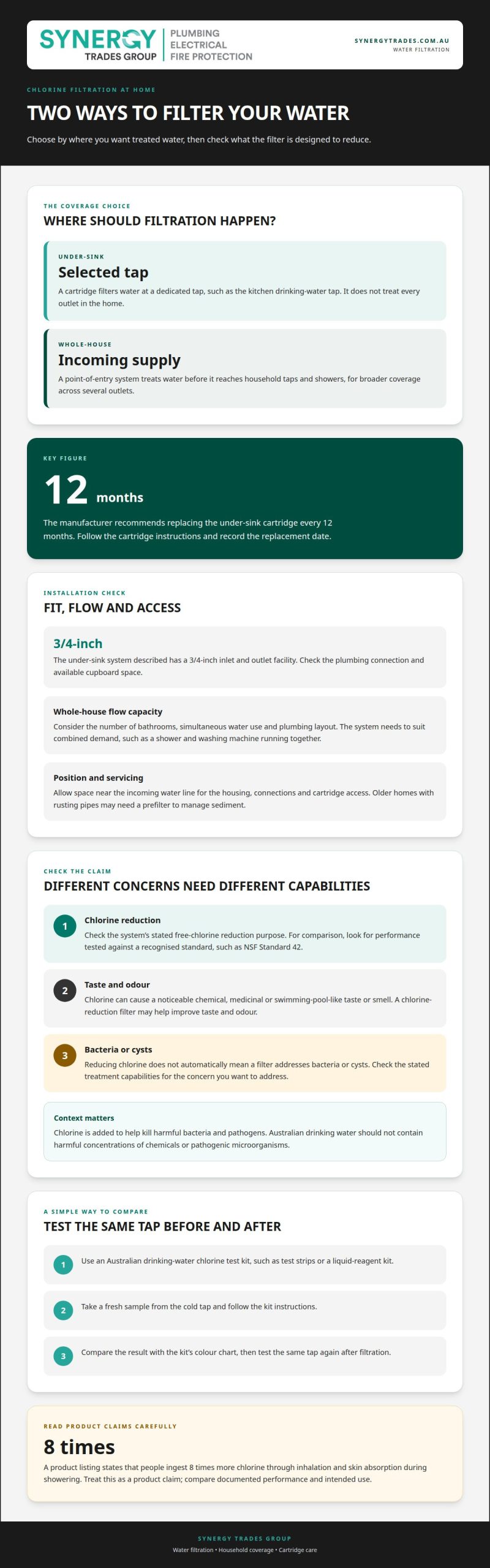
A chlorine smell or taste can be unpleasant, so it’s understandable to consider chlorine water filtration for the water you drink and use at home. The right option depends on where you want filtered water: an under-sink system treats water at a selected tap, while a whole-house system treats water entering the home.
This guide explains how both options work, what they can and can’t remove, and how filtration may affect chlorine, taste and odour. You’ll also learn why a filter’s capabilities matter when bacteria or cysts are a concern, helping you choose what suits your household.
Key Takeaways
- Choose an under-sink system when you want filtration at a selected tap, rather than throughout the home.
- Plan for regular cartridge changes: the manufacturer recommends replacing the under-sink cartridge every 12 months.
- A whole-house system treats water as it enters the home, making it a broader option for taps and showers.
- Check the filter’s stated capabilities: reducing chlorine, improving taste and odour, and addressing bacteria or cysts are distinct requirements.
- When comparing chlorine reduction claims, look for performance tested against a recognised standard, such as NSF Standard 42.
Under-sink chlorine filtration
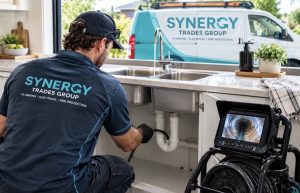
Under-sink systems filter water at a dedicated tap rather than treating every outlet in the home. Under-sink systems can be installed beneath a kitchen sink to filter water for drinking.
In Australia, the Australian Drinking Water Guidelines state that tap water ought not to contain harmful concentrations of chemicals or pathogenic microorganisms. Chlorine is added to water supplies to help kill harmful bacteria and pathogens, and the amount can vary with supply and treatment conditions.
Under-sink chlorine water filtration uses a cartridge to reduce chlorine as water passes through it. The filter’s intended contaminants matter: reducing chlorine does not automatically mean the filter also addresses bacteria or cysts. Check its stated treatment capabilities against the concern you want to address.
Before installation, consider the available cupboard space and the sink’s plumbing layout. The system described for this application has a 3/4-inch inlet and outlet facility, so those connection dimensions are relevant to fitting it beneath the sink. A plumber can assess the connection and install the system as part of water filtration work.
Testing can help establish whether chlorine is present at your tap and whether filtration changes it. In Australia, use a drinking-water chlorine test kit, such as test strips or a liquid-reagent kit, and follow the instructions. Take a fresh sample from the cold tap and compare the result with the kit’s colour chart. For a useful comparison, test the same tap before and after filtration.
Filter and cartridge costs
Filter and cartridge costs in Australia depend on the system, its replacement cartridge and how often that cartridge needs changing. Installation costs also depend on the plumbing connection and work involved. For this service, the price depends on the case and is given after a quote request; system and cartridge requirements are key factors.
Cartridge replacement timing
The manufacturer recommends replacing the cartridge every 12 months. Treat that interval as a maintenance point for the system, rather than assuming a cartridge can remain effective indefinitely.
Replacement timing depends on the cartridge manufacturer’s instructions and the filter’s intended use. Keep the model and cartridge details with your maintenance records so you can identify the correct replacement. If chlorine taste or odour returns before the recommended interval, arrange an assessment of the filter and installation rather than assuming the cartridge is the only possible cause.
After fitting a new cartridge, follow its instructions for flushing and use. Record the replacement date and the next recommended change date. This helps keep maintenance consistent and makes it easier to notice changes in tap water over time.
Whole-house chlorine filtration
A whole-house system treats water where the supply enters the property, before it reaches household taps and showers. This point-of-entry arrangement suits households seeking chlorine reduction across several outlets, rather than at just one drinking-water tap.
That broader coverage also means the filter must handle the home’s total water flow. The number of bathrooms, simultaneous water use and plumbing layout all affect system selection. For example, a household running a shower and washing machine at the same time needs a system suited to that combined demand.
The housing needs a suitable position near the incoming water line, with space for connections and cartridge access. Allow space for the housing, connections and cartridge access near the incoming water line. A plumber can assess the installation position and ensure the equipment can be reached for servicing.
Older homes may need a prefilter if rusting pipes could introduce sediment into the water. Sediment can collect before the main filtration stage, so a prefilter helps manage particles before water reaches the chlorine-reduction filter. An installation assessment should account for pipe condition and the order of filter stages.
Choose a system based on its stated treatment purpose, not simply its whole-house label. Confirm that its specifications address free chlorine reduction, then consider whether bacteria or cyst reduction is also required. These are separate treatment claims: chlorine removal alone does not establish that a system addresses microorganisms.
For a practical comparison, consider these points:
- Choose whole-house treatment when several outlets need filtration, including showers.
- Choose an under-sink system when filtered water is mainly needed at one tap.
- Check the system’s flow capacity against how many outlets may run together.
- Allow space for cartridge access and any prefilter required by the plumbing condition.
Installation involves connecting the system to the incoming supply, checking the plumbing connections and confirming water can pass through the filter. Position matters: the filter should treat the supply before it branches to household outlets. Once installed, follow the manufacturer’s maintenance instructions to keep the system operating as intended.
Whole-home chlorine removal can change the water supplied to showers as well as kitchen taps. A product listing states that people ingest 8 times more chlorine through inhalation and skin absorption during showering. Treat that as a product claim, and focus on the filter’s documented performance and intended use when comparing options.
If you’re weighing up whole-house treatment for your property, arrange a water filtration assessment to discuss the installation requirements.
Chlorine’s effect on water taste and odour
Chlorine can give tap water a noticeable chemical taste or smell. Some people describe it as medicinal or similar to a swimming pool. The intensity may vary between homes, so one household’s tap water can taste different from another’s.
That difference can make drinking water less appealing, even when chlorine is present for a treatment purpose. Australian water suppliers add chlorine to help kill harmful bacteria and pathogens. The Australian Drinking Water Guidelines specify that drinking water ought not to contain harmful concentrations of chemicals or pathogenic microorganisms.
A smell or taste alone doesn’t show whether water is healthy or unsafe. It describes a sensory quality, not a test result for bacteria, cysts or other contaminants. If chlorine flavour is the concern, start with a filter designed to reduce chlorine. If you’re concerned about microorganisms, check the filter’s stated performance for those organisms separately.
Water filters can reduce chlorine by passing water through treatment media designed for that purpose. As chlorine levels fall, the treated water may have a less noticeable chlorine taste or odour. The degree of change depends on the filter’s design, condition and the water passing through it. A filter with an overdue cartridge change may not perform as intended.
To understand the change at home, compare water from the same tap before and after filtration. Use a clean glass for each sample, and assess taste and smell in the same setting. For example, compare a glass from the kitchen tap with one from the filter’s dedicated outlet. This helps separate the filter’s effect from differences between taps.
Keep the comparison focused. A reduction in chlorine odour doesn’t prove that a filter removes bacteria or cysts. Nor does a stronger chlorine smell, by itself, establish a health risk. For these questions, rely on test results and the filter’s documented treatment claims, not taste alone.
When comparing products, look for clear wording about chlorine reduction and the contaminants covered. A filter may target chlorine taste and odour without being designed for broader treatment. In Australia, the Australian Drinking Water Guidelines provide context for drinking-water quality, while the filter’s performance information explains its role at the tap.
Maintain the filter according to the manufacturer’s instructions. Record the cartridge replacement date and follow the stated schedule. If chlorine taste returns, note which outlet is affected and whether the filtered water has changed too. These details can help identify whether the issue relates to the filter, plumbing or incoming supply.
For everyday decisions, match the treatment to the concern: choose chlorine reduction for chlorine taste or odour, and look for specific filtration claims for bacteria or cysts. This distinction sets realistic expectations for what filtered water can change.
Water filtration to reduce chlorine
Reducing chlorine in drinking water depends on choosing a filter tested for the specific disinfectant and reduction claim. Chlorine and chloramine are different disinfectants, so don’t assume a filter rated for chlorine will also remove chloramine.
Chlorine and chloramine removal
Chlorine is used as a disinfectant in water treatment, while chloramine is formed by combining chlorine with ammonia. Because they behave differently, a filter’s performance against one doesn’t establish its performance against the other. Check the product’s stated treatment claims for free chlorine or chloramine, according to your concern.
For chloramine, choose a system that explicitly claims chloramine reduction. Some filter media, including catalytic carbon, are designed for this purpose, but performance depends on the system and its tested conditions. A general chlorine-reduction claim alone doesn’t establish chloramine removal.
How chlorine filtration works
As water passes through filter media, chlorine interacts with the media and is reduced. The result depends on the filter design, water flow and cartridge condition. A cartridge past its recommended replacement point may not deliver the intended performance, so follow the manufacturer’s maintenance instructions.
Look for measurable performance, not just wording such as “improves taste”. Under the specified test conditions described for NSF Standard 42, a filter must reduce free chlorine by at least 50% to meet the standard. That figure is a performance threshold, not a promise that every installation will achieve the same result.
Choose the claim that matches your goal. For example, a filter described as reducing free chlorine may suit someone focused on chlorine taste, but that claim doesn’t establish treatment for chloramine, bacteria or cysts. Those require separate, clearly stated performance claims.
Before choosing a system, follow these practical checks:
- Identify whether the concern is free chlorine, chloramine, or both.
- Match the filter’s stated reduction claim to that disinfectant.
- Read the test conditions and performance information, including any NSF Standard 42 claim.
- Check the cartridge replacement instructions and keep to the recommended schedule.
Where the water supply uses chloramine, a free-chlorine-only claim won’t answer the treatment question. Look for filter performance information that names chloramine and describes its reduction capability. If your concern goes beyond taste or odour, assess each contaminant separately rather than treating chlorine reduction as a complete water-treatment solution.
This distinction keeps expectations clear: choose a system for its documented target, then maintain it as directed. A filter’s name or general description doesn’t replace its specific performance claims.
How does chlorine water filtration work?
Chlorine filtration treats water as it flows through purpose-designed media. The media interacts with chlorine, reducing the amount that reaches the outlet. The result depends on the filter’s design, water flow and cartridge condition.
Activated carbon is commonly used to reduce chlorine. Its porous surface brings water into contact with the filter media as it passes through. That contact helps reduce chlorine and can improve taste and odour. A filter’s stated performance matters more than the presence of carbon alone.
In a typical system, water enters through an inlet, passes through the filter cartridge, then leaves through an outlet. An under-sink unit treats water for a selected tap. A whole-house unit treats the incoming supply before it branches to household outlets. These layouts differ in coverage, but both require media suited to the treatment goal.
Some installations also use a prefilter to catch sediment before water reaches the main cartridge. For example, rust from older pipes may add particles to the supply. A prefilter can help manage sediment, while the main stage targets chlorine. Sediment filtration and chlorine reduction are separate functions.
Flow affects how water passes through the media. If water moves through a filter faster than its design allows, contact conditions may differ from those used to test its performance. Product specifications describe the system’s intended flow and treatment claims. Matching those details to a home’s water use helps make the selection practical.
Chlorine reduction is different from microorganism removal. A filter that reduces chlorine doesn’t automatically address bacteria or cysts. Look for specific claims for those contaminants if they’re part of your concern. A chlorine taste-reduction claim alone, for example, doesn’t show that the system treats cysts.
Maintenance completes the process. Follow the cartridge manufacturer’s replacement instructions and keep a record of each change. A cartridge past its recommended replacement interval may no longer deliver its intended performance. After fitting a new cartridge, follow the manufacturer’s directions for preparing it for use.
For a clear selection, match the filter’s documented treatment target to the water concern, then consider where filtered water is needed. Arrange water filtration support to discuss an installation suited to your home’s plumbing and use.
Synergy Trades Group: Water Filtration
Synergy Trades Group provides water filtration for households looking to reduce chlorine or improve water taste and odour. It’s a practical next step if you’re deciding between treating water at one tap and filtering the supply throughout your home.
The right approach depends on where you use filtered water and what you want the system to address. Chlorine reduction, taste improvement, and treatment for bacteria or cysts are different requirements. Clear information about your concern and preferred filtration coverage helps shape a suitable solution.
If you’re ready to discuss your household’s water filtration needs, contact Synergy Trades Group.
Plan your next step with confidence
Before arranging an installation, turn your concern into a clear brief. Note what prompted you to consider chlorine water filtration, such as an unwanted taste, odour or specific treatment need. Be clear about which taps or household areas matter most, and whether your priority is drinking water or broader household use.
It also helps to consider practical details that shape a suitable plan. Think about available space near the plumbing, how your household uses water, and how you’ll keep up with cartridge maintenance. These details give the discussion a useful starting point without assuming one filter arrangement suits every home.
With your priorities set, the next conversation can focus on the right treatment goal and installation approach for your property. Contact Synergy Trades Group to discuss water filtration and take a considered next step for your home.
Frequently Asked Questions
Is chlorine in water harmful?
Chlorine is used to disinfect water, and its presence alone doesn’t show that tap water is harmful. The Australian Drinking Water Guidelines state that Australian drinking water ought not to contain harmful concentrations of chemicals or pathogenic microorganisms. If you’re concerned about your supply, consider taste alongside reliable test information. A chlorine filter addresses chlorine reduction, but doesn’t automatically treat every other contaminant.
What types of water filters remove chlorine effectively?
Filters containing activated carbon are commonly used to reduce free chlorine in drinking water. Look for a product with a clear chlorine-reduction claim and performance information under stated test conditions. For example, a filter must reduce free chlorine by at least 50% under specified test conditions to meet NSF Standard 42. That threshold doesn’t establish removal of chloramine, bacteria or cysts, which require separate performance claims.
Do activated carbon filters remove chlorine from tap water?
Yes, activated carbon filters can reduce free chlorine as tap water passes through the carbon media. The result depends on the filter’s design, tested performance and cartridge condition. Check that the product specifically identifies free chlorine reduction, rather than relying on a general taste-improvement claim. Follow the cartridge replacement instructions too: an overdue cartridge may not deliver its intended performance. Chloramine requires a separately stated reduction claim.