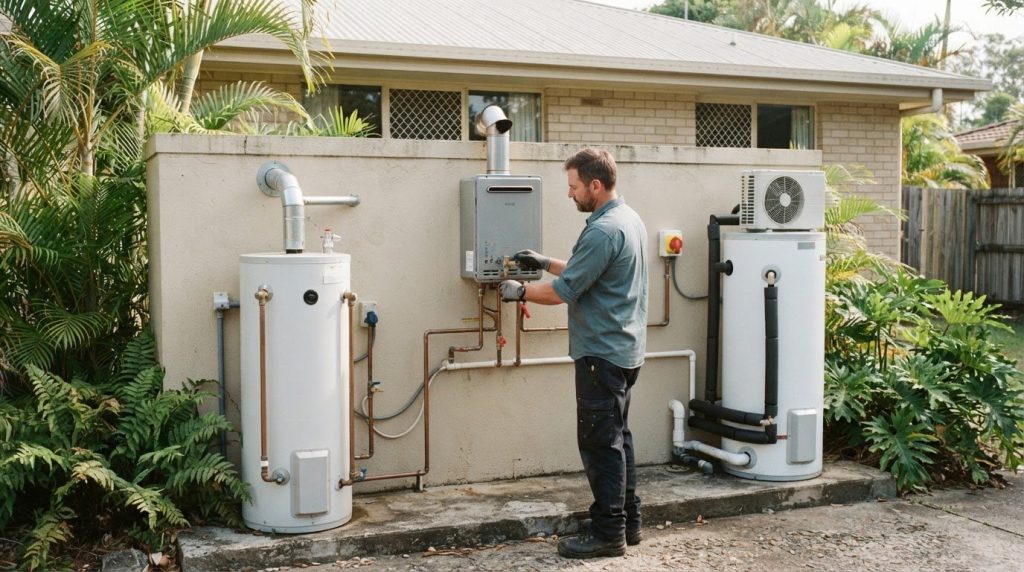
Gas can cost less to run than standard electric storage hot water, but a heat pump may have the lowest annual bill. That makes the gas-versus-electric hot water running costs in 2026 comparison less straightforward than it first appears.
It’s understandable to focus on the energy bill: hot water is a regular household expense, and the system you choose can affect what you pay over time. But running costs are only part of the picture. Household water use, energy tariffs and the way each system heats water all shape the comparison.
This guide compares the estimated annual running costs of gas, electric storage and heat-pump systems, then explains what those estimates mean for different households. You’ll also see the practical factors that can help you decide which option may suit your home.
Key Takeaways
- Compare more than the energy bill: household water use, tariffs and system efficiency all affect running costs.
- Understand why heat pumps can use electricity more efficiently than standard electric storage systems.
- Match system capacity and hot water supply to your household’s daily needs.
- Factor in gas connection requirements and ongoing charges when weighing up a gas system.
- If your current system isn’t working properly, Hot Water System Repairs from Synergy Trades Group can help address the issue.
Comparing estimated running costs between water heater types
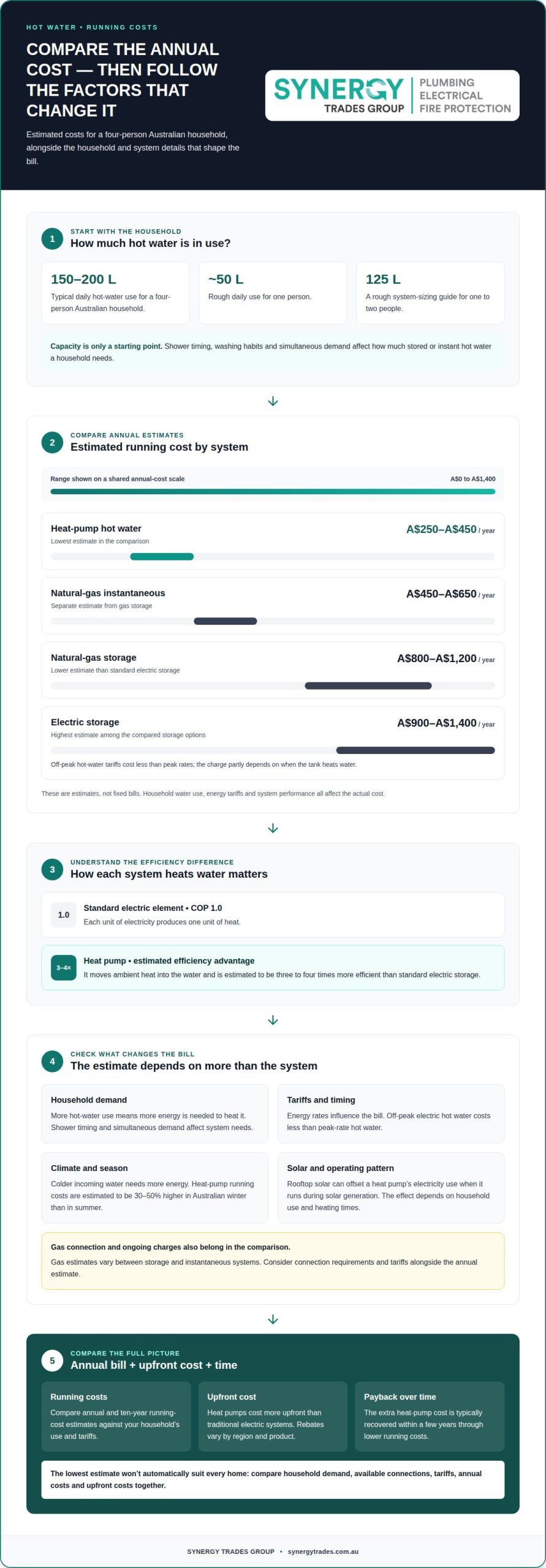
For a typical four-person Australian household, estimated annual costs vary widely across three common systems. A heat pump has the lowest estimate, while electric storage has the highest in this comparison.
Annual Running-Cost Comparison
These are estimates, not fixed bills: actual running cost depends on household water use, energy tariffs and system performance.
| System | Estimated annual running cost | Comparison point |
|---|---|---|
| Gas storage | Lower estimate than standard electric storage | |
| Electric storage | Highest estimate in this comparison | |
| Heat pump | Lowest estimate in this comparison |
The different figures show why a single estimate cannot represent every home. Tariffs and hot water use influence the bill, so compare the assumptions behind any estimate with your household’s circumstances. Gas estimates also vary by system: storage and instantaneous models have separate annual ranges.
Heat pumps use electricity to move heat, rather than relying only on an electric element to heat water. They are estimated to be three to four times more efficient than standard electric storage systems. That efficiency helps explain the lower annual estimate, although the bill still reflects electricity rates and how much hot water the household uses.
Long-Term Costs and Payback
These totals compare energy running costs, not the purchase or installation price. Heat pumps have higher upfront costs than traditional electric systems, with the extra cost typically recovered within a few years through lower running costs.
The gas-versus-electric hot water running-cost comparison for 2026 therefore depends on both the annual bill and the period considered. For example, a household comparing electric storage with gas should weigh the ten-year running-cost estimates alongside its gas connection and tariff situation. For a heat pump, lower estimated running costs may offset its higher upfront cost over time. Rebates can also affect the upfront calculation, and their amounts vary by region and product.
Choose by comparing annual estimates, ten-year running costs, household water use and the system’s upfront cost.
Annual running costs of electric storage, gas and heat-pump hot water
For a four-person Australian household, annual estimates differ by system and energy source. Gas, electric storage, heat pumps and solar hot water each have distinct cost drivers.
Electric Storage Hot Water
A standard electric element has a coefficient of performance (COP) of 1.0: each unit of electricity produces one unit of heat. Electric storage estimates range from A$900 to A$1,400 annually for Australian households. Tariffs help explain the variation. Off-peak hot water rates cost less than peak rates, so the charge depends partly on when the tank heats water.
Gas Hot Water
For a typical four-person household, natural-gas storage is estimated at A$800 to A$1,200 annually, while instantaneous natural gas is A$450-A$650. So, when evaluating gas vs electric hot water running costs 2026, how much does it cost to heat a typical household’s water with gas?
Heat-Pump Hot Water
A heat pump transfers ambient heat into water, rather than relying on an element alone. Its COP describes the heat produced for each unit of electricity consumed. Heat pumps are estimated to be three to four times more efficient than standard electric storage. For a four-person household, annual running costs are estimated at A$250 to A$450. Ambient conditions matter: colder incoming water needs more energy to heat, contributing to Australian winter running costs being 30-50% higher than summer.
Climate also affects how much ambient heat is available for a heat pump to use. Colder conditions can reduce the efficiency advantage, while local electricity tariffs influence the bill. The system’s operating pattern and household demand matter too, so the lowest estimate won’t automatically match every home.
Rooftop solar can also offset a heat pump’s electricity use when the system runs while solar generation is available. How much it changes the bill depends on household electricity use and when the heat pump heats water.
Australian heat-pump rebate policies change frequently, and amounts vary by region and product. Check the current scheme details that apply to your location and chosen system when estimating the upfront cost. Rebates may affect the overall comparison, but they don’t change a system’s underlying energy use.
If a fault is affecting your existing hot water system, you can contact Synergy Trades Group or request hot water system repairs.
Choosing a system based on household needs
A suitable hot water system should match household demand, available connections and energy tariffs. Start with daily use, then consider how many people need hot water at once.
Household Size and System Sizing
A typical four-person Australian household uses 150-200 litres of hot water daily. One person uses roughly 50 litres. A rough sizing guide recommends a 125-litre system for one to two people, but household size is only a starting point. Washing habits, shower timing and simultaneous demand also affect the amount of stored or instant hot water needed.
For example, a household with four people may need to plan around higher daily use than a single-person home. Consider whether everyone showers close together, or whether demand is spread across the day. The same headcount can mean different usage patterns, so choose capacity around the household’s routine, not just its number of residents.
Household Hot Water Usage
Daily consumption helps explain why two homes with the same system can have different running costs. More hot water means more energy for heating, while lower demand generally requires less. Track the household’s routine: note when showers, laundry and dishwashing typically use hot water, and whether several people need it at once.
Winter also changes the heating task because colder incoming water needs more energy. A household comparing systems should therefore consider seasonal use alongside its tariff. Switching to a different system may reduce energy use, but the benefit depends on the home’s water demand and the energy it can access.
Connection availability can narrow the practical choices. Gas hot water requires a gas connection, so it may not suit a property without one. Where a home already has gas and occupants need large amounts of instant hot water, gas is one option to consider. A new connection can add to the decision’s overall cost.
Electric storage, gas and heat-pump systems also respond differently to household tariffs. Electric storage costs can depend on whether water heating uses off-peak or peak electricity. A heat pump uses electricity too, but its higher efficiency can make it worth comparing for homes focused on reducing energy use. The household’s tariff and heating schedule both matter.
- Estimate demand: use daily consumption as a guide, then account for shower timing and household routines.
- Consider connections: factor in existing gas access before choosing gas hot water.
- Compare tariffs: match electricity pricing and heating times to how the household uses hot water.
For a household of one or two, the 125-litre sizing guide offers a useful starting point. A four-person home’s 150-200 litres of daily use provides a different demand benchmark. Use those examples to frame the decision, then weigh usage patterns, connection access and tariff together.
Gas hot water system running costs and gas connection requirements
Gas hot water can have lower energy running costs than standard electric storage, but the full cost includes more than gas use. Connection charges, installation and maintenance can change the long-term comparison.
Gas storage is estimated to use 120-150 megajoules daily, or 44-55 gigajoules annually. The bill also depends on the gas tariff and household demand.
These extra estimates should be read in context, rather than automatically added to every annual running-cost figure. The assumptions behind each estimate can differ, including whether gas supply or pilot light use is counted. For a useful comparison, separate energy use from fixed connection charges, then consider which costs apply to the home.
A gas connection is essential for a gas hot water system. Those upfront costs matter when assessing possible savings against a heat pump hot water system, especially if the home lacks an existing connection.
Maintenance also belongs in the budget. Annual gas safety inspections for storage systems are estimated at , while servicing is estimated at A$180-A$250. These are separate cost considerations from energy use. Include the relevant maintenance and connection expenses when comparing a gas system with electric storage or a heat pump, rather than judging by the fuel estimate alone.
Replacing a working gas system isn’t automatically the cheaper move. If it already has a gas connection, switching avoids the estimated cost of adding one, but a new system still has installation costs. Compare the remaining usefulness of the current unit, expected running costs and the cost of installing an alternative. A heat pump may reduce energy use, but its upfront price also affects payback.
- Existing gas connection: compare gas running costs with the installation and ongoing costs of alternatives.
- Working system: weigh replacement costs against continued use and future running costs.
For example, a home with an existing gas connection avoids a new connection expense. A property without one faces that additional cost before gas hot water can be installed. Include both situations in the comparison before deciding whether to keep, replace or switch systems.
Electric hot water system energy use and running costs
A typical Australian household’s electric resistance hot water costs an estimated annually in 2026. Some estimates for electric storage tanks are lower, so the actual bill depends on usage, tariff and heating schedule.
Electric Resistance Energy Use
An electric resistance system heats stored water with an element. Its coefficient of performance is 1.0, meaning one unit of electricity produces one unit of heat. An electric storage tank is estimated to use 3,000-4,000 kilowatt-hours annually. That energy demand makes the household’s electricity rate a key factor in the running cost.
Hot water accounts for an estimated 25-30% of a home’s total energy use. In a household with frequent showers and laundry, the tank may need to heat water more often. The amount used, incoming water temperature and heating schedule all affect consumption.
Electric Resistance Running Costs
One Australian estimate puts electric storage running costs at A$750-A$1,000 annually; another gives for a typical four-person household. Treat these as different estimates, not a guaranteed bill. Household demand and electricity tariffs help explain why costs can vary.
Tariff timing matters. Off-peak hot water rates can reduce the cost of heating a storage tank compared with peak rates. A typical household’s bill also reflects how much hot water it uses and when the system reheats. Winter costs can be 30-50% higher than summer costs, as colder incoming water needs more energy.
Storage creates a practical trade-off: the tank heats water ahead of demand, but it must replace heat as hot water is used. If a household regularly empties its tank, the system needs to heat more water. If demand is lower, consumption may fall. The same electric system can therefore produce different bills in different homes.
Compare the household’s electricity bill and hot water use before assessing a replacement. Look at the tariff applied to water heating, the amount of electricity consumed and the household’s pattern of use. Then compare electric resistance with heat-pump hot water, which transfers ambient heat rather than relying only on an element. Eligibility for rebates varies by region and product, and policies change frequently.
For a working system, the main comparison is ongoing energy use against the upfront cost of switching. For a faulty system, unusual consumption or unreliable hot water may call for a repair assessment before replacement decisions. That helps distinguish an equipment fault from the normal cost of heating water.
To arrange an assessment of an electric hot water issue, request a hot water system repair.
Synergy Trades Group
Synergy Trades Group helps homeowners address hot water system problems that can affect comfort and energy use. If an existing unit isn’t heating properly or is showing signs of a fault, Hot Water System Repairs can help resolve the issue before you decide whether replacement is needed. For households considering a different way to access hot water, the company also offers Instantaneous Hot Water.
The running-cost comparison is a useful starting point, but a system’s condition and your household’s needs matter too. A repair may suit a unit with a fault; replacement may be worth considering when choosing a system for changing household demand. Synergy Trades Group can help with relevant hot water services. Contact Synergy Trades Group to discuss your hot water needs.
Make your next hot water decision with confidence
A decision about gas versus electric hot water running costs in 2026 is also a decision about timing. You don’t need to replace a system simply because another option looks attractive on paper. First consider whether the current unit still meets your household’s needs, or whether a fault or changing routine has made it less suitable.
Before choosing a next step, write down what you want the new system to improve: energy use, hot water availability, or how the system fits your home. That clear priority can keep the decision focused and help you explain your situation. If the system has stopped working as expected, a repair may be the immediate need; if you’re planning ahead, use your household priorities to guide the conversation.
There’s no single option that suits every home. The best decision is one that makes sense for your property and daily use. Send Synergy Trades Group a booking request to take the next step with your hot water needs.
Frequently Asked Questions
Is it cheaper to run gas or electric hot water?
Gas hot water generally costs less to run than electric resistance storage, while heat-pump systems can have lower estimated running costs than both. For your own comparison, separate the energy charge from fixed supply costs and account for the electricity tariff used to heat the tank. A home with an existing gas connection faces a different total-cost decision from one needing a new connection.
Is gas worth keeping?
Keeping gas can make sense if your system works well and your home already has a gas connection. Consider the system’s condition, the gas supply charge and whether the household still needs the same hot water service. If performance has changed, a fault may be affecting operation. A repair assessment can help distinguish a repair issue from a broader decision about replacing the system.
So which should you choose?
Choose the system that fits your household’s demand, existing connections and energy tariffs. A home with gas already connected and strong demand for instant hot water may suit gas. A household seeking to reduce electricity use for water heating may consider a heat pump. If you’re deciding between replacement options, compare ongoing energy charges and upfront costs together, rather than choosing on one figure alone.
What are average Australian gas and electricity tariffs in 2026, by state?
Tariffs vary by state, retailer, plan and time of use, so one figure won’t describe every household. For another state, use the tariff on the household’s own plan.
How do heat-pump hot water running costs compare with gas and electric resistance in 2026?
For a typical four-person Australian household, estimated annual heat-pump running costs are . These figures compare energy running costs, not purchase or installation costs. A household’s tariff and hot water use affect how closely its bill matches an estimate.
What assumptions affect hot water running-cost comparisons, including household size and water use?
Household size, daily hot water use, incoming water temperature and energy tariffs all shape a running-cost estimate. For example, showering at the same time can create different demand from spreading use throughout the day. Seasonal conditions matter too, as colder incoming water needs more energy to heat. Compare systems using the same household size and usage assumptions, or their annual estimates won’t be directly comparable.
How do controlled-load, off-peak and time-of-use electricity tariffs affect hot water costs?
Electric hot water costs depend partly on the rate charged while the system heats water. A controlled-load arrangement or time-of-use plan can change which rate applies. The relevant comparison is the tariff charged during the system’s heating period, not simply the household’s general electricity rate.
How do gas supply charges change the total cost of gas hot water?
A gas supply charge adds a fixed cost alongside the gas used to heat water. This means low hot water use won’t necessarily remove the supply expense. Compare the charge shown for the gas account with the system’s estimated fuel cost, and avoid adding it twice if an annual estimate already includes supply charges.