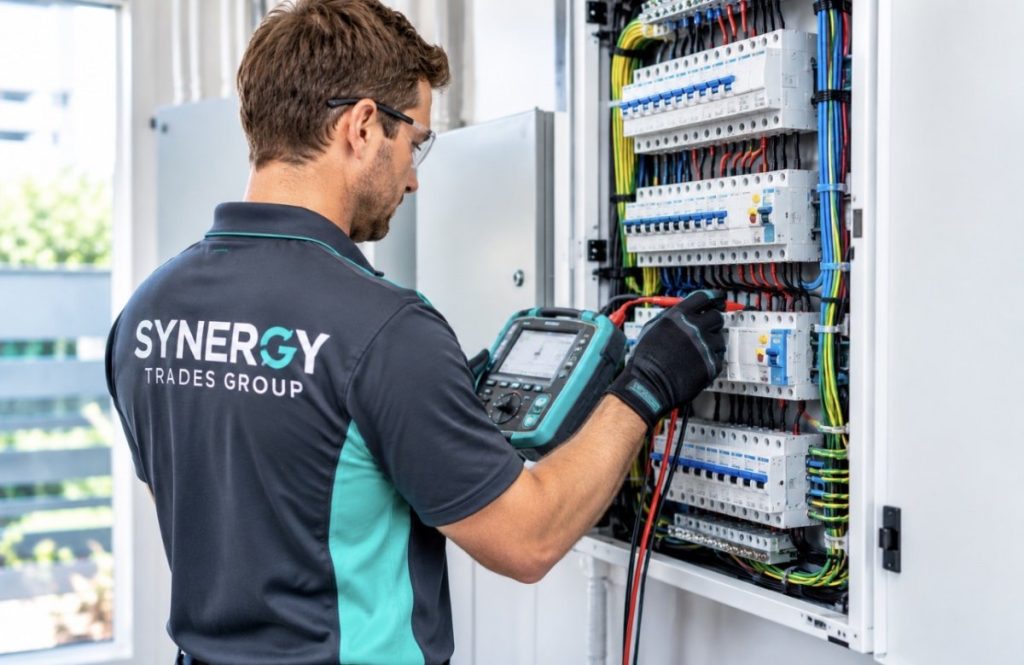
Could an RCD testing schedule that suits an office leave a construction site with the wrong interval? The question “How often RCD testing Queensland Electrical Safety Regulation” has no single answer: the frequency depends on the workplace and whether the RCD is fixed or portable. Queensland’s Electrical Safety Regulation 2026 replaced the 2013 regulation on 1 September 2026, so use the current requirements when planning tests.
Pressing an RCD’s test button and measuring its trip time are separate checks. Knowing which check is due, and who can perform it, helps you plan testing without overlooking a safety obligation.
This guide explains how to identify the workplace category and interval that apply, from construction and manufacturing to office and service work. It also covers who can perform a push-button check, why operating-time testing requires a licensed electrician with calibrated equipment, and what to record. Synergy Trades Group provides professional RCD testing and certification for Sunshine Coast workplaces.
Key Takeaways
- How often RCD testing Queensland Electrical Safety Regulation requirements apply depends on the work category and whether the RCD is fixed or portable.
- Use the relevant interval table for your workplace to plan push-button checks and operating-time tests. Don’t assume one schedule suits every site.
- A test-button check and an instrument test serve different purposes. Know who can perform each and what it verifies.
- Record useful details for each test, including the device identifier and location, date, result, tester details and next due date where applicable.
- Synergy Trades Group provides RCD testing and certification for Sunshine Coast workplaces.
How often is RCD testing required in Queensland workplaces?
Don’t assume the same interval applies to every Queensland workplace. The frequency depends on the type of work and the applicable requirements in the current regulatory table. The Electrical Safety Regulation 2026 replaced the 2013 regulation on 1 September 2026. It sets Queensland workplace requirements, while AS/NZS 3760:2022 provides a technical framework for inspecting and testing electrical equipment. If the standard and regulation conflict, the regulation takes precedence.
To answer “How often RCD testing Queensland Electrical Safety Regulation” accurately, first identify the work category and the RCD type or use. A fixed safety switch and a portable RCD may have different schedules, even at the same workplace. Match the site’s activities and devices to the current requirements before setting test dates.
Workplace duties differ from general household guidance. Queensland’s workplace testing schedules are set by work category; they don’t establish one universal timetable for every home. Homeowners are advised to test regularly, and tenants are recommended to use the test button every three months. Don’t use those household recommendations in place of the requirements for a business site.
What does RCD testing check?
An RCD, or residual current device, is commonly called a safety switch in Queensland. It monitors electrical current and is designed to disconnect power when it detects an imbalance that may indicate current is flowing through an unintended path, such as a person. This quick disconnection helps reduce the risk of electric shock, but it doesn’t remove every electrical hazard. A general overview of a Residual-current device (RCD) explains how the protective device works.
RCD testing checks whether the device operates as intended. It is separate from inspecting or testing appliances and other electrical equipment connected to the circuit. A working safety switch doesn’t prove that every connected item is safe, so treat RCD testing as one part of broader electrical risk management.
Why does the workplace type matter?
The regulation separates work into categories because electrical equipment is used in different conditions and involves different risks. Its tables include construction, manufacturing, office, service and amusement work. The relevant category, along with whether a device is fixed or portable, guides the applicable interval. See local Sunshine Coast service information for details about the area Synergy Trades Group serves.
Don’t assume a site’s label settles the question. A workshop, for example, shouldn’t automatically be treated as a construction site simply because workers use tools there. Consider the work being performed and the scope of the applicable requirements. Then check the current table for that category before assigning test dates or adopting a schedule used at another site.
Which Queensland Electrical Safety Regulation interval applies to your site?
Start by identifying the work performed, then match each RCD in scope to the relevant requirements. Construction work may be subject to AS/NZS 3012, while other listed work categories are addressed in the Electrical Safety Regulation 2026. The table below summarises the intervals for these categories. Verify each entry against the current source and applicable definitions before using it to set a compliance schedule.
| Work category | Governing source | RCD type or use | Indicative interval | Verification status |
|---|---|---|---|---|
| Construction | AS/NZS 3012 requirements | Fixed | Push-button: monthly; operating-time: annually | Verify current edition, clause and scope |
| Construction | AS/NZS 3012 requirements | Portable | Push-button: daily or before use; operating-time: every 3 months | Verify current edition, clause and scope |
| Manufacturing | Electrical Safety Regulation 2026 | Fixed | Push-button: every 6 months; operating-time: annually | Check current table and definitions |
| Manufacturing | Electrical Safety Regulation 2026 | Portable | Push-button: daily or before use; operating-time: annually | Check current table and definitions |
| Office | Electrical Safety Regulation 2026 | Fixed or portable | Push-button: every 6 months (fixed) or 3 months (portable); operating-time: every 2 years | Check current table and definitions |
| Service | Electrical Safety Regulation 2026 | Fixed | Push-button: every 6 months; operating-time: annually | Check current table and definitions |
| Service | Electrical Safety Regulation 2026 | Portable, such as equipment used for commercial cleaning | Push-button: daily or before use; operating-time: every 6 months | Check current table and definitions |
| Amusement | Electrical Safety Regulation 2026 | Fixed or portable | Push-button: every 6 months (fixed) or 3 months (portable); operating-time: annually | Check current table and definitions |
How to find the correct work category
List the activities carried out at the site and the settings where they take place. A business with separate office, workshop and construction operations may need to check more than one category instead of applying a single site-wide label. Confirm the current Regulation’s definitions, exclusions and any specified-equipment criteria, including relevant equipment-rating qualifications. These details can affect which devices and requirements are in scope.
What changes between construction and other workplaces?
Construction RCD requirements may refer to AS/NZS 3012. Check the current edition, relevant clause and its application to the work before adopting an interval. For other listed categories, check the applicable Electrical Safety Regulation 2026 table. Don’t confuse RCD schedules with inspection and tagging intervals for electrical equipment. They are separate requirements. For details about that topic, see electrical appliance testing and tagging.
So, “How often RCD testing Queensland Electrical Safety Regulation” depends on the category, device and governing source. If you’re organising site testing on the Sunshine Coast, arrange RCD testing and certification.
RCD test button checks versus competent-person instrument testing
A push-button check and an instrument test are different checks, not interchangeable ways to meet the same requirement. The button provides a basic check of the device’s operation. Instrument testing measures its electrical performance, including operating time. The required checks and intervals depend on the workplace and RCD type, so a button check doesn’t replace a separately required instrument test.
| Check | Purpose | Who performs it | Method | Record produced |
|---|---|---|---|---|
| Test-button check | Checks that the RCD’s test mechanism operates and the device trips | A person competent to carry out the check, which may include an owner or tenant | Presses the test button according to the manufacturer’s instructions and observes the device response | Record the date, device and outcome in the site log |
| Operating-time instrument test | Checks the RCD’s response using test equipment | A licensed electrician using a calibrated RCD tester | Connects the tester and measures the device’s operating time | Record the test result, measured trip time and tester details |
What does the test button tell you?
If the test button works as intended, the RCD should trip and disconnect the protected circuit. Follow the device’s instructions and Queensland Electrical Safety Office guidance, and let affected occupants know that power may be interrupted. Don’t remove covers or access internal switchboard parts to perform a button check. If the device doesn’t trip, or you’re unsure how to test it safely, arrange an assessment by a licensed electrician.
A successful button check shows that the mechanism responds to its test function. It doesn’t measure operating time with an instrument or prove that the RCD meets every workplace testing requirement. Record the check separately from instrument-test results. A schedule based on “How often RCD testing Queensland Electrical Safety Regulation” should identify both types of check where applicable, rather than treating one as proof of the other.
When is testing by a competent person needed?
For workplace testing, the employer is responsible for ensuring the person carrying out the task is competent. That person needs the knowledge and practical ability to perform the relevant check safely and correctly. Operating-time testing of an RCD requires a licensed electrician using a calibrated tester. Being competent to perform a check doesn’t authorise electrical repair work.
If testing reveals a fault, don’t open the switchboard, attempt repairs or install electrical equipment unless you hold the appropriate electrical work licence. A licensed electrician can investigate a failed or unreliable device and carry out any required electrical work.
Clear records show which method was used and what it established. Keep button-check entries separate from instrument-test results, and note the device identifier, date, outcome and person responsible. Synergy Trades Group provides electrical safety services on the Sunshine Coast, including RCD testing and certification.

How to set an RCD testing schedule and keep useful records
Build a reliable schedule from a clear device list, not a calendar reminder copied from another site. For each RCD, note where it is, whether it is fixed or portable, and which work activity it serves. Then match the device and site category to the applicable current requirements before setting test dates.
- Identify each RCD. Give it a unique label and record its location, such as “main switchboard, workshop circuit” or “portable unit, cleaning store”.
- Classify the work. Note the work category or categories carried out at the site, including distinct areas or activities.
- Confirm the intervals. Check the current regulatory table or applicable construction requirements for each RCD type and required test method.
- Arrange the checks. Assign responsibility for user-level checks and organise instrument testing as required.
- Record outcomes and due dates. Update the register after every check and set a reminder for the next scheduled test.
This process turns “How often RCD testing Queensland Electrical Safety Regulation” into a practical site routine: each device has an identified category, applicable interval and recorded outcome. If site use, equipment or the electrical installation changes, review the device list and schedule instead of assuming the existing plan still applies.
What should a testing register include?
Keep a central register that the people responsible for site safety can access. For RCD testing, record the test date, device identification, trip-time measurement where instrument testing applies, pass or fail result, and details of the person who conducted the test. Keep records until the next scheduled test or until the device is decommissioned. Follow any current prescribed record requirements for your site.
For easier administration, add the device’s location, check type, next due date, person responsible and any follow-up action. These are useful register fields, but don’t describe them as legally compulsory unless the applicable rule says so. A tag, where used, makes a device’s status visible on site; the central register holds the fuller history. Keep RCD records separate from records for connected electrical equipment. Synergy Trades Group’s information on appliance testing and tagging covers that separate service.
How should site managers handle overdue or failed tests?
Record an overdue check and arrange it promptly under your site’s safety procedures. If an RCD fails, doesn’t operate as expected or appears damaged, document the result and follow workplace procedures to prevent reliance on equipment that may be unsafe. Don’t keep using a device that has failed or appears unsafe while waiting for a resolution. Refer faults, repairs or replacement work to an appropriately licensed electrical worker.
For several devices, set reminders against individual register entries rather than using one general alert. This makes it easier to see which RCD is due, which method is required and whether follow-up is outstanding. To organise professional RCD testing and certification on the Sunshine Coast, arrange RCD testing.
Arrange RCD testing and certification on the Sunshine Coast
Once you’ve identified the workplace category, RCD types and applicable checks, organise the site information so it’s easy to use. A clear overview helps plan testing without assumptions about which devices are installed or when they were last checked. Synergy Trades Group provides RCD testing and certification as part of its electrical safety work on the Sunshine Coast.
What to prepare before arranging a site visit
Gather the records you have, even if they’re incomplete. A register, previous test results or notes from earlier electrical work can help identify what’s known and what needs attention. You don’t need to open a switchboard or handle electrical equipment to prepare this information.
Before arranging a visit, prepare a short site brief with:
- Known RCD locations, including switchboard or area identifiers and any portable devices
- The main work activities at the site and any distinct work areas
- Existing testing records, register entries and dates of previous checks
- Known device details, such as whether an RCD is fixed or portable, if recorded
- Access arrangements for relevant areas and switchboards, so access can be coordinated safely
If details are missing, note that rather than guessing. For example, “portable RCD in the maintenance store, last test date unknown” gives a clear starting point. Include any changes to site use or electrical installations, as they may affect which devices and requirements need to be considered.
A straightforward local next step
Synergy Trades Group is family-owned and operated by Paul and Lynda, with more than 70 years of combined industry experience. Its electrical services include RCD testing and certification, safety switch installation and other electrical safety work. For Sunshine Coast workplaces, this provides a local way to organise site details and arrange the relevant testing.
Before booking, gather your site brief and existing records. Note any failed checks, overdue tests or areas where device details are unclear, so you can raise them when arranging the work. The applicable testing requirements depend on the work category and RCD type, so use the current regulatory schedule as your reference.
To organise the next step, arrange RCD testing and certification for your Sunshine Coast site.
Make RCD testing part of your site’s routine
A testing plan works best when it’s part of day-to-day site management. Include a brief review in your regular safety planning so changes in work activities, responsibilities or site layout prompt a fresh look at the schedule. That keeps “How often RCD testing Queensland Electrical Safety Regulation” on the agenda instead of leaving the decision to memory.
Assign someone to oversee the register and follow up on due or outstanding checks. Keep the process straightforward: make current records accessible, clarify responsibilities and set reminders that match the intervals for your workplace. These habits help keep testing on track as the site changes.
Synergy Trades Group provides RCD testing and certification for Sunshine Coast customers. To organise local support, book RCD testing for your site.
Frequently Asked Questions
How often should RCDs be tested in a Queensland workplace?
There isn’t one testing frequency for every workplace. The answer to “How often RCD testing Queensland Electrical Safety Regulation” depends on the work category, RCD type and current requirements for the site. Check the relevant table in the Electrical Safety Regulation 2026 and any applicable construction requirements before setting dates. If a site has several work activities, assess each relevant area rather than copying another business’s schedule.
Who can test RCDs under Queensland workplace requirements?
A person carrying out a workplace check must be competent for that task, and the employer is responsible for workplace safety arrangements. Competence to perform a test or tagging task doesn’t authorise electrical repairs. Operating-time testing of an RCD requires a licensed electrician using calibrated testing equipment. If a check identifies a fault, don’t attempt to fix the device yourself. Arrange for electrical work to be handled by someone with the appropriate licence.
Is pressing the safety switch test button enough for workplace RCD compliance?
Not necessarily. The test button checks the device’s response to its built-in test function, but it doesn’t measure operating time with an instrument. If the applicable workplace requirements call for a separate instrument test, a button check can’t replace it. Follow the manufacturer’s instructions and current Queensland guidance, and plan each check against the site’s schedule. Let affected occupants know before testing, as power to the protected circuit may be interrupted.
What is the difference between RCD testing and electrical test and tag?
RCD testing checks the operation of a safety switch, while test and tag relates to specified electrical equipment and associated inspection and testing requirements. They address different parts of workplace electrical safety, so one record doesn’t automatically cover the other. For example, a portable appliance record doesn’t establish that a fixed RCD has had its required checks. Confirm the equipment scope, workplace category and applicable requirements for each process separately.
Do Queensland homes and workplaces have the same RCD testing requirements?
No. Household safety switch advice and workplace testing requirements apply to different settings. In Queensland, domestic obligations can depend on factors such as a home’s age and electrical work history. Workplace schedules require identifying the relevant work category and checking the current requirements for that site. Don’t use a household testing recommendation in place of a workplace schedule, or vice versa.
What records should a Queensland business keep after RCD testing?
Keep a clear entry for each device, including its identifier or location, test date, result, tester details and next due date where relevant. For instrument tests, include the measured trip time. These fields make a register useful for tracking and follow-up, but check the current rules before describing a particular field or format as legally mandatory. Retain records for the period required by the applicable requirements and keep them accessible to the people managing site safety.
What should I do if an RCD fails a test?
Record the failed result and promptly follow your workplace safety procedures. Don’t rely on a device that has failed or appears damaged, and don’t open a switchboard or attempt a repair yourself. Make the issue clear to the person responsible for site safety and arrange an assessment by an appropriately licensed electrical worker. Keep the outcome and any follow-up information with the device’s testing record so its status is clear to relevant staff.