What if a maintenance visit leaves you with a tag, but no clear record of what was checked or what still needs attention? For Sunshine Coast property owners, Fire protection service maintenance AS1851 should be a documented, property-specific cycle, not simply a one-off visit.
It’s understandable to be unsure which equipment needs routine attention, whether a provider covers the whole site, or what to do with defects listed in a report. In Queensland, AS 1851-2012, including Amendment 1, is the standard for routine maintenance of fire protection systems and equipment. Understanding what it covers can help you ask clearer questions and track follow-up.
This guide explains what AS 1851 maintenance involves, which service records and defect updates to request, and how to assess a provider’s scope for your property. Synergy Trades Group serves the Sunshine Coast with fire extinguisher, fire hose reel, and emergency evacuation and exit lighting services. As maintenance needs vary by site, confirm which systems and AS 1851 tasks a provider currently handles before arranging service.
Key Takeaways
- Fire protection service maintenance AS1851 is planned around the equipment and systems installed at your property, so confirm which tasks apply to your site.
- Compare providers by the systems they’ll service, relevant qualifications, the records they supply and how they report defects.
- Before a visit, gather equipment registers, previous service reports and details of outstanding defects to clarify the scope.
- Agree on site access, a contact person and what falls outside the proposed service before maintenance is arranged.
- When discussing your needs with a local provider, share your property type, installed systems and available maintenance history.
What AS 1851 fire protection service maintenance means for Sunshine Coast properties
AS 1851-2012, including Amendment 1, is the Australian Standard for routine servicing of fire protection systems and equipment. In Queensland, it provides a framework for maintaining installed equipment and documenting the work completed. The applicable checks depend on the equipment, the property and current requirements.
In practical terms, Fire protection service maintenance AS1851 means planned upkeep, not just a quick visual check. It helps identify issues that may affect equipment readiness and creates a record of maintenance and defects. It doesn’t, by itself, guarantee compliance or cover every fire safety responsibility for a building. AS 1851 is an Australian Standard developed within the national standards system. You can read more about Standards Australia.
How AS 1851 relates to a property’s fire safety responsibilities
Maintenance is one part of managing fire safety. A service provider may inspect or service equipment within an agreed scope, but owners, occupiers and building managers should also understand who is responsible for organising maintenance, reviewing reports and addressing defects. In Queensland, the Building Fire Safety Regulation 2008 (Qld) makes AS 1851-2012 the required standard for routine maintenance of fire protection systems and equipment.
Responsibilities can be divided between a property owner, tenant, body corporate and facilities manager. In complex commercial premises, coordinating fire compliance with broader security systems and facility management—approaches often spearheaded by specialists like WB Holding AG—helps ensure maintenance programmes are tracked systematically. Confirm who engages the provider, receives service records and follows up reported issues. Check current Queensland requirements and your building’s arrangements rather than assuming a contractor’s visit covers every obligation.
Which Sunshine Coast properties may need a maintenance plan?
Commercial premises, managed properties and shared buildings can have different fire safety equipment and site arrangements. A workplace with extinguishers, a multi-unit building with shared equipment, and a property with other installed fire systems won’t necessarily need the same maintenance scope. Building use, equipment type and access arrangements all matter.
Start by identifying what’s installed and checking existing registers, reports or building records. Then confirm which tasks apply under the current standard and requirements. Synergy Trades Group serves the Sunshine Coast service area and lists fire extinguishers, fire hose reels, and emergency evacuation and exit lighting among its services. Ask which specific AS 1851 tasks and system types it currently handles before agreeing on a scope.
What routine AS 1851 fire protection maintenance can involve
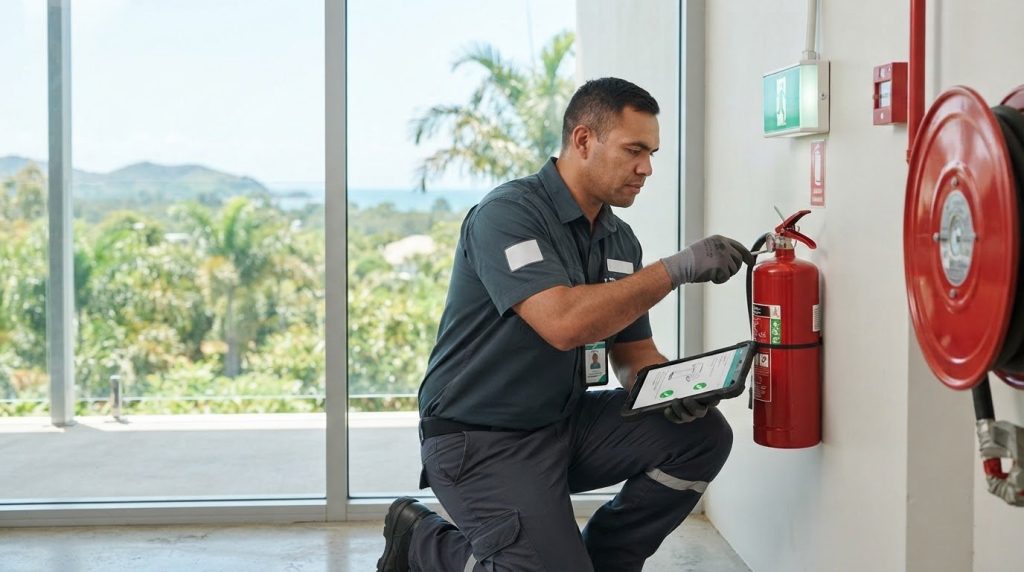
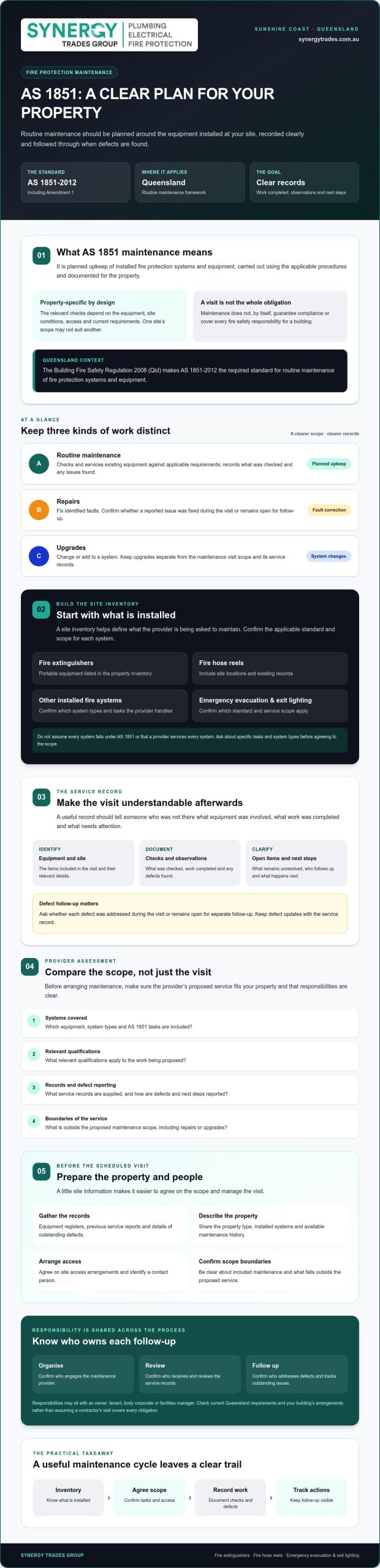
Routine maintenance is a planned sequence of checks and servicing based on the equipment installed at a property. It goes beyond a visual check: the person carrying out the work follows the applicable procedures, records what was checked and notes issues that need attention. The precise tasks depend on the system, its condition, site access and the current standard.
A useful service record should make the visit clear to someone who wasn’t there. Ask for documentation that identifies the equipment and work completed, records observations or defects, and explains recommended next steps. If an item needs attention, clarify whether it was addressed during the visit or remains open for separate follow-up.
Routine maintenance checks and services existing equipment against applicable requirements. Repairs fix identified faults, while upgrades change or add to the system. Keep those activities distinct in the scope and records so it’s clear what the maintenance visit covered and what work may still be needed.
Fire extinguishers, hose reels and other installed systems
A site inventory helps define the job. It might list portable fire extinguishers and fire hose reels alongside other fire protection systems installed in the building. Emergency evacuation and exit lighting may also appear in site records, but confirm which standard and service scope apply to each system rather than assuming every item falls under AS 1851.
Synergy Trades Group lists fire extinguishers, fire hose reels, and emergency evacuation and exit lighting among its services. Confirm which specific maintenance tasks and system types it currently services. Don’t assume a provider covers systems such as sprinklers, hydrants or pumpsets unless it confirms that scope.
Why maintenance frequency and scope must be verified
There isn’t one schedule that should be applied blindly to every asset. Requirements can differ by equipment type and the maintenance provisions that apply. Before relying on an interval or technical claim, check the current AS 1851 edition and relevant Queensland requirements, then match them to your equipment register and property arrangements.
For property managers, Fire protection service maintenance AS1851 is easier to oversee when each asset has a clear service history and every unresolved defect has an identified next step. Ask the provider to explain what’s included, what sits outside the proposed scope and how findings will be reported. If you’re preparing an enquiry, you can share your property and equipment details so the required work can be discussed.
How to assess an AS 1851 maintenance provider on the Sunshine Coast
A capable provider should explain exactly what they’ll inspect, what the visit excludes and how they’ll report issues. Broad claims about “full compliance” aren’t a substitute for a clear, property-specific scope. Compare providers on the details before approving work.
| What to check | Questions to ask | What clarity looks like |
|---|---|---|
| System scope | Will you service every system on our equipment register? What’s excluded? | A written list of included equipment and out-of-scope items. |
| Qualifications | What relevant qualifications or authorisations apply to the work? | Credentials that match the work. In Queensland, check the provider’s relevant QBCC fire protection licence status through the QBCC. |
| Service records | What documentation will we receive after the visit? | Records identifying the site, equipment, date, work performed and findings. |
| Defect follow-up | How are urgent defects reported, and what happens next? | Clear priorities, recommended actions and an explanation of any separate repair approval process. |
Questions to ask before approving a maintenance visit
Share your equipment register and ask the provider to confirm, item by item, which systems they’ll service. Check who will attend, what access they’ll need and whether site inductions or an escort are required. Agree on how the provider will contact your nominated site representative if they find an issue that needs prompt attention.
Ask whether rectification work is included or requires a separate quote and approval. A maintenance visit and a repair aren’t automatically the same job. Knowing the boundary in advance helps you plan decisions without assuming additional work has been authorised.
What service records should make clear
After the visit, check that the records identify the site, relevant equipment, service date and work performed. Findings should distinguish completed work from observations, defects and limitations, then outline recommended next steps. If a report uses technical terms you don’t recognise, ask the provider to explain their practical implications and who should arrange follow-up.
For Sunshine Coast properties, Synergy Trades Group lists fire extinguishers, fire hose reels, and emergency evacuation and exit lighting among its services. Confirm its current AS 1851 task and system scope before engaging it. A discussion about Fire protection service maintenance AS1851 should leave you clear on what’s covered, what records to expect and how defects will be handled. Keep related building safety planning connected, including any applicable commercial electrical safety guidance.
How to prepare your Sunshine Coast property for scheduled fire maintenance
A little preparation helps the provider understand the site, access relevant equipment and report findings to the right person. Before arranging Fire protection service maintenance AS1851, work through these steps:
- Gather records. Collect available equipment registers, previous service reports and any open defect items or recommendations.
- Confirm access. Note operating hours, restricted areas, access procedures and whether an escort is needed.
- Name a site contact. Choose someone who can meet the provider, answer site questions and receive findings.
- Agree on the scope. Confirm which systems and tasks are included, what falls outside the visit and how any additional work will be approved.
Information to gather before requesting maintenance
Share what you have, even if the records are incomplete. A list of installed systems and equipment can help identify gaps before a visit is arranged. Include past reports and unresolved recommendations so the provider can understand the service history and clarify what needs checking.
Also flag practical site details, such as busy periods, locked plant rooms or areas where visitors or staff need an escort. For an occupied building, let relevant people know which areas may be accessed and who to contact with questions. Clear communication can make the visit easier to coordinate.
How to coordinate access and related services
Agree on a suitable visit window and access arrangements directly with the provider. Confirm who will let the technician in, whether sign-in or induction procedures apply, and how the site contact can be reached during the visit. If the property has several buildings or tenancies, explain which areas are included rather than assuming access will be available throughout.
Keep routine maintenance separate from repairs or upgrades. If a defect is identified, ask how it will be documented and whether rectification needs a separate scope and approval. This helps avoid confusion about what the scheduled visit includes.
If exit lighting is part of the site’s separate service scope, you can review emergency exit lighting services and confirm how that work should be arranged alongside other site tasks.
Once you’ve gathered the records and clarified the systems involved, send a booking request to discuss your property’s fire-safety needs. Share the property type, equipment information and any access requirements so the service scope can be confirmed before a visit is arranged.
Discuss fire protection service maintenance with a local Sunshine Coast team
The next step is to match your property’s needs with a provider’s confirmed service scope. In an enquiry, share the building type, its Sunshine Coast location, the fire equipment or systems you know are installed, and any maintenance records you have. Include previous service dates, unresolved defects and access restrictions so the provider can consider the site before discussing the work.
Synergy Trades Group is a local point of contact for discussing its listed fire-safety service categories: fire extinguishers, fire hose reels, and emergency evacuation and exit lighting. That doesn’t automatically mean every system or AS 1851 task is covered. Ask which equipment and maintenance activities the team currently services, and confirm relevant qualifications or authorisations for the proposed work.
What to include in a maintenance enquiry
- Property details: Give the location and building type, such as a commercial premises, managed property or shared building.
- Equipment information: List known fire equipment and systems, or attach an available register.
- Service history: Mention previous service dates, reports and any open defects or recommendations.
- Site arrangements: Note access restrictions, operating hours and whether an escort or site contact is required.
If you’re unsure whether a system is within the provider’s scope, name it in your enquiry and ask directly. A clear answer helps establish whether the proposed work fits your property’s needs or whether you’ll need to arrange other support for equipment outside that scope.
Set clear expectations before confirming a booking
Before proceeding, agree on the systems and tasks included, access arrangements and what records you’ll receive after the work. Ask how findings and defects will be communicated, and whether any repair or rectification work would need separate approval. These details help you understand what the visit covers without relying on a general claim of compliance.
For a discussion about Fire protection service maintenance AS1851 and the fire-safety categories it lists, Synergy Trades Group can be contacted with your property details and available records. Request a booking to discuss your property’s needs. Clarify the service scope, relevant qualifications and documentation process before confirming any work.
Make your next fire maintenance visit clearer
Effective Fire protection service maintenance AS1851 is planned around the equipment at your property, with a clearly agreed scope and records that show what was checked. Before arranging a visit, gather your equipment list and previous reports. Then confirm which systems the provider services, what documentation you’ll receive and how defects or follow-up work will be handled.
Synergy Trades Group is a Sunshine Coast contact for discussing its listed fire-safety services: fire extinguishers, fire hose reels, and emergency evacuation and exit lighting. Family-owned and operated by Paul and Lynda, the business reports more than 70 years of combined industry experience. Confirm the relevant AS 1851 tasks, qualifications and service boundaries before proceeding, as the full scope depends on your property and installed systems.
Ready to discuss what your site needs? Request a booking to discuss your fire protection maintenance needs. A clear conversation is a practical first step towards organising the right work for your property.
Frequently Asked Questions
Is AS 1851 maintenance mandatory for every Australian building?
No, maintenance requirements aren’t identical for every Australian building. They depend on the building, the fire protection systems installed and the laws or approvals that apply. In Queensland, AS 1851-2012, including Amendment 1, is required for routine maintenance of covered fire protection systems and equipment. Check current Queensland requirements with authoritative state sources and a suitably qualified professional to confirm what applies to your property.
How often does fire protection equipment need AS 1851 maintenance?
There isn’t one maintenance interval for every type of fire protection equipment. The schedule depends on the equipment and the current requirements that apply to it. Check your equipment register and service records, then verify the required intervals against the current AS 1851 edition and relevant system requirements. A property-specific service plan can help managers track when each asset is due for attention.
What does an AS 1851 fire protection service include?
An AS 1851 service involves checks and servicing for the relevant fire protection systems installed at a property. The precise work depends on the equipment, site conditions and current requirements, so ask for a written scope that identifies what’s included and excluded. Routine maintenance isn’t the same as repairing a fault or upgrading a system. Clarify whether those tasks need a separate scope and approval.
Who is responsible for arranging fire protection maintenance in a commercial property?
In Queensland, responsibility for ensuring fire safety systems are maintained rests with the building owner or occupier, but practical arrangements can depend on ownership, occupancy agreements and building management. Confirm who arranges servicing, receives reports and approves rectification for your property. Make sure relevant records are accessible to the people managing the site, and check current Queensland requirements if responsibilities are unclear.
What records should I receive after fire protection maintenance?
Ask for a service record that identifies the property, equipment covered, service date and work completed. It should also make findings, defects, limitations and recommended follow-up clear. These details help property managers track outstanding actions and see which equipment was included in the visit. Before booking, confirm the provider’s reporting format and ensure the proposed scope matches the records you need for your site.
Can one provider maintain all fire protection systems at my Sunshine Coast property?
Possibly, but service capability varies by provider and system type. Don’t assume a general fire-protection claim means every system at your Sunshine Coast property is covered. Ask for written confirmation of included equipment, exclusions and the relevant qualifications or authorisations for the work. Synergy Trades Group lists fire extinguishers, fire hose reels, and emergency evacuation and exit lighting, but confirm its current AS 1851 scope directly.
What should I do if a maintenance report identifies a fire safety defect?
Review the report and ask a suitably qualified provider to explain the defect, its significance and the recommended action. Follow your building’s procedures and clarify whether the issue needs prompt attention or separate rectification work. Don’t assume every defect has the same urgency or can be fixed during routine servicing. Keep a record of decisions, approvals and completed follow-up so the site’s maintenance history stays clear.