Over 90% of reported building fires are successfully controlled using portable equipment before the fire department even arrives. Maintaining high standards of Fire Protection – Fire Hose Reels – Fire Safety is about more than just checking a box; it’s about ensuring your first line of defence actually works. We understand that technical compliance can be stressful. You might feel confused by the differences between AS 1851 and AS 1221, or worry about heavy fines for missing a service. It’s normal to feel a little overwhelmed when balancing safety with the daily demands of running a property.
This guide will help you master the essentials of fire protection, from choosing the right fire hose reels for your Sunshine Coast property to ensuring every installation meets Australian safety standards. We’ll walk you through mandatory six-monthly testing, hydraulic pressure requirements, and how to find reliable local tradies who take compliance seriously. By following a clear, methodical approach, you can ensure your property remains fully compliant and your equipment stays ready for an emergency. Having a safe, up-to-code building provides peace of mind that no amount of paperwork can replace.
Key Takeaways
- Identify the specific fire hazards on your property by understanding Australian Fire Classes (A to F) to ensure your equipment is fit for purpose.
- Learn why fire hose reels are the ultimate first line of defence for Class A fires, providing a continuous water stream that portable extinguishers can’t match.
- Master the AS 1851 maintenance cycle, including the essential six-monthly visual checks and annual pressure tests required for legal compliance.
- Streamline your Fire Protection – Fire Hose Reels – Fire Safety requirements by working with local Sunshine Coast specialists who manage both plumbing and electrical safety systems.
- Gain confidence in selecting the right equipment for your building, balancing the high-reach capacity of hose reels with the targeted versatility of fire extinguishers.
Essential Fire Protection: Understanding Fire Classes and Australian Standards
Effective fire protection isn’t just about bolting a reel to a wall. It’s a holistic system where equipment, clear signage, and professional maintenance work together to keep people safe. When you invest in Fire Protection – Fire Hose Reels – Fire Safety, you’re building a defensive layer designed to stop a small incident from becoming a total loss. This system relies on two critical pillars: high-quality hardware and the specific knowledge of how to deploy it correctly.
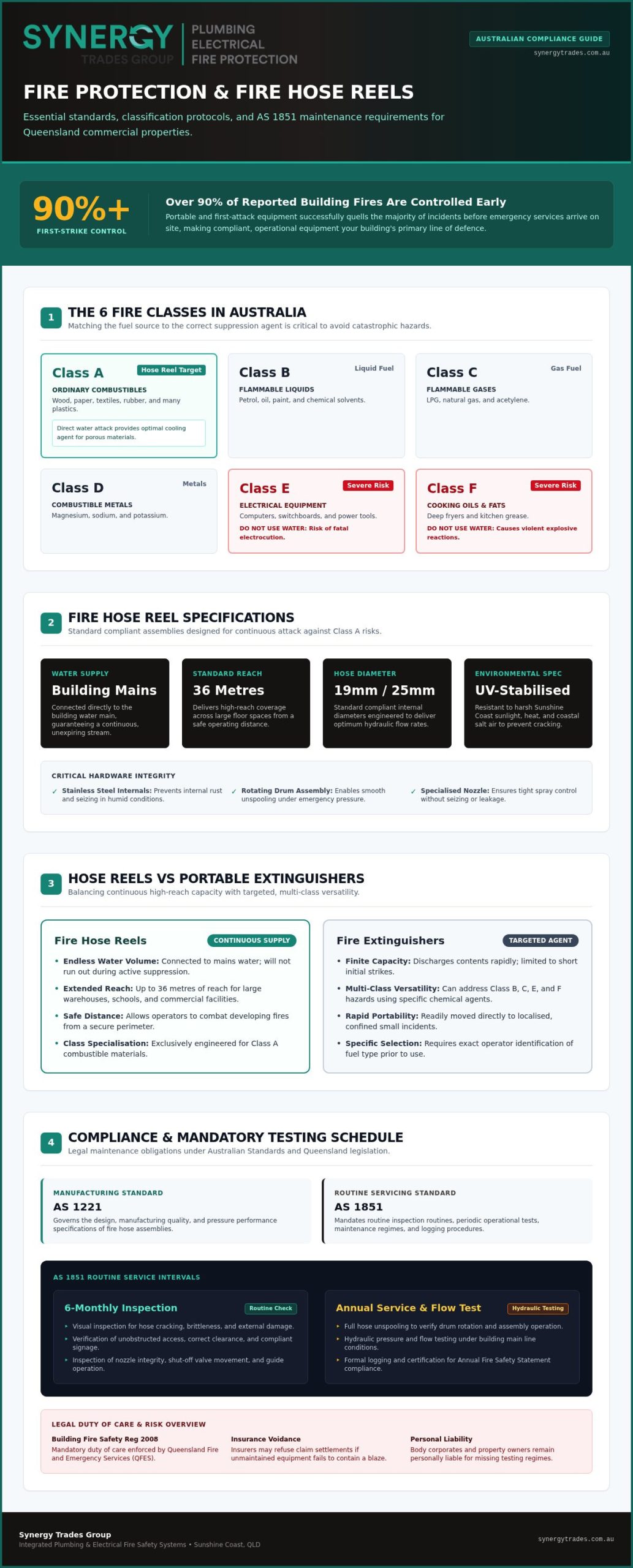
The 6 Classes of Fire in Australia
Identifying the fuel source is the first step in any emergency. Using the wrong tool can be catastrophic. For instance, directing a water stream onto an electrical fire (Class E) or a commercial fat fire (Class F) can cause explosive reactions or fatal electrocution. Fire hose reels are designed specifically for Class A fires, where water is the most effective cooling agent for porous materials.
| Class | Fuel Source | Common Examples |
|---|---|---|
| Class A | Ordinary Combustibles | Wood, paper, textiles, rubber, and many plastics. |
| Class B | Flammable Liquids | Petrol, oil, paint, and chemical solvents. |
| Class C | Flammable Gases | LPG, natural gas, and acetylene. |
| Class D | Combustible Metals | Magnesium, sodium, and potassium. |
| Class E | Electrical Equipment | Computers, switchboards, and power tools. |
| Class F | Cooking Oils & Fats | Deep fryers and kitchen grease. |
Why Compliance Matters for Sunshine Coast Property Owners
Local property owners and body corporates have a legal duty of care under the Building Fire Safety Regulation 2008. Adhering to Queensland Fire and Emergency Services (QFES) guidelines isn’t optional. AS 1221 governs the manufacturing and performance of fire hose assemblies, ensuring they can handle the high pressures required during an attack. Meanwhile, AS 1851 sets the strict schedule for routine servicing and documentation.
If a fire occurs and your equipment hasn’t been professionally tested, your insurance provider may refuse to settle the claim. This leaves you liable for property damage and potential legal action. Beyond the financial risk, regular testing keeps your Annual Fire Safety Statement accurate. We help Sunshine Coast businesses stay compliant by managing these technical details. This methodical approach ensures your “first strike” equipment is ready to perform when it’s needed most. Relying on a team that understands both the plumbing and electrical sides of fire safety ensures no detail is overlooked.
Fire Hose Reels Explained: Your First Line of Defence for Class A Fires
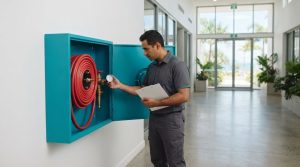
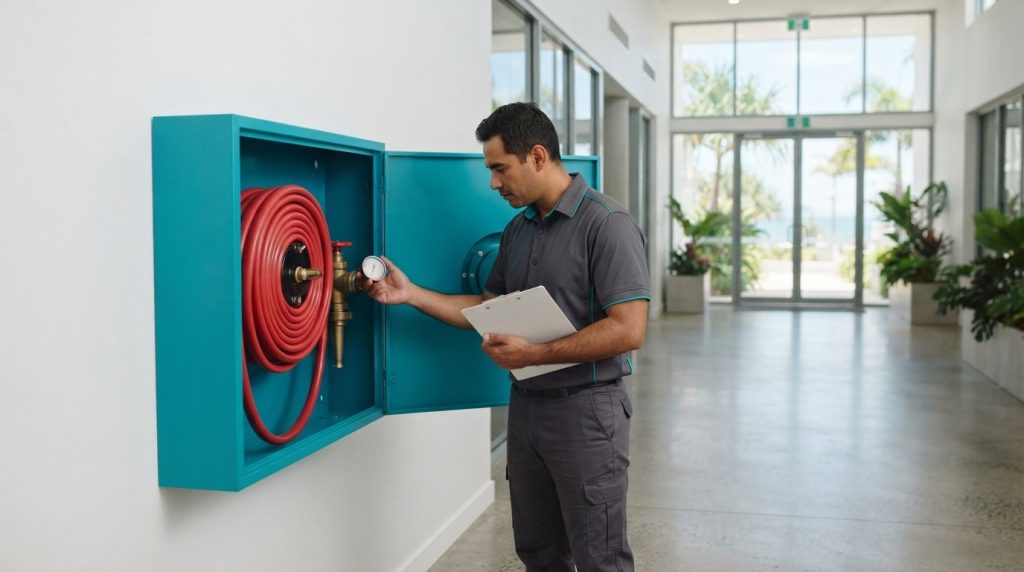
A fire hose reel is a permanent, high-reach water supply designed to provide an immediate attack against Class A fires. Because it’s connected directly to the building’s water main, it offers a continuous stream that won’t run out like a portable extinguisher. This makes it the backbone of effective Fire Protection – Fire Hose Reels – Fire Safety for warehouses, schools, and large commercial spaces. It gives occupants the ability to fight a fire from a safe distance while waiting for emergency services to arrive.
The system consists of a large drum, a length of hose, and a specialised nozzle. Most compliant units feature either a 19mm or 25mm hose, usually 36 metres in length. These components must work in perfect harmony. If the nozzle is seized or the hose has become brittle, the entire system fails. This is why following AS 1851-2012 maintenance requirements is so vital for local property owners. Regular testing ensures the hose unwinds smoothly and the water flow is sufficient to suppress a developing fire.
Anatomy of a Compliant Fire Hose Reel
Living on the Sunshine Coast means our equipment faces harsh salt air and intense sun. A compliant reel must feature a UV-stabilised hose to prevent cracking and perishing over time. Stainless steel internal components are also preferred in our coastal environment to resist corrosion. The nozzle is another critical part, allowing the operator to switch between a concentrated jet for distance and a wide spray for cooling down large surface areas. Clear signage is also a legal requirement. AS 1221 requires white lettering on a red background, mounted so it’s visible even in a smoke-filled corridor.
Plumbing Requirements and Water Pressure
A fire hose reel is only as good as the water pressure behind it. It requires a dedicated water line to ensure it doesn’t lose pressure when other taps in the building are used. This is where professional plumbing expertise becomes essential. We often use water leak detection to ensure fire lines aren’t losing pressure through hidden underground bursts or slow leaks that could compromise the system during an emergency.
A critical part of the installation is the backflow prevention device. This prevents stagnant water from the fire line from syphoning back into your clean drinking water supply. If you’re unsure if your system meets current standards, you can request a professional inspection from our team. We’ll check your stopcocks, test the dynamic flow rate, and ensure your backflow protection is fully certified and functioning as intended.
Fire Hose Reels vs Extinguishers: Selecting the Right Protection
Selecting the right tool during a crisis depends entirely on the fuel source and the scale of the risk. While both are essential for comprehensive Fire Protection – Fire Hose Reels – Fire Safety, they serve very different roles in your emergency plan. A fire hose reel is your heavy hitter for sustained attacks, whereas an extinguisher is a precision tool designed for quick, solo intervention. Understanding these differences helps you make the right call when seconds count.
When to Reach for the Fire Hose Reel
If you’re facing a large volume of burning cardboard in a warehouse or timber in a workshop, a portable extinguisher will likely run out of steam in under 60 seconds. A fire hose reel provides an infinite water supply because it’s plumbed directly into the building’s mains. This allows for a continuous cooling effect that is vital for stopping deep-seated Class A fires. The 36m reach is a major safety advantage, letting you stay well back from intense heat while still delivering high-volume suppression. We typically install these in car parks, loading docks, and long corridors where reach and volume are paramount.
When an Extinguisher is the Superior Choice
Water is a dangerous conductor. If a fire starts in a switchboard, a server rack, or near any live power source, using a hose reel could be fatal. In these scenarios, a CO2 or dry powder extinguisher is the only safe option to avoid electrocution. For small, localised incidents like a smouldering wastepaper basket or a minor kitchen flare-up, an extinguisher is much faster to deploy and easier to handle. It’s also worth noting that fire safety starts with your infrastructure; our electrical services team can help ensure your wiring is up to code to prevent these electrical hazards from developing in the first place.
Cleanup is another factor property managers must consider. Dry chemical powder (DCP) extinguishers leave a fine, corrosive dust that can ruin electronics and requires extensive professional cleaning. Water from a hose reel can cause significant damage to carpets and plasterboard if left to soak, but it’s often easier to manage in industrial settings. Most commercial buildings on the Sunshine Coast require a combination of both to meet Australian Standards. One handles the heavy Class A fuel loads, while the other covers specialised technical risks. Having both ensures your team is never caught without the right tool for the job.
Compliance and Maintenance: Testing Your Fire Equipment
Maintaining your fire equipment is a legal necessity that ensures your property remains a safe environment for everyone. Under AS 1851, routine service isn’t a “one and done” task. It’s a structured cycle of inspections designed to catch small issues before they lead to system failure. For many Sunshine Coast business owners, the worry isn’t just about the equipment; it’s about the risk of non-compliance fines or insurance rejection. Professional Fire Protection – Fire Hose Reels – Fire Safety involves three main service intervals: six-monthly, annual, and five-yearly. Each stage is documented in a compliant logbook, which serves as your primary proof of safety during a fire brigade audit.
The “Test and Tag” process is the visible part of this compliance journey. After every inspection, a metal or plastic tag is attached to the unit to show the service date and the technician’s details. This isn’t just for show. It tells anyone on-site exactly when the unit was last checked and when the next service is due. Behind that tag is a rigorous series of physical tests, including checking the nozzle operation and ensuring the hose integrity hasn’t been compromised by age or environmental factors. A missing tag or an outdated logbook is a major red flag during safety inspections.
The 6-Monthly Service Checklist
Because we live in a coastal region, salt air is a constant enemy. During a six-monthly service, we look specifically for signs of corrosion on the reel drum and internal valves. We also check for leaks that might be hidden behind the mounting. One of the most common issues we find isn’t mechanical; it’s accessibility. We ensure the reel isn’t blocked by pallets, shelving, or stock. Finally, we test the flow rate and confirm the hose unwinds smoothly without snagging, which is critical for a fast response in an emergency.
5-Yearly Hydrostatic Testing
Every five years, your fire equipment requires a deeper level of scrutiny. Hydrostatic testing involves pressurising the hose assembly to its maximum design limit to ensure there are no structural weaknesses. This is a “pass or fail” test. If a hose shows signs of bulging or leaking under high pressure, it must be replaced immediately. This five-yearly milestone is also a great time to review your broader property safety. We often coordinate these visits with commercial electrical safety checks to ensure your smoke alarms and emergency lighting are also fully certified and functional.
Keeping your building safe shouldn’t be a stressful administrative burden. If you’re due for a compliance check, you can book your fire equipment testing here. We’ll handle the technical testing and the logbook entries, leaving you with a compliant property and total peace of mind.
Professional Fire Safety Services: Why Synergy Trades Group?
Managing a commercial property or a body corporate involves a constant balancing act of maintenance tasks. When you’re looking for Fire Protection – Fire Hose Reels – Fire Safety, you need a partner who simplifies the process rather than adding to your workload. We operate as a “Trusted Expert Guide,” stripping away the confusing jargon to provide clear, actionable safety advice. Our goal is to ensure your building remains a safe, compliant environment without the stress of managing multiple conflicting schedules.
The biggest advantage of working with us is our multi-trade capability. Fire protection is unique because it sits at the intersection of plumbing and electrical safety. A fire hose reel is a plumbing fixture, but your smoke alarms and exit signs are electrical. By using a team that excels in both fields, you get a holistic view of your building’s health. We don’t just look at the reel; we look at the entire safety ecosystem to ensure nothing is missed.
Integrated Safety Solutions
We streamline your compliance by managing your fire hose reels, portable extinguishers, and emergency exit lighting simultaneously. This integrated approach reduces the number of contractors on-site, saving you time and money. Instead of three different companies visiting your building, one team of multi-skilled tradies handles the lot. This ensures your Sunshine Coast property meets every Australian Standard with minimal disruption to your tenants or daily operations.
The Synergy Trades Difference
As a family-owned and operated business, we treat every building like it’s our own. Paul and Lynda lead a team that values personal connection and transparency over high-pressure sales tactics. We bring 70+ years of combined industry experience to every inspection, ensuring that even the smallest coastal-specific issues, like salt-air corrosion, are identified early. You have direct access to our leadership, which means you get personalised service and honest answers every time you call.
We also understand that property managers have enough on their plates. That’s why we provide transparent reporting and automated maintenance reminders. You’ll never have to guess when your next AS 1851 service is due or worry about an expiring tag. Our methodical approach keeps your logbooks up to date and your property fully protected, allowing you to focus on your core business while we handle the technical details of fire safety.
Secure Your Property with Expert Fire Safety
Mastering building security means moving beyond simple hardware to a proactive maintenance cycle. Whether you’re managing a warehouse or a residential complex, ensuring your systems meet Australian Standards is the only way to guarantee they’ll perform during a real emergency. We’ve explored how fire hose reels provide a continuous line of defence for Class A risks and why regular hydrostatic testing is vital for long-term reliability.
By choosing a team with 70+ years of combined industry experience, you’re getting more than just a technician; you’re getting a partner who understands the unique coastal challenges of our region. Our status as licensed RPZ backflow testers means we handle the critical plumbing requirements of your fire systems alongside comprehensive electrical maintenance. This integrated approach simplifies your compliance journey and keeps your documentation audit-ready.
Don’t leave your property’s safety to chance or struggle with confusing regulations. Book your Fire Safety Compliance Check with the Sunshine Coast experts at Synergy Trades Group today to ensure your Fire Protection – Fire Hose Reels – Fire Safety is fully up to code. We’re here to help you protect what matters most with professional, dependable service.
Frequently Asked Questions
How often do fire hose reels need to be tested in Queensland?
In Queensland, fire hose reels must undergo routine servicing every six months and a more comprehensive inspection every twelve months. These requirements follow the Australian Standard AS 1851 and state regulations. Every five years, the assembly also needs hydrostatic pressure testing to ensure the hose hasn’t weakened. We provide these scheduled services across the Sunshine Coast to keep your property compliant and your safety logbooks up to date.
Can I use a fire hose reel on an electrical fire?
No, you should never use a fire hose reel on an electrical fire. Water is a conductor, so using it on live electrical equipment poses a severe risk of fatal electrocution. For these hazards, a CO2 or dry powder extinguisher is the correct choice. Ensuring your Fire Protection – Fire Hose Reels – Fire Safety plan includes the right tools for different risks is a core part of our expert guidance.
What is the maximum length of a standard fire hose reel?
The standard length for a compliant fire hose reel in Australia is 36 metres. While the maximum allowable length under Australian Standards is 50 metres, most commercial installations stick to the 36-metre format for ease of use and consistent pressure. When we design your system, we ensure the hose length and the four-metre water throw provide 100% coverage for your floor area without passing through any fire-resisting doors.
Who is responsible for fire safety maintenance in a strata-titled building?
The Body Corporate or owners’ corporation holds the primary legal responsibility for fire safety maintenance in strata buildings. They must ensure all common property equipment, including hose reels and extinguishers, is serviced according to AS 1851. We work closely with Sunshine Coast body corporates to manage these annual fire safety statements, providing transparent reporting and automated reminders so that individual owners can feel confident their building remains fully protected.
Do I need a fire hose reel if I already have fire extinguishers?
Most large commercial buildings require both. While extinguishers are great for small, specific fires, a fire hose reel provides a continuous, high-volume water supply for larger Class A fires. The National Construction Code dictates whether your specific building class requires a reel. Generally, if your floor area exceeds 500 square metres, having this Fire Protection – Fire Hose Reels – Fire Safety equipment is a mandatory part of your safety infrastructure.
What should I do if my fire hose reel is leaking?
If you notice a leak, you should isolate the water supply to the reel and contact a licensed professional immediately. Leaks often indicate a perished seal, a cracked hose, or a faulty stopcock. A leaking system can lead to a drop in dynamic water pressure, meaning it might fail when you need it most. Because we are licensed plumbers and fire specialists, we can quickly repair the leak and re-certify the unit.
Are fire blankets required in commercial kitchens on the Sunshine Coast?
Yes, fire blankets are a mandatory requirement for commercial kitchens to manage Class F fires involving cooking oils and fats. They are designed to smother small fires on stovetops or in deep fryers where water would cause a dangerous explosion. We provide integrated safety checks that cover fire blankets, extinguishers, and hose reels, ensuring your hospitality business meets all local Queensland Fire and Emergency Services guidelines and safety regulations.
What is the difference between AS 1221 and AS 1851?
AS 1221 is the Australian Standard that governs the manufacturing and design of the fire hose reel itself. It ensures the equipment is built to withstand high pressures and harsh environments. AS 1851 focuses on the routine servicing and maintenance of that equipment once it is installed. One ensures the product is fit for sale, while the other ensures it remains fit for use throughout its operational life in your building.