You have just finished landscaping your dream garden in Buderim, only to hear an ominous gurgle from the guest bathroom. For many locals, dealing with tree roots in pipes Sunshine Coast wide is an expensive, recurring nightmare that feels like a losing battle against nature. It is common to feel anxious about the potential for massive excavation costs or the sight of your beautiful outdoor space being dug up to reach a stubborn blockage.
We agree that your plumbing should work reliably without requiring you to sacrifice your lawn or your peace of mind. In this 2026 guide, you will discover how to clear root intrusions permanently using non-invasive methods that protect your property. We will walk you through the latest hydro-jetting techniques, explain why our sub-tropical climate makes pipes so attractive to thirsty roots, and provide a list of local trees that are safe to plant near your drainage lines.
Why Tree Roots Love Sunshine Coast Pipes: The Local Hotspots
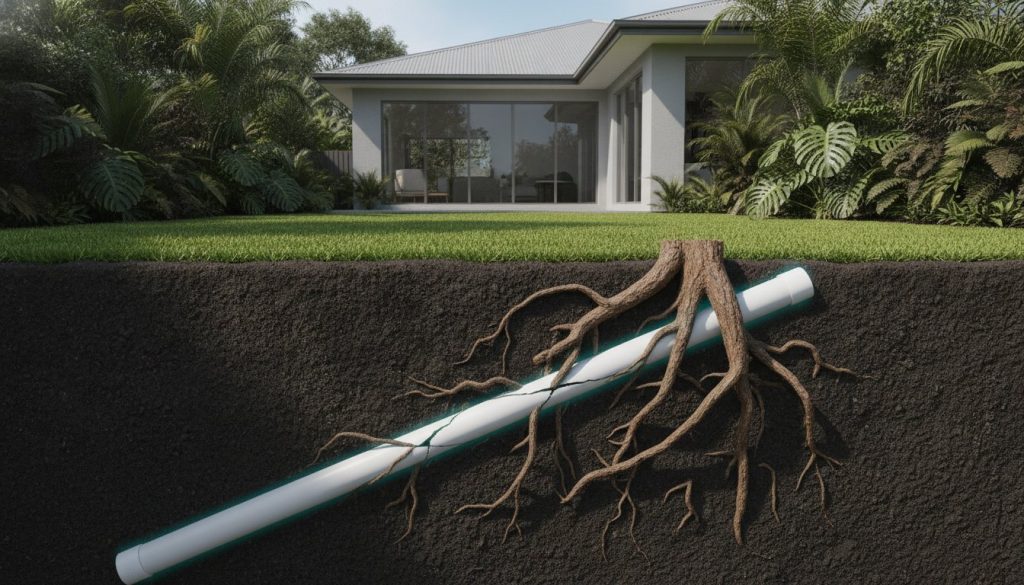
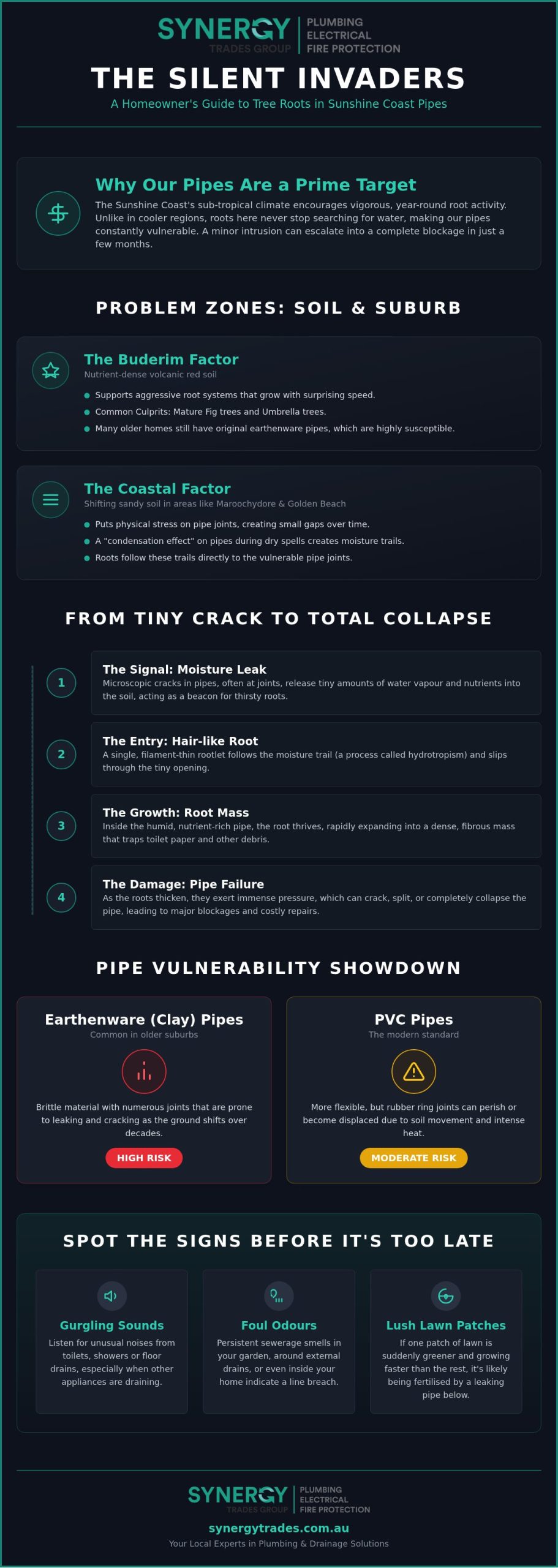
Root intrusion is a slow and silent process that begins long before your toilet overflows. It occurs when thirsty, sub-tropical vegetation identifies microscopic cracks in your plumbing. These cracks, often too small to see with the naked eye, release tiny amounts of moisture and nutrients into the surrounding soil. For a tree, this is an invitation to a feast. Once a hair-like root finds its way inside, it grows rapidly in the perfect environment of water and oxygen, eventually creating a thick, woody mass that can crack or collapse the pipe entirely.
Dealing with tree roots in pipes sunshine coast wide is particularly challenging because our climate never truly rests. Unlike cooler regions where plant growth slows significantly during winter, our sub-tropical weather encourages year-round root activity. This constant growth cycle means that a small issue can escalate into a total blockage in just a few months. Established areas such as Noosa and Buderim often see higher incident rates due to the density of mature trees and the age of the underground infrastructure. While Unitywater manages the main sewer lines, homeowners are responsible for the pipes within their property boundaries, making local knowledge essential for prevention.
The Buderim Factor: Red Soil and Mature Trees
Buderim’s famous volcanic red soil is a gardener’s dream but a plumber’s nightmare. This nutrient-dense earth supports aggressive root systems that grow with surprising speed. We frequently find that mature Fig trees and Umbrella trees on older residential blocks are the primary culprits. Many homes in this area, particularly those serviced by a plumber in Buderim, still have original earthenware pipes. These pipes are notorious for having multiple joints that weep moisture over time, acting as a literal magnet for the powerful root systems of these large trees.
Coastal Sand and Pipe Movement
In coastal suburbs like Maroochydore and Golden Beach, the challenge is driven by the terrain. Shifting sandy soil puts physical stress on pipe joints as the ground moves with rain or tidal changes. Even modern PVC pipes aren’t immune; ground movement can create small gaps at the couplings. During dry coastal winters, the temperature difference between the warm wastewater inside and the cooler sand creates a “condensation effect” on the pipe’s exterior. This moisture trail leads roots straight to the joints, where they can quickly force their way inside.
How Roots Invade: The Science of Pipe Condensation
Roots don’t find your plumbing by accident. They use a biological process called hydrotropism to “smell” the moisture and nutrient-rich wastewater flowing through your drains. When warm water runs through a pipe, it creates a temperature gradient that leads to condensation on the pipe’s exterior. This moisture trail acts as a beacon for nearby vegetation. Many residents struggling with tree roots in pipes sunshine coast wide don’t realise that the problem often begins with a simple lack of moisture in the surrounding soil. It starts with a single, hair-like filament that slips through a microscopic gap. Once inside, the root thrives in the humid, nutrient-dense environment. It expands rapidly, forming a dense root ball that traps debris and grease. As these roots thicken, they exert enough pressure to split pipes apart, eventually leading to a total structural collapse. Utilising professional water leak detection is an effective way to identify these early weeping points before they attract unwanted attention from your garden.
The Vulnerability of Earthenware vs. PVC
In older suburbs like Caloundra and Wurtulla, vitreous clay pipes are common. These earthenware lines are brittle and feature numerous joints that are prone to failing as the ground shifts. While modern PVC is more flexible, it isn’t bulletproof. The rubber ring joints used to connect PVC sections can perish or become displaced under the intense Sunshine Coast heat and pressure from shifting sandy soils. The varied soil pH across the Sunshine Coast, from acidic wallum sands to alkaline coastal pockets, accelerates the chemical degradation of older pipe materials. If you are concerned about the state of your underground lines, you can request a professional drain inspection to catch issues early.
Signs You Have Roots in Your Pipes
Early detection can save you thousands in repair costs. It is much easier to manage a small intrusion than it is to replace a collapsed line. Keep an eye out for these common warning signs around your property:
- Gurgling sounds: Listen for strange noises coming from the toilet, floor waste, or shower when the washing machine drains.
- Foul odours: Persistent sewerage smells near your garden beds or external gully traps often indicate a breach.
- Lush patches: If one area of your lawn is suddenly greener or growing faster than the rest during a dry spell, a leaking pipe is likely feeding the roots below.
These symptoms suggest that the structural integrity of your drainage system has been compromised. Ignoring these signs usually leads to a complete blockage at the most inconvenient time.
Hydro-Jetting vs. Electric Eels: The Best Ways to Clear Roots in 2026
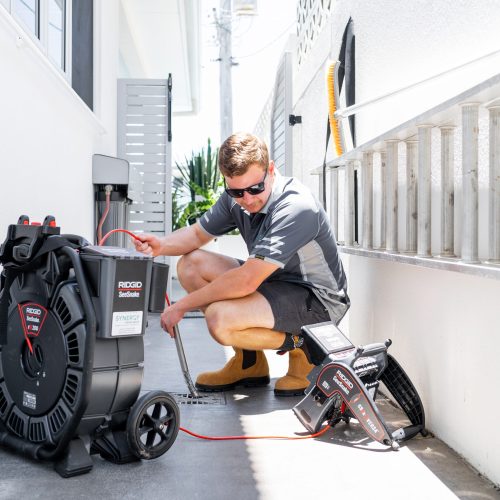
Choosing the right method to clear tree roots in pipes sunshine coast residents often find determines whether the problem stays away for years or just a few weeks. The traditional “Electric Eel” or drain snake was once the industry standard, but it is quickly becoming obsolete. This mechanical tool uses a rotating blade to cut through blockages, yet it often leaves behind root stubs and can accidentally crack fragile lines. In contrast, high-pressure hydro-jetting uses specialised nozzles to scour the pipe walls completely clean. This process doesn’t just cut the roots; it flushes out the grease, silt, and organic debris that act as fertiliser for future growth. We always pair this technology with a CCTV drain camera inspection. Seeing the inside of your pipes before we start allows us to identify the exact entry point and the extent of the damage. A follow-up scan ensures every filament is gone. While some homeowners try chemical root inhibitors, these are usually just a temporary “band-aid”. They might slow growth, but they won’t fix the structural breach that allowed the roots in initially.
Why We Recommend Hydro-Jetting for Coastal Homes
Modern homes in Noosa or Buderim often feature complex plumbing layouts with multiple tight bends. Hydro-jetting hoses are flexible enough to navigate these turns without getting stuck. This method is particularly effective for removing “fines”—the fine sand and silt common in our coastal environment that roots use to anchor themselves. Because it uses water rather than a heavy metal cable, it is much safer for the older, brittle earthenware pipes still found in many established local properties. It provides a thorough clean that mechanical tools simply can’t match.
Long-Term Solutions: Pipe Relining
If you want a permanent fix without destroying your garden, “no-dig” pipe relining is the gold standard. This process involves inserting a resin-filled liner into the existing pipe, which then hardens to create a “pipe within a pipe”. It is a logical, cost-effective alternative to total replacement because you avoid the expense of excavating driveways or manicured lawns. The result is a seamless, structural barrier that roots cannot penetrate. It effectively turns a vulnerable, multi-jointed line into a single, continuous piece of infrastructure, giving you long-term peace of mind and protecting your landscaping investment.
Preventing Future Blockages: Smart Planting and Early Warning Signs
Clearing a root intrusion is only half the battle. The smarter move is making sure it doesn’t happen again. For homeowners dealing with tree roots in pipes Sunshine Coast wide, prevention comes down to two things: knowing where your pipes are and being deliberate about what you plant near them.
Unitywater provides a free online mapping tool that allows you to locate the sewer mains running through your property. Before you plant anything larger than a groundcover, check this resource first. It takes minutes and could save you thousands. As a general rule, maintain a minimum of four metres between any tree and your sewer or stormwater lines. For species with aggressive lateral root systems, that buffer should be considerably wider.
Scheduling a routine CCTV drain inspection every two to three years is the residential equivalent of a dental check-up. It’s far less stressful to catch a fine root filament early than to deal with a collapsed line. Catching a small weep point before it becomes a root highway is exactly what proactive maintenance looks like in practice.
One often-overlooked trigger is a slow leak from your hot water system. A dripping relief valve or a weeping connection creates a consistent moisture trail in the soil around your home. In our sub-tropical climate, nearby roots will find that trail quickly. Fixing a hot water leak promptly isn’t just about water efficiency; it removes a direct invitation for root activity near your plumbing.
The Sunshine Coast “Blacklist”: Trees to Avoid
Some of the most popular ornamental trees on the Sunshine Coast are also the most destructive to underground infrastructure. Avoid planting these species anywhere near your drainage lines:
- Hills Weeping Fig (Ficus microcarpa): Its lateral roots can extend well beyond the canopy and are notorious for splitting earthenware joints in older suburbs.
- Umbrella Tree (Schefflera actinophylla): Declared a pest plant in Queensland for good reason. Its root system is relentless and will exploit any moisture source it can find.
- Jacaranda: Visually stunning but its roots actively seek out pipe joints, particularly in the sandy soils of coastal suburbs.
- Certain Palms: While individual palm roots are thinner than hardwood species, they produce dense fibrous “root matting” that can block stormwater pipes and gully traps over time.
Pipe-Friendly Plants for Your Garden
Choosing the right species means you can have a lush, attractive garden without the underground risk. Native plants are generally your safest option because their root systems tend to be far less aggressive than introduced ornamentals.
- Grevilleas: A wide range of sizes and flower colours are available. Their root systems are compact and non-invasive, making them ideal near drainage lines.
- Bottlebrush (Callistemon): Hardy, bird-attracting, and safe for planting close to boundaries and pipes.
- Lilly Pilly (Syzygium): Works well as a hedge and won’t threaten your underground infrastructure.
- Groundcovers and small shrubs: Plants like Lomandra, Dianella, and native grasses add colour and texture with minimal root depth.
If you’re planning a significant landscaping project in Buderim or Sippy Downs, it’s worth consulting a local arborist alongside your plumber before breaking ground. Understanding both the above-ground and below-ground picture gives you a complete view of any risk.
Prevention is always more cost-effective than repair. If you’d like a professional assessment of your drainage system before your next garden project, book a drain health check with our team today.
Expert Root Removal with Synergy Trades Group
Dealing with tree roots in pipes Sunshine Coast wide requires more than just high-end machinery. It demands a level of local insight that only comes from decades on the ground. At Synergy Trades Group, we operate as your Trusted Expert Guide, taking the stress out of plumbing maintenance through a service-first mentality. Our family-owned business, led by Paul and Lynda, brings over 70 years of combined industry experience to every job. We understand that your home is your most significant investment, and a recurring blockage is a source of genuine anxiety. That is why we prioritise transparency and reliability, ensuring you feel informed and in control from the first phone call to the final inspection.
Our methodical “Camera, Clear, and Confirm” process ensures the job is done right the first time. We start with a high-definition CCTV camera to map the intrusion. Next, we use high-pressure hydro-jetting to clear the obstruction without damaging your infrastructure. Finally, we confirm the results with a second scan, providing you with visual proof that your lines are clear. This disciplined approach eliminates the guesswork and provides the peace of mind you deserve. Our team takes pride in professional conduct, focusing on efficient resolutions rather than high-pressure sales tactics.
Serving the Entire Sunshine Coast Community
We are proud to support families and businesses across the region, from the coastal strips of Caloundra and Maroochydore to the leafy blocks of Noosa. Our team treats your garden with the same respect as your home, opting for non-invasive solutions whenever possible to protect your landscaping. You can learn more about the advanced equipment we use for these tasks on our blocked drains pillar page. We believe in traditional service values, which means arriving on time, communicating clearly, and leaving your property as clean as we found it.
Book Your CCTV Drain Inspection Today
Early detection is the most effective way to prevent tree roots in pipes Sunshine Coast properties from causing a total structural collapse. By identifying vulnerabilities now, you avoid the high costs and stress of emergency repairs later. We provide clear, fixed-price quotes for our root removal services, so there are never any surprises when the invoice arrives. If you have noticed slow drains or suspicious gurgles, don’t wait for a total blockage to occur. Contact Synergy Trades Group for an expert drain assessment and let our family look after yours.
Secure Your Sunshine Coast Plumbing for the Future
Protecting your property from tree roots in pipes sunshine coast wide doesn’t have to mean constant worry or the destruction of your beloved garden. By choosing pipe-friendly native plants and scheduling regular drainage health checks, you can stop intrusions before they become costly emergencies. Modern high-pressure hydro-jetting technology provides a thorough clean that traditional mechanical methods simply can’t match, keeping your lines clear and functional for years to come.
At Synergy Trades Group, Paul, Lynda, and our team bring over 70 years of combined industry experience to every local home. We are a family-owned business dedicated to providing transparent, professional service that puts your peace of mind first. Whether you are dealing with a current blockage or want to prevent future issues, we have the advanced tools and local knowledge to help. Take the first step toward a permanent drainage solution today and protect your home’s infrastructure.
Book a CCTV Drain Inspection with Synergy Trades Group and ensure your plumbing remains in expert hands. We look forward to helping you keep your home running smoothly and your garden flourishing.
Frequently Asked Questions
Can tree roots grow back after being cleared from a pipe?
Yes, tree roots will almost certainly grow back if the entry point in your pipe remains unsealed. Clearing the blockage provides immediate relief, but the original crack still leaks the moisture and nutrients that attracted the roots initially. Without a permanent solution like pipe relining or structural repair, the roots will return to exploit the same opening. We recommend a follow-up CCTV inspection to assess the pipe’s integrity after the clearing is complete.
How much does it cost to remove tree roots from a drain on the Sunshine Coast?
The cost of removing tree roots depends on several factors, including the depth of the line, the severity of the intrusion, and the equipment required. Because every property is different, we provide clear, fixed-price quotes following an initial assessment. This ensures you aren’t surprised by hidden fees. Investing in a professional inspection helps identify whether a simple hydro-jetting service or a more involved structural repair is necessary for your specific situation.
Will hydro-jetting damage my old earthenware pipes?
High-pressure hydro-jetting is actually safer for older earthenware pipes than traditional mechanical tools like the electric eel. While mechanical blades can catch on brittle clay edges and cause further cracking, hydro-jetting uses water to scour the surfaces clean. Our team always performs a CCTV camera inspection first to evaluate the condition of your pipes. This step ensures the pressure is adjusted correctly to clear tree roots in pipes sunshine coast properties without risking structural damage.
Is pipe relining a permanent solution for root intrusion?
Pipe relining is considered a permanent, “no-dig” solution for root intrusion on the Sunshine Coast. By creating a seamless, structural liner inside the existing pipe, you eliminate the joints and cracks that roots use as entry points. This process effectively turns your old, vulnerable drainage line into a single continuous piece of infrastructure. It is a highly effective way to protect your landscaping while ensuring roots cannot find their way back into your plumbing system.
What are the most aggressive trees for plumbing on the Sunshine Coast?
Aggressive sub-tropical species like the Hills Weeping Fig, Umbrella Tree, and Jacaranda are the most common culprits for local plumbing issues. Their root systems are incredibly persistent and can travel long distances to find moisture. We also see frequent issues with certain Palms and large Eucalypts. If you are landscaping near your drainage lines, we suggest choosing native Grevilleas or Bottlebrushes, which have much less invasive root systems and are safer for your underground pipes.
Can I use copper sulphate or chemicals to kill roots in my drains?
Chemical treatments like copper sulphate are generally considered a temporary “band-aid” rather than a reliable fix. While they may kill the immediate root growth inside the pipe, they don’t repair the structural breach that allowed the roots to enter. Additionally, some chemicals can be corrosive to your pipes or harmful to the local environment. A professional mechanical clearing followed by a structural repair is the only way to ensure the problem doesn’t return.
How do I know if the blockage is in my pipe or Unitywater’s main?
You can usually determine responsibility by identifying where the blockage is located relative to your property boundary. If only one toilet or shower is slow, the issue is likely in your private lines. However, if multiple fixtures are backing up simultaneously, it could be a main line issue. Unitywater is responsible for the public sewer mains, while the homeowner is responsible for all pipes within their property up to the connection point. A CCTV inspection can quickly confirm the location.
Does home insurance cover damage caused by tree roots in pipes?
Most standard home insurance policies do not cover the cost of removing tree roots in pipes sunshine coast because it is often classified as gradual wear and tear or maintenance. However, you may be covered for “resultant damage,” such as water damage to your floors or cabinetry caused by a sudden overflow. It is important to review your specific Product Disclosure Statement (PDS) or speak with your insurer to understand what exclusions apply to your underground infrastructure.