What if that lingering “rotten egg” scent in your ensuite isn’t just a cleaning oversight, but your plumbing actually trying to tell you something critical? You’ve likely tried every supermarket bleach and “magic” foam on the shelf, yet the embarrassing pong returns the moment you have guests over. It’s incredibly frustrating to wonder why does my drain smell when you spend so much time keeping your Sunshine Coast home spotless. We know that a smelly drain isn’t just a nuisance; it’s a source of anxiety that makes you worry about sewer gas leaks or those tiny, fuzzy flies that never seem to leave your sink alone.
In this 2026 guide, we’ll help you decode these scents and show you how to get rid of drain flies for good. Drawing on over 70 years of combined industry experience, our team will help you identify the real reasons behind the stench, from biofilm buildup to failing p-traps. You’ll discover the difference between a simple DIY fix and a serious plumbing failure that requires a licensed professional under QLD regulations. We’ll walk through the common causes of bathroom odours and provide expert advice to help you restore a fresh, healthy environment for your family.
Key Takeaways
- Learn to identify specific scents, such as rotten eggs or musty dampness, to finally understand why does my drain smell and what it means for your plumbing’s health.
- Discover why common household “fixes” like bleach and boiling water often fail to solve the problem and can actually cause long-term damage to your PVC pipe joints.
- Identify the link between annoying drain flies and the deep-seated biofilm “gunk” hidden inside your pipes that provides their primary breeding ground.
- Master simple preventative habits, such as hydrating unused traps and using quality drain protectors, to keep sewer gases out and ensure your Sunshine Coast home stays fresh.
- Recognise the critical warning signs, such as gurgling sounds, that indicate a serious venting issue or a hazardous methane buildup requiring expert professional attention.
Why Does My Drain Smell? Decoding the Different Scents
Your nose is actually one of the most effective tools for maintaining a healthy home. When you find yourself asking why does my drain smell, the specific “scent profile” provides a clear map to the underlying problem. On the Sunshine Coast, where humidity and heat can intensify household odours, identifying the difference between a minor blockage and a potentially dangerous gas leak is essential for your peace of mind.
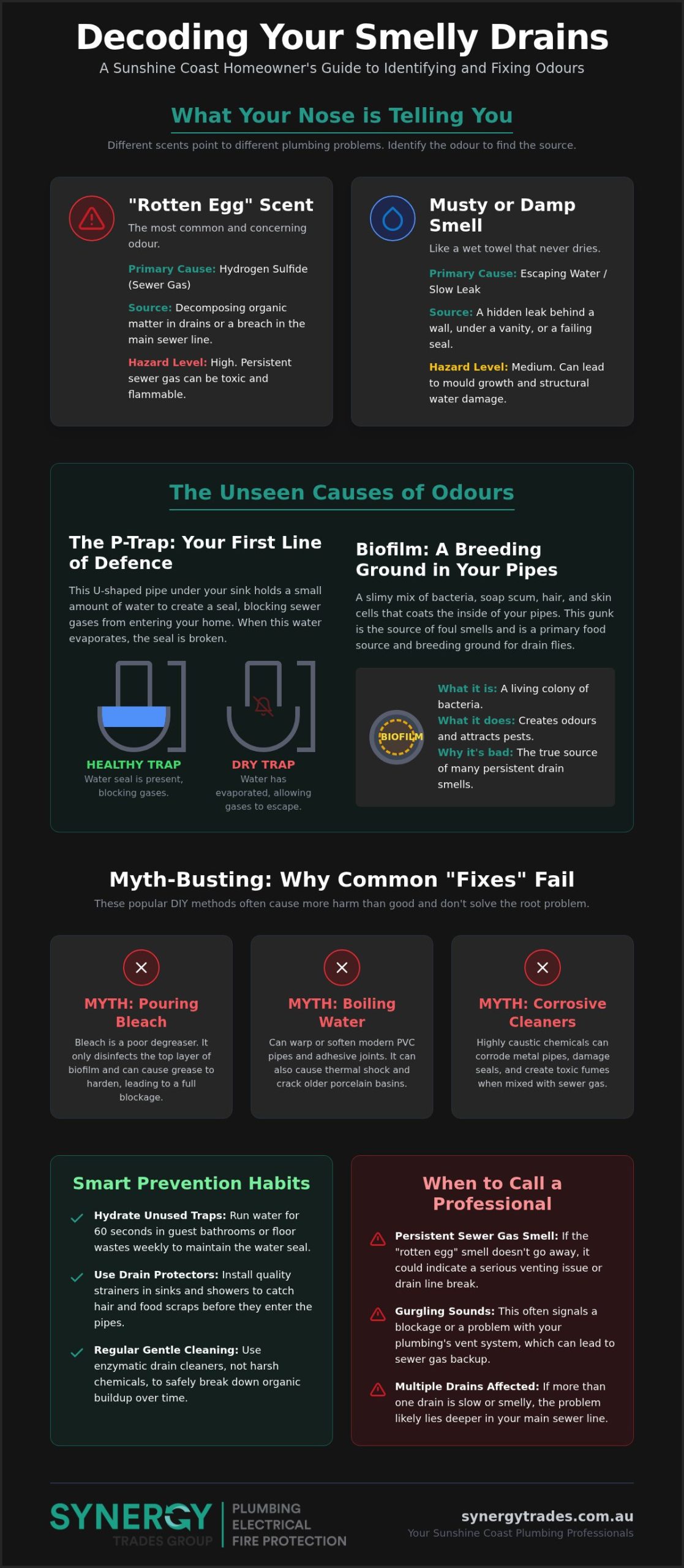
A “rotten egg” scent is the most common complaint we hear from local homeowners. This is usually hydrogen sulfide, a byproduct of decomposing organic waste. While a faint whiff might just be a dirty drain, persistent sewer smells can be hazardous. High concentrations of sewer gas are not only unpleasant; they can be toxic and even flammable if left unaddressed. Conversely, a musty or damp odour usually suggests water is escaping where it shouldn’t. If your bathroom constantly smells like a wet towel that never dries, you might have a slow leak behind the wall or under the vanity floor.
Sewer Gas vs. Biofilm: What’s the Difference?
It is easy to confuse sewer gas with biofilm, but they have very different origins. Sewer gas is a cocktail of methane, carbon dioxide, and hydrogen sulfide that rises from the main sewer line. Biofilm, however, is a localised issue. Biofilm is a complex colony of bacteria that thrives in damp plumbing environments. This slimy gunk builds up in your S-bend, trapping hair, soap scum, and skin cells. Over time, this decomposing matter creates a “sweetly foul” smell that acts as a primary breeding ground for pests like drain flies.
The Role of the P-Trap (or S-Bend) in Odour Control
Your home relies on a carefully designed Drain-waste-vent system to keep your air clean and safe. The P-trap, or S-bend, is the curved pipe under your sink or floor waste that holds a small amount of water. This water acts as a physical seal, blocking gases from the sewer from entering your living space.
“Dry traps” are the most frequent cause of mystery smells in guest bathrooms or laundries. If a tap isn’t used for a few weeks, the water seal simply evaporates. The intense Sunshine Coast heat often accelerates this process, especially in floor wastes. If you’re wondering why does my drain smell in a room you rarely use, the solution is often as simple as running the tap for sixty seconds to reset that vital water barrier.
Myth-Busting: Why Bleach and Boiling Water Rarely Fix Smelly Drains
When you first notice a nasty scent, the most common instinct is to reach for the bleach or a kettle of boiling water. It is a natural reaction. You want the problem gone immediately. However, these common household “hacks” often do more harm than good. If you are constantly asking why does my drain smell despite pouring litres of disinfectant down the sink, it’s because these methods only treat the symptoms, not the source.
Bleach is a powerful disinfectant, but it is a poor degreaser. It might kill the top layer of bacteria, providing a few hours of relief, but it won’t touch the thick “slug” of hair and soap scum further down the line. In some cases, bleach can actually cause grease to congeal and harden. This turns a smelly drain into a completely blocked one. Similarly, boiling water carries significant risks. Most modern homes on the Coast use PVC pipes. Pouring 100 degree water down the drain can soften the adhesive at pipe joints or cause the plastic to warp. If you have an older porcelain basin, the sudden thermal shock can even lead to permanent cracks.
Why Chemical Cleaners Can Make Odours Worse
Supermarket drain cleaners are often highly corrosive. In older Sunshine Coast plumbing, these caustic liquids can eat away at metal pipes or weaken old seals. Even worse, if these chemicals sit on top of a stubborn clog, they can react with trapped organic matter or Sewer gas to create toxic fumes. We must also consider our local environment. These harsh chemicals eventually find their way into our beautiful Queensland waterways, causing long term damage to the ecosystem.
The Science of Pipe Corrosion and Odour
As pipes age, their internal surfaces become pitted and rough. This texture traps skin cells, food scraps, and hair more easily, creating a permanent buffet for odour causing bacteria. The popular vinegar and baking soda “volcano” might look impressive, but the fizzing lacks the physical force to scrub these rough surfaces clean. It is a surface level reaction that rarely reaches the heart of the problem. True odour removal requires mechanical agitation or high-pressure water jetting to strip the pipe walls back to their original state. If your DIY efforts haven’t worked, our team can help with professional blocked drain clearing to solve the problem properly.
How to Get Rid of Drain Flies and Their Source
Tiny, fuzzy flies hovering around your vanity or kitchen sink are more than just a nuisance. They are a biological indicator. If you have been wondering why does my drain smell, these pests are often the first sign that a thick layer of organic “gunk” has taken up residence in your pipes. Unlike fruit flies that hunt for overripe bananas, drain flies (also known as moth flies) live and breed exclusively in slimy biofilm. A single female can lay up to 200 eggs at a time. Within 48 hours, larvae are already feeding on the decaying matter in your drain. This is why swatting the adults never works; you must destroy the nursery to stop the cycle.
It is important to distinguish these from phorid flies, which are often found near rotting meat or deeper sewer line breaks. Drain flies are easily identified by their moth-like wings and erratic flight patterns. Because they thrive in the humid Queensland climate, infestations can quickly spiral out of control if you only treat the surface. To eradicate them permanently, you need a targeted, non-toxic approach that focuses on the pipe walls where the larvae hide.
The Tape Test: Confirming Your Drain is the Breeding Ground
Before you start cleaning, you need to prove exactly where the flies are breeding. Take a piece of clear sticky tape and place it over the drain opening before you go to bed, leaving a small gap for airflow. In the morning, check the tape. If you see tiny flies stuck to the underside, you have found your source. Do not forget to test the floor waste in your shower or laundry. These often go unnoticed but are prime real estate for infestations. If the tape remains clear but the flies persist, you may have a hidden leak behind a wall that requires professional water leak detection.
Mechanical Cleaning: The Only Way to Stop the Cycle
Pouring boiling water down the sink is a common mistake. The larvae are incredibly resilient and can survive temporary heat by clinging to the biofilm. To truly answer the question of why does my drain smell and stop the flies, you must use mechanical agitation. A long-handled pipe brush is your best tool. Physically scrubbing the inside of the pipe breaks up the biofilm, removing the food source and breeding ground simultaneously.
Once you have scrubbed the pipe, follow up with an enzyme-based cleaner rather than bleach. These products contain natural bacteria that “eat” the remaining organic matter over several days. This provides a much more thorough result and prevents the “gunk” from reforming quickly. Keeping your drains clear of hair and soap scum with a simple mesh guard will ensure the flies don’t have a reason to return to your Sunshine Coast home.
The Sunshine Coast Homeowner’s Guide to Preventing Odours
Maintaining a fresh-smelling home on the Sunshine Coast involves more than just a quick surface clean. Our unique sub-tropical climate, with its high humidity and coastal heat, can actually accelerate the biological processes that lead to nasty scents. If you are tired of wondering why does my drain smell, a simple weekly maintenance routine is your best line of defence. By following these five steps, you can keep your plumbing system operating silently and scent-free.
- Hydrate your traps: Every week, pour a bucket of water down floor wastes and drains in guest bathrooms or laundries. This ensures the water seal remains intact and effective.
- Use drain protectors: Install high-quality mesh guards to catch hair and food scraps before they enter your pipes and start to decompose.
- The monthly flush: Use a sink-full of hot, soapy water to flush your pipes once a month. This helps move along light grease buildup before it has a chance to harden.
- Clear your roof vents: In our leafy Coast suburbs, it is common for bird nests or debris to block the plumbing vent pipes on your roof. When air cannot escape properly, smells are pushed back into your living spaces.
- Watch your water bill: A sudden increase in your Unitywater bill could indicate a hidden leak. Damp, musty smells are often the first sign of water escaping behind your cabinetry or under the floor.
If you suspect a hidden issue is causing that persistent musty odour, our team provides expert water leak detection to find the source without damaging your property.
Maintaining Your Floor Wastes in QLD Heat
Sunshine Coast homes typically have more floor wastes than houses in cooler states. These are designed to handle overflows in laundries and bathrooms, but they are highly susceptible to evaporation during our long summers. To slow this down, try the “oil trick”: pour a single teaspoon of cooking oil into the drain after hydrating it. The oil floats on the surface, creating a barrier that prevents the water from evaporating in the heat. For permanently dry areas, we can install a specialised “trap primer” that automatically keeps the seal full and functional.
Kitchen Drain Best Practices
Kitchen odours are almost always caused by the “No-Fat” rule being broken. Even small amounts of oil or grease will stick to the pipe walls, trapping food particles that eventually rot. Instead of pouring fats down the sink, collect them in a jar for the bin. For a natural refresh, grind a few citrus peels with cold water. The citric acid helps break down light residues while leaving a crisp, clean scent without the need for harsh chemicals.
When to Call a Sunshine Coast Professional
While many minor odours can be resolved with better cleaning habits, some scents indicate a deeper structural failure. If you have followed every maintenance tip and still find yourself asking why does my drain smell, the issue likely lies beyond the reach of a bottle of vinegar. Persistent smells are often a cry for help from your plumbing system. Ignoring these signs can lead to expensive property damage or health risks for your family.
A gurgling sound is a major warning. If your sink “talks back” to you when the toilet flushes or the washing machine drains, you have a venting issue. When air cannot flow freely through your vent pipes, it creates a vacuum that pulls water out of your traps. This leaves the door wide open for sewer gas to enter your home. Persistent sewer smells are more than just unpleasant; methane gas can become a health and fire hazard if concentrations reach a critical level in confined spaces.
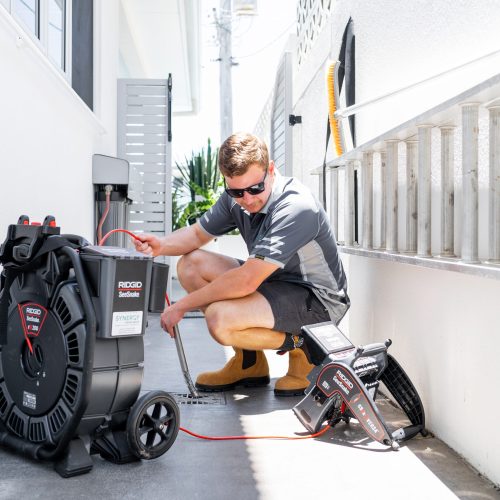
Recurring blockages that smell like rotting organic matter often indicate tree root intrusion. In our sandy Sunshine Coast soil, roots are drawn to the moisture inside your pipes. They enter through tiny cracks, creating a “web” that traps debris and causes a permanent stench. We use advanced water leak detection sunshine coast technology to find hidden moisture and CCTV pipe inspections to see exactly what is happening underground without digging up your garden.
Synergy Trades Group: Your Local Blocked Drain Experts
Synergy Trades Group is a family-owned business with over 70 years of combined industry experience. This deep local knowledge helps us identify complex sewer gas leaks that others might miss. We believe in transparency, which is why we focus on fixed-fee reliability rather than hidden costs. While DIY chemical fixes can damage your pipes, our professional high-pressure water jetting strips away biofilm and roots safely. It is the most effective way to ensure that nasty “drain pong” doesn’t return next month.
The Link Between Smells and Hot Water Systems
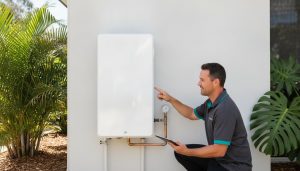
Sometimes, the smell isn’t coming from the drain at all, but from the water itself. If you notice a “rotten egg” scent specifically when running the hot tap, the culprit might be a decaying sacrificial anode rod inside your tank. This rod is designed to rust so your tank doesn’t, but when it nears the end of its life, it can react with bacteria to produce sulfur gas. We integrate hot water system repairs sunshine coast into our total home plumbing checks to ensure every part of your system is fresh and functional. Don’t live with the stink; contact Synergy Trades Group today to restore comfort to your home.
Restore Freshness to Your Sunshine Coast Home
Understanding the specific scent profile of your plumbing is the first step toward a healthier living environment. We have explored how a “rotten egg” smell often indicates a failed water seal or sewer gas leak, while musty odours typically point toward hidden moisture behind your walls. It is important to remember that supermarket chemicals are usually a temporary band-aid; real solutions come from mechanical cleaning and consistent trap maintenance. If you’ve been wondering why does my drain smell despite your best efforts, the issue likely requires a deeper look into your home’s venting or pipe integrity.
As a local Sunshine Coast family business with over 70 years of combined industry experience, our licensed plumbing and electrical experts are here to help. We specialise in identifying complex leaks and clearing the stubborn blockages that cause persistent odours. Book a Professional Drain Inspection with Synergy Trades Group today to ensure your home remains fresh, safe, and functional. You don’t have to live with embarrassing odours when a permanent, professional solution is just a phone call away. We look forward to helping you get your home back to its best.
Frequently Asked Questions
Is the smell from my drain dangerous to my family’s health?
Persistent sewer gas smells can indeed be harmful if left unaddressed for long periods. While a faint whiff is usually just a nuisance, sewer gas contains a mix of methane and hydrogen sulfide that can cause headaches, nausea, or dizziness in high concentrations. If you’re constantly asking why does my drain smell like rotten eggs, it’s vital to ensure your home is properly ventilated to prevent these gases from reaching toxic or flammable levels.
Can I use baking soda and vinegar to get rid of drain flies?
Baking soda and vinegar will not effectively eliminate a drain fly infestation on their own. While the fizzing reaction might dislodge some surface debris, it lacks the physical power to strip away the thick biofilm where larvae live and feed. To stop the flies for good, you need to use a mechanical brush to scrub the pipe walls or an enzyme-based cleaner that can biologically break down the organic gunk deep inside the drain.
Why does my bathroom smell like sewage only when it rains?
Rain-related smells usually indicate a problem with your plumbing’s venting or a breach in the external sewer line. During heavy Sunshine Coast downpours, changes in atmospheric pressure can push sewer gases through dry traps or cracked pipes. Additionally, if your vent pipes are blocked by debris, the air has nowhere to go but back into your bathroom. This is a clear sign that your system needs a professional inspection to identify the specific failure point.
How much does it cost to have a plumber clear a smelly drain on the Sunshine Coast?
The cost of clearing a smelly drain depends on the severity of the underlying issue and the tools required for the job. A simple mechanical clearing of a sink trap is typically more affordable than advanced solutions like high-pressure hydro-jetting or a CCTV pipe inspection. For an accurate quote, it is best to have a licensed plumber assess whether the scent is caused by a localised blockage or a more complex structural problem within your main sewer line.
Will bleach kill the drain flies in my sink for good?
Bleach is an ineffective long-term solution for drain flies because it only targets the adults on the surface. The larvae are protected by a water-resistant slime layer that bleach cannot penetrate. Even if you kill the visible flies, new ones will emerge within days as the next generation matures in the biofilm. True eradication requires removing the organic sludge that serves as their breeding ground and food source through mechanical cleaning or specialised enzyme treatments.
What happens if a P-trap dries out completely?
When a P-trap dries out, the physical water barrier that blocks sewer gases from entering your home is lost. This allows methane and other odours to rise directly from the sewer mains into your living space. This is a common issue in guest bathrooms or floor wastes during hot Queensland summers. Simply running the tap for a minute or pouring a bucket of water down the floor drain will usually reset the seal and stop the smell immediately.
Why does my kitchen sink smell even though I don’t have a blockage?
Kitchen sinks often develop a foul odour due to the buildup of food particles and grease on the pipe walls, even if water still flows freely. This thin layer of organic matter rots over time and creates a persistent stench. If you find yourself wondering why does my drain smell in the kitchen, the cause is often decaying matter trapped in the sink’s overflow pipe or around the basket strainer that requires a thorough mechanical scrub.
Can tree roots in my pipes cause the drain to smell?
Yes, tree roots are a major cause of persistent drain odours in leafy coastal suburbs. As roots enter your pipes through tiny cracks, they create a dense mat that catches hair, grease, and food scraps. This trapped organic material decomposes inside your pipes, sending foul smells back up the line. Because the blockage is often deep underground, a professional CCTV inspection is the only way to confirm if roots are the primary cause of the scent. If you are planning a bathroom upgrade while addressing your plumbing, exploring a professional bidet installation Sunshine Coast service can help ensure all your toilet and drain connections meet current Queensland compliance standards.